Step-by-Step Guide to Cleaning Down Duvets at Home
Check your duvet’s care label first-you’ll need to confirm if it’s machine-washable and what water temperature to use. Spot-treat stains with a mild detergent and soft cloth, then wash in cold water on a gentle cycle using a front-loading machine. Use a down-specific detergent and rinse thoroughly. Dry on low heat with tennis balls to break up clumps and restore loft, checking often. Make sure it’s fully dry to prevent mildew. Proper drying and care keep the down breathable and durable over time, maintaining comfort and performance for better sleep. You’ll find tips on preventing damage and extending lifespan just ahead.
Notable Insights
- Check the care label to confirm if the down duvet is machine-washable and note fabric-specific instructions.
- Spot-treat stains with a mild detergent or enzymatic cleaner before washing, testing on a hidden area first.
- Wash in cold water on a gentle cycle using a mild, down-specific detergent and thorough rinsing.
- Dry in a large-capacity dryer on low heat with tennis or wool balls to restore loft and prevent clumping.
- Ensure complete dryness by drying in cycles, checking frequently, and manually fluffing to prevent mildew.
Check the Care Label Before Washing
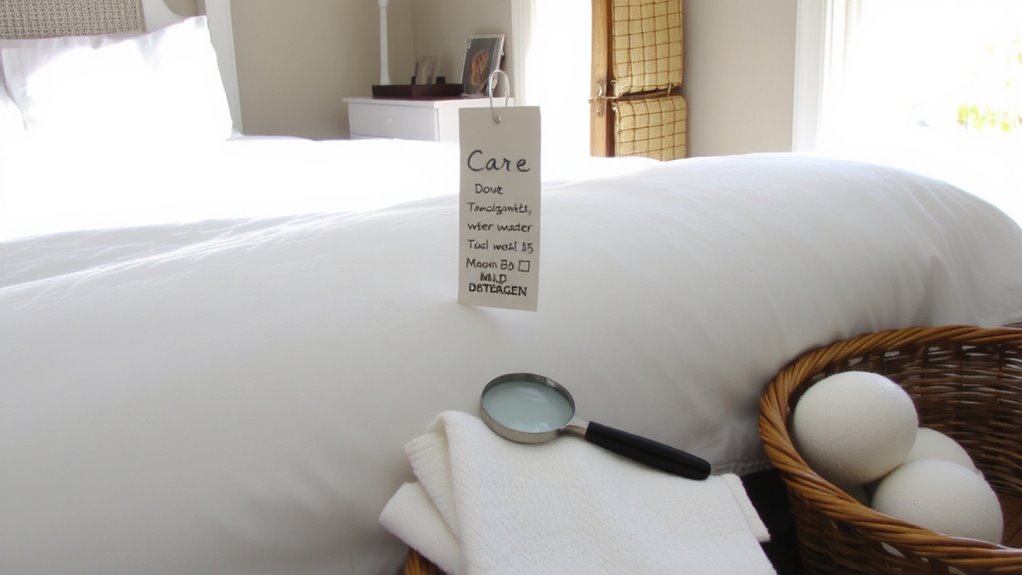
Before tossing your down duvet into the washing machine, take a moment to check the care label-manufacturers often include important details that can prevent damage and extend the life of your bedding. The fabric type determines how the duvet handles moisture and agitation, so confirming it’s machine-washable is essential. Some down duvets have delicate outer shells that require gentle hand washing or professional cleaning. Also, consider your washing machine capacity-front-loading machines are generally better because they don’t have an agitator, which can stress the duvet’s seams. Top-loaders with enough space work too, but only if the duvet fits loosely to allow thorough cleaning and rinsing. Overcrowding leads to uneven wash results and strain on the fibers. Always follow the maker’s instructions on water temperature and cycle settings to maintain loft and insulation. Proper care preserves comfort, supports restful sleep, and protects your investment.
Spot-Treat Stains on Down Duvets
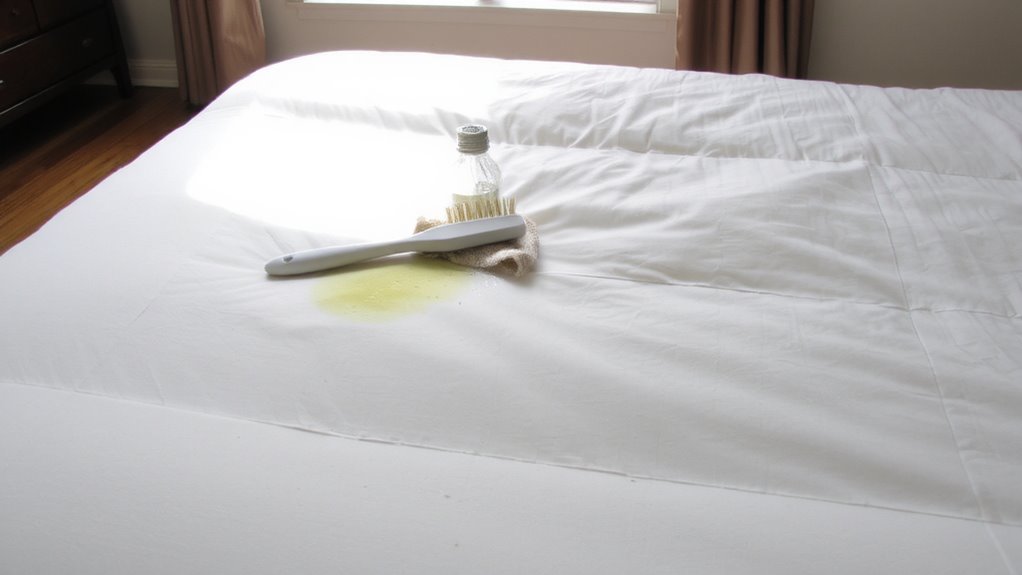
You’ve already checked the care label to make sure your down duvet can handle a wash, but what if it only has a few spots or localized stains? Spot-treating avoids full cleaning and preserves the down’s loft and insulation. Begin with stain identification-determine whether it’s sweat, oil, or moisture-based, as each responds to different treatments. Use a mild detergent or enzym Bieber cleaner applied gently with a soft cloth. Always test on a small, hidden area first to ensure fabric protection. Dab, don’t rub, to prevent spreading or damaging fibers. Let it air dry fully to maintain down integrity. This targeted approach saves time and wear on the duvet. If stains persist or spread, a full cleaning might be needed. Regular spot care helps extend time between deep cleans, keeping your sleep surface fresh without compromising material performance.
Use Cold Water and Gentle Cycle for Down
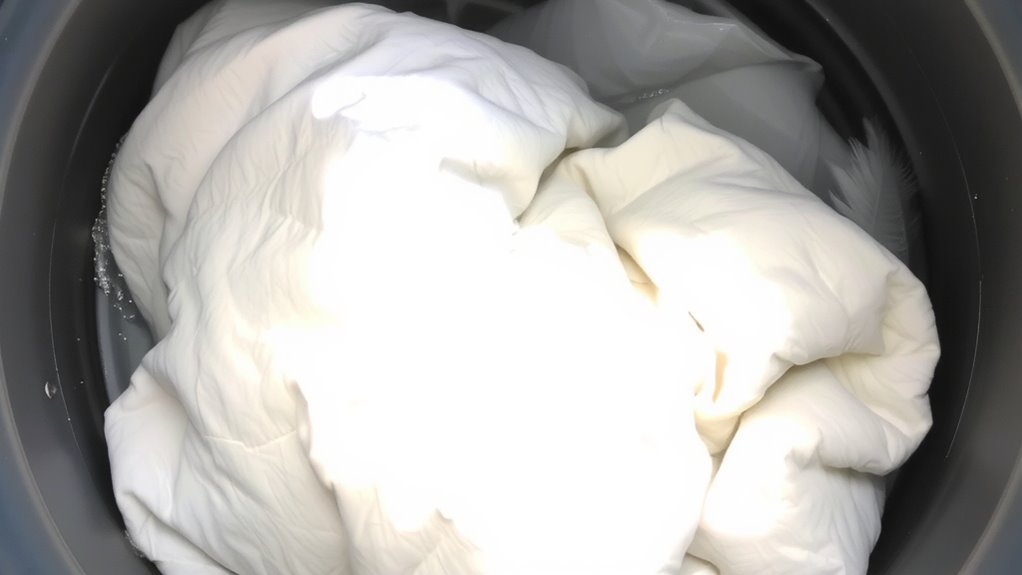
If your down duvet needs a full wash, choosing the right cycle and water temperature makes all the difference in protecting its delicate fibers and maintaining long-term performance. Always use cold water and the gentle cycle to prevent damage and preserve loft. Warm or hot water can weaken down clusters over time, reducing insulation. Pair this with proper detergent selection-use a mild, down-specific detergent to avoid residue. Good rinse efficiency guarantees no soap remains trapped, which could compromise breathability and comfort during sleep.
| Setting | Why It Matters | What to Do |
|---|---|---|
| Cold Water | Protects down structure | Set machine to cold |
| Gentle Cycle | Reduces fiber stress | Choose delicate setting |
| Low Spin | Aids rinse efficiency | Avoid high-speed extraction |
Dry With Tennis Balls to Prevent Clumps
Tossing your washed down duvet into the dryer is the next step, and adding a couple of clean tennis balls can make a big difference. These balls help break up wet clumps as they tumble, promoting even drying and supporting effective fluff maintenance. Proper drying techniques are essential-down can trap moisture, leading to mildew or flat spots if not thoroughly dried. The tennis balls gently press and separate the down clusters, reducing drying time and preserving loft. Use a low-heat setting to avoid damaging delicate feathers, and check the duvet frequently to guarantee consistent drying throughout. This method supports long-term durability and comfort. While some prefer wool dryer balls for a quieter option, tennis balls are widely available and effective. Make sure they’re clean and free of dirt or oils. Consistent fluff maintenance like this helps maintain breathability and thermal performance, contributing to more comfortable sleep over time.
Tumble Dry to Restore Fluffiness
While proper drying techniques play a key role in maintaining your down duvet’s shape and comfort, tumble drying on low heat helps restore its natural fluffiness without damaging the delicate fibers. You’ll want to use a large-capacity dryer to allow enough room for even airflow. Add clean tennis balls or dryer balls to help break up damp clumps and improve loft. Tumble timing is critical-plan for 2–3 hours, checking every 30 minutes to avoid overheating. Pause the cycle occasionally to manually fluff and redistribute the down. Drying safety means never using high heat, which can weaken fibers or pose fire risks. Guarantee the duvet is 100% dry before removing-any lingering moisture could lead to mildew. A fully dry duvet feels light, evenly soft, and retains its puff. Proper drying extends lifespan and supports consistent comfort, especially if you rely on breathability and temperature regulation for restful sleep.
Store Your Down Duvet Properly to Prevent Mildew
After cleaning and thoroughly drying your down duvet, proper storage becomes key to preserving its condition and preventing mildew. You’ll want to store it in a cool, dry place away from direct sunlight, which can weaken fibers over time. Use a breathable cotton storage bag instead of plastic-this guarantees proper ventilation and allows any residual moisture to escape, reducing the risk of mold. Avoid compressing the duvet too tightly, as down needs some loft to maintain its insulating properties. For long term storage, check on it every few months to air it out and shake it gently to redistribute the filling. Don’t place heavy items on top, since prolonged pressure can damage the stitching and fabric. Proper ventilation and occasional fluffing help maintain breathability and comfort. A well-stored down duvet supports restful sleep and may extend its life, contributing to consistent warmth and performance over time.
On a final note
Always check the care label before washing, as some down duvets need professional cleaning. Spot-treat stains gently, then wash in cold water on a gentle cycle to protect the feathers. Dry with tennis balls to break up clumps and restore fluffiness in the tumble dryer. Proper storage in a cool, dry place prevents mildew and extends lifespan. Following these steps helps maintain comfort and performance over time.