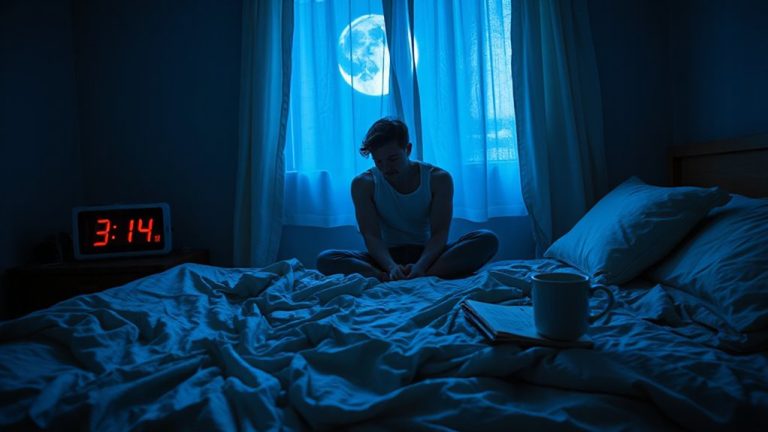
Using Chamomile in a Bath for Children With Sleep Anxiety
You can ease your child’s sleep anxiety with a chamomile bath by combining warm water and chamomile’s calming scent to relax their body and mind. Use 4–6 tea bags steeped in hot water, then pour into a 90–100°F bath. Soak for 10–15 minutes 30 minutes before bed to help signal it’s time to wind down. Choose fragrance-free, hypoallergenic products, especially if your child has sensitive skin or allergies. There’s more to contemplate when matching this method to your child’s routine.
Notable Insights
- Chamomile baths can help calm children with sleep anxiety by promoting relaxation through warmth and aroma.
- Steep chamomile tea or flowers before adding to bathwater to release soothing compounds effectively.
- Maintain bath temperature between 90–100°F to avoid overstimulation and support natural sleep onset.
- Use fragrance-free, hypoallergenic chamomile products and patch test to prevent skin irritation in sensitive children.
- Incorporate the bath into a consistent bedtime routine with quiet, dimly lit activities afterward to reinforce sleep signals.
How Chamomile Baths Ease Kids’ Sleep Anxiety
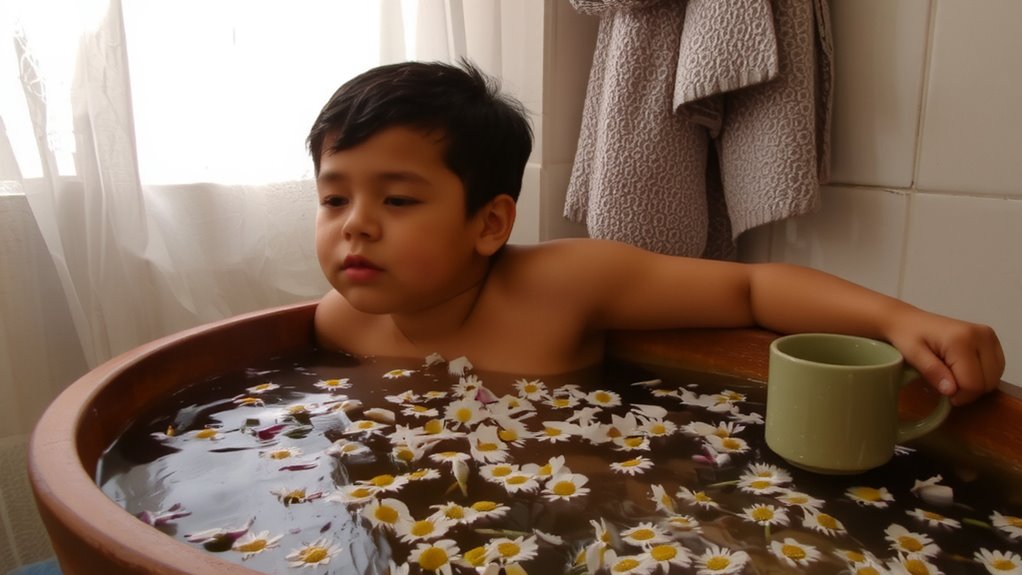
Sleep troubles in children often come with restlessness, racing thoughts, and difficulty unwinding-chamomile baths may help ease these symptoms gently. You might notice your child calms more easily when exposed to the aromatherapy benefits of chamomile’s natural scent, which supports a smoother shift into sleep. The warm water aids muscle relaxation, releasing built-up tension from the day. This combination encourages both physical comfort and mental quiet. Chamomile contains apigenin, a compound that gently interacts with brain receptors linked to sleep regulation. While not a medical treatment, it may serve as a helpful part of a consistent bedtime routine. You can try it safely in moderation, watching for any skin sensitivity. It won’t replace professional care for ongoing sleep disorders, but it offers a low-risk option worth considering. For added support, consider pairing chamomile baths with other best bath products for better sleep designed to enhance relaxation and sleep quality.
Make a Chamomile Bath for Better Sleep
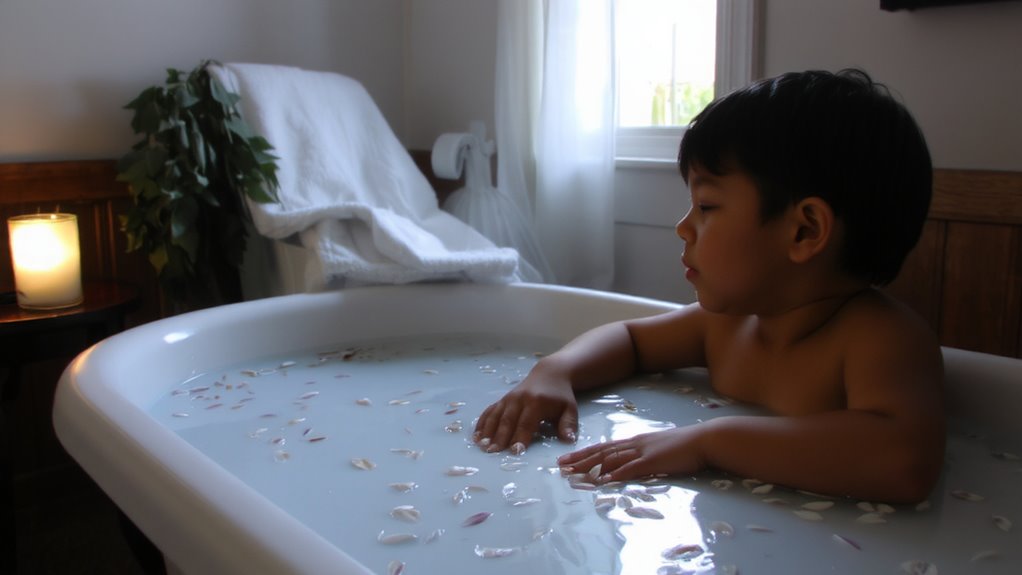
While you’re preparing your child’s evening routine, turning a regular bath into a chamomile-infused soak can be a simple, low-effort step toward better sleep. Start by creating a strong herbal infusion-steep 4 to 6 chamomile tea bags or 1/2 cup of loose flowers in 2 cups of hot water for 15 minutes, then pour it into the tub. This releases calming compounds gently. Aim for a warm bath temperature, around 90–100°F (32–38°C), to avoid overstimulation. Warm water helps relax muscles, while the chamomile’s natural properties support a calm mind. Let your child soak for 10–15 minutes, ideally 30–60 minutes before bed, to align with natural sleep signals. The combination of consistent bath temperature and herbal infusion may help ease mild sleep anxiety. Some families report improved sleep onset, though results can vary. Consider trying it for a few nights to assess its effect. For enhanced relaxation, consider pairing the chamomile bath with other sleep-inducing bath products.
Pick Gentle Chamomile Products for Sensitive Skin
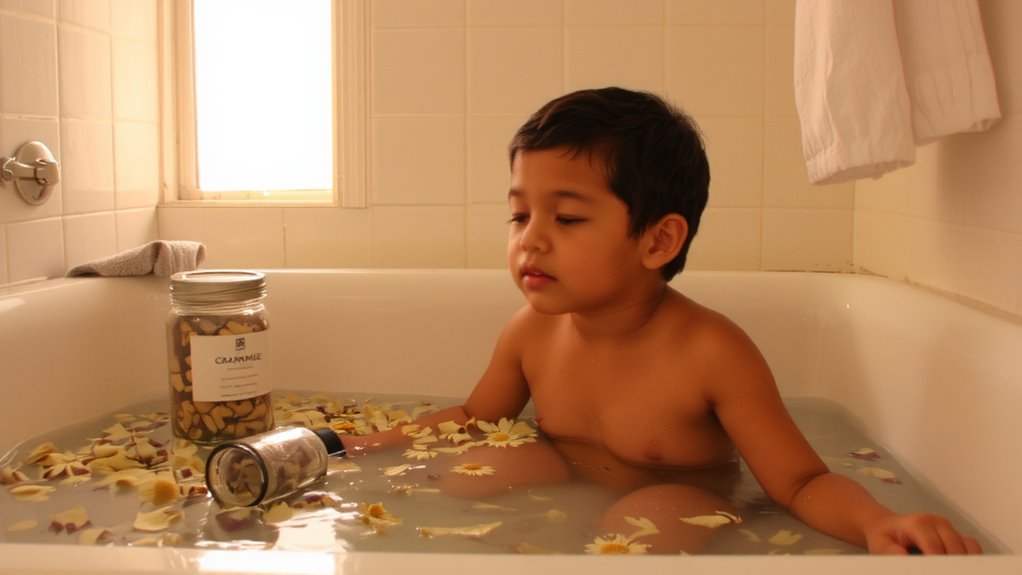
When choosing chamomile products for your child’s bath, especially if they have sensitive skin, it’s best to look for those made with gentle, fragrance-free ingredients. Product selection matters because children with ingredient sensitivity may react to synthetic fragrances, dyes, or sulfates. Opt for chamomile bath products labeled hypoallergenic and dermatologist-tested, as these are less likely to irritate delicate skin. Check labels carefully-natural chamomile extract should be near the top, indicating a meaningful concentration. Avoid anything with alcohol or added perfumes, which can dry or inflame skin. Brands that offer samples or money-back guarantees let you test a product’s performance without risk. Cotton-based packaging, like muslin bags for loose chamomile, is another safe option, letting you control the strength. Always do a patch test before full use to assess tolerance. Simple, clean formulations support both skin health and calming benefits, making the bath experience soothing and safe.
Build a Calm Bedtime With Chamomile
You’ve chosen a gentle chamomile product that’s safe for your child’s sensitive skin, and now you can use it as part of a consistent, calming bedtime routine. Add the chamomile to a warm bath about 30 minutes before bed, letting its soothing aroma help signal it’s time to wind down. The warmth of the water, combined with chamomile’s natural properties, may ease tension and support relaxation. After the bath, move into quiet time with dim lights and soft pajamas. Read a few calming bedtime stories, keeping voices low and motions gentle. This sequence becomes a predictable part of your child’s sleep routines, reinforcing cues for rest. Over time, the consistent use of chamomile in this way may improve sleep onset and reduce nighttime anxiety. Always observe how your child responds, adjusting timing or elements as needed.
Is Chamomile Safe for Young Kids? What to Watch For?
Could chamomile be a safe option for your child’s bedtime routine? For most young kids, chamomile is gentle and well-tolerated, especially in bath form, since it’s absorbed through the skin rather than ingested. Still, you’ll want to watch for allergic reactions, particularly if your child has sensitivities to plants like ragweed or chrysanthemums-signs like rash, redness, or itching mean it’s best to stop use. When using chamomile baths, consider dosage safety by sticking to manufacturer-recommended amounts of dried herb or extract. Too much can cause irritation or upset, even topically. Always do a patch test first on a small area of skin to check tolerance. While chamomile isn’t a cure for sleep disorders, it may help ease sleep anxiety when part of a consistent routine. Talk to your pediatrician if your child has medical conditions or takes other sleep aids.
On a final note
You can try a chamomile bath to help ease your child’s sleep anxiety, as its mild compounds may support relaxation. Make sure the product is fragrance-free and designed for sensitive skin. Use it as part of a consistent, calming routine. Though chamomile is generally safe, do a patch test first and watch for irritation. If sleep issues continue, consult a pediatrician to explore underlying causes and balanced solutions.