The Role of Sleep Position in Managing Lower Back Pain: What the Research Shows
Your sleep position plays a key role in managing lower back pain by influencing spinal alignment and pressure points. Sleeping on your back with a pillow under your knees or on your side with knees bent and a pillow between them helps maintain natural spine curvature. Avoid stomach sleeping, as it increases spinal strain. A medium-firm mattress and proper pillow support improve comfort and alignment, easing pain over time-discover how small adjustments can lead to better outcomes tonight.
Notable Insights
- Back sleeping with a pillow under the knees helps maintain spinal alignment and reduces lower back pressure.
- Side sleeping with bent knees and a pillow between the legs supports hip and spine alignment.
- Stomach sleeping is linked to increased spinal strain and should generally be avoided for back pain.
- Proper pillow placement and mattress firmness contribute to improved sleep quality and pain reduction.
- Persistent nighttime back pain despite optimal positioning may indicate underlying conditions requiring medical evaluation.
Best Sleep Positions for Lower Back Pain

The best sleep positions for lower back pain help maintain a neutral spine and reduce pressure on your lower back. If you sleep on your back, placing a pillow under your knees supports spinal alignment, improving sleep quality. This position distributes weight evenly, especially with a mattress of medium to medium-firm firmness, which research often recommends for lower back support. Side sleepers may benefit from bending the knees slightly and keeping legs aligned, though this position requires attention to hip and spine alignment. Stomach sleeping usually increases strain and is less advised. Your mattress firmness plays a key role-too soft, and your spine sags; too firm, and pressure builds. A quality mattress with balanced support and cushioning can make a noticeable difference in comfort and pain reduction over time. Trial periods help assess real-world performance. For those seeking targeted relief, choosing one of the best twin XL mattresses can enhance spinal support and overall sleep comfort.
Use Pillows to Align Your Spine and Reduce Pain
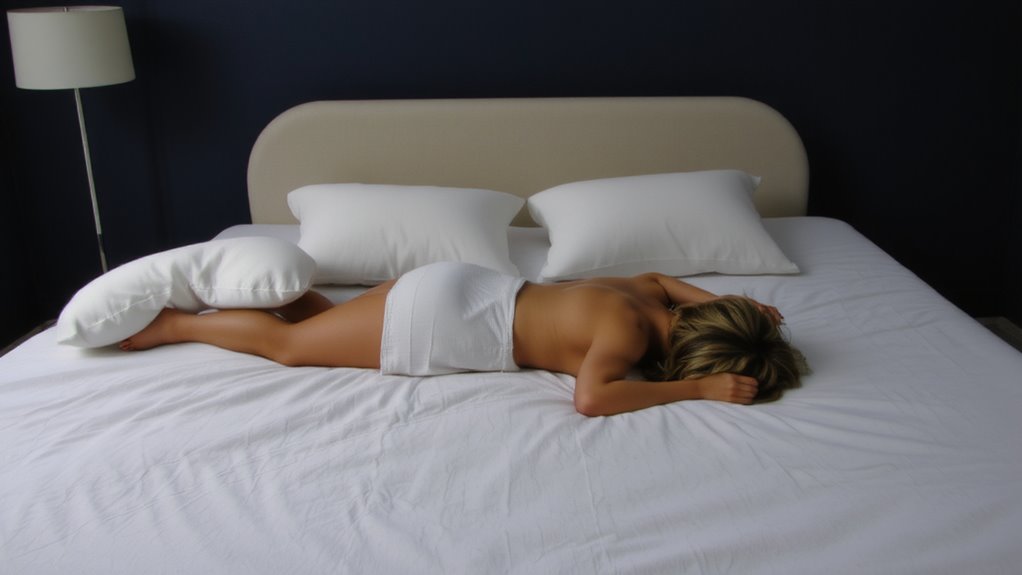
Pillows aren’t just for your head-they’re tools for better spine alignment and less lower back pain. Proper pillow placement supports natural curves in your spine while you sleep, reducing strain. Whether you sleep on your side or back, strategic use of pillows maintains alignment and improves comfort.
| Sleep Position | Pillow Placement |
|---|---|
| Back | Under knees |
| Side | Between knees |
| Side (tall) | Between knees + arm |
| Back + apnea | Under knees + behind neck |
| Side + pain | Between knees + chest hug |
These placements enhance spinal alignment by balancing hip and shoulder levels. Memory foam or contoured pillows hold shape well. Try options with removable covers for easy cleaning. Many come with trial periods-test for 30 days to assess comfort. Proper support tonight can mean less pain tomorrow. Side sleepers may benefit most from knee pillows designed for alignment, which help maintain proper hip positioning throughout the night.
Worst Sleep Positions That Worsen Lower Back Pain

Ever wake up with a stiff, aching lower back and wonder if your sleep position might be to blame? Sleeping flat on your stomach increases spinal compression effects, flattening the spine’s natural curve and straining lower muscles. This position forces your neck to twist, adding stress that can worsen pain over time. Even seemingly comfortable fetal positioning risks arise when curled too tightly-this over-flexion compresses vertebrae and restricts circulation. Though it may feel cozy, prolonged tight curling can increase morning discomfort. Sleeping without support in these positions offers no alignment benefit and often leads to longer recovery times. Adjusting isn’t always easy, but switching to a better-aligned posture reduces strain. Consider trial periods with new positions or aids backed by warranties, giving you time to assess real improvements in comfort and mobility without pressure.
How Your Sleep Position Affects Lower Back Pain
While your body repairs itself during sleep, the position you spend those hours in can either support or sabotage your lower back’s health. If your spine isn’t aligned, you might unknowingly increase nerve compression, which can lead to pain or numbness. Side sleepers often reduce strain if they keep knees slightly bent, while back sleepers benefit from a pillow under the knees to maintain natural curvature. Stomach sleeping usually worsens alignment and heightens pressure. Poor positioning can disrupt sleep quality, making it harder to stay asleep or reach deep restorative stages. Over time, this affects recovery and daily function. Using supportive mattresses or specialized pillows may help maintain alignment. Some sleep aids are designed specifically to reduce pressure points. It’s worth trying different setups, since individual anatomy varies. Check return policies when testing new products. Choosing the right mattress can significantly improve spinal support, and research indicates that best mattresses for back pain are engineered to balance comfort and alignment.
Proven Tips for Pain-Free Sleep With Lower Back Pain
A well-aligned spine could be the key to waking up without stiffness or discomfort. Choosing the right mattress firmness matters-medium-firm options often support spinal alignment while cushioning pressure points. Too soft, and your spine sags; too firm, and you may feel strain. Try models with trial periods so you can test comfort over weeks. Pair this with consistent sleep hygiene: go to bed and wake up at the same time daily, even on weekends. Limit screens before bed and keep your room cool and dark. Using a supportive pillow under your knees (if you sleep on your back) or between your legs (side sleeping) helps maintain alignment. These small adjustments enhance sleep quality without drastic changes. Focus on what you can control-your setup and routine-so your body gets the rest it needs.
When to See a Doctor for Lower Back Pain at Night
You’ve made adjustments to your sleep setup and routine, from choosing a supportive mattress to aligning your spine with well-placed pillows, but sometimes nighttime back pain still lingers or gets worse. If discomfort wakes you regularly or makes it hard to fall asleep, it might be linked to underlying sleep disorders or spinal issues. Sharp, radiating pain, numbness, or weakness in your legs-or pain that persists for more than a few weeks-warrants a medical evaluation. Nighttime pain that doesn’t respond to position changes or worsens when lying down could signal something beyond strain. A doctor can assess for conditions like sciatica, spinal stenosis, or sleep disorders such as insomnia or sleep apnea, which sometimes connect to chronic pain. Early evaluation helps identify treatable causes and improves long-term outcomes. Don’t wait months-timely care supports better sleep and recovery.
On a final note
You can reduce lower back pain by choosing a sleep position that supports spinal alignment, like lying on your back with a pillow under your knees or on your side with a pillow between your legs. Avoid stomach sleeping, as it strains the lower back. Use supportive mattresses and pillows designed for comfort and alignment. If pain continues despite trying these changes, consider consulting a doctor to rule out underlying conditions.