Sleep Quality and Bone Mineral Density: What Studies Show
You’re losing bone faster than you think, and poor sleep is likely speeding it up. Long-term studies show that skimping on sleep or having low-quality rest disrupts hormones like melatonin and cortisol, which throws off bone repair. If you regularly get less than 7 hours, your body may resorb bone faster than it rebuilds it. Conditions like insomnia or sleep apnea make this worse by fragmenting deep sleep. Fixing sleep patterns helps stabilize bone metabolism over time-your next steps could slow decline.
Notable Insights
- Chronic sleep duration below seven hours is linked to lower bone mineral density in longitudinal studies.
- Poor sleep quality disrupts circadian rhythms, impairing nighttime bone remodeling and repair processes.
- Low melatonin levels from fragmented sleep reduce bone formation and increase resorption over time.
- Long-term insomnia and sleep apnea correlate with accelerated bone loss in older adults and postmenopausal women.
- Consistent, high-quality sleep helps maintain bone density by stabilizing hormones like cortisol and growth hormone.
How Chronic Sleep Loss Damages Bone Health

While you might not immediately link tossing and turning at night to your skeleton, long-term sleep problems can quietly weaken your bones over time. When your sleep duration regularly falls below seven hours, your body struggles to maintain bone repair cycles. This shortchange often triggers a hormonal imbalance, reducing growth hormone and melatonin-both essential for bone strength. Over time, low melatonin affects bone formation, while disrupted cortisol levels increase resorption. Though sleep aids may help some regain rest, they shouldn’t replace addressing root causes like poor sleep hygiene or untreated sleep apnea. Opting for physician-guided treatment, whether behavioral therapy or diagnostic testing, supports better long-term outcomes. Consider tracking sleep patterns for two weeks before making decisions. Devices with sleep-stage analysis and clinical evaluations offer clarity. Warranties on medical devices typically cover malfunctions, but effectiveness depends on individual adherence and accurate diagnosis.
The Biology Of Sleep And Bone Remodeling
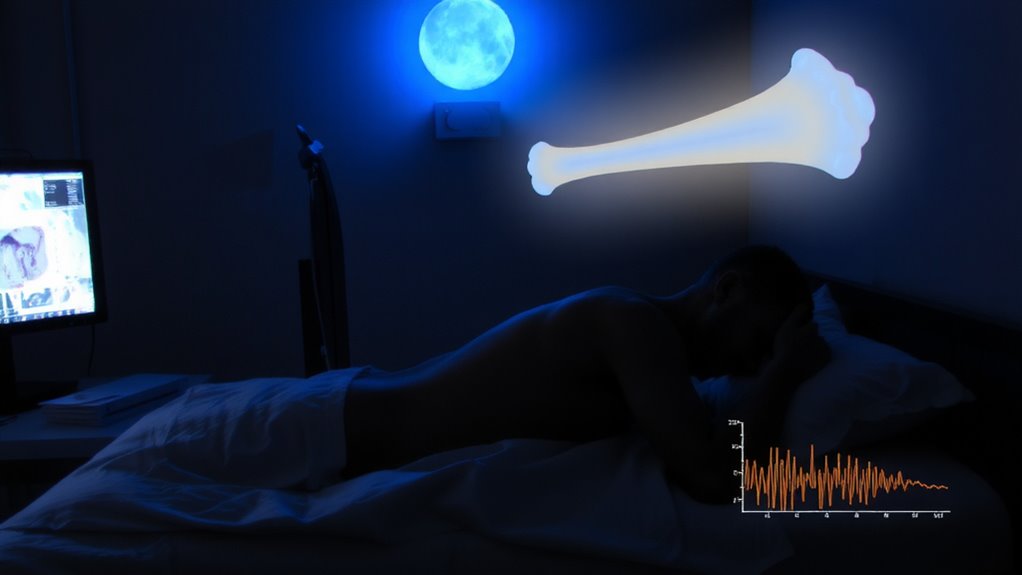
Because your body repairs and rebuilds bone tissue during sleep, the quality and timing of your rest directly influence how well your skeleton stays strong. Your bones follow Circadian rhythms, with most remodeling happening at night when growth hormone and other repair processes peak. These rhythms depend on consistent sleep patterns to function properly. During deep sleep, your body also maintains hormonal balance, regulating cortisol, melatonin, and parathyroid hormone-all involved in bone formation and breakdown. Disrupting your sleep schedule can throw off these signals, weakening bone density over time. To support this natural process, aim for 7–9 hours nightly and keep a regular sleep-wake cycle, even on weekends. While sleep aids might help short-term, long-term solutions should focus on habits that align with your body’s internal clock. Poor timing or fragmented rest may reduce bone’s ability to renew itself, even if total sleep seems adequate.
Why Insomnia And Sleep Apnea Harm Bones

If you’re struggling with insomnia or sleep apnea, your bones might not be getting the repair time they need, since both conditions disrupt the deep, restorative sleep phases when bone remodeling peaks. Chronic sleep disruption leads to hormonal imbalance, reducing growth hormone and melatonin-both essential for bone repair. At the same time, your body faces increased oxidative stress, which damages bone cells and slows regeneration. These changes weaken your skeletal strength over time. Consider how your sleep patterns may be silently affecting your bones.
| Condition | Effect on Sleep | Impact on Bone Health |
|---|---|---|
| Insomnia | Frequent wakefulness | Reduced repair due to fragmented sleep |
| Sleep Apfce | Breathing interruptions | Lower oxygen, higher oxidative stress |
| Poor Sleep | Shallow sleep cycles | Hormonal imbalance impairing remodeling |
| Long Nights | Delayed REM entry | Less time in bone-repair phases |
| Night Waking | Inconsistent duration | Elevated cortisol harming bone density |
What Long-Term Studies Reveal About Sleep And Density
You’ve likely noticed how restless nights leave you feeling worn down, but over time, those same sleep issues can do more than drain your energy-they can take a measurable toll on your bone health. Long-term studies show people with chronic poor sleep often have lower bone mineral density. Researchers link this to hormonal fluctuations that disrupt bone remodeling-especially changes in melatonin and cortisol. Over years, disrupted sleep patterns may also accelerate cellular aging, weakening bone structure. These effects appear more pronounced in older adults and postmenopausal women, though they’re detectable across age groups. Sleep duration and quality both matter, with fragmented or short sleep tied to greater bone loss. Studies tracking participants for over a decade suggest consistency matters as much as total hours. While findings don’t prove causation, they highlight sleep as a modifiable factor worth addressing through lifestyle or, when necessary, guided treatment.
Can Better Sleep Slow Bone Loss?
How much could your nightly rest really affect your bones? Emerging evidence suggests that both sleep duration and quality play roles in slowing bone loss over time. Poor or inconsistent sleep may increase bone turnover, tipping the balance toward more breakdown than formation. Over years, this can weaken bone structure. Longitudinal studies show people who maintain regular, restful sleep patterns often have slower declines in bone mineral density.
| Sleep Factor | Bone Health Impact |
|---|---|
| Short sleep duration (<6 hrs) | Linked to higher bone turnover |
| Consistent, quality sleep | May help stabilize bone metabolism |
Improving sleep-through routine, environment, or addressing sleep disorders-could support skeletal health. Consider discussing sleep aids or testing with a provider if disrupted rest persists.
On a final note
You can help protect your bone health by prioritizing sleep. Chronic poor sleep may weaken bones over time, as shown in long-term studies. If you have insomnia or sleep apnea, treating it could support better bone density. Simple changes-like a consistent bedtime or seeing a doctor for sleep disorders-might make a difference. Some find sleep aids useful, but discuss risks and benefits with your provider.