Why Delayed Sleep Phase Disorder Is More Common in Adolescents and Young Adults
Your body naturally shifts to a later sleep schedule during adolescence, making it hard to fall asleep early no matter how tired you feel. This delay in melatonin release, often starting at 10 or 11 p.m., aligns with Delayed Sleep Phase Disorder. School demands, screen use, and social habits worsen the mismatch. It’s not laziness-it’s biology. Treatments like light therapy or timed melatonin may help reset your rhythm, and understanding your options is the first step toward improvement. There’s more to contemplate when finding what works for you.
Notable Insights
- Adolescents naturally experience a delayed circadian rhythm, shifting sleep onset later.
- Melatonin release begins later at night, often after 10 p.m., delaying sleep onset.
- Biological changes during puberty mimic and exacerbate Delayed Sleep Phase Disorder.
- Screen use before bed suppresses melatonin and increases mental arousal, worsening sleep delay.
- Early school start times conflict with delayed sleep-wake cycles, reinforcing the disorder.
What Is Delayed Sleep Phase Disorder (DSPD)?
While your body typically follows a natural sleep-wake cycle aligned with daylight, delayed sleep phase disorder (DSPD) shifts that rhythm much later-sometimes by several hours. You might not feel sleepy until long after midnight, even if you want to sleep earlier. This isn’t just staying up late-it’s a true circadian misalignment, where your internal clock runs out of sync with social or work demands. Because of this, you may struggle to wake up on time, feel groggy during the day, or develop chronic insomnia from repeated sleep disruption. DSPD isn’t laziness-it’s a biological shift in when you’re ready to sleep and wake. Though it can resemble poor sleep habits, the timing issue persists even when you try to adjust. Recognizing circadian misalignment helps clarify whether sleep aids or schedule changes might help, or if professional treatment like light therapy is a better option.
Is DSPD Normal for Teens?
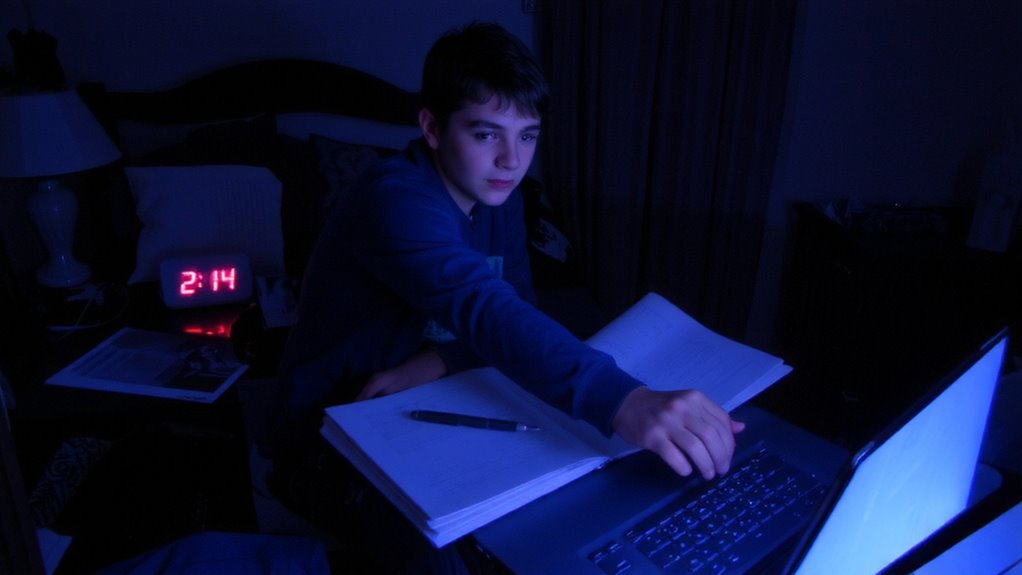
You’re not alone if you’re a teen or young adult who finds it nearly impossible to fall asleep before midnight, even when you’re tired. Many teens experience a natural shift in their sleep schedule, making it hard to fall asleep early. While this doesn’t always mean you have Delayed Sleep Phase Disorder (DSPD), it can feel similar. DSPD goes beyond just staying up late-it involves chronic insomnia, where your sleep delay causes real problems with school, work, or daily life. Often, it leads to social jetlag, the fatigue from trying to follow a schedule that clashes with your body’s rhythm. Unlike temporary sleep issues, DSPD persists for months, even with effort. If your sleep problem keeps recurring, tracking your pattern or discussing sleep aids and light therapy with a doctor might help. It’s worth checking if what seems normal is actually a condition needing support.
Why Teens’ Bodies Release Melatonin Too Late?
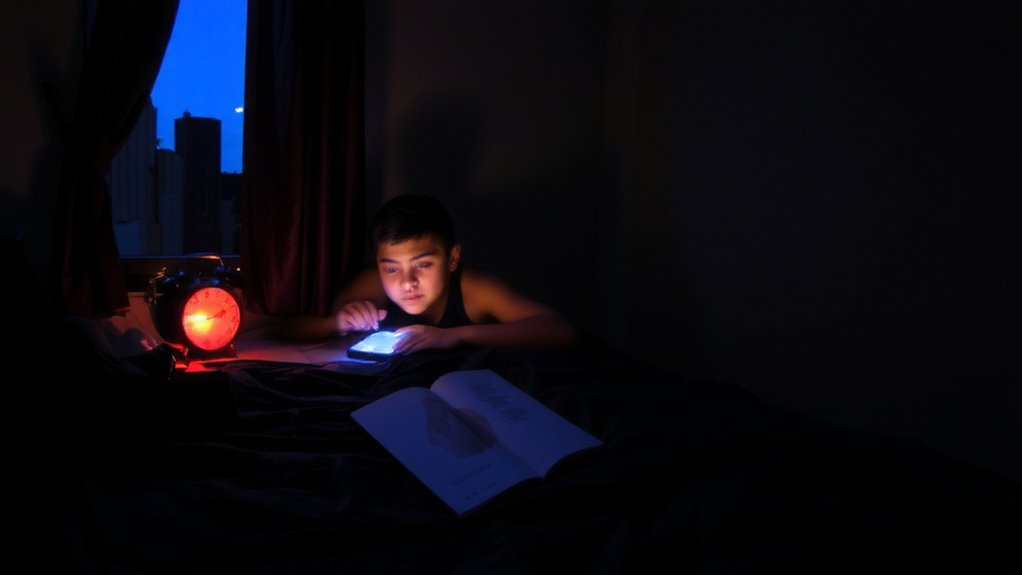
What if your body’s internal clock is simply out of sync with your daily schedule? During adolescence, your circadian rhythm naturally shifts later, delaying signals for sleep. This means your brain starts releasing melatonin-the hormone that helps you sleep-much later at night, often around 10 or 11 p.m., instead of earlier. This shift isn’t laziness; it’s a normal part of development, though it can lead to a hormone imbalance that affects sleep timing. With melatonin release out of step with school or work demands, falling asleep early becomes difficult. Recognizing this biological change helps explain why teens struggle with early mornings. Adjusting sleep habits, considering light exposure in the morning, or discussing timed melatonin supplements with a doctor may help realign your rhythm-offering practical steps to manage sleep patterns effectively without relying on opinion-based advice.
How Late-Night Screens Make DSPD Worse
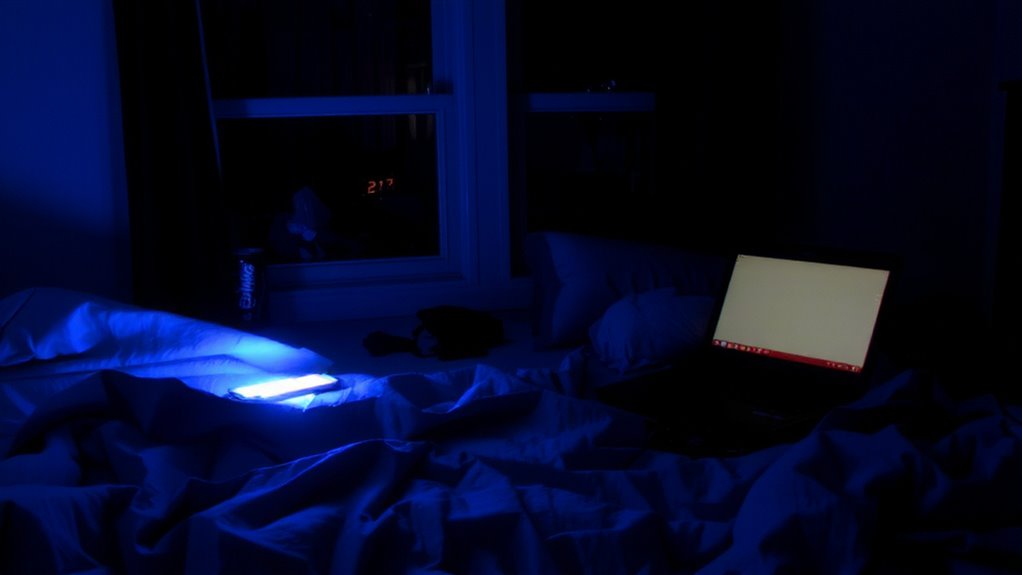
The natural delay in melatonin release during adolescence already makes falling asleep early a biological challenge, and adding late-night screen use can deepen the problem. Blue light from phones and tablets suppresses melatonin further, pushing sleep onset even later. Scrolling through social media often keeps your mind engaged, making it harder to wind down. Below is how common habits affect your sleep:
| Behavior | Impact on Sleep |
|---|---|
| Using screens 1 hour before bed | Delays melatonin release |
| Nighttime social media use | Increases mental arousal |
| Reading on a tablet | Exposes you to blue light |
| Binge-watching shows | Reduces total sleep time |
| Responding to messages late | Disrupts sleep routine |
Limiting screen exposure and switching to dim, warm lighting in the evening can support healthier sleep patterns. Some find blue light filters or apps that adjust screen color helpful, though reducing overall use is most effective. Wearing blue light blocking glasses in the evening may also help minimize melatonin suppression.
Why Early School Start Times Are a Problem?
While your body’s internal clock shifts later during adolescence, most schools still begin early in the morning, creating a mismatch that can worsen sleep deprivation. You’re likely already facing social pressure to stay up late and connect with peers, which pushes bedtime even later. At the same time, academic stress makes it tempting to sacrifice sleep for studying, even though that hurts focus and memory long-term. Waking up early forces you to cut sleep short, leading to chronic tiredness and poor performance. This cycle increases the risk of developing or worsening Delayed Sleep Phase Disorder. Rather than turning to sleep aids too soon, consider how school timing affects your natural rhythm. Adjustments to daily routines or school policies could better align with your biological needs. Goal is lasting improvement, not quick fixes.
How to Reset Your Sleep Schedule
If you’ve been going to bed later and waking up later without realizing how much it’s affecting your daily rhythm, gradually shifting your schedule can help re synchronize with natural sleep patterns. Start by adjusting your bedtime in 15-minute increments earlier each night until you reach your target. Consistency matters-even on weekends. Maximize morning light exposure to signal your body it’s time to be awake; natural sunlight works best. Limit screen time and bright lights in the evening to support melatonin release. Good sleep hygiene includes a quiet, cool bedroom and a calming pre-sleep routine like reading or light stretching. Avoid caffeine after noon and heavy meals close to bedtime. These steps can improve sleep quality over time, making it easier to fall asleep and wake up at desired times.
On a final note
You’re more prone to delayed sleep phase disorder during adolescence because your body’s melatonin release naturally shifts later. Late-night screen use worsens this shift, while early school start times make catching up on sleep difficult. Resetting your schedule with consistent wake times, morning light exposure, and reduced evening screen time can help. If sleep problems persist, consult a specialist to explore options-some treatments include light therapy or melatonin supplements under medical guidance.