Engaging Deep Gluteal Muscles With Abducted Leg Pillow Configuration
You’re activating your deep gluteal muscles-key for hip stability-by placing a firm pillow between your legs just above the knees, maintaining gentle abduction. This position supports spinal alignment, boosts gluteus medius and minimus engagement, and reduces compensatory movement. Choose a 12–16 inch pillow with a washable, non-slip cover for consistency. Try trial-period brands to test comfort. Proper setup enhances muscle isolation during rest or exercise, especially if you sit often. Small adjustments improve long-term form and function. There’s more to discover about refining your routine for lasting results.
Notable Insights
- Place a firm pillow between your legs above the knees to promote hip abduction and target deep gluteal muscles effectively.
- Maintain neutral spine alignment while performing exercises to ensure optimal gluteus medius and minimus activation.
- Use slow, controlled movements during lateral leg lifts and clamshells with the pillow to enhance muscle engagement.
- Choose a pillow 12–16 inches wide to support proper hip positioning without causing strain or misalignment.
- Avoid common errors like hip hiking or ankle squeezing to ensure isolated, efficient deep gluteal muscle recruitment.
Why the Deep Glutes Matter for Strength and Shape
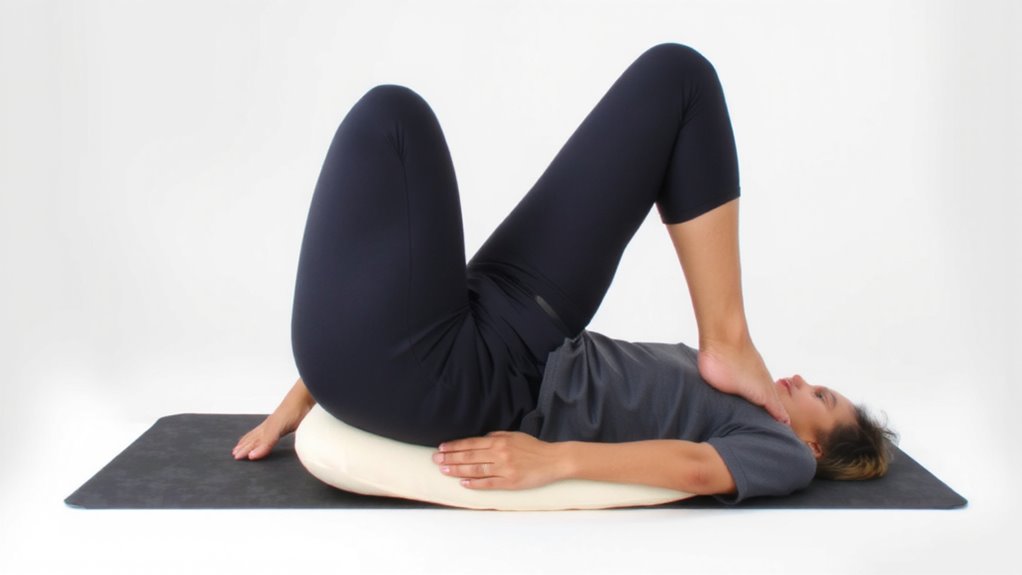
While you might already focus on your glutes during workouts, paying attention to the deep gluteal muscles-like the gluteus medius and minimus-can make a real difference in both strength and lower body shape. These muscles support hip stability, improve movement control, and contribute to balanced leg development. Strengthening them doesn’t just bring strength benefits-it also enhances glute aesthetics by adding fullness and definition to the hips and sides. Without adequate activation, larger muscles like the gluteus maximus may compensate, leading to imbalances or inefficient movement patterns. Targeting deep glutes guarantees more complete muscle engagement, which supports functional performance in daily activities and exercise. You’ll notice better posture, reduced strain on joints, and a more sculpted look over time. Consistent, mindful training using proper form and positioning helps achieve long-term results. While progress varies, most people see improvements within weeks of focused effort.
How the Pillow Boosts Glute Activation
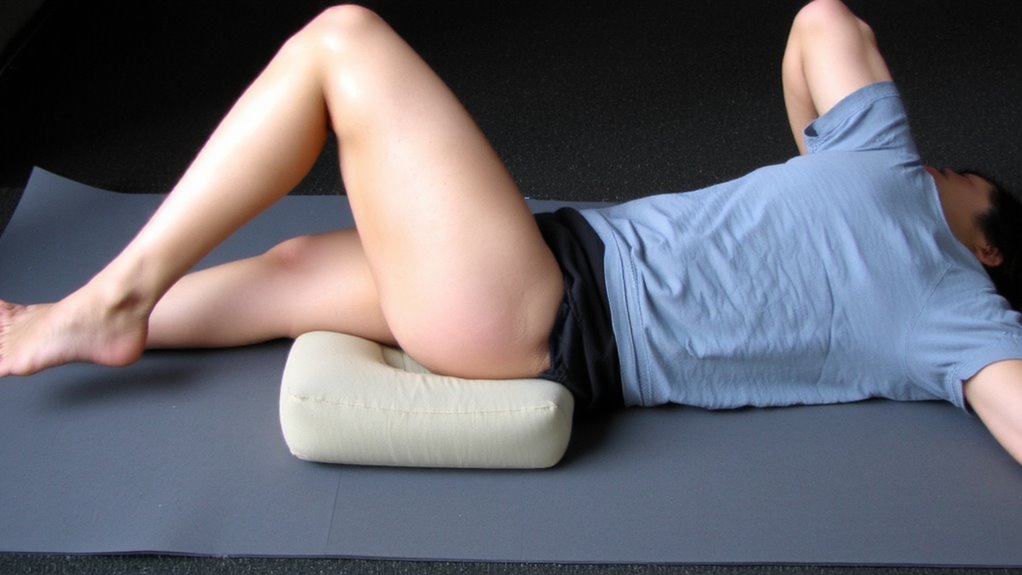
Because proper alignment plays a key role in muscle activation, placing a pillow between your legs during certain exercises or while sleeping can help target the deep gluteal muscles more effectively. The pillow creates gentle hip abduction, which promotes better glute isolation by keeping your pelvis stable and reducing compensatory movements. This position encourages consistent neural recruitment, meaning your gluteal muscles communicate more efficiently with your nervous system during activation. Over time, improved neural patterns support stronger, more responsive muscle engagement. You’ll likely notice the difference during movement or even at rest, especially if you spend long hours sitting. Using a pillow nightly may also support hip and spinal alignment, potentially easing discomfort tied to poor sleep posture. It’s a low-risk addition to your routine, often with a trial period offered by makers, so testing its effect on your comfort and muscle function is practical. Results vary, but many find the support beneficial.
Choose the Right Pillow for Hip Abduction
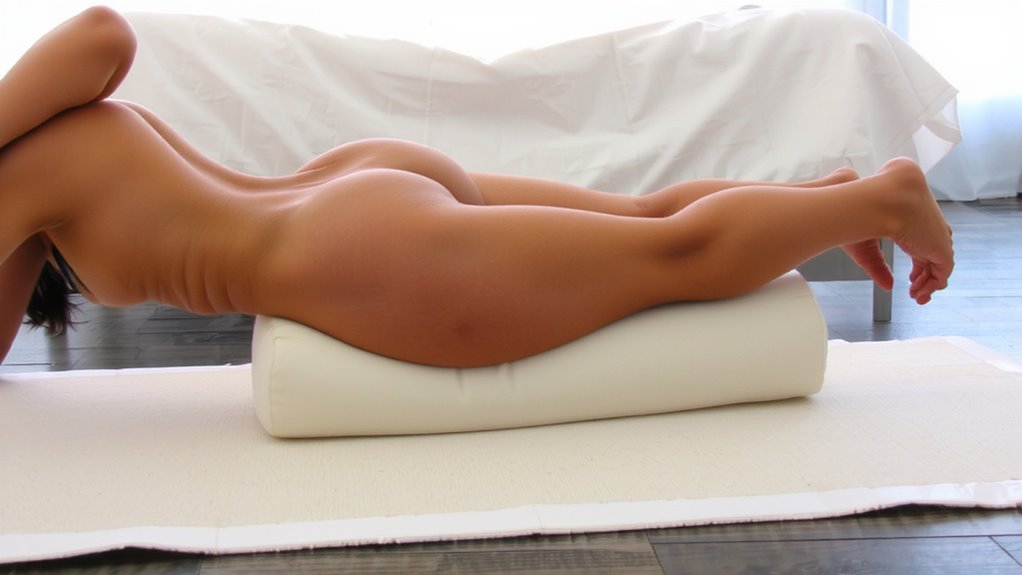
The right pillow can make a real difference when it comes to hip abduction and glute activation during sleep or exercise. You’ll want to take into account both pillow firmness and pillow width to support proper alignment. A firmer pillow maintains its shape under your legs, offering consistent support through the night, while a softer one may compress too much, reducing effectiveness. Pillow width matters because it must fit comfortably between your legs without forcing your hips too far apart or letting them collapse together. Look for a pillow 12 to 16 inches wide, depending on your body size. Many quality options come with trial periods, so you can test firmness and width over time. Check if the cover is removable and hypoallergenic, especially if you have sensitivities. Choosing based on construction and performance helps guarantee better comfort and muscle engagement without guesswork. Side sleepers benefit significantly from supportive pillows designed for alignment, and many top-rated options are specifically engineered for best pillows for side sleepers.
Set Up the Hips-Open Pillow Position
Now that you’ve picked a supportive pillow with the right firmness and width, it’s time to position it effectively for hip abduction. Lie on your side and place the pillow between your legs, just above the knees. This helps maintain proper hip alignment by preventing the top leg from pulling forward or collapsing down. Keep your spine stacked-ears, shoulders, and hips in a straight line-to support neutral posture throughout the night. Proper placement encourages muscle isolation in the deep gluteal muscles by gently activating them during rest. Make sure the pillow isn’t too thick or too thin; you want your hips slightly apart but not strained. Test different positions for comfort and adjust as needed. A good pillow will hold its shape, support alignment, and improve rest over time-especially if you’re dealing with stiffness or sleep discomfort. Try it for several nights to assess real benefits. For side sleepers with chronic hip pain, choosing one of the best pillows for side sleepers can significantly enhance spinal alignment and pressure relief.
Top Pillow Exercises for Deep Glute Engagement
While lying on your side with the pillow positioned just above your knees, you can begin simple exercises to activate the deep gluteal muscles without straining your joints. Try the lateral leg lift: slowly raise your top leg while keeping it pressed into the pillow, then lower it with control-this enhances glute isolation and targets the gluteus medius effectively. Perform three sets of 12 reps per side, focusing on smooth motion. Another option is the clamshell; keep your feet together and lift your knee against the pillow’s resistance, improving muscle symmetry over time. These movements work best when done consistently, using a firm yet compressible pillow that maintains hip alignment. You’ll notice improved stability and balance with regular use. Choose a washable, durable model with a non-slip cover to guarantee consistent positioning. There’s no need for intense effort-gentle, controlled actions yield steady progress.
Avoid These Mistakes in Pillow Squeezes
Why do some people not feel much benefit from pillow squeezes? You might be making common errors that reduce effectiveness. Improper alignment is a key issue-your hips and spine should stay neutral, not tilt or rotate. If your knees rise too high or drop too low, the deep gluteal muscles aren’t properly engaged. Avoid squeezing the pillow with your ankles instead of your hips; that shifts effort away from the target muscles. Also, using a pillow that’s too soft or too thick can hinder proper form. Choose one with firm, responsive support to maintain position. Don’t hold your breath-breathe steadily to support muscle activation. Move slowly, focusing on control. These adjustments improve performance and help you feel the right muscle engagement. With consistent form and the right pillow, you’ll get more from each squeeze. Try minor tweaks and monitor changes over a week.
Who Should Use the Pillow Technique
You’ve likely tried pillow squeezes to target the deep gluteal muscles, but if alignment, breathing, or equipment choice threw off your form, the results may have felt underwhelming. You might benefit from this technique if you sit often or have low back discomfort, as it supports posture enhancement when done correctly. The method works well for those integrating movement therapy into daily routines, especially with Pilates integration to improve control and muscle engagement. It’s also helpful if you’re rehabbing a hip issue or aiming to stabilize your pelvis during sleep or rest. Use a firm yet compressible pillow to maintain thigh alignment without strain. While not a sleep aid per se, proper positioning may reduce nighttime discomfort. Try it for a few nights, adjusting placement until you feel subtle glute activation without tension. Most brands offer a 30-day trial, so test it risk-free.
On a final note
You’ll want a firm, contoured pillow that holds its shape during hip abduction exercises. This setup supports proper alignment and increases deep glute engagement without straining joints. Try it for several sessions to assess comfort and activation-many find it boosts mind-muscle connection. Check warranty terms before buying, as foam quality varies. Used right, this tool can enhance strength training, but stop if discomfort occurs.