Best Sleep Aids for Airplane Travel That Actually Work
Take one Unisom SleepTabs or ZzzQuil ULTRA 30 minutes before flight to fall asleep faster, both using doxylamine to ease sleep onset without habit formation. Pair with a SARISUN neck pillow and eye mask to support your head and block light. For a drug-free option, try melatonin-based supplements like Traveler’s Sleep Aid 5-in-1 or fast-dissolving Dream Bites. Consider how each option affects alertness and space, since compact, non-inflatable designs save room and work instantly-there’s more to weigh based on your travel rhythm.
We are supported by our audience. When you purchase through links on our site, we may earn an affiliate commission, at no extra cost for you. Learn more. Last update on 19th July 2026 / Images from Amazon Product Advertising API.
Notable Insights
- Oral sleep aids like Unisom and ZzzQuil with doxylamine succinate help users fall asleep faster and sleep longer on flights.
- Melatonin-based supplements such as Good Day Chocolate Dream Bites support natural sleep onset and circadian rhythm adjustment during travel.
- SARISUN’s 360° memory foam neck pillow reduces head bobbing and provides stable, comfortable support without chin pressure.
- Inflatable and compact neck pillows offer customizable firmness and portability, fitting easily into carry-ons.
- Light-blocking eye masks, especially those with contoured 3D designs, enhance sleep by ensuring total darkness in bright cabins.
Unisom SleepTabs, Nighttime Sleep-aid, Doxylamine Succinate, 80 Tablets

If you’re looking for a reliable option to help you sleep during long flights, Unisom SleepTabs might be a solid choice, especially if you struggle to fall asleep without assistance. I’ve found that one tablet, containing doxylamine succinate, helps me fall asleep about 33% faster than if I took nothing. It’s non-habit forming when used as directed, so I don’t worry about dependency. The 80-count bottle offers plenty of doses, which is great for frequent travelers. I usually wake up without feeling groggy, and Unisom’s reputation as a pharmacist-recommended brand gives me confidence. It’s part of a larger line, but I stick with SleepTabs for consistency.
Best For: Frequent travelers or occasional users seeking a non-habit forming sleep aid to fall asleep faster during long flights or disrupted schedules.
Pros:
- Clinically proven to help users fall asleep 33% faster than placebo
- Non-habit forming when used as directed, with minimal grogginess upon waking
- Pharmacist-recommended brand backed by consumer trust and a range of trusted formulations
Cons:
- May cause drowsiness or impaired coordination if taken without allowing 7–8 hours for sleep
- Not suitable for individuals sensitive to antihistamines or seeking natural sleep remedies
- Requires consistent timing and planning, which may be inconvenient for irregular travel schedules
Travel Neck Pillow with Eye Mask
The SARISUN travel pillow stands out for frequent flyers who struggle to sleep upright on long-haul flights, especially those over five hours where neck stiffness and head bobbing disrupt rest. I’ve found its 360° headrest system stabilizes my head without chin support, reducing neck pain. The integrated strap secures to airplane headrests, preventing unwanted movement. Its firm memory foam holds shape without inflating, and the 3D eye mask helps block light. At just 7.7 ounces, it’s lightweight and packs easily. Developed from feedback by 1,000+ travelers, it’s ergonomic, non-compressible, and fits most bag pockets-ideal for consistent comfort without bulk.
Best For: Frequent travelers and long-haul flight passengers seeking ergonomic head and neck support with added sleep aid features like a 3D eye mask.
Pros:
- Provides 360° head support with an innovative headrest system that prevents head bobbing on planes or in cars
- Lightweight (7.7 oz), non-inflatable design with firm memory foam retains shape and fits easily into travel bags
- Developed from feedback of over 1,000 travelers, offering ergonomic, bed-like comfort and improved sleep quality
Cons:
- May not fit all airplane headrests due to the integrated strap design
- Firm structure could feel too rigid for users preferring softer neck pillows
- Limited color or style options available, currently only offered in black
Jet Lag Remedy 30 Chewables for Travel Fatigue

I rely on Jet Lag Remedy 30 Chewables when crossing multiple time zones and need a trustworthy solution that won’t disrupt my routine. Developed over 18 years ago, this homeopathic remedy targets mental, emotional, and physical symptoms like fatigue, irritability, and swelling. I appreciate that it supports my immune system during crowded flights, where germs spread easily. The great-tasting, all-natural tablets are chewable-no water needed-and each is blister-packed to stay fresh. They’re TSA-compliant and fit easily in my carry-on. Designed for up to 48 hours of travel, they’ve been a reliable go-to for years, offering subtle, consistent support without side effects.
Best For: Frequent travelers crossing multiple time zones who seek a natural, convenient remedy for jet lag and travel-related fatigue.
Pros:
- Targets a wide range of jet lag symptoms including fatigue, irritability, insomnia, and physical discomfort
- Supports immune health during air travel with a TSA-compliant, travel-ready design
- Easy-to-use, great-tasting chewable tablets that are all-natural, homeopathic, and require no water
Cons:
- Homeopathic formulation may not provide immediate or noticeable effects for all users
- Limited duration of use-designed for up to 48 hours of travel, requiring re-dosing for longer trips
- Blister-packed tablets, while fresh, may be less convenient for bulk access compared to a bottle format
ZzzQuil ULTRA Sleep Aid 25mg (48 Tablets)

When you’re stuck on a long flight and need help settling in fast, ZzzQuil ULTRA Sleep Aid 25mg works quickly to support both falling asleep and staying asleep, making it a solid choice for adults dealing with temporary sleeplessness during travel. I take one tablet an hour before bedtime, and it helps me fall asleep faster, thanks to 25mg of doxylamine succinate blocking histamine receptors. Clinical trials show users sleep about 27% longer than without it, with fewer wake-ups. It’s non-habit forming, so I’m not worried about dependency. Made by Vicks, a top global sleep aid brand, it’s reliable for occasional use when I need restful, uninterrupted sleep on flights.
Best For: Adults seeking a fast-acting, non-habit forming sleep aid to support sleep onset and maintenance during occasional sleeplessness, especially while traveling.
Pros:
- Contains 25mg doxylamine succinate, clinically proven to help users fall asleep faster and sleep 27% longer on average
- Non-habit forming formula designed for occasional use without dependency risk
- Backed by Vicks, the world’s #1 sleep aid brand based on 2023 Euromonitor retail sales data
Cons:
- May cause morning drowsiness or grogginess in some users
- Not intended for long-term or daily use
- Effectiveness may vary depending on individual sensitivity to antihistamines
The Traveler’s Sleep Aid 5-in-1 Formula (20 Capsules)

If you’re someone who struggles to sleep on planes or adjust to new time zones, the Traveler’s Sleep Aid 5-in-1 Formula might be your best bet for rest during trips. I’ve found it combines melatonin, GABA, lemon balm, Shoden ashwagandha, and Suntheanine L-theanine to target stress, balance cortisol, and support deep sleep. It helps reset your circadian rhythm, so jet lag feels less overwhelming. The 20 capsules come in blister packs, which protect against moisture and make packing easy. Each ingredient is chosen to also support immune function-useful when travel stresses your body. It’s not a knockout pill, but it eases you into sleep naturally, which I appreciate on long flights or restless hotel nights.
Best For: Travelers who struggle with jet lag, stress-induced sleeplessness, or difficulty sleeping in unfamiliar environments like hotels and airplanes.
Pros:
- Combines five synergistic ingredients to support deep sleep, stress reduction, and circadian rhythm regulation
- Supports immune function during travel, helping the body cope with added stress
- Conveniently packaged in protective blister packs for portability and freshness
Cons:
- Contains melatonin, which may not be suitable for everyone or for long-term use
- Limited to 20 capsules, which may not last for extended or frequent travelers
- May not be strong enough for individuals with severe insomnia or chronic sleep disorders
OLLY Sleep Fast Dissolves Strawberry 30 Count

The fast-dissolving OLLY Sleep tablets offer a convenient option for travelers seeking a reliable way to rest without needing water during a flight. I take one 30 minutes before I want to sleep, and it dissolves quickly on my tongue. Each tablet has 3 mg of melatonin and lemon balm, which may help me fall and stay asleep. It’s sugar-free, vegan, and has no synthetic colors, with a mild strawberry flavor. The formula is non-habit forming and 100% drug-free. I appreciate that OLLY focuses on real ingredients for well-being, though the product isn’t FDA-evaluated.
Best For: Travelers and on-the-go individuals seeking a convenient, water-free sleep aid to support falling and staying asleep naturally.
Pros:
- Fast-dissolving, sugar-free, vegan tablets with no synthetic colors
- Contains 3 mg melatonin and lemon balm to support sleep quality
- Mild strawberry flavor and non-habit forming, 100% drug-free formula
Cons:
- Not evaluated by the FDA; not intended to treat or cure medical conditions
- Melatonin may cause drowsiness or grogginess the next day in some users
- Limited to a 30-count supply, which may require frequent repurchasing
Inflatable Travel Air Pillow for Neck Support
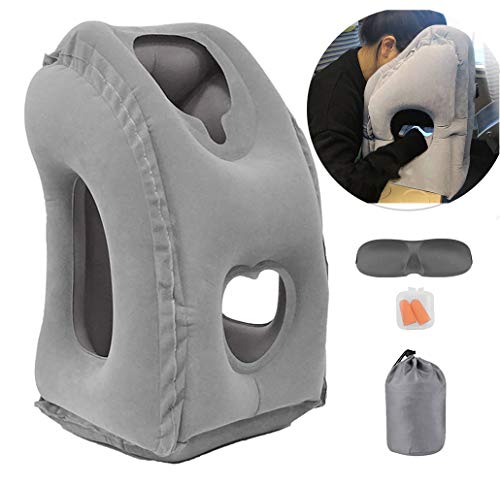
I’ve found the Kimiandy Inflatable Travel Air Pillow works best for travelers who need reliable neck support without the bulk, especially on long flights or overnight rides. Its 45° ergonomic design aligns your head and neck naturally, reducing strain on your cervical spine. Made with foam fill and soft flocking PVC, it inflates quickly using a large valve-just leave a little air space for comfort. At only 0.78 pounds, it packs into a small drawstring bag, unfolding to 19.6 inches wide. I use it on planes, trains, even at the office, and it’s easy to clean and machine washable. It holds air for up to two days but shouldn’t be stored inflated. There’s a slight odor at first, but it fades in minutes.
Best For: Travelers seeking lightweight, portable neck support that provides ergonomic alignment during long flights, road trips, or office naps.
Pros:
- Ergonomic 45° design promotes natural head and neck alignment, reducing cervical spine pressure
- Lightweight and compact with a drawstring bag for easy portability and storage
- Quick inflation and deflation via a large valve, machine washable, and durable flocking PVC construction
Cons:
- May have a slight initial odor due to airtight packaging, though it dissipates quickly
- Holds air for up to two days but requires occasional reinflation for extended use
- Should not be stored inflated, which may be inconvenient for some users
Airplane Pillow Combo with Chin Strap & Eye Mask

When I need reliable support for my head and neck during long flights, the SARISUN Airplane Pillow Combo with Chin Strap & Eye Mask stands out because it locks into place using the seat’s headrest for 360° stability, making it ideal for anyone who struggles with head bobbing or jaw slack while sleeping upright. It’s made of firm memory foam and spandex, weighs just 8.8 ounces, and fits securely without bulk. The chin strap keeps my jaw aligned, and the 3D eye mask blocks light effectively. I appreciate how it stays in place without inflating or adjusting mid-flight, and its compact size slips into most bags. Developed from feedback by over 1,000 travelers, it’s a practical upgrade for seated comfort, especially if you’re prone to neck strain or disrupted rest.
Best For: Frequent travelers and light sleepers who need stable head, neck, and eye support during long flights or road trips to prevent head bobbing and jaw slack while sleeping upright.
Pros:
- Provides 360° head and neck support by integrating with airplane seat headrests for maximum stability
- Includes a chin strap and 3D contoured eye mask to reduce mouth opening and block light effectively
- Compact, non-inflatable design made from firm memory foam offers consistent comfort and easy portability
Cons:
- May feel too firm for users preferring soft, plush pillow textures
- Chin strap could feel restrictive to those unaccustomed to facial support during sleep
- Only available in one size and color, limiting customization options
Travel Pillow Alternative Head Support Band

Though traditional neck pillows work for some, the SeatSleeper Head Support Band offers a smarter fix if you’re someone who struggles with head bobbing during upright sleep on planes or in cars. I’ve found its semicircular design, made of 80% acrylic and 20% terylene with polyester fill, comfortably supports my head without bulk. The adjustable strap stretches to about four feet, fitting most headrests securely. At just 1.41 ounces, it’s lightweight and folds small enough to fit in a handbag. It’s latex-free, hand-wash only, and includes an antibacterial treatment. One size fits all, and customer support and warranty details are available through the manufacturer.
Best For: Travelers who struggle with head bobbing during upright sleep on planes or in cars and prefer a lightweight, compact alternative to traditional neck pillows.
Pros:
- Lightweight and portable design (only 1.41 ounces) folds small enough to fit in a handbag
- Adjustable strap (up to 4 feet) fits most airplane and car headrests for secure support
- Soft, latex-free materials with antibacterial treatment for comfort and hygiene
Cons:
- Hand wash only, which may be inconvenient for frequent travelers
- Limited support for side or reclined sleeping positions due to upright design
- Solid color and basic aesthetic may not appeal to users seeking stylish travel accessories
Lewis N. Clark Comfort Eye Mask

The Lewis N. Clark Comfort Eye Mask gives me total darkness, thanks to its light-blocking design and soft ridge that seals out light at the bottom. I appreciate how the adjustable buckle strap tightens easily without Velcro, so it won’t snag my hair. Made from plush, breathable rip-stop nylon, it feels gentle on my eyes and stays comfortable during long flights or naps. It’s one-size, so it fits both adults and kids, and works well with CPAP masks. I’ve used it on planes, in hotels, and at home for insomnia and headaches-it’s durable, hand-washable, and holds up well over time.
Best For: Individuals seeking a comfortable, light-blocking eye mask for travel, sleep, or headache relief, suitable for both adults and children.
Pros:
- Effectively blocks all light with a soft ridge seal, ideal for total darkness during sleep or naps
- Adjustable buckle strap provides a secure, snag-free fit without Velcro, making it gentle on hair
- Made from durable, breathable rip-stop nylon that’s gentle on the eyes and hand-washable for easy care
Cons:
- One-size design may not fit very large or very small head sizes perfectly
- Buckle adjustment, while secure, may feel stiff or unfamiliar to some users
- Hand-wash only care requirement may be less convenient for frequent travelers
Factors to Consider When Choosing a Sleep Aid for Airplane
You’ll want to pick a sleep aid that’s comfortable and fits well, since tight masks or bulky designs can shift during flight and disrupt rest. Think about how easy it is to carry and use-compact size and simple setup matter when you’re packing light and moving through airports. Check the ingredients or tech behind each option, too, so you know what’s safe, how well it might work mid-flight, and whether it’s worth trying before your trip.
Comfort And Fit
A well-designed travel sleep aid keeps you supported and comfortable during long flights, and comfort starts with proper fit. You’ll want 360° head support to stop head bobbing and keep your neck aligned, especially when sleeping upright. Choose a structure that’s firm enough to support your head and neck but soft enough to avoid pressure points over hours. Look for adjustable straps or bands that securely attach to seat headrests-this helps stabilize your head during turbulence or shifts in position. Soft, breathable materials are essential; they reduce skin irritation and let you wear the aid longer without discomfort. Don’t overlook fabric quality-many top options use moisture-wicking, hypoallergenic covers tested for extended wear. Try models with trial periods, so you can test support and fit before committing. Proper alignment and sustained comfort matter most on long-haul flights.
Portability And Size
Look for sleep aids that pack down small-ideally smaller than a paperback book-so they slip easily into your carry-on or personal bag without taking up precious space. Choose models under 7 inches in any dimension; they fit snugly in side pockets and don’t need compressing. Lightweight options weighing less than 8 ounces keep your load light, especially on long trips. Solid, non-inflatable designs save time and hassle, working instantly without pumps or setup. If you prefer tablets, pick blister-packed or individually wrapped doses-they resist moisture, stay clean, and let you grab just what you need. Foldable supports with compact storage shapes boost packing efficiency. Smaller size doesn’t mean weaker performance; many miniaturized aids still offer reliable comfort. Prioritize construction and packed dimensions to balance function and portability. Test a few options at home to see how they pack and feel before flying.
Ease Of Use
Compact size sets the stage, but how quickly and smoothly a sleep aid works when you’re in your seat matters just as much. Choose fast-dissolving or chewable tablets-they kick in fast and don’t need water, which helps when restrooms are busy or seats are upright. Pre-dosed, individual packets mean you skip measuring and carry only what you need. Solid forms also clear TSA checks without hassle. Pick sleep aids with simple instructions, like “take one 30 minutes before bed,” so you won’t fumble in dim light. Non-inflatable neck pillows or eye masks hold their shape and work right away-no pumping or adjusting. Avoid anything needing setup or extra tools. When you’re cramped or tired, straightforward design makes all the difference. A smooth routine helps you relax faster and sleep better, even mid-flight.
Safety And Ingredients
While you’re weighing options for better rest at 30,000 feet, checking what’s inside a sleep aid matters as much as how easy it is to use. Choose products with non-habit-forming ingredients like melatonin or doxylamine succinate, proven to support short-term sleep without dependency. Look for clear labels showing exact dosages-such as 3 mg melatonin or 25 mg doxylamine per dose-so you know exactly what you’re taking. Avoid antihistamines or strong sedatives that can cause next-day drowsiness, dry mouth, or foggy thinking, especially during long trips. If you prefer natural or homeopathic options, pick ones backed by solid safety and effectiveness data. Make sure the ingredients are clinically studied and won’t interfere with your health or travel plans. You want something safe, reliable, and gentle on your system-not something that leaves you groggy or dependent.
Effectiveness During Travel
When you’re trying to catch rest on a flight, choosing a sleep aid that works efficiently in the unique conditions of air travel makes a real difference. Clinically proven options help you fall asleep 33% faster and extend sleep by up to 27% compared to placebo, according to FDA-submitted data. Non-habit-forming formulas are ideal for occasional use, promoting uninterrupted rest without next-day grogginess. If you prefer natural solutions, homeopathic remedies with all-natural ingredients target jet lag symptoms like insomnia, irritability, and fatigue caused by circadian shifts. For convenience, fast-dissolving or chewable tablets require no water-perfect for cramped cabins. Products combining melatonin, GABA, and adaptogenic botanicals reduce stress, regulate cortisol, and support deeper sleep. These features work together to improve sleep quality when you’re away from home, giving you a practical edge in managing travel-related sleep disruption.
Frequently Asked Questions
Can I Bring Sleep Aids on a Plane?
Yes, you can bring sleep aids on a plane, but rules depend on the type. Pills, gummies, or liquids must follow TSA limits-liquids under 3.4 ounces in your carry-on. Solid forms like tablets are hassle-free. Keep them in original packaging to speed through security. Some meds cause drowsiness that might affect balance, so test them at home first. Always check airline and destination regulations, especially internationally, to avoid issues.
Are Sleep Aids Safe for Children?
You shouldn’t give sleep aids to children without consulting a doctor first. Most over-the-counter options aren’t approved for young kids and can cause unexpected side effects. Instead, you might try natural methods like consistent bedtime routines, calming teas, or child-safe melatonin only under medical guidance. Always check labels and dosing, and talk to your pediatrician about any sleep concerns. Safety comes first when making choices for your child’s rest.
Do Sleep Aids Interact With Alcohol?
You shouldn’t mix sleep aids with alcohol-it can intensify drowsiness, slow breathing, and raise your risk of serious side effects. Alcohol interferes with how these medications break down, making them less predictable and potentially dangerous. Even over-the-counter options become riskier when combined. If you’re unsure, check the label or ask a healthcare provider. Always test a sleep aid at home first, never while drinking, to see how your body reacts safely.
How Early Should I Take a Sleep Aid Before Flying?
Take your sleep aid about 30 to 60 minutes before you plan to sleep on the flight. That timing lets it kick in as the cabin lights dim. You’ll stay alert during boarding but feel drowsy once seated. Always check the label-some formulas act faster than others. Start with the lowest dose at home first, so you know how your body reacts. Don’t mix it with alcohol, and confirm it won’t interact with any meds you take.
Can I Become Dependent on Sleep Aids?
you can become dependent on sleep aids if you use them too often or for too long, especially prescription ones like benzodiazepines or z-drugs. over-the-counter options, such as melatonin or antihistamines, carry lower risks but aren’t meant for daily use. your body may stop responding as well over time, so it’s smart to limit use and combine them with good sleep habits. always check with your doctor.