Best Sleep-Friendly Night Lights for a Restful Dark Room
Choose red or amber night lights like the GE Sleeplite or 670nm Red Light models to support melatonin production and maintain healthy sleep cycles. These emit zero blue light, use little energy, and stay cool overnight. Many have dusk-to-dawn sensors and dimming options for personalized comfort. Units such as L LOHAS and echosari offer adjustable brightness and safe, plug-in designs. Consider sensor placement and lumen output to match your room’s darkness-finding the right balance can make a noticeable difference in nighttime ease and sleep quality.
We are supported by our audience. When you purchase through links on our site, we may earn an affiliate commission, at no extra cost for you. Learn more. Last update on 19th July 2026 / Images from Amazon Product Advertising API.
Notable Insights
- Choose red or amber night lights (600–670nm) to minimize melatonin suppression and support natural sleep cycles.
- Opt for models with dusk-to-dawn sensors to enable automatic, hands-free operation without disrupting sleep.
- Select dimmable options with low lumen output (5–10 lumens) for minimal light intrusion in dark bedrooms.
- Avoid blue light by picking bulbs labeled blue-light-free, as wavelengths below 500nm disrupt circadian rhythms.
- Prioritize energy-efficient, cool-running LED models with long lifespans (30,000+ hours) for safe, continuous use.
GE Sleeplite Dusk-to-Dawn LED Night Lights (2 Pack)

If you’re looking for a reliable way to maintain nighttime visibility without disrupting your sleep, the GE Sleeplite Dusk-to-Dawn LED Night Lights (2 Pack) are a strong choice, especially since they automatically turn on at dusk and off at dawn using a built-in light sensor. I’ve used them in my hallway and bedroom, and they provide a soft amber glow that helps me move safely at night without straining my eyes or interrupting my sleep cycle. The LEDs stay cool, last a long time, and don’t use much energy, which I appreciate. Their slim design fits flush into outlets, and I can still plug in another device above it. Since they’re UL-certified, I feel confident using them around kids or in apartments. They work quietly in the background, blending into the decor while doing exactly what they’re supposed to-making nights safer and sleep easier.
Best For: Individuals seeking an energy-efficient, automatic night light that provides safe, low-level illumination without disrupting sleep.
Pros:
- Automatically turns on at dusk and off at dawn with a built-in light sensor for hands-free operation
- Emits a soft amber glow that supports nighttime visibility while minimizing sleep disruption
- Slim, space-saving design allows for use of a secondary outlet and stays cool during operation
Cons:
- Light output may be too dim for those needing brighter nighttime illumination
- Fixed color temperature offers no customization options
- May not function properly if placed where artificial light interferes with the sensor’s detection
2 Pack Amber Night Light, Dimmable LED

The 2 Pack Amber Night Light, Dimmable LED is my top recommendation for anyone seeking a reliable, low-light solution that supports healthy sleep cycles-especially parents, shift workers, or light-sensitive individuals. I use these in my hallway and nursery, and they deliver a soft, diffused amber glow that won’t disrupt melatonin. The touch control offers three brightness levels, and the built-in dusk-to-dawn sensor turns them on automatically. At just 0.5W, they’re energy efficient, costing under $0.60 a year. Their compact, flame-retardant ABS design stays cool and fits snugly in outlets, keeping a second socket free. I’ve left them on 24/7 with no issues. Ideal for safe nighttime navigation and low-light routines.
Best For: Parents, shift workers, and light-sensitive individuals seeking a reliable, low-light solution that supports healthy sleep cycles without disrupting melatonin.
Pros:
- Soft, dimmable amber glow with three brightness levels via touch control, ideal for nighttime navigation and sleep-friendly environments
- Built-in dusk-to-dawn sensor enables fully automatic operation, turning on at dusk and off at dawn without manual input
- Compact, energy-efficient design consumes only 0.5W, costs under $0.60 per year, and leaves a second outlet free for other devices
Cons:
- Not water-resistant, limiting use to indoor, dry locations only
- Light cannot be used outdoors or in humid environments like bathrooms without risk
- Fixed amber hue offers no color temperature or white light option for task lighting
L LOHAS Amber Night Light (2-Pack)
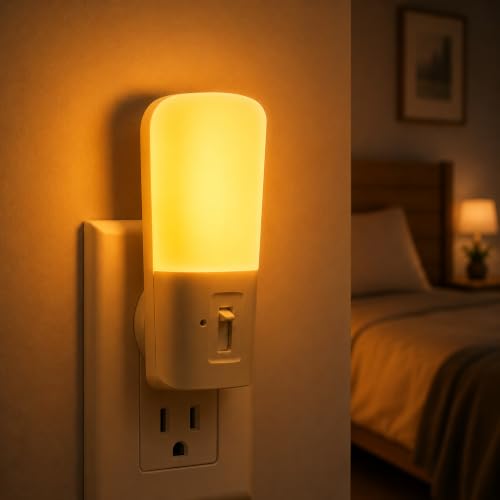
I’ve found the L LOHAS Amber Night Light (2-Pack) works best for people who need gentle, sleep-supportive lighting without disrupting their natural sleep cycle, especially if they’re sensitive to blue light. It gives off warm amber-yellow light with zero blue spectrum, helping protect melatonin levels. Brightness adjusts from 5 to 80 lumens via a slide switch, and the dusk-to-dawn sensor turns it on and off automatically. At just under 1 watt, it’s energy efficient and lasts over 30,000 hours. The compact plug-in design fits nurseries, hallways, or bathrooms while leaving the lower outlet free. I recommend keeping 1 meter between units to avoid sensor issues.
Best For: People seeking a sleep-friendly, energy-efficient night light that emits blue-light-free amber illumination for nurseries, bedrooms, or hallways.
Pros:
- Emits amber-yellow light with no blue spectrum, supporting melatonin production and circadian rhythm health
- Adjustable brightness (5–80 lumens) and automatic dusk-to-dawn sensor for hands-free operation
- Compact plug-in design leaves bottom outlet accessible and maintains a polished, space-saving profile
Cons:
- Not water-resistant, limiting use to indoor, dry locations only
- Requires 1 meter spacing between units to prevent sensor interference
- Fixed corded design with no battery option, reducing placement flexibility
2 Pack Dimmable Warm Plug-in Night Lights

Who wouldn’t want a night light that adjusts to their sleep needs without disrupting rest? I use the 2 Pack Dimmable Warm Plug-in Night Lights, and they’ve been a quiet help. With touch control and three color temps-warm, natural, and cool-I find a hue that suits my mood. The light sensors turn them on at dusk, off at dawn, which saves energy. Their rear-facing LEDs cast a soft glow, reducing sleep disruption. Made from flame-retardant ABS plastic, they’re safe and sturdy. No batteries needed-just plug in. I appreciate the 24-month warranty and lifetime support from TORANKOS. They’re ideal for bedrooms, not outdoors.
Best For: Individuals seeking a safe, energy-efficient, and adjustable plug-in night light for bedrooms or children’s rooms that supports healthy sleep with automatic lighting and minimal light disruption.
Pros:
- Touch control with adjustable brightness and three color temperature options for personalized ambiance
- Automatic dusk-to-dawn operation with light sensor for convenience and energy savings
- Rear-facing LED design and flame-retardant ABS construction enhance safety and reduce sleep interference
Cons:
- Not suitable for outdoor or wet environments due to lack of water resistance
- Limited to indoor plug-in use, which may restrict placement flexibility
- Only one shade color (white) and fixed square design may not match all décor styles
670nm Red Light Night Light (2-Pack)

Since maintaining natural melatonin levels matters most for shift workers, new parents, or anyone sensitive to light at night, I look for red lights that cut blue wavelengths completely-and the 670nm Red Light Night Light (2-Pack) delivers with a pure, sunset-like glow that won’t disrupt sleep cycles. It automatically turns on at dusk and off at dawn, saving effort and energy. With three brightness levels and continuous dimming, I can adjust the light for nursing, sleepwalking prevention, or nighttime bathroom trips. Its slim, safe design fits tightly into outlets, won’t overheat, and works across voltages. I appreciate the 2-year warranty, especially when using it for my toddler or aging parents-it’s a reliable, science-backed tool for healthier nights.
Best For: Shift workers, new parents, and light-sensitive individuals seeking a blue-light-free night light to support natural melatonin production and healthy sleep cycles.
Pros:
- Emits a 100% blue-light-free 670nm red glow that supports melatonin production and minimizes sleep disruption
- Auto-sensing dusk-to-dawn operation with adjustable brightness and three practical lighting modes for versatile use
- Slim, safe, energy-efficient design with a 2-year warranty, making it ideal for nurseries, travel, and multi-room applications
Cons:
- Limited to red light output, which may not suit users who prefer white or warmer light at night
- Plug-in design may block certain outlet configurations despite its slim profile
- No battery backup, so it won’t function during power outages
2 Pack Plug-in Red Night Light

If you’re looking for a low-light solution that supports healthy sleep without sacrificing convenience, the 2 Pack Plug-in Red Night Light offers a practical blend of safety, efficiency, and smart design. I appreciate how its red glow, dimmable across three levels, stays soft and uniform thanks to hidden LEDs and a diffusing outer layer. It runs on just 0.5W, uses no batteries, and won’t overheat, thanks to flame-retardant ABS and over-current protection. The photocell sensor turns it on at dusk and off at dawn, perfect for hallways or nurseries. Since it leaves the second outlet free and stays on safely 24/7, it’s a quiet, reliable aid for nighttime routines.
Best For: Parents, caregivers, and light-sensitive individuals seeking a safe, energy-efficient red night light that supports healthy sleep and automates nighttime illumination.
Pros:
- Adjustable 3-level brightness with soft, diffused red light that minimizes melatonin disruption for better sleep
- Photocell sensor enables automatic dusk-to-dawn operation with no manual control needed
- Outlet-friendly design preserves second socket and features over-current protection for safe 24/7 use
Cons:
- Not water-resistant, limiting use to indoor, dry environments only
- Red light may not suit users who prefer white or warmer tones for nighttime visibility
- Fixed plug design may block some wall outlets depending on furniture placement
L LOHAS LED Night Lights 2-Pack

Though I don’t need bright lighting to move safely at night, the L LOHAS LED Night Lights 2-Pack delivers just enough soft white glow-40 lumens at 3000K-to guide my steps without disrupting melatonin levels. These plug-in lights turn on automatically in low light and off at dawn, so I never have to remember a switch. At just 0.3W, they’re energy efficient and stay cool, which I appreciate near kids or pets. Their compact size doesn’t block the other outlet, and since they work on standard 110–130V AC, no batteries are needed. I’ve used them in hallways, bathrooms, and bedrooms-they’re reliable, simple, and effective for safe nighttime navigation.
Best For: Individuals seeking energy-efficient, automatic night lights for safe, low-light navigation in homes with children or pets.
Pros:
- Automatically turns on at dusk and off at dawn with built-in light sensor for hands-free operation
- Compact design preserves use of adjacent electrical outlet and emits minimal heat for safety
- Soft 3000K white light provides gentle illumination without disrupting sleep patterns
Cons:
- Light output may be too dim for users needing brighter nighttime visibility
- Plug-in design may block outlet if wall outlet is in an awkward position or tightly spaced
- Not portable or battery-powered, limiting use to locations with accessible wall outlets
echosari 670nm Red Light Night Light (2-Pack)

I find the echosari 670nm Red Light Night Light (2-Pack) especially helpful for anyone sensitive to light at night, particularly those prioritizing sleep quality in bedrooms, nurseries, or hallways. The 670nm red glow emits no blue light, which helps protect melatonin levels. Its built-in sensor switches it on at dusk, offering Auto, On, or Off modes. I adjust brightness with a simple button-High, Middle, or Low-to suit my space. Each unit uses just 0.5W, and the long-lasting LEDs save energy. The foldable plug fits tightly into outlets, leaving room for nearby plugs. I use one in my bedroom and another in the hallway-no tools needed, just plug and go.
Best For: Individuals sensitive to light at night who prioritize sleep quality, especially in bedrooms, nurseries, or hallways.
Pros:
- Emits a 670nm red glow with no blue light, helping to preserve natural melatonin levels and support healthy sleep cycles.
- Features dusk-to-dawn sensor with Auto, On, and Off modes for convenient, hands-free operation.
- Compact, foldable plug design saves space and allows use in one outlet without blocking adjacent ones.
Cons:
- Limited brightness levels may not suit users needing stronger illumination for nighttime visibility.
- Auto mode relies on ambient light detection, which may cause inconsistent activation in environments with fluctuating light.
- Only two units included with no option for larger packs, potentially increasing cost for whole-home coverage.
Mr Beams Amber LED Night Light 2-Pack
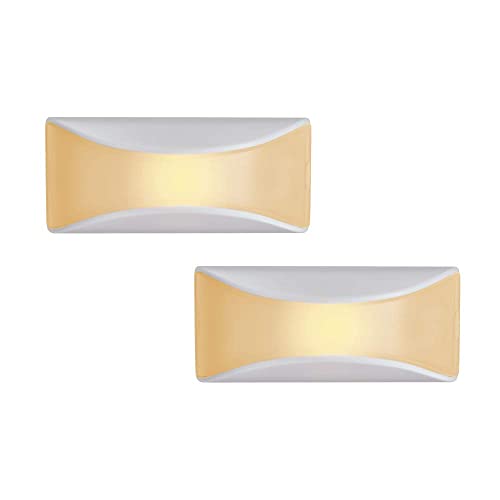
Because it emits a soft amber glow at 600nm, the Mr Beams Amber LED Night Light 2-Pack works best for people sensitive to blue or white light at night, especially those trying to protect their sleep quality. I’ve found it reliable-it turns on automatically in the dark and stays off in daylight, saving battery. It’s dim, under 1 lumen, but bright enough for safe steps or bathroom trips. Weather-resistant and lightweight, it mounts in minutes with adhesive or screws. I use it in the hallway, and it’s lasted about six months on batteries. It comes with a one-year warranty, and support is easy to reach if needed.
Best For: People sensitive to blue or white light at night who want a sleep-friendly, low-maintenance amber glow for safe navigation in dark areas.
Pros:
- Emits a sleep-friendly 600nm amber light that’s less disruptive to melatonin production
- Dusk-to-dawn sensor ensures automatic operation and extends battery life
- Easy, tool-free installation with adhesive strip or mounting hardware
Cons:
- Very dim output (<1 lumen) may not suffice for those needing brighter illumination
- Batteries not included, and lifespan is limited to ~6 months with average use
- IPX4 rating offers only basic splash resistance, not ideal for very humid environments
MAZ-TEK LED Night Light 2 Pack
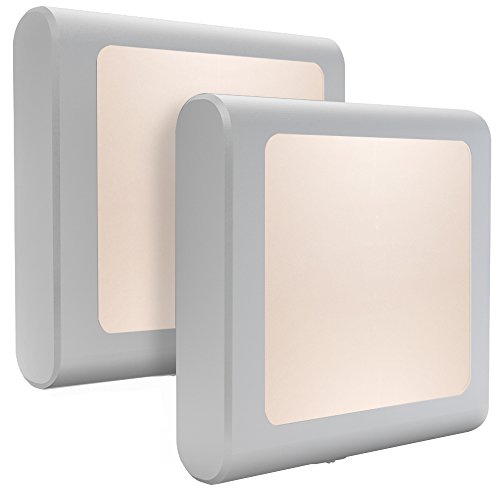
If you’re looking for a reliable, low-maintenance option that provides gentle nighttime illumination without disturbing your sleep environment, the MAZ-TEK LED Night Light 2 Pack fits the bill. I’ve found these compact, square-shaped lights easy to install in standard outlets, where they stay out of the way and don’t block adjacent plugs. Their warm white LED glow, adjustable from 0 to 25 lumens with a slide switch, offers just enough light for safe movement. The built-in photocell turns them on automatically at dusk, helping maintain consistent nighttime routines. At only 0.5W and with a 50,000-hour lifespan, they’re efficient and long-lasting. They’re best for indoor spaces like hallways, bedrooms, or bathrooms. While not waterproof, they’re safe for everyday use and come with a 30-month warranty and lifetime technical support-solid protection if you’re testing them for sleep-friendly navigation.
Best For: Individuals seeking an energy-efficient, low-maintenance night light for safe, automatic illumination in indoor areas like bedrooms, hallways, and bathrooms.
Pros:
- Adjustable stepless dimming from 0 to 25 lumens provides customizable, sleep-friendly lighting
- Automatic dusk-to-dawn photocell sensor ensures hands-free operation and consistent nighttime visibility
- Compact design fits standard outlets without blocking adjacent plugs and features a long 50,000-hour LED lifespan
Cons:
- Not waterproof, limiting safe use in damp areas like bathrooms despite recommended placement
- Light output is relatively low (25 lumens), which may be insufficient for larger spaces
- Requires constant plug-in power, with no battery backup option for outages
Factors to Consider When Choosing Sleep-Friendly Night Lights
You’ll want to take into account light color carefully, since warmer tones like red or amber help support natural melatonin levels better than blue or white light. Look for models with adjustable brightness and automatic sensors so the light turns on only when needed and stays dim enough to avoid disrupting sleep. Don’t overlook energy efficiency, safety certifications, and durable construction-features that guarantee reliable, safe use night after night.
Light Color Importance
While selecting a night light for better sleep, paying close attention to light color can make a meaningful difference in how well your body maintains its natural rhythm. You’ll want to choose lights that emit red or amber tones, especially those around 600–670nm, because they contain little to no blue light. Blue light, particularly below 500nm, can suppress melatonin and interfere with sleep. Red light at 670nm helps preserve melatonin levels and supports a calm state, making it ideal for nighttime use. Look for warm-colored lights with a color temperature below 3000K, as they mimic the natural sunset and help signal to your body that it’s time to wind down. These long-wavelength lights have less impact on circadian rhythms than cooler tones. Picking the right color helps maintain healthy sleep without unwanted alertness.
Brightness Adjustment Options
Since not all nighttime visibility needs are the same, choosing a night light with adjustable brightness can better match your environment and sensitivity. You’ll find models with three-level settings-low, medium, high-that let you adjust based on room darkness or personal comfort. For finer control, stepless dimming offers smooth changes, usually from 0 to 25 lumens, so you can set the exact glow needed. Touch switches or slide controls make adjustments easy, with no extra tools required. Look for dimmable options with low outputs (5–10 lumens) if you’re using it in the bedroom-they give just enough light to move safely without interfering with melatonin. While some units pair brightness controls with sensors, focus here on manual adaptability. Test models with flexible adjustment to see how well they suit your nighttime routine, especially if you’re sensitive to light or managing sleep issues.
Automatic Sensor Function
If your goal is effortless, consistent nighttime lighting, models with automatic sensor functions can simplify your routine. Dusk-to-dawn sensors use photocells to turn on when light drops at twilight and off at sunrise, so you never have to remember. This automatic operation guarantees reliable illumination without interference, helping you maintain steady sleep habits. Most units offer on, off, and auto modes, giving you control when needed. To prevent one light from affecting another, space sensors at least one meter apart. These sensors activate only when necessary, reducing unnecessary exposure and supporting a calm sleep environment. Since they respond to natural light changes, performance stays consistent across seasons. Look for models with adjustable sensitivity if your space has variable lighting. Many brands offer trial periods, so you can test responsiveness in your room. A reliable sensor means less effort and more predictable nighttime support.
Energy Efficiency Benefits
A single efficient LED night light can cut your nightly energy use to just a fraction of what older bulbs require. You’ll typically use only 0.3W to 1W, slashing both your electricity bill and environmental impact. Many models cost less than $0.60 a year to run, making them ideal for keeping on all night. With built-in dusk-to-dawn sensors, they turn on only when needed, so you’re not wasting power during daylight. Long-lasting designs often exceed 30,000 hours, meaning fewer replacements and less hassle over time. The low-heat LED technology and over-current protection help maintain efficiency while supporting safe, continuous operation. When choosing, look for these features to balance performance and energy savings. You’ll support better sleep routines without driving up energy costs-making efficient night lights a smart, practical choice for long-term bedroom use.
Safety Certification Standards
When choosing a sleep-friendly night light, checking for safety certifications should be a top priority. Look for models certified by UL (Underwriters Laboratories) to guarantee they meet strict electrical and fire safety standards. Choose units made with V-0 rated flame-retardant ABS plastic, which reduces fire risks during continuous use. Make sure the night light has over-current protection to prevent overheating, short circuits, and electrical failures-especially important in children’s rooms. Certified lights are tested to stay cool during 24/7 operation, lowering risks in sensitive environments. Avoid using non-water-resistant models in damp areas; they’re built only for dry indoor spaces. Always follow manufacturer guidelines to maintain safety compliance and long-term performance. Prioritizing certified designs means you’re getting tested reliability without sacrificing peace of mind. These features support safer, uninterrupted sleep, especially for those managing sleep disorders or using the light nightly.
Compact Design Compatibility
Space matters, especially where every inch counts. You need a night light that fits without getting in the way. Compact models range from 0.7 to 2.79 inches deep, sitting flush against walls to avoid bumping into furniture or feet. Many plug-in designs use only the top half of an outlet, so you can still charge your phone or use a humidifier. If space is tight-like in hallways or closets-square units around 2.6 inches per side tuck in neatly. Ultra-slim versions with foldable plugs stick close to the wall, cut down on snag risks, and work well with outlet covers. Pick a light under 4 inches tall to keep it visible but unobtrusive, especially in bedrooms or nurseries. These designs help you maintain function without clutter, letting you move freely and sleep better.
Wavelength And Sleep
Since not all light affects your sleep the same way, choosing the right wavelength matters for maintaining healthy melatonin levels. You’ll want lights in the red to amber range (600–670 nm), which studies show minimize melatonin suppression and support natural sleep onset. Blue light, especially between 400–490 nm, disrupts your circadian rhythm by blocking melatonin, making it harder to fall asleep. Instead, opt for red light (650–700 nm), proven to have little effect on your sleep hormones while still offering visibility. Amber light around 590–600 nm is also a smart choice-it balances clarity with sleep support. Lights above 550 nm let you stay alert at night without throwing off your sleep-wake cycle. Selecting the right wavelength helps you maintain better sleep hygiene, especially if you wake frequently or use night lights regularly.
Durability And Longevity
A good night light lasts for years without losing brightness or safety, and LED models typically run 30,000 to 50,000 hours-long enough to serve you reliably through thousands of nights. You’ll want one made with durable, flame-retardant V-0 ABS plastic, which handles continuous use and reduces fire risks. Look for low power draw, around 0.3W to 0.5W, since it cuts heat buildup and extends the life of internal parts. Units with photocell sensors turn on only at dusk, sparing unnecessary wear and saving energy. Over-current protection and cool-running LEDs prevent overheating, helping the circuitry stay intact during 24/7 operation. These features mean fewer replacements and steadier performance over time. Some brands even offer trial periods or extended warranties, letting you test durability risk-free. Choosing a well-built model now supports consistent, safe nighttime lighting without surprises later.
Frequently Asked Questions
Can These Night Lights Cause Eye Strain?
You’re unlikely to experience eye strain if you choose night lights with soft, diffused glow and warm color temperatures below 3000K. These lights emit minimal blue light, which helps maintain natural melatonin levels. Look for models with adjustable brightness and motion sensors so you control output. Most use LED bulbs designed for low glare. Check warranties-many brands offer 1- to 2-year trials, letting you test comfort safely.
Do They Work During Power Outages?
You’ll need battery-powered models if you want light during outages-most plug-in night lights won’t work without power. Some include rechargeable batteries or USB backup, so you stay lit even when the electricity cuts. Check specs for runtime and charging needs. Models with motion sensors or dim settings help conserve power. Consider ones offering trial periods, so you can test reliability. Always confirm whether your pick supports outage use-many don’t.
Are They Safe for Pets?
Yes, they’re safe for pets if you choose models with cool-to-the-touch LEDs and sturdy, chew-resistant cords. You’ll avoid burns or shocks since the lights don’t overheat. Opt for ones with low blue light emissions, which won’t disrupt your pet’s sleep rhythm either. Plug-in types stay secure, while battery-powered options reduce tripping hazards. Check for BPA-free, non-toxic materials, and consider models offering trial periods to test safety and effectiveness in your home.
Can I Use Them Outdoors?
you can’t use them outdoors unless they’re specifically rated for outdoor use. most sleep-friendly night lights aren’t weatherproof, so moisture and temperature shifts could damage them. if you need outdoor lighting, check the IP rating-look for at least ip44 for basic weather resistance. always confirm manufacturer guidelines, and consider a dedicated outdoor model with durable construction. test it briefly before long-term placement, and use a covered area when possible to extend its life.
Do They Emit Blue Light?
No, they don’t emit blue light-you’ll find only warm red or amber hues, which are less disruptive to melatonin. You notice the difference at night because these colors support your body’s natural rhythm. Most use LED bulbs designed to stay cool and last years. Check the packaging for “blue-light-free” claims, and pick models with dimmer settings. A 30-night trial is common, so you can test brightness and color comfort risk-free.