The Effect of Temperature on Narcolepsy Symptoms and Sleep Quality
You’re more sensitive to temperature because narcolepsy disrupts your body’s ability to regulate heat and cold. Hot days increase fatigue and dehydration, worsening daytime sleepiness, while cold bedrooms can fragment your sleep. Your autonomic system struggles to maintain balance, leading to night sweats or chills. Aim for a bedroom between 60–67°F with breathable bedding. Cooling vests or warm herbal tea may help-small changes can make a noticeable difference over time.
Notable Insights
- High temperatures worsen daytime sleepiness in narcolepsy by increasing fatigue and the risk of heat-related dizziness or confusion.
- Cold bedrooms disrupt sleep continuity, causing fragmentation and frequent awakenings due to heightened sensitivity to temperature changes.
- Autonomic dysfunction in narcolepsy impairs thermoregulation, leading to night sweats, chills, and unstable core body temperature.
- Optimal sleep quality occurs in cool bedrooms (60–67°F) with low humidity and breathable, moisture-wicking bedding materials.
- Thermal management strategies like cooling vests, heated blankets with timers, and layered bedding improve both day and night symptom control.
How Heat Worsens Narcolepsy Daytime Sleepiness
Why does the heat seem to drain your energy even more if you have narcolepsy? High temperatures make your body work harder to stay cool, which can worsen daytime sleepiness and fatigue. When you’re already managing narcolepsy, the added stress of heat puts extra strain on your nervous system. You’re also more vulnerable to heat exhaustion, especially if you’re less aware of physical signals due to unpredictable sleep patterns. Symptoms like dizziness, confusion, or extreme tiredness could be early signs, so recognizing them early matters. Dehydration risks increase in heat, and even mild dehydration may intensify sleep attacks. To stay safer, drink water consistently and avoid peak sun hours. Lightweight clothing, cooling towels, and portable fans can help regulate body temperature. Air-conditioned environments are ideal during hot days. Planning outdoor activities carefully and monitoring how you feel can reduce complications. A cool sleeping environment can also improve nighttime sleep quality, and using a breathable mattress cover may enhance thermal regulation while you rest. These small adjustments support better daily control.
Why Cold Bedrooms Disrupt Narcolepsy Night Sleep
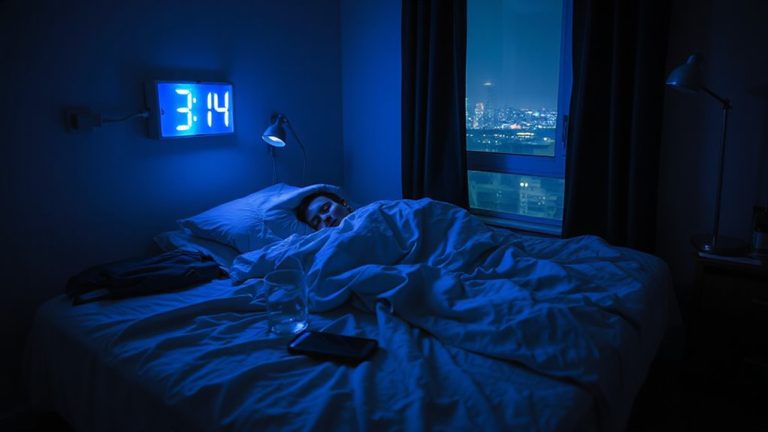
Could your bedroom temperature be working against your sleep, even if you think cooler is better? For people with narcolepsy, bedtime chills can trigger sleep fragmentation, making it harder to stay asleep through the night. When your room’s too cold, your body may struggle to maintain comfort, leading to more frequent awakenings or shallow sleep stages. This disruption interferes with sleep continuity, reducing overall rest quality. Unlike typical sleepers, narcolepsy affects your sleep architecture, making you more vulnerable to disturbances like cold. Instead of assuming a colder room is ideal, consider a range between 65°F and 68°F. Using breathable layers, a weighted blanket with temperature regulation, or a bedside heating pad on low might help. These tools offer customizable warmth without overheating, supporting fewer disruptions and more stable sleep cycles. A short trial period helps gauge what works best-many quality products even have risk-free warranties. Adding moisture to the air with a best humidifier for sleep can also improve respiratory comfort and reduce nighttime awakenings.
Why Narcolepsy Makes Body Temperature Hard to Regulate
Your body’s ability to maintain a steady temperature at night might be more fragile than you realize, especially with narcolepsy affecting your nervous system’s automatic controls. Narcolepsy often brings autonomic dysfunction, meaning your body struggles with basic regulatory tasks like adjusting to temperature changes. This isn’t just discomfort-it can interrupt sleep onset and reduce sleep quality. You may notice night sweats or chills because your internal thermostat isn’t responding normally. Circadian misalignment also plays a role, as your sleep-wake cycle runs off-schedule, confusing temperature signals that usually rise and fall predictably. Since these shifts help guide sleep, their disruption makes rest harder to sustain. Managing this involves understanding your body’s unstable patterns and considering sleep aids that support thermal regulation. Tools like breathable bedding or moisture-wicking pajamas can help offset some effects, offering practical relief without major lifestyle changes.
Ideal Bedroom Temperature for Narcolepsy Sleep
Though individual needs may vary, most people with narcolepsy tend to sleep better in a bedroom kept cool, typically between 60 and 67 degrees Fahrenheit, because a lower ambient temperature supports the body’s natural dip in core temperature during sleep onset. You’ll also want to keep bedroom humidity around 30–50% to prevent discomfort and breathing issues that can disrupt sleep. Too much moisture may worsen allergens, while too little can dry your airways. Your sleep surface material matters, too-memory foam retains heat, while latex or hybrid coils offer better airflow. Cotton or moisture-wicking bedding can help regulate warmth. Since narcolepsy affects sleep stability, pairing a cool room with breathable materials improves sleep continuity. Adjustable foundations or cooling mattress pads are options worth trying, especially if you often wake feeling too warm. Look for products with trial periods so you can test what works best for your rest without risk. A high-quality humidifier can help maintain ideal moisture levels, and the best models for consistent performance are often found among the best humidifiers for the bedroom.
Cooling Strategies for Narcolepsy Daytime Alertness
Why do you feel more alert on some days than others, especially when managing narcolepsy? Temperature plays a bigger role than you might think. Small shifts in body heat can influence daytime drowsiness. Cooling strategies help stabilize alertness, especially in warm environments or during energy dips. Simple habits like cool morning showers wake your system gently by lowering core temperature. For sustained effect, many use cooling vests-wearable garments with gel or phase-change materials that absorb heat. They’re lightweight, portable, and often machine-washable, with trial periods offered by most brands.
| Strategy | Benefit | Consideration |
|---|---|---|
| Morning showers | Fast, natural alertness | Short-term effect |
| Cooling vests | Hours of steady cooling | Upfront cost, needs charging |
How to Warm Up Safely Without Disrupting Sleep
How do you stay warm at night without triggering grogginess or disrupting your sleep cycle? Using heating pads can be effective, but choose ones with automatic shut-off features to avoid overheating and prolonged use. Set them to low or medium heat and place them at the foot of the bed, not directly under your body, to maintain core temperature without overstimulation. Warm beverages like herbal tea may help, but avoid caffeine or heavy sugars, which can interfere with sleep onset. Sip them 30–60 minutes before bed so your body has time to cool down naturally. Opt for non-electric options like heated blankets with timers or layered bedding to regulate warmth gradually. Test different methods over several nights to see what supports uninterrupted rest. Warranties and safety certifications matter-look for UL-listed products. Small, consistent adjustments often yield better results than drastic changes.
On a final note
You may find that cooler rooms, around 65°F, help stabilize your sleep and ease daytime fatigue. Since narcolepsy can disrupt temperature regulation, using breathable bedding and a reliable cooling pad might improve comfort. If you warm the room, do so gently to avoid night awakenings. Choose sleep aids with adjustable settings and trial periods so you can test what works. Always consult your doctor before making changes.