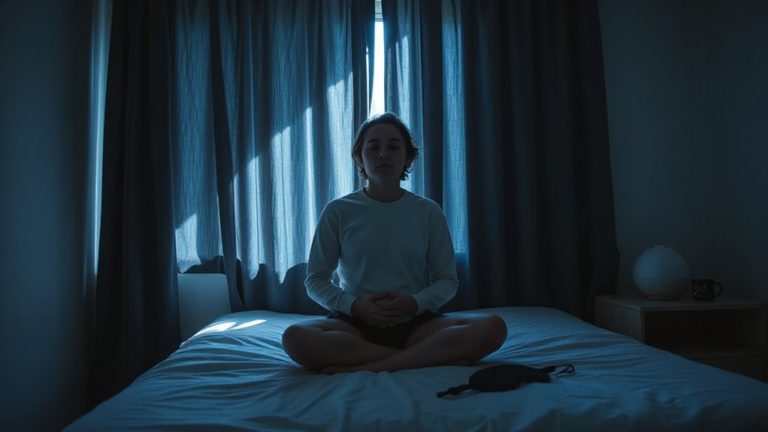
The Impact of Exercise-Induced Endorphins on Sleep Latency
Exercise boosts endorphins, which lower stress and calm your mind, helping you fall asleep faster. These natural chemicals ease mental chatter and muscle tension without side effects, unlike some sleep aids. For best results, time workouts a few hours before bed, so your body has time to cool down and settle. Morning or afternoon exercise often works better for sleep onset. You’ll see clearer patterns in how your body responds if you track your sleep and energy over time.
Notable Insights
- Exercise-induced endorphins reduce stress hormones, promoting calmness that shortens sleep latency.
- Endorphins help regulate neural activity, easing mental chatter that delays sleep onset.
- Regular physical activity boosts endorphin release, enhancing mood and supporting faster sleep initiation.
- Morning or afternoon exercise optimizes endorphin benefits without increasing nighttime alertness.
- Endorphins from exercise improve sleep latency naturally, without dependency or adverse side effects.
How Exercise Helps You Fall Asleep Faster
While you might think falling asleep faster requires medication or complicated routines, regular physical activity actually plays a key role in reducing the time it takes to drift off. You’ll find that consistent exercise helps regulate your body’s internal clock, especially when you pay attention to exercise timing-finishing workouts a few hours before bedtime is usually ideal to avoid raising your core temperature too close to sleep. Even moderate activities like walking or cycling can make a difference over time. Pairing this habit with a calm sleep environment-cool, dark, and quiet-amplifies the benefits. Though exercise isn’t a substitute for medical treatment in sleep disorders, it serves as a reliable, non-invasive aid. You might reduce reliance on sleep aids by combining movement with strong sleep hygiene. It’s low-cost, carries few risks, and offers a predictable, gradual improvement when practiced consistently. Give it a few weeks to see meaningful changes.
Why Endorphins Shorten Sleep Latency
Because your body releases endorphins during physical activity, these natural chemicals can help you fall asleep faster by easing tension and promoting a sense of calm. These endorphins influence your brain chemistry by reducing stress hormones and enhancing mood, which sets the stage for quicker sleep onset. You experience improved neural regulation, meaning your nervous system shifts more smoothly from wakefulness to sleep. This balance helps quiet mental chatter and relaxes muscle tension, both of which are key for reducing sleep latency. Unlike some sleep aids that alter brain function externally, endorphins support your body’s natural rhythms. They don’t require a prescription or carry dependency risks, making them a sustainable option. By relying on your body’s built-in system, you avoid potential side effects. Regular exercise strengthens this response over time, offering a reliable, non-invasive way to support healthier sleep patterns through natural brain and nervous system adjustments.
Best Workouts for Faster Sleep Onset
You’ve already seen how endorphins released during exercise can ease your mind and body into a state more ready for sleep, reducing the time it takes to drift off. For faster sleep onset, morning cardio is a strong option-it boosts endorphins early, helps regulate circadian rhythms, and avoids the alertness spike too-close-to-bedtime workouts can cause. A 30-minute brisk walk or light jog in the sun sets a calm, steady tone for the day. Resistance training, like bodyweight circuits or weight lifting, also helps by reducing muscle tension and promoting physical fatigue, but aim to finish sessions at least six hours before bed. Both types of exercise improve sleep quality over time, though individual responses vary. Try tracking your sleep for two weeks after starting a routine to see what works best. No single workout fits all, so consider your schedule, energy levels, and comfort when choosing.
Why Night Workouts Can Keep You Awake
If you’re feeling alert late into the night after an evening workout, it’s likely due to physiological shifts that can interfere with sleep onset. Increased adrenaline keeps your mind sharp and energy elevated, making relaxation harder. Likewise, a higher core temperature can delay the natural drop your body needs to initiate sleep. While exercise supports overall sleep health, timing matters. Consider how your body responds individually.
| Factor | Effect on Sleep | Time to Normalize |
|---|---|---|
| Increased adrenaline | Heightens alertness | 1–2 hours |
| Elevated core temperature | Delays sleep onset | 1.5–3 hours |
| Endorphin release | Boosts mood and energy | 1–3 hours |
| Post-workout heart rate | Reduces sleep readiness | 30–90 minutes |
Monitor your patterns and adjust workout timing if sleep latency becomes an ongoing concern.
Other Ways Exercise Helps You Fall Asleep Faster
Evening workouts might keep you awake due to lingering adrenaline or a raised body temperature, but when timed right, exercise offers clear benefits for falling asleep faster. You experience a post-exercise drop in body temperature, which signals your body it’s time to sleep. This cooling effect mimics the natural dip that occurs in your circadian rhythm, helping align your internal clock with your desired sleep schedule. Regular physical activity strengthens this rhythm over time, especially when you exercise at consistent times each day. Morning or afternoon sessions are often best-they boost alertness during the day and allow enough time for your body temperature to fall by bedtime. While you might consider sleep aids, exercise provides a natural, sustainable option without side effects. It’s not a quick fix, but with consistent effort, you’re likely to see meaningful improvements in how quickly you fall asleep.
On a final note
You’ll fall asleep faster when exercise boosts endorphins, easing mental tension. But timing matters-late workouts may raise body temperature and delay sleep. Aim for moderate aerobic sessions earlier in the day to support natural sleep rhythms. While sleep aids offer short-term relief, consistent exercise improves sleep onset without side effects. Try a 20-minute trial walk or cycle; many notice benefits within two weeks. Check warranties on fitness trackers monitoring sleep response-some cover performance accuracy for 12 months.