Prescribing Timed Darkness Therapy for Advanced Sleep-Wake Phase Disorder
You can use timed darkness therapy to shift your sleep schedule later by blocking light exposure in the early evening, which helps realign your circadian rhythm. Start 8–10 hours of darkness when you usually feel sleepy, keeping lights off or wearing a sleep mask. Pair this with morning bright-light exposure to strengthen the reset. Consistency matters most-stick to the same nightly routine. You’ll likely see improvements in 1–2 weeks, and there’s no cost or equipment beyond blackout curtains or a comfortable mask. More details on optimizing your setup follow.
Notable Insights
- Prescribe 8–10 hours of continuous evening darkness to delay early sleep and wake times in ASWPD patients.
- Start darkness at the patient’s current early sleep onset to prevent further phase advancement.
- Use blackout curtains, sleep masks, and eliminated screen light for complete light avoidance.
- Combine with morning bright light exposure to reinforce circadian rhythm shifts later.
- Maintain consistent nightly timing for 1–2 weeks to achieve stable, desired sleep schedule changes.
What Is ASWPD: and How Timed Darkness Helps
What if your body’s internal clock simply refuses to sync with the world around you? That’s likely advanced sleep-wake phase disorder (ASWPD), where you fall asleep and wake up much earlier than desired. Chronobiology research shows your circadian rhythm is misaligned, often linked to early melatonin release. Evening light exposure can worsen it by causing premature melatonin suppression, shifting your rhythm further forward. Timed darkness helps by limiting light at key hours, allowing your melatonin levels to follow a more typical pattern. You don’t need special equipment-just consistent planning. Dim indoor lights, avoid screens, and use blackout curtains when needed. Studies support this low-cost method as a practical first step. It’s non-invasive, with no side effects, though results vary. Some see change in days; others need weeks. Consider tracking sleep patterns before and during the trial to assess improvement.
How Timed Darkness Resets Your Internal Clock
Your body’s internal clock relies on light and darkness cues to stay aligned with the 24-hour day, and when it runs too early-as in ASWPD-timed darkness can guide it back on track. By avoiding light in the early evening, you shift your sleep schedule later through natural chronobiology mechanisms. These internal processes respond to darkness just as they do to light, slowly adjusting your rhythm. Over time, consistent timed darkness strengthens neural plasticity, helping your brain adapt to a more typical sleep-wake pattern. This therapy doesn’t require medication or devices, just strategic environmental control. You create conditions that support gradual, lasting change. Results vary, but most people notice improvement within a few weeks. It’s low-risk, with no side effects when applied correctly. While not instant, its effectiveness builds with routine. Consider it a foundational option before turning to brighter interventions.
Best Time to Begin Timed Darkness Therapy
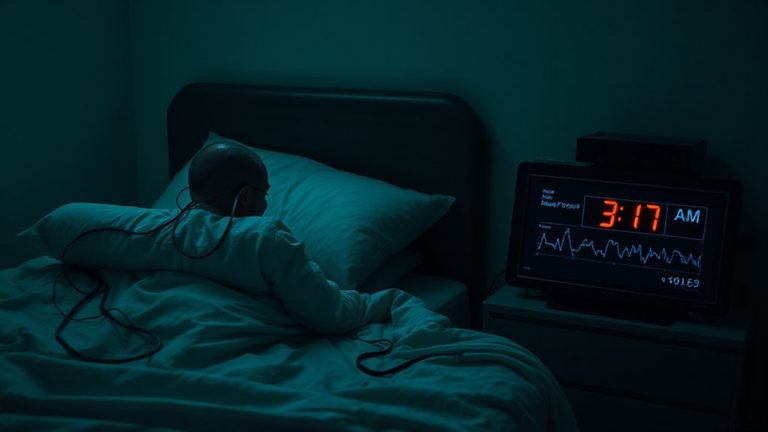
When should you start timed darkness therapy? Begin when your sleep patterns clearly shift too early, like falling asleep at 7 p.m. and waking at 3 a.m. The ideal duration for therapy is typically 8 to 10 hours of continuous darkness, aligned with your target sleep window. Starting at the same time each night helps build a consistent schedule, which strengthens your body’s internal clock over time. You’ll likely see shifts within 1–2 weeks if you stick to the routine. For best results, begin therapy under guidance from a sleep specialist who can tailor timing to your rhythm. Starting too early or too late may reduce effectiveness, so tracking your sleep habits beforehand helps pinpoint the most favorable start time. Consistency matters more than perfection-small daily efforts add up. This approach supports long-term adjustment without medications or invasive treatments.
How to Create Timed Darkness at Home
Though complete darkness isn’t always easy to achieve at home, you can create effective timed darkness with a few key adjustments to your bedroom environment. Start by improving light blocking-use blackout curtains or shades to cover windows, sealing edges with tape if needed to stop light leaks. Consider wearing a comfortable sleep mask designed for total light blocking, especially if wall or window fixes aren’t possible. Turn off all electronics or cover glowing indicators, and avoid nightlights. These steps enhance your sleep environment by signaling your body it’s time to wind down. Timed darkness works best when consistent, so set a nightly routine for dimming lights and preparing the space. With proper setup, even small changes can support your internal clock. Test options like curtains versus masks to find what fits your room and comfort best. For stylish options that combine function and design, consider patterned blackout curtains featuring Best Patterned Blackout Curtains.
Pairing Darkness and Light Therapy
Creating a consistent sleep routine isn’t just about shutting out light at night-it also involves managing your exposure to light during the day. Pairing timed darkness with bright light exposure helps regulate your circadian rhythm. Morning light, especially blue light, signals wakefulness, while evening darkness supports melatonin release. This balance improves sleep hygiene and treats advanced sleep-wake phase disorder effectively.
| Time of Day | Light Exposure | Purpose |
|---|---|---|
| Morning | Bright, blue-enriched | Boost alertness, reset circadian clock |
| Afternoon | Natural light | Sustain energy and mood |
| Evening | Dim, blue-depleted | Prepare body for sleep |
Use light therapy lamps in the morning and reduce screen time to limit blue light at night. Combine this with timed darkness for best results. Consistency strengthens sleep hygiene, making it easier to fall asleep and wake up at desired times.
On a final note
You can manage ASWPD by using timed darkness to shift your internal clock later. Start darkness therapy in the early evening, blocking blue light with blackout curtains or a sleep mask. Pair it with morning light exposure for best results. This approach is low-cost, non-invasive, and adjustable at home. While changes take days to notice, consistent timing improves outcomes. Always consult a sleep specialist to confirm diagnosis and track progress.