Why Pressure Mapping Technology Helps Identify Ideal Mattress Types for Joint Pain
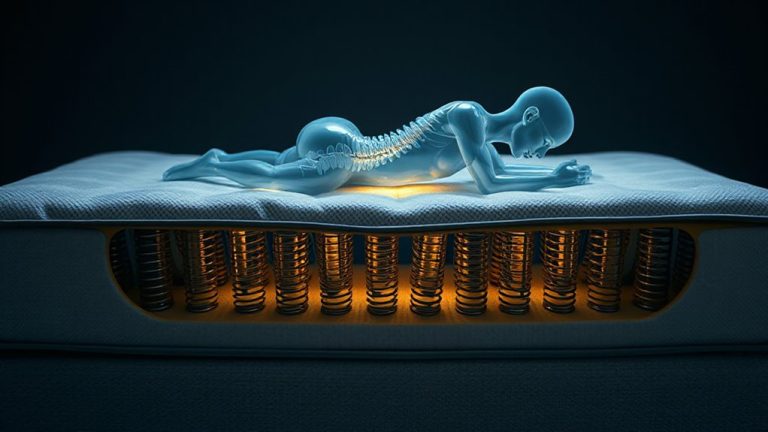
Pressure mapping shows exactly where your body bears too much weight while you sleep, especially in the hips and shoulders. If your spine isn’t aligned, joint pain can get worse overnight. A soft mattress might feel cozy, but it often lets you sink too deeply, increasing pressure. Medium to medium-firm models with zoned support help spread weight evenly. Materials like latex or memory foam respond differently, and hybrids offer a balanced mix. Data from pressure maps guides you to a mattress that supports your unique shape and sleep position-keep exploring to find the best fit for your comfort.
Notable Insights
- Pressure mapping identifies high-pressure zones like hips and shoulders that contribute to joint pain during sleep.
- It reveals how well a mattress supports spinal alignment, reducing strain on joints over time.
- The technology shows if a mattress is too soft, causing uncomfortable sinking that exacerbates joint discomfort.
- Pressure maps guide selection of medium-firm mattresses that evenly distribute weight and relieve pain triggers.
- It helps match mattress types, such as latex or hybrid, to individual sleep positions for optimal joint support.
Where Your Body Feels Pressure While Sleeping
Pressure points aren’t just discomfort-they’re clues. When you sleep, your body alignment and sleep posture directly affect where pressure builds. Common spots-hips, shoulders, lower back-bear the most weight, especially if your mattress doesn’t support natural spinal curves. If you’re a side sleeper, your shoulders and hips sink deeper, increasing pressure unless the mattress contours properly. Back sleepers often feel strain in the lower back if support is too soft or uneven. Poor body alignment over time can disrupt rest and contribute to morning stiffness. Pressure mapping technology shows these patterns clearly, highlighting areas where your sleep posture may be off. It helps match your build and preferred position to a mattress that balances support and cushioning. Look for models with zoned support or adaptive materials, and always test with a sleep trial and solid warranty-small steps that make a real difference in long-term comfort. Some of the best mattresses for back pain relief combine targeted support and pressure relief to promote proper spinal alignment.
Why Softness Worsens Joint Pain: And What Helps
You might think a softer mattress feels more comfortable at first, especially if you’re dealing with aching joints, but that plush surface can actually make pain worse over time. When your body sinks too deeply, it throws your spine out of alignment, increasing pressure on hips and shoulders. Proper support matters more than plush comfort. Firmness levels that are too low fail to keep your body balanced, while medium to medium-firm options often provide better relief. Look for mattresses with targeted support zones-especially in the center third and shoulder areas-to cradle your shape without sagging. These zones help maintain natural spinal alignment and reduce joint strain. Pressure mapping studies show that balanced support lowers pain triggers. Many top models offer trial periods and strong warranties, so you can test firmness safely. Choosing wisely based on support-not softness-can lead to more restful, pain-free sleep. Back sleepers with back pain benefit significantly from medium-firm mattresses designed to promote proper spinal alignment.
Memory Foam Vs. Latex: Which Eases Hip and Shoulder Pain?
Why do some mattresses relieve hip and shoulder pain better than others? It comes down to how they respond to your body’s pressure points. Memory foam conforms closely due to its temperature-sensitive cellular structure, cradling hips and shoulders evenly. But it may retain heat and slow responsiveness. Latex, with its open-cell design and natural elasticity, offers resilient support that responds quickly to movement. This helps maintain spinal alignment while easing joint stress. Pressure mapping shows latex distributes weight more evenly over time, especially for side sleepers. Memory foam often wins on initial sink, but latex provides a buoyant feel that may reduce morning stiffness. Both materials resist dust mites, but natural latex is more eco-friendly. Look for mattresses with at least a 10-year warranty and sleep trials of 100 nights to test pain relief. Your choice depends on whether you prefer deep contouring or responsive support.
Do Hybrid Mattresses Relieve Pressure for Side Sleepers?
How do hybrid mattresses stack up when it comes to easing pressure for side sleepers? They often combine responsive coils with foam or latex layers, offering a balance that can support hips and shoulders without sacrificing comfort. The top layers cradle your body, helping distribute pressure, while the coil system provides firm, even support. This design helps maintain spinal alignment, which matters if you wake with stiffness. Hybrids typically offer solid edge support, making it easier to move around or sit on the edge of the bed. Many also provide good motion isolation, so if you share the bed, you’re less likely to feel your partner shift. Look for models with a trial period and clear warranty terms-this lets you test pressure relief in your own sleep environment. While not ideal for everyone, hybrids can be a practical middle ground for side sleepers needing both cushioning and structure.
Match Your Sleep Position to the Right Mattress Using Pressure Data
Pressure mapping technology gives you a clearer picture of how your body interacts with a mattress, especially when sleep position plays a big role in comfort and support. If you’re a side sleeper, high-pressure areas form at your shoulders and hips, so a softer surface that cushions these spots helps maintain proper body alignment. Back sleepers often need balanced support to keep the spine neutral, and pressure maps can show if your lower back is sinking too much or staying too elevated. For stomach sleepers, poor sleep posture can strain the neck and lower back-pressure data highlights when a firmer mattress might reduce strain. These detailed visuals guide you toward a mattress that matches your natural sleep posture, improving spine positioning over time. Many brands offer trials and warranties, letting you test based on actual pressure performance, not just feel. This data-driven approach leads to smarter, more informed choices.
On a final note
You can use pressure mapping to see how well a mattress supports your hips and shoulders, especially if you sleep on your side. Memory foam conforms closely, while latex offers responsive support, and hybrids balance both. A good match reduces joint pain over time. Look for models with trial periods and warranties so you can test firmness and comfort. Your sleep position and body type help guide the best choice.