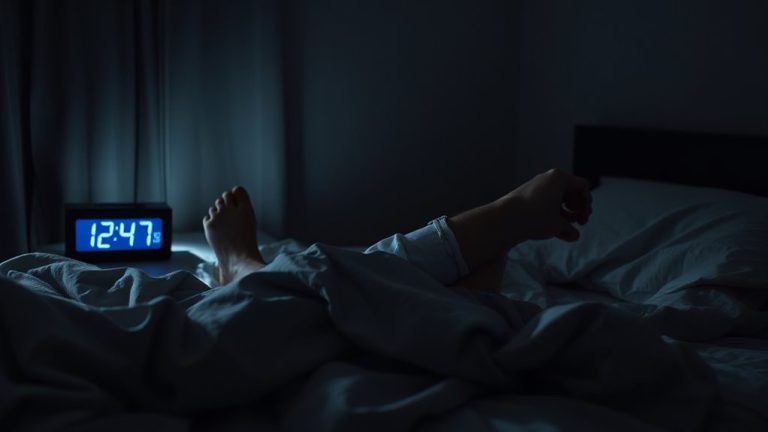
Improving Sleep Quality Through Understanding Circadian Rhythms
You sleep better when your routine matches your body’s natural rhythm. Keep wake and bedtimes consistent, even on weekends, to stabilize your internal clock. Morning light and daytime movement boost alertness, while dimming lights and reducing screen time at night help your body prepare for rest. Aim for a cool, quiet bedroom around 65°F with breathable bedding. If your energy dips or sleep feels off, small habit shifts can make a noticeable difference-there’s more to explore that might help you fine-tune your approach.
Notable Insights
- Align sleep and wake times consistently every day to stabilize your body’s internal clock.
- Expose yourself to bright natural light in the morning to suppress melatonin and boost daytime alertness.
- Limit blue light exposure from screens in the evening to support natural melatonin production.
- Maintain a cool, dark, and quiet sleep environment to enhance sleep quality and support circadian rhythms.
- Avoid long or late afternoon naps to prevent interference with nighttime sleep onset and duration.
How Your Body Clock Controls Sleep
Most of your daily sleep pattern depends on an internal body clock called the circadian rhythm, which runs on a roughly 24-hour cycle and responds to light and dark cues from your environment. As evening approaches, your body temperature begins to drop, signaling that it’s time to wind down. At the same time, your brain triggers melatonin release, a hormone that promotes sleepiness. In the morning, light exposure halts melatonin and boosts cortisol, helping you feel alert. This rhythm guides not only when you sleep but also when you’re most likely to feel focused or tired. Disruptions can affect hormone release and body temperature regulation, making it harder to fall or stay asleep. Aligning your routine with these natural shifts-like sleeping in a cool room or limiting screen time at night-supports better timing and overall sleep quality.
See The Signs Of A Disrupted Rhythm
Could you wake up feeling groggy even after eight hours of sleep, or struggle to focus midday despite drinking coffee? These could be signs your circadian rhythm is off. You might also notice trouble falling asleep or waking too early, even when tired. Mood changes, low energy, and poor concentration often follow. Shift work, screen time at night, or frequent travel can lead to jet lag, which temporarily throws off your rhythm. Over time, a disrupted cycle may contribute to more serious sleep disorders like insomnia or sleep apnea. Recognizing these signals early helps you decide whether to adjust habits or seek advice. Tracking sleep patterns, light exposure, and daily energy levels gives useful insight. Some try sleep aids short-term, but long-term solutions rely on consistent cues like light and meal timing. A doctor can help if problems persist.
Reset Your Clock With A Sleep Routine
Why do you still feel tired after a full night’s rest? Your circadian rhythm might be out of sync. Resetting it starts with a steady sleep routine. Go to bed and wake up at the same time every day, even on weekends. This consistency strengthens your body’s internal clock. Add morning exercise to help-it boosts alertness and anchors your rhythm to daylight. Just 20–30 minutes of activity can make a difference. If you need a nap, keep it short and at the same time daily. Consistent naps of 20 minutes or less can refresh you without disrupting nighttime sleep. Avoid long or late naps, as they may interfere with your sleep cycle. Over time, this routine helps regulate energy, mood, and rest quality. It’s a practical step toward better sleep hygiene and supports long-term improvements in how you feel each day.
Boost Melatonin With Smart Light Exposure
When evening rolls in, dimming the lights can help your body ease into sleep mode by signaling the start of melatonin production. Avoiding blue light from screens during evening exposure supports this natural shift. Your eyes react to brightness and color, mistaking bright blue-rich light for daylight, which delays melatonin release. To align your rhythm, use warmer, dimmer lighting after sunset. A variety of top light therapy lamps can also help regulate circadian rhythms when used appropriately during daylight hours.
| Time of Day | Light Type | Melatonin Effect |
|---|---|---|
| Afternoon | Bright, natural | Keeps you alert |
| Early Evening | Warm, dim | Begins melatonin rise |
| Late Evening | Minimal, red-tinged | Boosts melatonin strongly |
Consider using amber bulbs or screen filters that reduce blue light. Consistent smart light exposure improves sleep onset and quality over time.
Create A Sleep-Friendly Bedroom Environment
You’ve already set the stage for better sleep by managing light exposure to support melatonin, and now it’s time to focus on the space where rest happens-the bedroom itself. Keep room decor simple and calming-neutral colors and minimal clutter help signal relaxation. Choose breathable bedding and a supportive mattress suited to your comfort needs. Control noise levels with soundproof curtains, a white noise machine, or earplugs, especially if outside sounds disrupt you. Blackout curtains or a sleep mask can further block light, while a cool room temperature-around 65°F-supports natural body cooling. Consider a fan or air purifier if it helps maintain comfort and quiet. These changes are easy to test, with most offering noticeable improvements within a week. Look for products with trial periods so you can assess performance without pressure. Small, informed adjustments make the bedroom work for your rhythm. For maximum light blockage, consider installing best blackout curtains designed to minimize early morning sunlight disruption.
Support Your Rhythm With Daily Habits
While your bedroom sets the stage for rest, your daily habits fine-tune the rhythm that governs sleep and wakefulness. You strengthen this rhythm by maintaining consistent hydration and balanced meals throughout the day. Drinking water regularly supports metabolic functions linked to energy levels, while skipping meals or overeating can disrupt your internal clock. Aim to eat at predictable times, focusing on whole grains, lean proteins, and vegetables to sustain energy and support nighttime recovery. Exposure to natural light in the morning, paired with limited screen time at night, reinforces your body’s natural cycle. Physical activity during daylight hours improves sleep quality, but avoid intense workouts close to bedtime. These habits don’t require perfection-small, consistent choices make a difference. Over time, they help regulate your circadian rhythm, improving both sleep onset and overall rest, without relying on sleep aids or interventions.
On a final note
You can improve sleep by aligning with your circadian rhythm. Notice signs like fatigue or insomnia, then adjust with consistent bedtimes and morning light. Dim lights at night to boost melatonin, and keep your bedroom cool and dark. Daily habits like exercise and limited screen time help too. Small changes often reduce the need for sleep aids. Try these steps for several weeks, and track progress to see what works best for your body’s natural cycle.