How to Prevent Neck Pain From Reading in Bed With Proper Posture and Pillows
Sit up straight using a bed wedge at a 30 to 45-degree angle to support your spine and reduce neck strain. Pair it with a contour pillow that matches your neck’s curve-memory foam or adjustable fill works best. Keep your book at eye level with a hands-free stand to avoid tilting your head. Use a warm-toned LED light to prevent leaning, take breaks every 30 minutes, and stretch gently afterward-many wedges even offer trial periods so you can test what truly supports your comfort.
Notable Insights
- Maintain spine alignment by sitting up straight to reduce neck strain and prevent forward head tilt.
- Use a bed wedge with 30–45 degrees of incline for firm, stable back support during reading.
- Choose a neck-supportive pillow that matches your sleeping posture and maintains natural spinal curvature.
- Position your book at eye level using a stand or tray to avoid neck flexion and strain.
- Use warm, angled lighting and take 30-minute breaks to rest your eyes and reset your posture.
Sit Up Straight to Keep Your Spine in Line
Good posture starts with alignment-so when reading in bed, propping yourself up with pillows to sit straight helps keep your spine neutral and reduces strain on your neck. Proper spine alignment means your head isn’t leaning forward or drooping, which lessens muscle fatigue over time. You’ll want firm back support to maintain this position without slumping, especially during long reading sessions. A stack of firm pillows or a contoured reading pillow can offer steady support along your lower and upper back, promoting a natural curve in your spine. This setup may feel awkward at first, but your body adjusts with consistent use. Choosing the right support depends on your mattress firmness and sleep preferences. Look for breathable materials and washable covers for comfort and longevity. Test different arrangements to see what balances ease and posture, helping prevent long-term discomfort. For side sleepers dealing with hip pain, using the best pillow for hip pain can further improve spinal alignment while reading in bed.
Prop Yourself up With a Bed Wedge
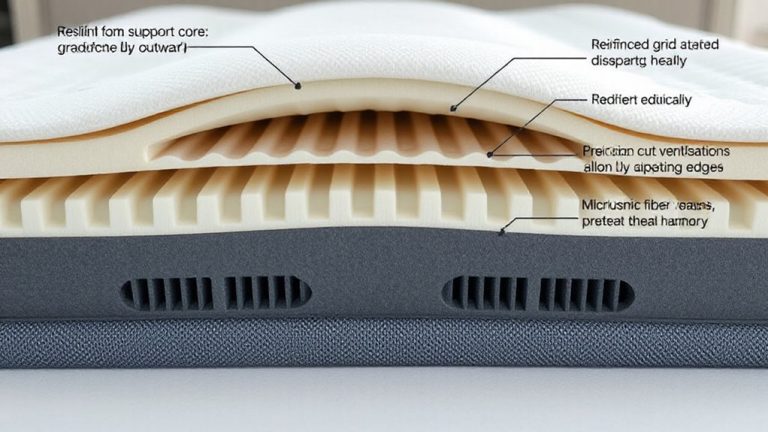
Sitting up straight helps align your spine and ease neck strain, but if propping with regular pillows feels unstable or flattens too fast, a bed wedge might work better for steady support. A bed wedge is designed to offer firm, long-lasting back support while you read, keeping your upper body elevated at a consistent angle. Most are made from dense foam, which holds its shape better than standard pillows. Some include non-slip bottoms or adjustable inclines, helping you find a comfortable position without shifting during use. When choosing one, check the incline-typically 30 to 45 degrees works well for reading. Many models come with trial periods or warranties, so you can test comfort and support risk-free. Using a bed wedge reduces strain on your neck and back by maintaining posture without constant adjustment. It’s a practical sleep aid that supports healthier reading habits in bed. For optimal comfort, consider a 45-degree wedge pillow as it provides an ideal incline for reading while promoting proper spinal alignment.
Choose a Pillow That Supports Your Neck
A well-designed pillow does more than cushion your head-it supports the natural curve of your neck and keeps your spine aligned while you read in bed. Proper neck alignment reduces strain during prolonged reading, especially when propped up. Pillow firmness matters: too soft, and your neck tilts too far forward; too firm, and it pushes your head back, disrupting alignment. Look for pillows labeled as supportive or contour-shaped, since they’re often designed to cradle the neck. Memory foam or latex options maintain shape and offer consistent support. Some brands let you adjust fill material, so you can fine-tune height and firmness. Consider trying a pillow with a trial period-many reputable companies offer 30 to 60-day returns. This lets you test comfort and support without risk. A good pillow balances firmness and shape to maintain alignment, making bedtime reading safer and more comfortable. For neck pain relief, consider choosing one of the best pillows for neck pain recommended by experts.
Hold Your Book at Eye Level to Prevent Neck Pain
Keeping your book at eye level while reading in bed helps maintain a neutral spine and reduces strain on your neck muscles. Proper book alignment means holding the book so its center matches your eye positioning, preventing you from tilting your head down. When you angle your head forward or downward, even slightly, it increases pressure on your cervical spine over time. Holding the book up with your hands or using a hands-free book stand keeps it aligned with your gaze, supporting better posture. Devices like cushioned reading arms or adjustable bed trays offer stable support and improve comfort during extended use. These tools are often lightweight, adjustable, and come with trial periods for home testing. Look for models with padded clamps or rotating joints to maintain ideal eye positioning without straining. Small adjustments in book alignment can make a measurable difference in neck comfort over time.
Use a Reading Light to Avoid Leaning Forward
You’ve already set up your book at eye level to reduce strain, but poor lighting can undo that progress by pulling you forward as you squint to see the page. Good reading lighting is key to maintaining posture alignment and preventing neck pain. A dedicated light keeps pages clearly visible without hunching. Choose a source that’s bright enough to eliminate shadows but not so harsh that it causes glare or keeps you awake.
| Light Type | Best For | Notes on Use |
|---|---|---|
| Clip-on lamp | Adjustable positioning | Lightweight, attaches to bed frame |
| Bedside lamp | Ambient brightness | Offers wide coverage |
| LED book light | Personal reading | Low heat, energy-efficient |
Look for warm-toned LEDs around 2700–3000K to support melatonin release. Test lights with dimming options and check return policies in case adjustments are needed.
Take Breaks Every 30 Minutes to Ease Strain
Even a well-lit book and perfect posture can’t eliminate strain entirely if you’re reading nonstop for hours. Your neck muscles stiffen, and eye strain builds up without you noticing. That’s why taking a break every 30 minutes helps-just stand up, look away from the page or screen, and let your eyes refocus on something distant. This simple pause reduces eye strain and lowers the impact of prolonged screen time if you’re using a device. It also gives your neck and shoulders a chance to reset, preventing subtle tension from turning into lasting discomfort. Think of it as maintenance, not interruption. Over time, these breaks support better sleep by reducing physical stress before bed. They don’t have to be long-just 60 to 90 seconds-and they improve how you feel both now and over weeks of consistent reading. Your body’s response can guide choices about sleep habits or needed adjustments.
Do 3 Quick Stretches After Reading to Prevent Stiffness
Why does your neck feel tight after reading in bed? Holding one position too long strains muscles and limits circulation. Doing three quick stretches helps release tension and restores mobility. Start with neck rotation: slowly turn your head to the left, hold for three seconds, then rotate to the right. Repeat five times per side. This loosens stiff neck muscles and improves joint function. Next, do shoulder rolls. Roll shoulders forward in a smooth circle ten times, then reverse for ten backward rolls. This eases upper back and trapezius tightness caused by hunching. Finish with a forward neck stretch-gently lower your chin toward your chest and hold for 15 seconds. These moves take less than two minutes but reduce stiffness markedly. Regular use may prevent long-term strain and support better sleep posture. Try them nightly to maintain flexibility and comfort.
On a final note
You can reduce neck pain by sitting upright with spine support and using a bed wedge for better alignment. A supportive pillow keeps your neck stable, while holding your book at eye level prevents strain. A reading light helps you avoid leaning forward. Take short breaks every 30 minutes and stretch afterward. Try these adjustments gradually, and consider products with trial periods to find what works best for your comfort and sleep routine.