The Power of Aromatherapy in Promoting Restful Slumber and Regulating Your Internal Clock
You can use aromatherapy to support restful sleep and balance your internal clock by choosing calming oils like lavender or chamomile, which help quiet the nervous system. Inhaling these scents 60–90 minutes before bed may improve sleep quality and ease mild insomnia. For alertness, try citrus oils in the morning. Pair diffusing with consistent bedtime habits and intermittent use for safety. You’ll find practical ways to get the most out of your routine ahead.
Notable Insights
- Aromatherapy influences brain chemistry through the olfactory system, regulating sleep and wakefulness by targeting key neural pathways.
- Calming essential oils like lavender and chamomile reduce anxiety and improve sleep quality without causing dependency.
- Energizing scents such as lemon and rosemary in the morning support alertness and help synchronize the circadian rhythm.
- Using diffusers 60–90 minutes before bedtime disperses soothing aromas that enhance sleep onset and maintain sleep continuity.
- Consistent timing, proper diffusion methods, and high-quality oils maximize benefits while minimizing risks for long-term sleep regulation.
How Aromatherapy Affects Your Sleep and Wake Cycle
Have you ever wondered why a whiff of lavender can make you feel drowsy, or why citrus scents seem to sharpen your focus in the morning? That’s because aromatherapy directly influences brain chemistry. When you inhale essential oils, odor molecules travel through your nasal passages and stimulate the olfactory system, which connects to brain regions that regulate sleep and alertness. These signals affect neural pathways linked to mood, stress, and circadian rhythm. For example, calming scents like sandalwood may slow heart rate and ease anxiety by altering neurotransmitter activity. Energizing scents like lemon can boost serotonin and dopamine, helping you feel more awake. Using aromatherapy consistently at key times-like before bed or upon waking-can support your natural sleep-wake cycle. It’s a non-invasive, drug-free option worth trying if you’re exploring sleep aids or adjusting to sleep disorders. Always test oils safely and consult a healthcare provider if symptoms persist. Incorporating a high-quality aromatherapy diffuser can enhance the effectiveness of essential oils for sleep support.
Use These Essential Oils for Deeper Sleep
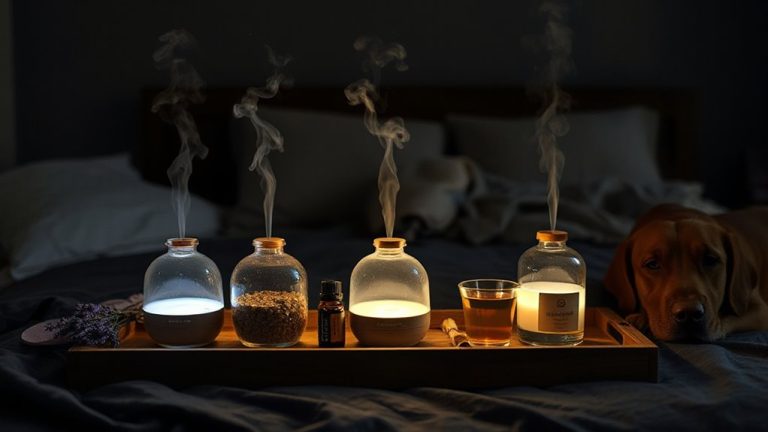
What if the key to more restful nights wasn’t a pill, but a scent? You can harness Lavender benefits to ease into deeper sleep-its calming aroma reduces nervous system activity, helping you fall asleep faster. Studies show lavender oil improves sleep quality, especially for those with mild insomnia. Pair it with Chamomile properties, known for gentle sedative effects, and you’ve got a natural duo that supports relaxation without grogginess. Just a few drops in a diffuser, or diluted on your temples, can make a noticeable difference. Unlike some sleep aids, these oils rarely cause dependency, making them safer for regular use. While results vary, consistent trial over a week or two often reveals improvements. Look for 100% pure essential oils with no additives to guarantee effectiveness. Always patch-test first, and discontinue if irritation occurs. They’re not a cure, but they’re a practical step worth trying. For best outcomes, consider using a diffuser or topical application to maximize aroma absorption and therapeutic benefits.
Time Your Aromatherapy for Circadian Balance
While your body’s internal clock runs on a roughly 24-hour cycle, using aromatherapy at the right times can help reinforce its natural rhythm. Chronobiology research shows that exposure to certain scents in the morning, like citrus or rosemary, may support alertness and neural synchronization with daylight. Later in the evening, calming oils such as lavender or chamomile, used 60–90 minutes before bed, can signal your brain to wind down. Timing matters-consistent daily use strengthens circadian cues. You’re not just masking fatigue; you’re aligning your body’s systems. Studies suggest well-timed aromatherapy can improve sleep onset and quality, especially when paired with good sleep hygiene. It won’t replace medical treatment for serious sleep disorders, but it’s a low-risk option worth trying. Look for pure, therapeutic-grade oils, and track your response over two to three weeks to judge effectiveness.
Diffuse Oils the Right Way for Sleep
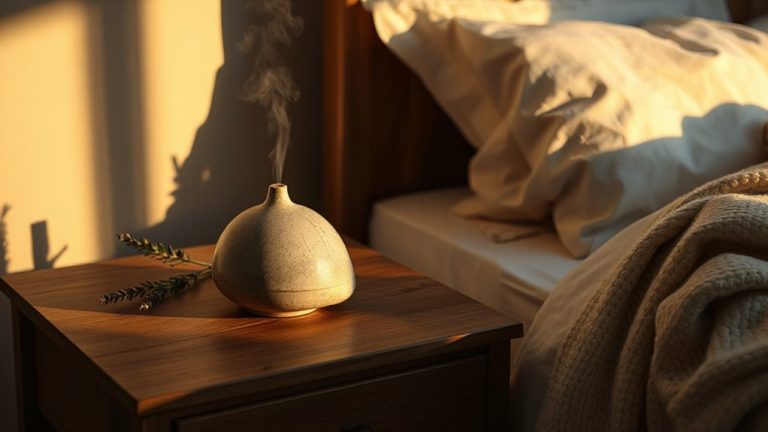
If you’re using a diffuser to help with sleep, placing it in your bedroom 30 to 60 minutes before bedtime gives the scent time to take effect without overwhelming your senses. Proper diffusion techniques matter-ultrasonic diffusers disperse a fine mist that blends scent and humidity, while nebulizing types deliver pure aroma without water. The key is ideal timing and placement. Run your diffuser just long enough to scent the room, then let it cycle off. Choosing the right device can enhance effectiveness, so consider the type of aromatherapy diffusers best suited for nightly use.
| Method | Duration | Best For |
|---|---|---|
| Intermittent | 30 mins on, 30 off | Sensitive noses |
| Continuous | 60 mins | Larger rooms |
| Pre-sleep | 30–60 mins before bed | Calming the mind |
Build a Bedtime Routine That Actually Works
You’ve set the mood with carefully diffused oils, but lasting sleep improvement comes from consistency beyond scent alone. A bedtime routine should include predictable, calming steps you can follow most nights. Start with a digital detox-turn off screens at least 30 minutes before bed to reduce blue light exposure, which disrupts melatonin. Use that time for mindful breathing: sit quietly, inhale slowly for four counts, hold for four, and exhale just as gradually. This simple practice helps lower heart rate and quiet mental chatter. Pair it with a dimly lit environment and a fixed bedtime to strengthen your circadian rhythm. Choose activities that signal winding down-reading, light stretching, or journaling. Consistency matters more than perfection. Try the routine for at least two weeks to assess its effect. Over time, these steps can improve sleep onset and overall rest quality.
Stay Safe With Nightly Aromatherapy Use
Since essential oils are potent plant extracts, using them nightly means taking precautions to guarantee they enhance sleep without causing irritation or adverse effects. Safety precautions are essential for consistent usage. Always dilute oils properly-especially if applying to skin-and opt for high-quality, pure formulas. Avoid direct inhalation from bottles and keep diffusers at a safe distance while you sleep. Some oils may interact with medications or affect allergies, so patch testing matters.
| Risk | Prevention |
|---|---|
| Skin irritation | Dilute with carrier oil |
| Respiratory sensitivity | Use intermittent diffusion |
| Photosensitivity | Avoid sun after topical use |
| Overexposure | Limit diffusion to 30–60 mins |
Consistent usage works best when paired with smart, informed habits that prioritize your well-being night after night.
Pair Aromatherapy With Proven Sleep Habits
One key to better sleep is combining aromatherapy with established routines that support your body’s natural rhythm. You can enhance your sleep environment simply by introducing calming scents like lavender, which research links to slower heart rate and relaxed breathing-key parts of the lavender benefits. Use a diffuser 30 minutes before bed, but pair it with consistent habits: dimming lights, reducing screen time, and sticking to a fixed bedtime. A quiet, cool room boosts these effects. Think of aromatherapy not as a standalone fix but as part of a larger strategy. If you struggle with sleep disorders, consider how scent pairs with proven sleep aids like white noise machines or blackout curtains. Trial different combinations over a few weeks to see what stabilizes your circadian rhythm. This practical approach offers measurable improvements without overpromising results.
On a final note
You can use aromatherapy to support better sleep and a steady internal clock when you choose oils like lavender or chamomile, time diffusion before bed, and pair scents with consistent routines. It’s safe for most, but test small amounts first. While not a fix for serious sleep disorders, it works well with proven habits like dark rooms and regular bedtimes, offering a gentle, low-risk option to try.