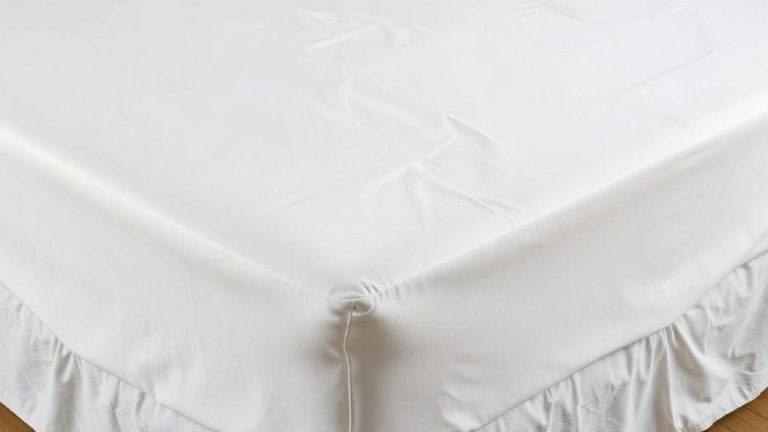
Best Sustainable Mattresses for Eco-Friendly Sleep Goals
You’ll sleep cleaner and greener on sustainable mattresses made with GOLS-certified organic latex, natural wool, and organic cotton-materials that are biodegradable, non-toxic, and free from chemical flame retardants. Models like the Awara and Organic Queen Hybrid offer breathable, fiberglass-free comfort with durable steel coils and cooling plant-based fabrics. Most come with long trial periods, including 365-night options, and strong warranties. Choosing one means better air quality, ethical sourcing, and easier end-of-life disposal-key trade-offs to weigh as you explore your best fit.
We are supported by our audience. When you purchase through links on our site, we may earn an affiliate commission, at no extra cost for you. Learn more. Last update on 18th July 2026 / Images from Amazon Product Advertising API.
Notable Insights
- Made with GOLS and GOTS-certified organic latex, cotton, and wool for truly sustainable, non-toxic sleep.
- Free from fiberglass, polyfoams, formaldehyde, and chemical flame retardants, ensuring safer environmental and human impact.
- Utilizes biodegradable, renewable materials like natural latex and organic wool that reduce landfill waste.
- GREENGUARD Gold and CertiPUR-US certifications guarantee low emissions and healthier indoor air quality.
- Eco-conscious brands plant trees per purchase and use recyclable, ethically sourced, USA-made materials.
Awara Natural Hybrid Full Mattress 10
-rayon blend, adds temperature regulation while keeping the surface irritation-free. I find this mattress balances breathability and softness, thanks to its bamboo-derived fabric and organic wool layer. Inside, 8 inches of pocketed coils offer support and cut motion transfer, which might help if you share the bed. The core uses GOLS-certified latex, giving resilient comfort that responds well to pressure points. At 10 inches thick, it suits most sleep positions. I also appreciate the fiberglass-free design-no harsh chemicals. Plus, the 365-night trial and Forever Warranty™ let me test it deeply, knowing I’m covered long-term.
Best For: Sleepers seeking a natural, eco-friendly hybrid mattress with balanced support and cooling comfort, ideal for those prioritizing sustainability and long-term durability.
Pros:
- Features GOLS-certified organic latex and sustainably sourced materials, including bamboo rayon and New Zealand wool for a clean, breathable sleep surface
- 8 inches of individually wrapped coils provide excellent motion isolation and support across all sleep positions
- Generous 365-night trial and Forever Warranty™ offer unmatched risk-free testing and lifelong coverage
Cons:
- Heavy at 71.8 pounds, making setup and moving difficult without assistance
- Only 35 customer reviews, limiting social proof and real-world feedback
- Premium price point may not suit budget-conscious buyers despite strong eco-credentials
Organic Queen Hybrid Mattress 14

If you sleep hot or live in a humid climate, the Organic Queen Hybrid Mattress 14 stands out with its cooling, breathable design that keeps airflow steady all night. I appreciate how the CertiPUR-US certified gel foam pulls heat away while the organic cotton layer boosts airflow. Its 14-inch hybrid build promotes ventilation, and the fiberglass-free materials meet the Global Recycled Standard. With medium firmness (6.5/10) and 7-zone support, it balances cushioning and pressure relief for side, back, or stomach sleepers. Individually wrapped coils reduce motion transfer, and 2.3mm edge coils prevent sinkage. At 80 x 60 x 14 inches and 112 lbs, it’s durable, well-supported, and designed for long-term use.
Best For: Hot sleepers and couples in humid climates seeking a breathable, medium-firm, and eco-friendly hybrid mattress with excellent motion isolation and edge support.
Pros:
- Effective cooling with gel foam and organic cotton layers that enhance airflow and heat dissipation
- Strong edge support and motion isolation thanks to individually wrapped pocket springs and thick 2.3mm edge coils
- Eco-conscious construction with CertiPUR-US certified foam, organic materials, and compliance with Global Recycled Standard
Cons:
- Heavy at 112 pounds, making setup and moving difficult without assistance
- Medium-firm feel may not suit sleepers preferring very soft or very firm surfaces
- Only available since August 2025, so long-term durability data is not yet established
Awara Natural Hybrid Twin Mattress 10
The Awara Natural Hybrid Twin Mattress 10 stands out for sleepers who prioritize both eco-friendly materials and durable, responsive support. I appreciate its 8 inches of individually wrapped steel coils, which help with spinal alignment and reduce motion transfer. It’s made with GOLS and FSC-certified organic latex, plus organic New Zealand wool in a quilted, bamboo-rayon cover-no fiberglass, all sustainable. At 10 inches tall and 54.9 pounds, it’s sturdy but manageable. I like that buying one helps plant 10 trees through Trees for the Future. Plus, I can test it year-round with the 365-night trial and feel secure under the lifetime Forever Warranty™-it’s one of the longest around, and that counts for something.
Best For: Eco-conscious sleepers seeking a durable, natural hybrid mattress with excellent support and long-term sustainability benefits.
Pros:
- Features GOLS and FSC-certified organic latex, organic New Zealand wool, and a fiberglass-free, bamboo-rayon cover for a sustainable, non-toxic sleep environment
- Offers excellent motion isolation and spinal alignment thanks to 8 inches of individually wrapped steel coils
- Includes a 365-night home trial and a lifetime Forever Warranty™-the longest in the industry
Cons:
- Weighs 54.9 pounds, which may make setup and moving difficult without assistance
- Higher price point compared to conventional hybrid mattresses due to premium natural materials
- Only 35 customer reviews with a 4.2-star average, indicating limited user feedback for evaluation
Ethical Mattress Co Hybrid (Full, No Fiberglass)

You’ll sleep cooler and breathe easier on the Ethical Mattress Co Hybrid, a solid pick if you’re looking for a natural, long-lasting mattress without fiberglass or chemical flame retardants. I trust its organic cotton cover and wool layer to wick moisture and resist overheating, while the natural latex gives soft pressure relief without trapping heat. The pocketed coils support spinal alignment and reduce partner disturbance, ideal if you shift positions at night. Since it’s made in New Jersey with high-density, non-toxic materials, it feels sturdier than most hybrids-76 pounds, to be exact. The 10-inch profile ships compressed, and its organic wool meets flammability rules safely, making setup simple and eco-conscious.
Best For: Eco-conscious sleepers seeking a non-toxic, durable hybrid mattress free from fiberglass and chemical flame retardants.
Pros:
- Constructed with 100% organic cotton, wool, and natural latex for a toxin-free, breathable sleep surface
- Features pocketed coils for excellent motion isolation, edge support, and spinal alignment
- Meets flammability standards naturally with organic wool, no chemical retardants required
Cons:
- Weighs 76 pounds, making it heavier and harder to move than most hybrid mattresses
- Limited to a single firmness level, which may not suit all sleep preferences
- Higher price point compared to conventional hybrid mattresses with synthetic materials
Organic Merino Wool Mattress Topper (Queen)
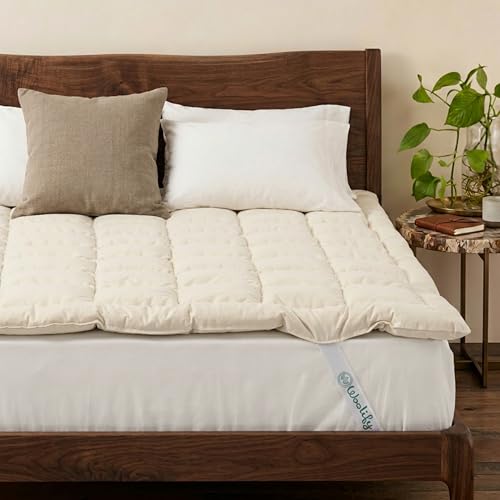
A queen-sized sleeper seeking temperature balance and natural materials will find this Organic Merino Wool Mattress Topper a strong match, especially those sensitive to heat, allergens, or chemical off-gassing. I love how the 2-inch plush top cushions pressure points while maintaining support, offering medium-soft firmness that suits side, back, and stomach sleepers. Made from 100% organic merino wool and cotton, it regulates heat year-round, staying cool in summer and warm in winter. The dense, hypoallergenic fibers resist odors and block allergens, and since it’s handmade without synthetics, there’s no off-gassing. I recommend spot cleaning or dry cleaning only.
Best For: Sleepers seeking a natural, temperature-regulating mattress topper that provides hypoallergenic comfort and balanced support for all sleeping positions.
Pros:
- Naturally regulates temperature year-round, keeping you cool in summer and warm in winter
- Hypoallergenic and resistant to odors, ideal for sensitive sleepers and those avoiding chemical off-gassing
- Made from 100% organic merino wool and cotton, ethically sourced and sustainably crafted
Cons:
- Dry clean only, limiting convenient home care options
- Slight premium price due to organic and handcrafted materials
- May be too warm for sleepers who prefer a very cool surface in hot climates
Zinus 10″ Bliss Memory Foam Mattress

Looking for a sustainable mattress that balances eco-friendly materials with comfort? I’ve found the Zinus 10″ Bliss Memory Foam Mattress uses a Tencel blend cover, which wicks moisture and stays cool, while green tea and gel infusions in the foam fight odors and heat. It’s CertiPUR-US certified, meaning low emissions and safe materials. The 7-zone airflow system boosts breathability, and the foam, made in Georgia, supports pressure relief. It ships compressed, expands in hours, and holds up to 500 pounds. I appreciate the 10-year warranty-it gives me confidence in its long-term use.
Best For: Eco-conscious sleepers seeking a comfortable, sustainably made mattress with cooling features and strong pressure relief.
Pros:
- Features a sustainable Tencel blend cover and green tea-infused foam for odor resistance and temperature regulation
- Includes cooling gel-infused memory foam and a 7-zone airflow system for enhanced breathability
- CertiPUR-US certified, made in the USA, and comes with a 10-year limited warranty
Cons:
- May require extended expansion time in cooler room temperatures
- Only available as a compressed in-a-box mattress without additional bedding components
- Cover is hand wash only, limiting cleaning convenience
AWARA Natural Hybrid Twin Mattress 12

When choosing a sustainable mattress that balances eco-conscious materials with solid support, the AWARA Natural Hybrid Twin Mattress 12 stands out for sleepers who value natural components and long-term durability. I appreciate its 4 inches of FSC-certified natural latex and breathable New Zealand wool, which wick heat and resist allergens without fiberglass. Individually wrapped coils reduce motion transfer while supporting spinal alignment. At 12 inches thick, it pairs a Euro top with steel springs for comfort and airflow. It’s GREENGUARD Gold and OEKO-TEX 100 certified, ensuring low emissions. Plus, every purchase plants 10 trees. I’ve got a 365-night trial and a lifetime warranty to test it risk-free.
Best For: Eco-conscious sleepers seeking a durable, natural-material mattress with excellent support, breathability, and long-term environmental impact through reforestation.
Pros:
- Made with sustainable, non-toxic materials including FSC-certified latex, New Zealand wool, and organic cotton
- Excellent motion isolation and spinal support thanks to individually wrapped coils and responsive natural latex
- Industry-leading 365-night trial and lifetime warranty, plus 10 trees planted per purchase for environmental impact
Cons:
- Heavier than average at 57 pounds, making setup and moving more difficult
- Natural latex may have an initial off-gassing smell, though it dissipates quickly
- Higher price point compared to conventional hybrid mattresses without natural materials
NapQueen 8″ Twin Bamboo Charcoal Mattress
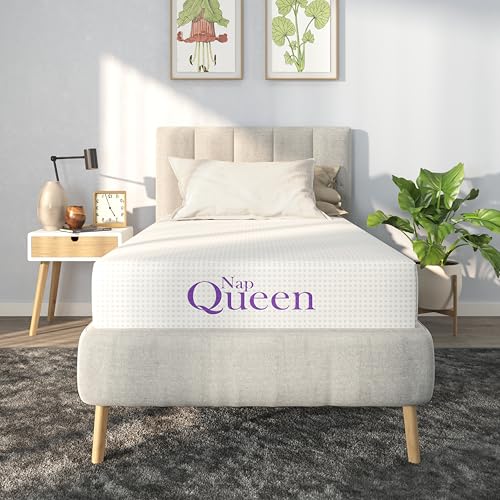
You’ll find the NapQueen 8″ Twin Bamboo Charcoal Mattress a solid fit if you sleep hot or want a simple, low-maintenance bed with responsive support. I appreciate how the bamboo charcoal-infused memory foam helps regulate temperature, moisture, and odor, creating a fresher sleep environment. The medium feel supports spine alignment, especially if you’re a stomach sleeper. High-density foam cushions joints and the lower back without deep sink. At 8 inches thick and 28 pounds, it’s easy to handle and expands quickly after unboxing. The cover zips off, so I can wash it when needed. It supports up to 200 pounds and comes with a 2-year warranty-practical, no-fuss comfort for everyday use.
Best For: Stomach sleepers and hot sleepers seeking a low-maintenance, responsive mattress with temperature-regulating properties.
Pros:
- Bamboo charcoal-infused memory foam helps regulate temperature, moisture, and odor for a fresher sleep environment
- Medium firmness supports spine alignment and provides joint and lower back cushioning without deep sink
- Removable, washable cover and quick setup from a box make it easy to maintain and use
Cons:
- Maximum weight limit of 200 pounds may not suit heavier individuals
- Twin size may be too small for adults wanting extra sleeping space
- Limited warranty of only 2 years compared to longer industry standards
Ethical Mattress Co. Twin Kid’s Bed-in-a-Box
The Ethical Mattress Co. Twin Kid’s Bed-in-a-Box supports growing kids with a 6-inch profile ideal for floor beds, bunks, and trundles. I like that it combines organic latex for comfort and pressure relief with pocketed coils to support spinal alignment as your child grows. It’s made without polyfoams, fiberglass, or chemical flame retardants-organic wool meets flammability standards naturally. Built in New Jersey with organic cotton, wool, and latex, it’s shipped compressed for easy setup. At 52 pounds, it’s sturdy but manageable. With a 4.7-star average from 39 reviews, it balances breathability, safety, and long-term use for toddlers to teens.
Best For: Families seeking a safe, eco-friendly, and supportive mattress for children from toddlers to teens, especially those using floor beds, bunks, or trundles.
Pros:
- Combines organic latex and pocketed coils for comfort, pressure relief, and spinal support during growth
- Made without polyfoams, fiberglass, or chemical flame retardants, relying on organic wool for natural fire safety
- Ethically manufactured in the USA with certified organic materials and ships compressed for easy setup
Cons:
- At 52 pounds, it may be heavy for some to lift and unbox without assistance
- Limited customer reviews (39) may make long-term durability perceptions uncertain
- Lower profile (6 inches) may not provide sufficient cushioning for children who prefer plush mattresses
Organic Merino Wool Mattress Topper (King)
Though I prioritize comfort, I also want sustainable bedding that supports long-term health, which is why the Organic Merino Wool Mattress Topper (King) from Woolify stands out for eco-conscious adults seeking natural sleep solutions. I use 100% organic cotton and ethically sourced merino wool, which is breathable, moisture-wicking, and resists odors. It’s biodegradable, non-toxic, and supports regenerative farming. At 76 x 80 x 2 inches, it fits standard king beds and offers medium-soft support, easing pressure on hips and shoulders. I notice it regulates temperature well-cool in summer, warm in winter. It’s dry clean only, but spot cleaning works for small spills. Made by Woolify, model MWT1, it’s a durable, hypoallergenic layer that improves sleep comfort without chemicals.
Best For: Eco-conscious adults seeking a natural, chemical-free mattress topper that provides pressure relief and temperature regulation while supporting sustainable and ethical farming practices.
Pros:
- Made with 100% organic cotton and ethically sourced merino wool, offering a non-toxic, biodegradable, and sustainable sleep surface
- Naturally breathable, moisture-wicking, and temperature-regulating to keep sleepers cool in summer and warm in winter
- Provides medium-soft support and pressure point relief, ideal for side, back, and stomach sleepers seeking enhanced comfort and spinal alignment
Cons:
- Dry clean only, which may increase long-term maintenance costs and inconvenience
- Heavier at 15.62 pounds, making it less convenient to move or rotate
- Not machine washable, limiting at-home cleaning options despite spot cleaning recommendations
Factors to Consider When Choosing a Sustainable Mattress
You’ll want to check how the materials are sourced, making sure they come from ethical, eco-friendly farms that protect both workers and the environment. Look for certifications like GOTS or GOLS, since they verify organic content and responsible construction practices you can trust. A longer lifespan and durable design not only save money over time but also reduce waste, especially when paired with a solid warranty or trial period.
Material Sourcing Ethics
When choosing a sustainable mattress, how materials are sourced makes a direct impact on both the environment and human well-being. You should look for natural latex, organic cotton, or wool, since these renewable, biodegradable materials reduce resource depletion and environmental harm. Avoid polyfoams and non-certified wood components linked to deforestation and high carbon emissions. Instead, choose brands that rely on transparent supply chains, so you know materials were harvested without exploiting workers or damaging ecosystems. Materials like organic wool also double as natural flame barriers, eliminating the need for chemical retardants and supporting safer production. Though certifications won’t be covered here, knowing your materials come from ethical sources helps support long-term health and ecological balance. You’re not just buying comfort-you’re investing in cleaner sleep and fairer global practices with every informed choice.
Certification And Standards
Knowing where your mattress materials come from sets the foundation for sustainability, and now it’s time to focus on the certifications that verify those claims. Look for GREENGUARD Gold Certification to guarantee low chemical emissions and better air quality-it tests for over 1,000 volatile organic compounds. Choose GOTS-certified mattresses, which confirm organic fibers are processed without toxic dyes or finishes. Prioritize Oeko-Tex Standard 100, guaranteeing materials are free from over 100 harmful substances like heavy metals and pesticides. Check for CertiPUR-US, which confirms foam contains no formaldehyde, phthalates, or heavy metals and has low emissions. If your mattress includes latex or wood-based components, FSC Certification guarantees those materials come from responsibly managed forests. These labels aren’t just badges-they’re proof of safety, responsibility, and quality. Relying on them helps you make informed choices that support both your health and the planet without compromising comfort or durability.
Eco Friendly Construction
Choosing a mattress with eco friendly construction means looking closely at how it’s built and what materials are used. You’ll want ones made with GOLS and FSC-certified organic natural latex, which guarantee sustainable sourcing and lower environmental harm. Opt for fiberglass-free designs-they’re safer to dispose of and reduce pollution. Natural cover fabrics like organic cotton and wool help the mattress break down more easily and cut reliance on synthetic, oil-based textiles. If your mattress has coils, choose individually wrapped steel ones; they last longer and are easier to recycle than foam cores. Make sure it has GREENGUARD Gold Certification, so you know it emits fewer chemicals and supports cleaner indoor air. These features work together to reduce environmental impact while supporting healthier sleep-without overpromising or sacrificing practicality.
Longevity And Durability
A mattress built to last doesn’t just save you money-it reduces waste by staying out of landfills for as long as possible. You’ll want one with high-density natural latex or individually wrapped steel coils, since those hold up better over time and resist sagging. Hybrid models that pair responsive support layers with durable, breathable covers tend to maintain comfort and shape for years. Look for fiberglass-free designs with natural flame barriers like organic wool-they keep the structure stable and avoid breakdown from harsh chemicals. When a brand offers a lifetime warranty and a 365-night trial, it shows real faith in long-term performance. Choosing FSC-certified latex or GOLS-certified organic materials guarantees strength and sustainability without sacrificing resilience. These features mean fewer replacements and more consistent support, helping you sleep better while making a smarter, longer-lasting choice.
Organic Content Verification
Trust matters when verifying organic content in a mattress, and certifications give you that proof. Look for GOLS certification to confirm at least 95% of the latex, cotton, or wool is organically produced by weight. Check that independent bodies like USDA Organic or FSC verify natural latex and wood-based materials, so you know they’re responsibly sourced. Don’t skip third-party marks like OEKO-TEX Standard 100 or GREENGUARD Gold-they guarantee the mattress won’t off-gas harmful chemicals. Always make sure the claims are backed by independent testing, especially for materials like wool and latex, which are often misrepresented. Transparency matters: choose brands that openly share supply chain details, proving organic standards apply through every production stage, not just at the material level. That way, you’re not just sleeping on organic-you’re sleeping sounder, knowing labels are backed by real evidence and strict oversight.
Sustainable Production Practices
You’ve checked the labels and verified the organic content, but how a mattress is made matters just as much as what it’s made of. Look for certifications like FSC-Certified® latex, GOLS organic, or GREENGUARD Gold-they guarantee materials are sustainably sourced and emissions stay low. Choose brands using renewable, biodegradable materials like organic cotton, wool, and latex to cut reliance on petroleum-based foams. Avoid fiberglass, petrochemical foams, and toxic flame retardants; they create harmful emissions and unsafe working conditions. Support companies committed to ethical sourcing, such as wool from humane, regenerative farms that protect soil health and animal welfare. Many sustainable brands also run reforestation programs, planting trees with each purchase to actively offset carbon. These practices reduce environmental harm while maintaining comfort and durability. You’re not just buying a mattress-you’re supporting cleaner production and long-term planetary health. Every choice shapes the future of sleep and sustainability.
End Of Life Impact
While most people focus on comfort and materials when choosing a mattress, what happens at the end of its life plays a crucial role in its environmental footprint. When you choose a mattress made with biodegradable materials like natural latex, organic cotton, or wool, you guarantee it breaks down more safely in landfills, reducing long-term pollution. In contrast, models with synthetic foams and petrochemicals can linger for decades, leaching harmful substances. You’ll also want to avoid fiberglass, since it doesn’t break down and can release hazardous particles. Look for certifications like GOLS or OEKO-TEX 100-they mean the materials are safer to decompose. Mattresses built for disassembly let you recycle or repurpose parts, cutting waste. Picking a design that supports reuse extends material life and lowers environmental impact, giving you peace of mind long after your sleep solution wears out.
Frequently Asked Questions
How Long Do Sustainable Mattresses Typically Last?
They typically last 7 to 10 years, depending on materials and use. You’ll notice sagging or reduced support over time, especially with all-latex models. Natural fibers like wool and cotton hold up well but compress gradually. High-density foams resist indentations longer. You can extend lifespan by rotating it regularly and using a supportive base. Most come with 10-year warranties, covering major defects, so check trial periods and return policies before buying.
Are Eco-Friendly Mattresses Good for Allergies?
Yes, eco-friendly mattresses can be good for allergies because they often use natural, non-toxic materials like organic cotton, wool, and latex that resist dust mites and mold. You’ll avoid off-gassing from synthetic foams, which some people find irritating. Look for GOTS or Greenguard certifications-they confirm low emissions and organic content. Many brands offer trial periods, so you can test comfort and sensitivity risk-free.
Do Green Mattresses Need Special Cleaning?
You don’t need special cleaning for green mattresses, but you should use gentle, natural products to preserve their organic materials. Avoid harsh chemicals, which can break down natural latex or damage organic cotton. Spot clean with mild soap and water, then air dry completely. Most come with removable, washable covers for easier care. Regular airing helps prevent odors and moisture buildup. Check the warranty-some brands require specific cleaning methods to keep coverage valid.
Can I Recycle My Old Sustainable Mattress?
Yes, you can recycle your old sustainable mattress, and doing so helps reduce landfill waste. Many components like organic cotton, latex, and steel springs are recyclable. Check with the manufacturer first-some offer take-back programs. Local recycling centers or waste management services might accept mattress materials too. If it’s still in good shape, consider donating. Always confirm local guidelines, since rules vary by region. Recycling keeps materials out of landfills and supports eco-friendly manufacturing cycles.
Are Plant-Based Foams as Durable as Memory Foam?
You’ll find plant-based foams are fairly durable, though they usually don’t last quite as long as traditional memory foam. They offer similar support and comfort, but may soften faster over time, especially in heavier-use areas. Made with renewable materials like soy or castor oil, they reduce reliance on petroleum. Most brands pair them with durable base layers and offer 10- to 25-year warranties, plus sleep trials, so you can test resilience firsthand.