Best Sleep Quality Improvement Tools for a Restful Night
You improve sleep by matching tools to your needs-try nasal devices with soft, hypoallergenic gel if breathing is an issue, or use a wearable monitor to track patterns over several nights. Positioning aids help if you snore on your back, while light-guided breathers calm the nervous system. Choose certified-safe materials and portable designs for consistency. Look for devices with trial periods to test effectiveness. Your best setup depends on symptoms, lifestyle, and how quickly you adapt-options build on each other for fuller support.
We are supported by our audience. When you purchase through links on our site, we may earn an affiliate commission, at no extra cost for you. Learn more. Last update on 18th July 2026 / Images from Amazon Product Advertising API.
Notable Insights
- Electric anti-snoring devices use vortex airflow to open nasal passages and improve breathing comfort during sleep.
- Breathing lamps guide relaxation with color-changing lights that synchronize with 4-7-8 breathing techniques for faster sleep onset.
- Portable breathing trainers offer resistance-based exercises to enhance lung function and support stress relief in minutes.
- Wearable sleep monitors track breathing patterns and snoring with AI-powered apps to identify sleep quality trends.
- Side-sleep positioning tools like the Calma Clip gently discourage back sleeping to reduce snoring and improve airway alignment.
Electric Anti-Snoring Device for All Nose Shapes
If you struggle with snoring that disrupts your sleep or your partner’s, an electric anti-snoring device designed for all nose shapes could be the right fit. I’ve found it works by keeping nasal passages open with dual vortex airflow, which boosts breathing naturally. It’s lightweight, doesn’t press too hard on my nose, and fits securely no matter my nose shape. Made from soft, hypoallergenic medical-grade silica gel, it feels comfortable all night. The USB-rechargeable system makes it easy to use at home or while traveling. With consistent use, I noticed better sleep quality within days-no harsh chemicals or bulky parts, just improved airflow when I need it most.
Best For: Individuals who snore due to restricted nasal airflow and want a comfortable, non-invasive solution that works with all nose shapes.
Pros:
- Utilizes dual vortex airflow technology to naturally open nasal passages and improve breathing
- Made from soft, hypoallergenic medical-grade silica gel for comfort and irritation-free use
- USB-rechargeable and compact, making it convenient for travel and everyday use
Cons:
- May require an adjustment period to get used to the sensation during sleep
- Effectiveness may vary for those whose snoring is caused by factors other than nasal obstruction
- Requires regular charging, which could be inconvenient for extended trips without power access
EMAY Sleep Breathing Monitor with App Tracking

The EMAY Sleep Breathing Monitor with App Tracking works best for people who breathe through their nose at night and want clear, detailed feedback on their breathing patterns during sleep. I use it to track airflow and respiratory events with its triple-sensor probe, which sends data to the app for analysis. It shows real-time waveforms, highlights breathing anomalies, and generates AI-powered reports on AHI and snoring trends. The device is lightweight, at just 10g, and comes with soft, food-grade silicone and three strap sizes for a secure, comfy fit. It’s great for home or travel, but I remember it doesn’t work with CPAP masks, can’t measure SpO2, and isn’t for mouth breathers. It records only-no respiratory support-so I still consult my doctor to review results and discuss any concerns.
Best For: Individuals who breathe through their nose at night and seek detailed, app-based tracking of breathing patterns, respiratory events, and sleep quality.
Pros:
- Lightweight (10g) design with soft, food-grade silicone and adjustable straps for comfortable, secure fit during sleep
- Real-time monitoring with clear waveform display and AI-generated reports on AHI, snoring, and breathing trends
- Portable and easy to use at home or while traveling, with immediate start upon wearing
Cons:
- Not compatible with CPAP masks and unsuitable for mouth breathers
- Does not measure blood oxygen levels (SpO2) or pulse rate
- For monitoring only-does not provide respiratory support or replace medical diagnosis
Ball for Side Sleep – Calma Clip v2
What if a simple, non-invasive tool could help you stay off your back and reduce snoring through the night? I’ve tried the Ball for Side Sleep – Calma Clip v2, and it’s designed just for that. I clip it to the back of my shirt, foam side in, plastic out, snug but comfortable. It’s meant for back snorers only-so if I snore on my side or stomach, it won’t help. At first, I knocked it loose sometimes during sleep, but sticking with it nightly helped me shift toward consistent side sleeping. It doesn’t need batteries or apps, just basic commitment.
Best For: Back snorers seeking a non-invasive, device-free solution to encourage side sleeping and reduce snoring.
Pros:
- Easy to use with no batteries, apps, or charging required
- Encourages healthy side sleeping posture over time with consistent use
- Adjustable and comfortable when clipped securely to any shirt
Cons:
- Not effective for stomach or side snorers
- May fall off during sleep initially before habit forms
- Requires wearing a shirt to bed for proper attachment
Breathing Lamp for Mindfulness and Sleep

You’ll find the Breathing Lamp especially helpful if you struggle with winding down before bed or managing daily stress. It guides my breathing using a 4-7-8 rhythm-4 seconds to inhale, 7 to hold, 8 to exhale-while the light shifts from green to blue to yellow, syncing with each phase over 478 seconds. The soft silicone body feels smooth and looks clean in white, fitting easily on my nightstand or desk. Its gentle glow improves the room’s mood without overwhelming it. I turn it on with a long press and follow the light, which helps slow my thoughts. It’s simple, portable, and works well for mindfulness or quiet time. I’ve given a few as gifts-they’re practical for anyone wanting better sleep or calm.
Best For: Individuals seeking a simple, visual tool to support mindful breathing, reduce stress, improve sleep, and enhance daily relaxation routines.
Pros:
- Guides effective 4-7-8 breathing rhythm with intuitive color-changing lights to promote relaxation and focus
- Made from soft, high-quality silicone with a minimalist white design that fits seamlessly into bedrooms, offices, or living spaces
- Easy to use with a long-press switch and portable form, making it ideal for personal use or as a thoughtful gift for better sleep and mindfulness
Cons:
- Limited functionality beyond breathing guidance, with no customizable light patterns or timing options
- Light colors may not suit all user preferences or sensitivity levels in dark environments
- Requires manual operation with no automatic shut-off or smart features for hands-free use
3D Sleep Mask for Men Women (Black)
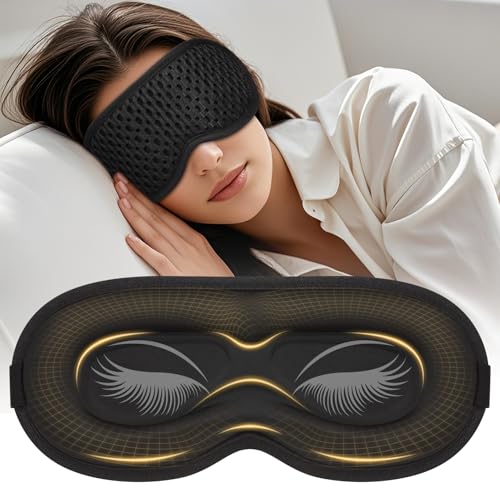
When choosing a sleep mask that balances full light blockage with comfort for all sleeping positions, this 3D Sleep Mask for Men Women (Black) stands out for those sensitive to pressure on their eyes or face. I find its contoured cup design creates space over the eyes, preventing contact and preserving makeup. The raised nose bridge blocks light completely while feeling lightweight. Soft, breathable layers and low-resilience memory foam add comfort for side, back, or stomach sleepers. I appreciate the adjustable buckle strap-it fits securely without tugging hair. It’s ideal for travel, naps, or nightly use, and makes a practical gift for any occasion.
Best For: Individuals seeking a comfortable, fully light-blocking sleep mask that provides pressure-free eye and facial coverage for all sleeping positions.
Pros:
- Contoured 3D cup design with a raised nose bridge ensures complete light blockage and eliminates pressure on eyes, nose, and face
- Soft, breathable materials including low-resilience memory foam and smooth interior fabric offer all-night comfort for various sleeping styles
- Adjustable buckle strap allows for a secure, customizable fit without snagging hair, ideal for travel and daily use
Cons:
- May not fit larger head sizes comfortably due to fixed strap range despite adjustability
- Black color shows light gray marks from facial oils over time without frequent cleaning
- Elevated design may feel bulky for users unaccustomed to 3D sleep mask shapes
Portable Breath Balancer for Anxiety & Focus (Green)

If you’re someone who struggles with stress-related sleep issues or disrupted breathing patterns, the Portable Breath Balancer for Anxiety & Focus (Green) could be a practical choice, especially if you need support in multiple settings like work, travel, or study. I use it for 10-minute nighttime sessions, and it guides slow breathing to help calm my mind. Its gentle resistance trains deeper inhales and longer exhales, which may improve relaxation and sleep onset. It’s lightweight, comes with a dust-proof bag, and has a food-grade mouthpiece. I clean it with water under 40°C and limit sessions to 15 minutes. Those with health concerns should consult a professional.
Best For: Individuals seeking a portable, non-invasive tool to manage anxiety, improve focus, and support sleep through guided breathing exercises in various environments.
Pros:
- Promotes rapid stress relief and emotional regulation in 3–5 minutes with gentle resistance breathing
- Supports sleep onset, circadian rhythm adjustment, and mindfulness across multiple scenarios including work, travel, and study
- Lightweight, portable design with a food-grade mouthpiece and dust-proof storage bag for safe, convenient use
Cons:
- May require adaptation period due to altered breathing rhythm, potentially causing discomfort for first-time users
- Not recommended for individuals with certain health conditions without prior professional consultation
- Limited session duration (max 15 minutes), which may restrict extended use for some users
Breathing Buddha Meditation Tool for Mindfulness

The Breathing Buddha Meditation Tool stands out for those seeking a simple, screen-free way to improve sleep quality through mindfulness. I use its gentle light patterns-green for inhale, purple for hold, blue for exhale-to guide my breath without closing my eyes. It offers three science-backed breathing modes, like 4/7/8 and box breathing, and pairs them with calming nature sounds. Made from soft silicone, it fits easily on my nightstand and runs up to two months on a single charge. I appreciate that it works without an app or timer, though it automatically shuts off after three hours.
Best For: Individuals seeking a screen-free, intuitive mindfulness tool to improve sleep, reduce stress, and support breathing exercises with visual and auditory guidance.
Pros:
- Offers three evidence-based breathing modes with color-coded light cues for easy, open-eyed meditation
- Combines soothing ambient nature sounds with a soft, durable silicone design for enhanced sensory relaxation
- Long battery life and automatic shut-off make it convenient for daily use without app dependency
Cons:
- Lacks app connectivity or customizable sound options for users seeking more control
- No manual timer or sound-free model variant for minimalist meditation preferences
- Limited brightness settings may not suit all lighting environments
Resonance Tuning Fork Healing Set (128Hz-384Hz)
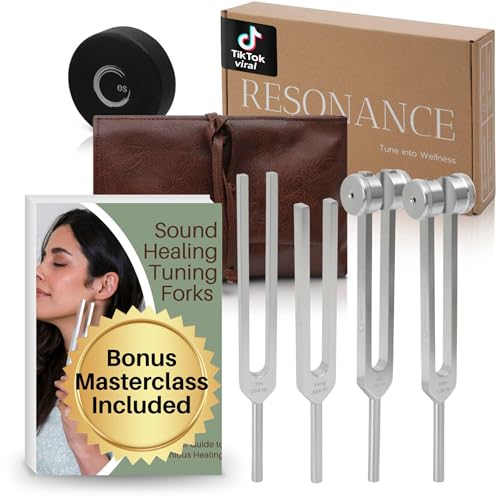
I rely on the Resonance Tuning Fork Healing Set (128Hz–384Hz) when I need fast, drug-free stress relief that supports deeper sleep, especially if I’m winding down after a high-pressure day. The 136.1Hz fork calms my nervous system in under a minute, likely by lowering cortisol. Weighted forks (128Hz, 136.1Hz) ease muscle tension, while unweighted ones (256Hz, 384Hz) help balance energy and focus the mind through harmonic resonance. Made from lead-free aluminum, the forks ring clearly for up to 30 seconds. I use them with the included activator and guide during breathwork or acupressure-no training needed. A 5-day masterclass helps build confidence, and the portable vegan leather pouch makes nightly use easy.
Best For: Individuals seeking fast, non-invasive stress relief and nervous system regulation through scientifically supported sound therapy frequencies.
Pros:
- Utilizes evidence-based frequencies (128Hz–384Hz) linked to nitric oxide release, cortisol reduction, and vagus nerve regulation for rapid calming effects
- Combines weighted and unweighted tuning forks for both physical tension relief and energetic balance, enhancing holistic self-care practices
- Includes a comprehensive 5-day masterclass, step-by-step guide, and portable kit for easy, independent use with no prior experience required
Cons:
- Effects may vary based on individual sensitivity to sound therapy, with some users experiencing subtle rather than immediate benefits
- Limited frequency range compared to full sound healing kits, potentially restricting advanced therapeutic applications
- Premium pricing may be a barrier for those new to sound healing without prior experience to validate effectiveness
Red Light Sleep Device & Sun Lamp
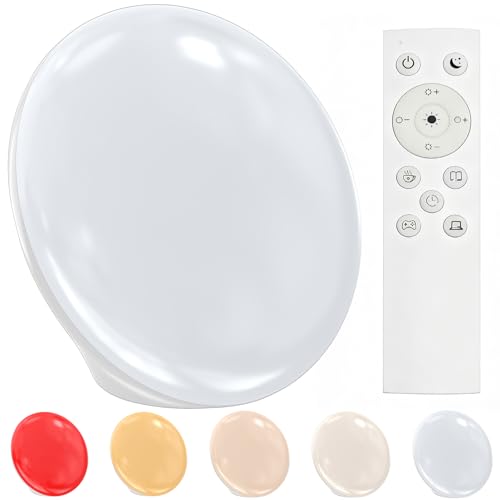
You’ll find the Red Light Sleep Device & Sun Lamp especially helpful if you’re aiming to strengthen your circadian rhythm through science-backed light exposure. I use the 670nm red light at night to help ease into sleep, and studies show it can reduce sleep onset time by up to 40%. In the morning, the 10,000 lux full-spectrum daylight boosts my alertness without harsh blue or UV light. With five brightness levels and four color temperatures, I can customize the lighting for any time of day. The flicker-free LEDs are safe and energy-efficient, lasting up to 20,000 hours. A built-in timer shuts it off after 30 to 120 minutes, perfect for naps or nighttime use. I take it with me when traveling to manage jet lag, and the memory function keeps my settings ready. It fits neatly on my nightstand and works just as well in the office or nursery. Touch and remote controls make it simple to adjust, and Amazon’s “Contact Seller” feature offers fast support if needed.
Best For: Individuals seeking a dual light therapy solution to support circadian rhythm regulation, improve sleep onset, and enhance daytime alertness with customizable, eye-safe lighting.
Pros:
- Combines 670nm red light and 10,000 lux full-spectrum daylight to naturally regulate melatonin and circadian rhythms
- Features flicker-free, UV-free, and blue-light-free LEDs with multiple brightness and color temperature settings for personalized comfort
- Compact, portable design with smart controls, memory function, and reliable customer support via Amazon’s “Contact Seller”
Cons:
- Lacks advanced smart home integration like app control or voice assistant compatibility
- Timer options are fixed (30/60/90/120 minutes) with no custom duration setting
- Higher price point compared to basic wake-up or therapy lights without dual functionality
Mindsight Breathing Buddha Meditation Device

Picture a small, glowing companion silently guiding you into calm with every breath-Mindsight’s Breathing Buddha suits anyone wrestling with stress or sleep troubles, especially those who learn best by seeing. It uses color-coded lights-green, purple, blue-to lead three breathing patterns: 4/7/8, 5/5, and 4/4/4/4-proven to slow heart rate and ease the mind. I use it nightly, tapping once to start, watching the soft glow fade with each breath. Made of squishy silicone, it fits in my palm, charges via USB, and lasts over a month. I leave it on my nightstand; it shuts off after three hours. I pair it with waves or breeze sounds, though it works fine without. It’s quiet, portable, needs no app, and helps me pause, reset, and ease into sleep.
Best For: People seeking a simple, app-free mindfulness tool to manage stress, improve sleep, or enhance focus through guided breathing-ideal for visual learners and all ages.
Pros:
- Intuitive color-coded light guidance with proven breathing patterns for relaxation and focus
- Soft silicone design, portable, USB rechargeable with long battery life and no app required
- Combines calming ambient sounds with adjustable brightness for customizable meditation or bedtime use
Cons:
- Limited to three breathing modes, which may not suit advanced practitioners needing variety
- Ambient sounds are built-in but not customizable or expandable
- Light glow, while soothing, may be too bright for some in complete darkness despite adjustable levels
Factors to Consider When Choosing Sleep Quality Improvement Tools
You’ll want to match the tool’s purpose and functionality to your specific sleep needs, whether it’s calming the mind, tracking patterns, or improving breathing. Look for designs that fit comfortably into your routine-technology and innovation matter, but so do material safety standards, ease of use, and how well it integrates with your lifestyle. Check if it offers trial periods or warranties so you can test performance without pressure.
Purpose And Functionality
While some sleep tools focus on tracking your sleep patterns, others actively support better breathing or encourage healthy sleep habits, so it’s important to match the device’s purpose with your specific needs. If you struggle with falling asleep due to stress, tools using guided breathing rhythms like 4-7-8 or box breathing can calm your nervous system and reduce sleep onset time. For snoring or mild airway issues, look for non-invasive devices that promote side sleeping or monitor breathing patterns. Remember, tracking tools offer insight into airflow or snoring but don’t treat conditions. Instead, they help you understand your sleep behavior. Choose a tool designed for your main concern-whether it’s breathing, positioning, anxiety, or circadian rhythm-so it aligns with your goals and fits naturally into your routine.
Design And Comfort
Comfort starts with design, and the right fit makes all the difference when choosing a sleep aid. You’ll want a contoured, 3D shape with a raised nose bridge-it cuts down on facial pressure and keeps light out, so you sleep undisturbed. Hypoallergenic, medical-grade silicone feels soft against your skin and lowers the chance of irritation during long-term use. Look for models under 10 grams; they’re lightweight enough to stay out of the way, even if you toss and turn. Adjustable, elastic straps with buckles let you fine-tune the fit without pulling your hair, and they work for many face shapes. Smooth, seamless surfaces paired with breathable memory foam help air circulate and reduce heat buildup. These details add up to a more comfortable, effective experience-especially if you’re trying it for the first time or testing options under a trial period.
Technology And Innovation
When evaluating sleep quality improvement tools, consider how built-in technologies actively support your breathing and sleep cycles. Devices with dual vortex airflow help expand your nasal passages, reducing resistance and improving breath efficiency. Real-time monitors use multiple sensors to track your respiratory patterns, alerting you to apneas or irregular cycles. If you struggle with falling asleep, smart light therapy devices use 670nm red light to help regulate melatonin, cutting sleep onset time by up to 40%. Tools that guide your breathing with the 4-7-8 method pair visual cues with your inhale, hold, and exhale phases for better rhythm. Wearables apply AI to analyze data, delivering detailed reports on AHI, snoring, and sleep stages. Look for models offering trial periods or solid warranties so you can test performance safely. These features combine innovation with practical function, giving you clear insights into healthier sleep.
Material Safety Standards
You’ve seen how technology can shape your sleep environment, from smart airflow systems to AI-powered wearables that track your breathing patterns. Now, focus on what those devices are made of. If a tool touches your skin or breath pathways, it should be safe for long-term contact. Look for food-grade silicone or medical-grade silica gel-they’re non-toxic, latex-free, and unlikely to irritate. Nasal devices or masks should meet ISO 10993 standards, ensuring they won’t cause allergic reactions. Always check that materials are labeled BPA-free, phthalate-free, and lead-free to avoid harmful chemicals. Memory foam sleep masks work best when certified by OEKO-TEX Standard 100, meaning they’re clear of hazardous substances. These markers don’t guarantee comfort, but they do reduce health risks. Choosing certified materials means you’re not trading better sleep for unintended exposure.
Ease Of Use
A well-designed sleep tool makes a real difference when it fits smoothly into your nightly routine. You’ll stick with tools that have intuitive controls, like one-button operation or automatic on/off features, because they cut down setup time. Look for devices needing little preparation-quick placement or simple activation helps you stay consistent. Rechargeable models with long battery life, lasting weeks or even months, save you from constant charging. Lightweight, ergonomic designs stay comfortable all night, reducing the need to readjust. Clear feedback, like fading lights or calming sounds synced to breathing, guides you without a learning curve. These features work together to simplify your experience, making it easier to use the tool as directed. When ease of use is built in, you’re more likely to get the rest you need-night after night.
Portability And Size
Small size and light weight make a noticeable difference when choosing a sleep tool you can rely on at home or take with you on the go. Devices under 4 inches fit easily into travel bags or bedside drawers, saving space without sacrificing function. Most weigh less than 50 grams, thanks to lightweight materials like medical-grade silicone and soft polymers, so they stay comfortable all night. Their compact housings are tough, with smooth, scratch-resistant finishes that hold up in carry-ons. Many feature USB rechargeable systems, cutting the need for extra adapters or batteries while simplifying travel. Foldable or modular designs shrink the overall size by up to 30%, making them easier to use in tight spots like airplane seats or hotel rooms. You’ll find these tools practical whether you’re staying in or staying somewhere else. Portability doesn’t mean weaker performance-it means smarter design for real-life needs.
Power And Charging
When choosing a sleep tool, how it powers up and holds a charge can make a real difference in daily use. If it’s USB rechargeable, you’ll save money and hassle by avoiding disposable batteries, and you’ll have an easier time charging while traveling. Many devices run on low-energy parts, using under 0.5 watts on standby, which helps keep energy use down. You can charge them from a power bank, laptop, or wall adapter, giving you flexibility wherever you are. Some tools last up to a month on a single charge if you use them 10 minutes each night. Auto shut-off timers-usually set from 30 to 120 minutes-help preserve battery life during sleep without needing your input.
Usage Duration
How long you use a sleep improvement tool plays a big role in how well it works, just as much as how you charge or power it. You’ll need to use most tools consistently for at least 7 to 10 nights before noticing changes in sleep quality or snoring. If you’re using posture correctors or behavioral devices, plan for several weeks of nightly use-they rely on habit formation, so patience matters. Tools with guided breathing exercises work best when you practice daily for 5 to 15 minutes, helping reduce anxiety and speed up sleep onset. Monitoring devices require at least three consecutive nights of use to collect reliable data on breathing patterns and sleep cycles. For lasting benefits from non-invasive aids, sticking with them for 30 days or more gives the best results, with steady improvements seen over time.
Frequently Asked Questions
How Long Does It Take to See Results With These Tools?
You’ll usually notice improvements in sleep within a few days to three weeks, depending on the tool and your routine. White noise machines or sleep masks often work faster, sometimes overnight. Devices like heated blankets or weighted blankets may take a few nights to adjust to. Sleep trackers help you spot patterns over two to four weeks. Most brands offer 30-day trials, so test them consistently. Results vary, but steady use increases your odds of better rest.
Are These Devices Safe for Children to Use?
yes, most sleep tools are safe for children, but you should always check age recommendations first. devices like white noise machines and weighted blankets work well, but use lower settings for kids. look for BPA-free materials and automatic shutoff features. consult a pediatrician before using sleep trackers or light therapy. many brands offer trial periods, so test the device at home. read return policies carefully to guarantee flexibility if it doesn’t suit your child’s needs.
Can I Use Multiple Tools Together Effectively?
Yes, you can use multiple tools together effectively, as long as they don’t interfere with each other’s functions. Pairing a white noise machine with a weighted blanket, for example, often improves comfort and sleep onset. Just monitor how your body responds, since too many stimuli might backfire. Most devices are safe and non-invasive, and many offer trial periods, so test combinations gradually to find what balances performance and comfort best.
Do Any Tools Require Batteries or Charging?
Yes, some tools need batteries or charging. Smart sleep masks, white noise machines, and wearable trackers run on rechargeable batteries. You charge them nightly or weekly, depending on use. Battery-powered models offer portability but require upkeep. Plug-in devices skip charging but limit placement. Check each product’s power specs before buying. Most brands provide charging cables or use standard batteries. Try devices with trial periods to test convenience and performance in your routine.
Are Replacements Available for Lost Parts?
Yes, you can get replacements for lost parts-most manufacturers offer them for common components like headgear, cushions, or charging cables. You just check the product’s support site or contact customer service. Some brands even sell kits with multiple sizes or styles. It’s smart to keep a spare on hand, especially for items that wear out. Warranties often cover defects, not loss, so you’ll likely pay for replacements.