Best Sleep Enhancing Gadgets That Actually Help You Rest
You can improve sleep with devices like microcurrent headbands that gently ease anxiety, or Bluetooth sleep masks with soft speakers for soothing audio. Positional clips encourage side sleeping to reduce snoring, while breath trainers guide slow breathing to calm your nervous system. Most are lightweight, drug-free, and use rechargeable batteries with 10–14 hour life. Look for washable fabrics, adjustable settings, and 30-day trials to test what works best for your routine. Choosing the right one depends on your sleep challenges and comfort needs.
We are supported by our audience. When you purchase through links on our site, we may earn an affiliate commission, at no extra cost for you. Learn more. Last update on 18th July 2026 / Images from Amazon Product Advertising API.
Notable Insights
- Microcurrent sleep devices use gentle electrical pulses to promote relaxation and support natural sleep without drugs or invasive methods.
- Bluetooth sleep headbands with ultra-thin speakers provide comfortable, tangle-free audio for side sleepers without disrupting rest.
- Positional therapy tools encourage side sleeping by gently discouraging back sleeping, improving airway alignment for snorers.
- Breath training devices guide slow, deep breathing to activate the body’s relaxation response in minutes before bedtime.
- Rechargeable, lightweight sleep gadgets with automatic shut-off and long battery life offer convenient, non-invasive sleep support at home or on the go.
Glowco CalmCarry Sleep Aid Device (Pink)

If you’re looking for a simple, screen-free way to ease into calm-especially for kids or anyone sensitive to light and sound-the Glowco CalmCarry Sleep Aid Device (Pink) stands out as a practical choice. I use it daily to support relaxation without medication or bright lights. It delivers gentle microcurrent pulses through hand acupoints, inspired by traditional wellness practices, helping me feel grounded. Lightweight and compact, it fits in my pocket and works anywhere-home, school, or travel. Safe for children 3+, it’s easy to hold and use, with simple controls and a soft grip. USB-rechargeable, it lasts about 30 sessions per charge, requiring little upkeep.
Best For: Individuals seeking a portable, screen-free relaxation tool, especially parents, children 3+, and those sensitive to light and sound.
Pros:
- Utilizes gentle microcurrent technology inspired by traditional wellness practices to promote natural calm and focus
- Compact, lightweight, and USB-rechargeable with up to 30 sessions per charge, ideal for travel and daily use
- Safe and user-friendly for children and adults, featuring simple controls and a soft, ergonomic grip
Cons:
- Effects may vary and are subtle, not suitable for those expecting immediate or strong sedative results
- Requires consistent use and adult supervision for children, which may limit independent use
- Limited color options and minimal customization features for personal preference
Ball for Side Sleep Posture – Calma Clip v2
You’ll get the most benefit from the Ball for Side Sleep Posture – Calma Clip v2 if you’re someone who snores primarily when lying on your back, since the device is built to gently train your body to stay on your side overnight. I clip it onto the upper back of my sleep shirt-plastic on the outside, soft foam against my skin-and it feels snug but not uncomfortable. The ball creates subtle pressure if I roll onto my back, helping me shift position without waking fully. I’ve found it works best with consistent nightly use, though it took about a week to adjust. It won’t help if you snore while already on your side, but for back snorers, it’s a simple, non-invasive option that supports healthier alignment.
Best For: Individuals who snore primarily when sleeping on their back and want a non-invasive way to train their body to maintain a side-sleeping position.
Pros:
- Effectively discourages back sleeping with gentle pressure, promoting better airway alignment
- Simple to use and clips onto any sleep shirt without requiring special garments
- Recommended by snore therapy experts as a non-invasive, drug-free solution
Cons:
- Only effective for back snorers; does not help those who snore while on their side or stomach
- May dislodge during sleep, especially during the initial adjustment period
- Requires consistent nightly use to develop a lasting side-sleeping habit
MUSICOZY Sleep Headphones Bluetooth 5.4 Mask

The MUSICOZY Sleep Headphones Bluetooth 5.4 Mask stands out for anyone seeking rest without sacrificing sound quality, especially side sleepers and frequent travelers. I’ve used it on long flights and with a snoring partner, and the ultra-thin, silicone-covered speakers stay comfortable even when lying on my side. The memory foam and ice silk lining feel breathable and light, reducing pressure on my face. With Bluetooth 5.4, I get stable, clear sound up to 33 feet away, and the upgraded battery lasts all night-up to 14 hours after just a 1–2 hour charge. It’s quiet, practical, and works well for meditation or travel.
Best For: Side sleepers, travelers, and anyone seeking comfortable, high-quality audio during sleep or relaxation without disturbing others.
Pros:
- Bluetooth 5.4 ensures stable, clear sound with extended range up to 33 feet
- Ultra-thin silicone-covered speakers and memory foam with ice silk lining provide exceptional comfort for side sleeping and long-term wear
- Upgraded battery offers up to 14 hours of playback, supporting uninterrupted all-night use
Cons:
- Longer charging time (1–2 hours) may be inconvenient for quick turnarounds
- Built-in speakers may limit sound isolation compared to noise-canceling headphones
- Not ideal for users who prefer adjustable volume via physical controls on the device
Sleep Aid Device with Microcurrent (Blue)
Who wouldn’t want a drug-free way to ease into sleep when nightly restlessness or anxiety keeps counting sheep the old-fashioned way? I’ve tried the Sleep Aid Device with Microcurrent (Blue), and it uses gentle microcurrent pulses to encourage relaxation without pills. It’s small, handheld, and easy to use at home or on trips. The adjustable intensity and multiple settings let me customize the sensation, while the simple controls work well, even in the dark. It’s non-invasive, doesn’t rely on chemicals, and fits easily into a nightly routine, offering a practical option worth testing for better sleep patterns.
Best For: Individuals seeking a drug-free, non-invasive solution to improve sleep and manage insomnia, restlessness, or anxiety.
Pros:
- Utilizes gentle microcurrent pulses to promote natural relaxation and sleep without pharmaceuticals
- Compact, portable design makes it convenient for home use or travel
- Customizable intensity levels and multiple pulse settings for personalized comfort
Cons:
- Effectiveness may vary between individuals, with some noticing minimal results
- Requires consistent use to experience potential benefits
- Relies on batteries or charging, which may be inconvenient for some users
Portable Breath Balancer for Smoking Cessation & Anxiety Relief

Though I’m not someone who likes bulky devices, I find the Portable Breath Balancer especially useful if I need quick, drug-free support for stress or sleep troubles-particularly when adjusting to new time zones or calming pre-sleep thoughts. It uses gentle resistance to guide slow, deep breathing, which helps quiet my mind in about three to five minutes. I use it before bed for a 10-minute exercise that supports relaxation and faster sleep onset. It’s lightweight, comes with a storage bag, and I’ve used it during travel to manage ear pressure and fatigue. The food-grade mouthpiece feels safe, and cleaning it is easy-just water under 40°C. I keep sessions under 15 minutes, as recommended, and notice better focus and calm. While the breathing rhythm feels strange at first, it’s normal and fades. If you have health concerns, check with a professional before using it.
Best For: Individuals seeking a portable, drug-free tool to manage stress, improve sleep, and support smoking cessation through guided breathing exercises.
Pros:
- Effectively reduces anxiety and promotes relaxation in 3–5 minutes using gentle resistance breathing
- Enhances sleep onset and supports circadian rhythm adjustment, especially during travel
- Lightweight, portable design with food-grade materials and easy cleaning for safe, convenient use
Cons:
- Initial use may feel uncomfortable due to unfamiliar breathing rhythm
- Limited session duration (up to 15 minutes) may not suit extended relaxation needs
- Not recommended for individuals with certain health conditions without professional consultation
Sleep Aid Device for Insomnia Relief
Looking for a solid solution when racing thoughts keep you awake? I’ve tried this sleep aid device, and it uses low-frequency microcurrent pulses to help ease anxiety and support natural sleep. It’s small, lightweight, and charges via USB, so I can take it everywhere-home, travel, even the office. The screen and button controls let me adjust the settings easily, and the strap keeps it secure all night. I appreciate how simple it is to use, no matter the environment. It won’t force sleep, but it creates conditions that may help me relax when my mind won’t quiet down.
Best For: Individuals struggling with anxiety-related insomnia who want a portable, non-invasive sleep aid to support relaxation and improve sleep quality.
Pros:
- Utilizes low-frequency microcurrent pulses to help reduce anxiety and promote natural sleep
- Compact, USB-rechargeable design makes it highly portable for use at home, work, or while traveling
- Features an intuitive display, adjustable settings, and a secure strap for personalized, comfortable use
Cons:
- Does not guarantee sleep-works by creating relaxation conditions rather than inducing immediate sleep
- Effectiveness may vary based on individual sensitivity to microcurrent technology
- Requires consistent use and proper placement to achieve optimal results
Neurocontrol Anxiety Relief Device (Black)
If you’re dealing with sleeplessness tied to stress or anxiety, the Neurocontrol Anxiety Relief Device (Black) offers a non-invasive way to encourage relaxation without drugs or vibration-based stimulation. I’ve used it myself, and the microcurrent technology provides gentle, deep relaxation that supports better sleep, mood, and focus. It runs on battery power only-never while charging-and shuts off automatically after 30 minutes, which helps prevent overuse. I simply turn it back on if I need another session. Holding it in my left hand on low frequency helps me unwind, while the right-hand high setting feels more energizing. With 15 intensity levels and USB charging, it’s easy to adjust and take anywhere.
Best For: Individuals seeking a non-invasive, drug-free solution for managing stress, anxiety, and sleep issues through gentle microcurrent stimulation.
Pros:
- Utilizes microcurrent technology for deep relaxation without vibration, supporting improved sleep, mood, and focus
- Automatically shuts off after 30 minutes to prevent overuse and preserve battery life, with quick restart by powering off and on
- Portable, wireless design with USB charging and 15 adjustable intensity levels for personalized, on-the-go use
Cons:
- Cannot be used while charging, limiting continuous usage or extended sessions
- Requires correct hand placement (left for low frequency, right for high) which may feel restrictive or confusing
- Automatic 30-minute shutdown may interrupt users who prefer longer sessions without manual restart
Voerou Sleep Mask Bluetooth Headphones
The Voerou Sleep Mask Bluetooth Headphones are a solid choice for anyone who listens to music, white noise, or podcasts to fall asleep but doesn’t want wires pulling at their ears or discomfort from bulky earbuds. I use it nightly, and the 3-in-1 design blocks light fully while delivering crisp stereo sound through thin, side-sleeper-friendly speakers. Bluetooth 5.4 pairs fast and stays stable with my phone. The memory foam and breathable fabric feel gentle, even with the adjustable strap snug. I get about 11 hours of use per charge, which covers my full sleep cycle. It’s helpful for managing my light sensitivity and occasional insomnia, and the built-in controls let me pause or skip tracks without moving.
Best For: Side sleepers, light-sensitive individuals, and anyone seeking a wire-free, comfortable sleep aid with built-in audio for music, podcasts, or white noise.
Pros:
- 3-in-1 design combines a light-blocking sleep mask, Bluetooth headphones, and hands-free audio controls for convenience
- Bluetooth 5.4 ensures fast pairing, stable connection, and energy efficiency with up to 12 hours of playback
- Ergonomic 3D contoured design with memory foam and breathable fabric provides comfort, pressure-free wear, and full light blockage
Cons:
- Built-in speakers may not deliver deep bass compared to traditional headphones or earbuds
- Not fully waterproof, limiting use during sweating or in humid environments
- Initial fit adjustment may be needed to balance audio clarity and light seal for different face shapes
MUSICOZY Sleep Headphones Bluetooth Headband
You’ll get the most out of the MUSICOZY Sleep Headphones Bluetooth Headband if you’re a side sleeper or someone who values both comfort and functionality in a sleep aid. I’ve found it works well for relaxation, travel, or managing insomnia, thanks to its soft, breathable fabric and stretchable silicone ring that fits most head sizes. It uses Bluetooth 5.4 and 40mm drivers for clear sound, with up to 14 hours of playtime. The removable control module lets me machine-wash it easily. There’s a 1-year warranty, plus a 30-day refund option, and support replies fast.
Best For: Side sleepers and individuals seeking a comfortable, multifunctional sleep aid for relaxation, meditation, travel, or managing insomnia.
Pros:
- Combines a soft, breathable sleep headband with Bluetooth 5.4 audio and 40mm drivers for clear, immersive sound
- Up to 14 hours of playback and a removable control module that allows machine washing for easy maintenance
- Includes a 1-year warranty, 30-day no-questions-asked refund policy, and responsive customer support
Cons:
- Battery lifespan is rated for up to 1 year with regular use, which may be shorter than expected for some users
- Sound quality, while clear, may not satisfy audiophiles seeking deep bass due to the fabric-integrated drivers
- Microphone quality for calls may be suboptimal in noisy environments due to the headband design
TOPOINT Sleep Mask Headphones Bluetooth 5.2
I rely on complete darkness and soothing sound to unwind, especially when traveling or dealing with insomnia, and the TOPOINT Sleep Mask Headphones deliver both with precision. The mask blocks 99.99% of light thanks to bendable cartilage and extra nose padding, ideal for side sleepers and light-sensitive users. Made with 95% 5A cotton, it’s soft, warm, and gentle on skin, even for elderly or cold-sensitive wearers. The inner liner is removable, and you can take out the Bluetooth module for washing. Stereo speakers with Bluetooth 5.2 offer clear audio and call support, with adjustable positioning. You get up to 10 hours of playback, USB-C charging, and solid noise and light reduction-useful for flights, hotels, or anxious nights.
Best For: Travelers, insomnia sufferers, and light-sensitive individuals seeking complete darkness and soothing audio for better sleep.
Pros:
- Blocks 99.99% of light with bendable cartilage and extra nose padding, ideal for side sleepers
- Features removable inner liner and Bluetooth module for easy washing and maintenance
- Delivers up to 10 hours of playback with Bluetooth 5.2, stereo sound, and built-in microphone
Cons:
- May feel too warm for hot sleepers due to 5A cotton material
- Adjustable speakers may shift during movement, requiring repositioning
- Not suitable for users needing full ear coverage or active noise cancellation
Factors to Consider When Choosing Sleep Enhancing Gadgets
You’ll want to think about the type of device and what it actually does, since some help you fall asleep while others track or improve sleep quality. Consider how it’s powered and how long the battery lasts-you don’t want to charge it every night-and make sure it’s comfortable enough to wear without pressure or overheating. Look at the tech it offers, how easy it is to carry, and whether the design fits your routine, especially if you travel or share a bed.
Device Type And Function
While choosing a sleep-enhancing gadget, the type of device and its core function play a key role in addressing your specific sleep challenges. If you struggle with environmental noise, audio-based devices with Bluetooth and built-in speakers can offer soothing sounds for up to 14 hours. For snoring or breathing issues worsened by back sleeping, positional therapy devices gently encourage side sleeping through physical feedback. You might find neuromodulation tools helpful if you deal with insomnia, as they use mild electrical pulses to promote relaxation, often with adjustable intensity and automatic shut-off features. Some gadgets combine functions-like blocking light, playing sound, and tracking movement-to target multiple sleep disruptors at once. Matching the device’s main function to your primary sleep concern improves your chances of a better night’s rest.
Power Source And Battery Life
When selecting a sleep-enhancing gadget, considering the power source and battery life guarantees uninterrupted performance throughout the night. You’ll want a device with a rechargeable lithium battery, as these typically last up to a year with regular use and offer reliable overnight performance. Look for models with USB-C charging-they charge faster and are more compatible with modern devices. A battery life between 10 and 14 hours makes certain it lasts all night, even during longer sleep cycles. Gadgets using Bluetooth 5.4 consume less power, so they stay charged longer and reduce how often you recharge. Many also include an automatic shutdown after 30 minutes, which saves battery and prevents unnecessary wear. These features help you avoid mid-session disruptions and keep your routine consistent. Choosing a device with strong battery efficiency and modern charging supports dependable, long-term use without frequent maintenance.
Comfort And Wearability
Comfort starts with design. You’ll want gadgets made with memory foam padding and breathable, hypoallergenic fabrics-they cut pressure points and help keep your skin at a comfortable temperature all night. Look for ergonomic shapes that follow your face or head’s natural curves, especially if you sleep on your side. These molds keep the fit snug but not tight, so you won’t feel squeezed or displaced. Weight matters too-staying under 100 grams means less strain and more freedom to move. Adjustable straps or flexible materials let you customize the fit, no matter your head size. Devices with ultra-thin speakers or low-bulk parts won’t dig into your pillow or ear when you roll over. All these features work together to help you wear the gadget longer, with fewer interruptions. A good fit increases the odds you’ll actually use it night after night.
Technology And Features
Since stable connectivity matters while you sleep, look for gadgets with Bluetooth 5.2 or higher, which maintain a strong wireless signal up to 33 feet and reduce audio lag or dropouts. You’ll want built-in rechargeable batteries that last 10–14 hours so you don’t have to charge mid-night. If you prefer non-drug options, pick devices with microcurrent pulse technology-it uses low-frequency stimulation to encourage relaxation and support natural sleep cycles. Make sure the gadget offers adjustable intensity levels and multiple modes so you can tailor the experience. Though speaker design affects comfort, here we focus on function: ultra-thin, flat speakers transmit sound effectively, even when you lie on your side. These features work together to deliver reliable, personalized support through the night, helping you test what works without relying on guesses or short-term fixes.
Portability And Design
A good night’s sleep shouldn’t depend on being tied to one place, which is why portability and design play a key role in choosing the right device. You’ll want a compact, lightweight gadget with an ergonomic shape-it fits easily in your travel bag and stays comfortable no matter where you rest. Look for smooth, low-profile models made with soft, hypoallergenic materials that won’t irritate your skin or limit your sleeping position. USB or USB-C rechargeable batteries mean you won’t hunt for disposable power, and a long battery life of 10 to 14 hours keeps it running all night. Tangle-free wireless connectivity and built-in controls let you adjust settings without reaching for your phone or fumbling with cords. These features add up to a device that moves with you, offering consistent support whether you’re at home or on the go.
Safety And Usage Guidelines
Safety starts the moment you unbox your sleep gadget-stick to the recommended usage times, because going too long with certain devices can lead to overstimulation or irritation, especially on sensitive skin. Don’t use electrical components while they’re charging; it could cause overheating or malfunction. Clean your device regularly with a non-abrasive, damp cloth and water under 40°C to keep it hygienic and prevent material breakdown. If you have a young child, supervise them closely-kids under 3 might choke on small parts or accidentally damage electronic parts. Stop using the gadget right away if you feel discomfort, dizziness, or breathing changes, and talk to a healthcare provider. Most brands offer trial periods, so test the gadget gradually to see how your body responds. Check warranty details too, since some only cover short-term defects. Following these steps helps you get real rest without unnecessary risks.
Frequently Asked Questions
Are These Gadgets Safe for Long-Term Use?
Yes, most of these gadgets are safe for long-term use if you follow the instructions. They’re built with non-toxic materials, low EMF emissions, and tested for nightly operation. Devices like white noise machines and sleep trackers perform consistently over time. Check for FDA clearance or CE marks. Use trial periods to test comfort, and pick models with solid warranties. Always consult a doctor if you have health concerns.
Can Children Use These Sleep Devices Safely?
Yes, children can use some sleep devices safely, but you should check age recommendations first. Always pick devices with non-toxic materials, low EMF emissions, and automatic shutoffs. Simple white noise machines or gentle night lights are often safe starting around age 3. Avoid anything with small parts or wires. Consult your pediatrician, especially if your child has asthma or sensory sensitivities. Try devices with trial periods to test effectiveness and comfort.
Do Any Require a Prescription to Operate?
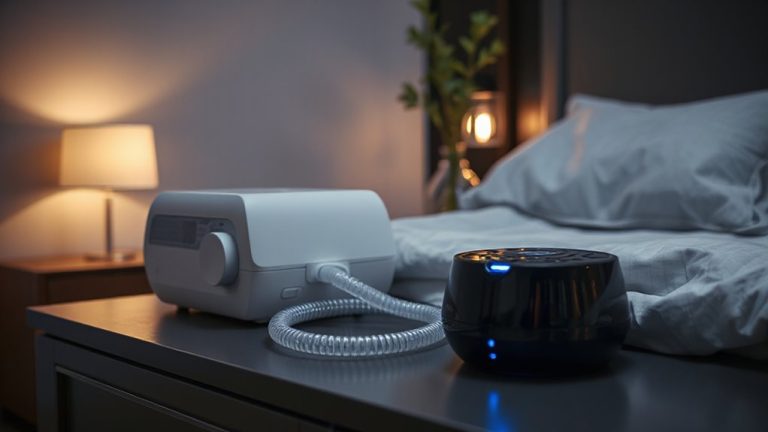
You don’t need a prescription for most sleep gadgets, but some advanced devices like CPAP machines do. These treat diagnosed conditions such as sleep apnea and require a doctor’s approval. Others, like smart pillows or white noise machines, are available over the counter. Always check labels-medical-grade tools often need professional oversight. If unsure, consult a clinician. Many brands offer trial periods, so test devices safely and return if they don’t suit your routine.
Are Replacements Available for Lost Parts?
Yes, you can get replacements for lost parts on most sleep gadgets. Manufacturers typically sell extra headbands, masks, filters, or charging cables separately. Check the company’s website or customer service for part availability and costs. Some offer warranty coverage or trial periods that include free replacements. Always keep your receipt and register the product. Doing so makes replacing items easier and guarantees you maintain full use without buying a whole new device.
How Do I Clean These Devices Properly?
You clean these devices by powering them down and wiping surfaces with a soft, slightly damp cloth. Avoid harsh chemicals or submerging any part. For removable covers or filters, you rinse or hand-wash them weekly using mild soap. You let all pieces air-dry fully before reassembling. Regular cleaning maintains performance, reduces irritants, and extends lifespan. You check the manual since care steps vary slightly by model and material.