Best Sleep-Enhancing Breathing Devices for Deeper Rest
You can improve your sleep tonight with devices like the Rhinomed Mute, an FDA-registered nasal dilator that boosts airflow by 38% and reduces snoring in 75% of users. For drug-free support, consider magnetic strips, silicone clips, or chin straps designed for comfort and reusability. Many are hypoallergenic, travel-ready, and clinically tested. Some need an adjustment period or nightly cleaning. Options with trial packs or warranties let you test what fits your breathing needs best-further details reveal which choice aligns with your sleep habits.
We are supported by our audience. When you purchase through links on our site, we may earn an affiliate commission, at no extra cost for you. Learn more. Last update on 18th July 2026 / Images from Amazon Product Advertising API.
Notable Insights
- Nasal dilators like Rhinomed Mute increase airflow by 38% and reduce snoring in 75% of users with clinical backing.
- EMAY Air Max dilators boost nasal airflow by 76.1%, designed by ENT specialists for effective, long-term use.
- Intake Magnetic Nasal Strips offer an adhesive-free, reusable solution that instantly enhances breathing and reduces snoring.
- Electric Anti Snoring Devices use dual vortex airflow and medical-grade materials for comfort and improved sleep over time.
- Mindsight Breathing Buddha supports restful sleep through guided breathing patterns without screens or apps.
Electric Anti Snoring Device Mint Green
If you’re looking for a non-invasive solution to reduce snoring and improve airflow during sleep, the Electric Anti Snoring Device in mint green might be the right choice. I use it nightly, and it comfortably fits my nostrils thanks to the soft, medical-grade silica gel. Its dual vortex air system boosts airflow, helping me breathe easier without irritation. Lightweight and USB-rechargeable, it’s easy to carry and convenient for travel. I noticed better sleep quality within days. There’s no messy setup-just insert the nasal plugs before bed. It doesn’t work overnight, but with consistent use, breathing becomes smoother, and snoring drops noticeably. A practical option worth trying.
Best For: Individuals seeking a non-invasive, portable solution to reduce snoring and improve nighttime breathing comfort.
Pros:
- Effectively enhances airflow with dual vortex technology for smoother breathing during sleep
- Compact, lightweight, and USB-rechargeable, making it ideal for travel and daily use
- Made with soft, anti-allergic medical-grade silica gel for a secure and comfortable fit
Cons:
- Results may take several days of consistent use, not effective immediately
- May not fit perfectly for all nose shapes despite flexible design
- Requires regular charging, limiting use if forgotten or low on power
Mindsight Breathing Buddha Meditation Tool (Multicolor)

Who benefits most from a screen-free, sensory-guided tool that pairs breath with soft light and nature sounds? I’ve found it helps me-whether I’m winding down after a long day or calming my mind before sleep. The Mindsight Breathing Buddha uses gentle color pulses-green to inhale, purple to hold, blue to exhale-alongside optional nature sounds like waves or birds. Its squishy silicone build fits easily on my nightstand, and the tap-sensitive brightness control is simple. I appreciate the 4-7-8, 5-5, and box breathing modes, which guide my breath without screens or apps. It shuts off automatically, lasts months on a charge, and works well for both kids and adults needing a quiet reset.
Best For: Individuals seeking a screen-free, sensory-based mindfulness tool to support stress relief, focus, and better sleep through guided breathing and ambient sounds.
Pros:
- Offers intuitive, color-coded breathing guidance ideal for visual learners and those who struggle with closed-eye meditation
- Combines soothing light patterns with nature sounds and a soft, tactile design for a multisensory calming experience
- Screen-free, app-free operation with long battery life and auto shut-off makes it simple and accessible for all ages
Cons:
- Lacks app connectivity or customizable sound/light settings for users wanting advanced features
- No built-in timer or mode scheduling, limiting automation for daily routines
- Nature sounds are not available on all models, reducing sensory support for some users
Intake Magnetic Nasal Strips Starter Kit (15 Count)
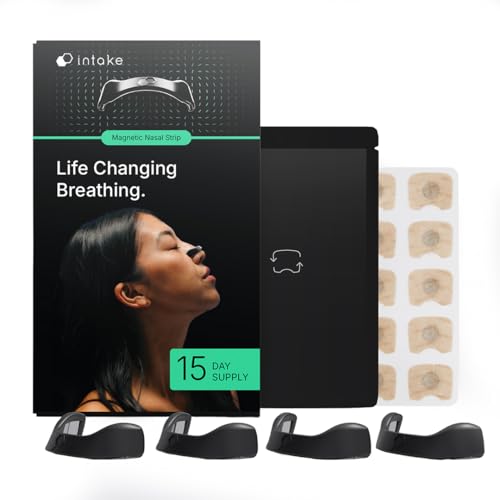
What if better airflow during sleep didn’t rely on bulky masks or adhesive strips? I’ve found the Intake Magnetic Nasal Strips Starter Kit changes the game. Its patented two-part system uses magnetic tabs and a flexible relief band to open nasal passages without sticking to your skin. The starter kit includes 15 tab pairs, four reusable bands in assorted sizes, and a magnetic applicator for easy placement. I noticed improved breathing, less snoring, and better sleep quality right away. Doctors recommend it for mouth breathing, and it pairs well with sprays or neti pots. A few users may experience mild irritation-stop if that happens. It’s a clean, comfortable option worth trying.
Best For: Individuals seeking a non-invasive, adhesive-free solution to improve nasal airflow, reduce snoring, and enhance sleep or athletic performance.
Pros:
- Utilizes a patented magnetic two-part system for effective, comfortable nasal dilation without skin adhesives
- Includes reusable components and a magnetic applicator for easy, personalized fit and extended use
- Clinically recommended, enhances breathing, and safely complements other respiratory aids like sprays or neti pots
Cons:
- Single-use tabs may increase long-term costs despite reusable bands
- Minor skin irritation possible for sensitive individuals
- Magnetic applicator and system may require a brief learning curve for optimal placement
Rhinomed Mute Nasal Dilator Starter Pack
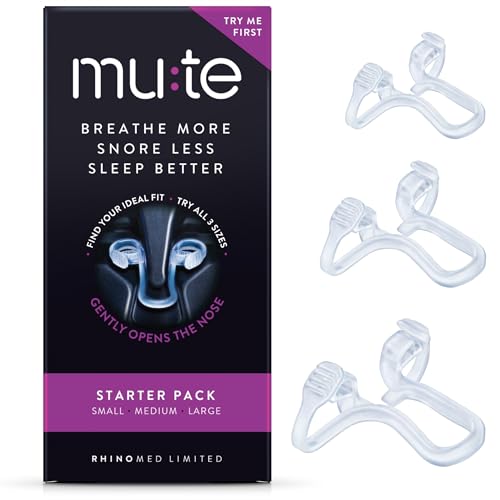
Looking for a discreet, drug-free way to breathe easier at night? I’ve tried the Rhinomed Mute Nasal Dilator Starter Pack, and it’s designed to help. These clear, internal dilators sit mostly inside your nose, with only a small bridge visible, following your nose’s natural angle for comfort. Made from soft, medical-grade polymer, they’re FDA-registered and increase nasal airflow by 38% in clinical trials-reducing snoring in 75% of users. The starter pack includes one of each size so I could test the best fit. Each pair lasts up to ten uses if rinsed daily, and adjustable stents let me fine-tune the placement.
Best For: Individuals seeking a discreet, non-invasive solution to improve nighttime breathing, reduce snoring, and alleviate nasal congestion without medication.
Pros:
- Clinically proven to increase nasal airflow by 38% and reduce snoring in 75% of users
- Discreet, low-profile design with only a small bridge visible during use
- Reusable for up to ten nights with daily rinsing, offering cost-effective, long-term use
Cons:
- May require trial and error to determine the correct size for optimal fit and effectiveness
- Some users may experience initial discomfort while adjusting to the internal fit
- Not suitable for those with severe nasal obstructions or structural nasal issues
EMAY Sleep Breathing Monitor with App Tracking

Though I prefer a straightforward solution for tracking my breathing patterns during sleep, the EMAY Sleep Breathing Monitor stands out for anyone focused on at-home respiratory monitoring without needing medical-grade diagnostics. It uses triple sensors to record airflow and detect breathing anomalies in real time, sending data to an app that generates detailed reports on AHI, snoring, and airflow trends. I found the lightweight, 10g design comfortable, with soft silicone and adjustable straps fitting securely. It’s easy to use-just place it before bed-and great for travel. But it only tracks nasal breathing, not SpO2 or pulse, and won’t work with CPAP.
Best For: Individuals seeking a non-invasive, at-home sleep breathing monitor to track nasal airflow, detect breathing anomalies, and review nightly respiratory trends via an app.
Pros:
- Uses triple sensors for accurate real-time airflow monitoring and anomaly detection
- Lightweight, comfortable design with adjustable silicone straps for secure all-night wear
- Simple setup and portability make it ideal for home or travel use with instant tracking
Cons:
- Only monitors nasal breathing and is not suitable for mouth breathers
- Does not measure SpO2 or pulse rate, limiting comprehensive sleep analysis
- Incompatible with CPAP masks, reducing utility for some sleep apnea users
Air Max Nasal Dilators Trial Pack

If you struggle with snoring or nasal congestion during sleep, the Air Max Nasal Dilators Trial Pack offers a practical, science-backed solution that enhances airflow where it matters most. I’ve found these dilators increase airflow by 76.1%, outperforming standard nasal strips. They’re designed by ENT specialists, open nasal passages, and reduce snoring caused by obstruction. Reusable for up to two months and made in the Netherlands, they’re BPA-free, latex-free, and drug-free. The trial pack includes small and medium sizes, so I could test the fit easily. A free storage box keeps them clean and portable.
Best For: Individuals seeking a reusable, non-invasive solution to improve nighttime breathing, reduce snoring, and relieve nasal congestion.
Pros:
- Clinically proven to increase airflow by 76.1%, enhancing oxygen intake and sleep quality
- Reusable for up to 2 months with a hygienic storage box included for convenience
- Developed by ENT specialists, ISO 13485 and CE certified, and free from BPA, latex, and drugs
Cons:
- May require adjustment period to get used to the sensation of wearing nasal dilators
- Trial pack includes only small and medium sizes, potentially limiting fit options for larger noses
- Not a substitute for medical treatment in cases of sleep apnea or severe respiratory conditions
Anti Snoring Device 4 Pack

This Anti Snoring Device 4 Pack is a solid choice for anyone seeking a simple, reusable solution to reduce snoring without bulky equipment or complicated setups. I’ve found these soft silicone clips gently open my nasal passages, improving airflow and cutting down on snoring. They’re hypoallergenic, so they don’t irritate my skin, and the 3-gear adjustability guarantees a snug fit whether I’m on my back or side. Inserting them is quick, and they stay in place all night. Each of the four comes in its own case, making them easy to pack for trips. They’re reusable and simple to clean, offering practical value over time.
Best For: Individuals seeking a simple, reusable, and non-invasive solution to reduce snoring and improve nighttime breathing comfort.
Pros:
- Made from soft, hypoallergenic silicone for comfortable, irritation-free use
- Adjustable 3-gear design ensures a secure, customized fit for various nose shapes
- Portable and travel-friendly with individual cases and easy cleanup
Cons:
- May take time to adjust to the sensation of wearing nasal clips during sleep
- Effectiveness may vary for individuals with severe sleep apnea or structural nasal issues
- Reusable design requires regular cleaning to maintain hygiene
Anngola Anti Snoring Nose Clip (10 Pack)

The Anngola Anti Snoring Nose Clip (10 Pack) works best for light snorers or people who want a simple, non-invasive way to support clearer nasal breathing during sleep. I’ve found these silicone magnetic clips comfortable once I adjusted after a few nights. They gently hold my nostrils open, improving airflow without irritation. Each clip fits securely and suits different nostril sizes, which helps. I clean them easily with water, and they last. The 10-pack comes in sealed boxes, so they stay hygienic-great for travel. They’re reusable, and if I have questions, support replies within 24 hours. A practical option worth trying.
Best For: Individuals seeking a simple, non-invasive solution to reduce mild snoring and improve nasal breathing during sleep.
Pros:
- Comfortable, soft silicone design that fits various nostril sizes
- Magnetic clips gently improve airflow and reduce snoring with regular use
- Reusable, easy to clean, and comes in a hygienic, travel-friendly 10-pack
Cons:
- May take a few nights to adjust to the feeling during sleep
- Effectiveness may be limited for severe snorers or sleep apnea sufferers
- Individual packaging, while hygienic, creates more plastic waste
Nasal Dilators to Reduce Snoring (8-Pack)
Since nasal congestion and narrow airways often contribute to snoring and disrupted sleep, these Nasal Dilators to Reduce Snoring (8-Pack) work well for anyone seeking a drug-free, non-invasive way to breathe easier at night. I’ve found the soft, flexible silicone comfortable for long-term wear, and the set includes eight reusable vents in four sizes-two of each-so I could find the best fit. Their ergonomic design stays in place without slipping, opening my nasal passages to reduce resistance. I noticed improved airflow and quieter breathing, which helped me sleep more soundly. The included case keeps them clean and travel-ready.
Best For: Individuals seeking a drug-free, non-invasive solution to reduce snoring and improve nighttime breathing comfort.
Pros:
- Effectively reduces snoring by gently opening nasal passages for improved airflow
- Includes eight reusable silicone vents in four sizes for a customized, secure fit
- Soft, non-toxic material ensures comfort during all-night wear with a portable storage case
Cons:
- May take time to find the correct size and insertion technique for optimal fit
- Results can vary depending on the underlying cause of snoring
- Not suitable for individuals with very sensitive nasal passages or certain nasal conditions
Anti Snoring Chin Strap for Men and Women
Looking for a simple, non-invasive way to reduce snoring without bulky equipment or uncomfortable fittings? I’ve found the Anti Snoring Chin Strap helps by gently supporting the jaw and keeping the mouth closed, which encourages breathing through the nose and improves airflow. Made from soft, breathable fabric with ventilation holes, it’s comfortable for long-term wear. The Velcro straps adjust easily, fitting most head and chin sizes securely-great for both men and women. It reduces snoring, dry mouth, and breathing interruptions, supporting better sleep quality and daytime focus. It’s a practical option worth trying if you want a lightweight, no-fuss solution.
Best For: Individuals seeking a lightweight, non-invasive solution to reduce snoring and improve sleep quality by promoting nasal breathing.
Pros:
- Effectively reduces snoring by supporting the jaw and keeping the mouth closed during sleep
- Made from soft, breathable fabric with ventilation holes for comfort during extended use
- Adjustable Velcro straps ensure a secure, customized fit for a wide range of head and chin sizes
Cons:
- May not be effective for individuals whose snoring is caused by nasal obstructions
- Some users might find the chin strap uncomfortable if they are not used to jaw support during sleep
- Limited adjustability for extremely large or small head sizes despite Velcro customization
Factors to Consider When Choosing Sleep-Enhancing Breathing Devices
You’ll want to check if a device has solid evidence behind it, like clinical studies showing it works for sleep issues like snoring or mild apnea. Think about how it feels too-does it fit well, stay comfortable all night, and suit your sleep position without slipping or causing irritation? Also, consider how easy it is to use daily, whether it’s travel-friendly, made from safe, non-toxic materials, and backed by a trial period so you can test it risk-free.
Effectiveness And Clinical Support
When choosing a sleep-enhancing breathing device, checking for clinical backing helps guarantee the product actually delivers on its promises. Devices with proven trial results boost nasal airflow by up to 38%, making breathing easier and more efficient. If you snore, know that 75% of users see improvement with intranasal dilators thanks to better airway openness. Look for FDA registration and medical-grade testing-it secures safety, especially if you have sensitive tissue or allergies. ISO 13485 and CE marks mean the device meets strict international quality standards, adding trust to its claims. Some advanced tools use AI and triple sensors to track your breathing patterns accurately, giving you useful feedback. These features don’t just sound impressive-they’re tested, verified, and built to support real results in your sleep health.
Design For Comfort And Fit
A well-designed sleep-enhancing breathing device should feel nearly unnoticeable throughout the night, so choosing one built for comfort and fit is essential. Look for models made from soft, flexible, medical-grade silicone or biocompatible polymers-they’re gentle on your skin and reduce irritation. A low-profile, internal or semi-internal design cuts down on bulk and won’t press painfully against your nose bridge, especially if you sleep on your side. Lightweight materials and compact shapes help prevent facial discomfort and keep the device in place. Smooth, seamless surfaces and hypoallergenic construction lower the chance of friction or allergic reactions. Adjustable sizing or customizable stents let you get a snug, personalized fit, no matter your nasal shape. These features work together to support consistent, comfortable use-key for long-term success.
Ease Of Use And Application
Though comfort matters, how easily you can use a sleep-enhancing breathing device each night often determines whether you’ll stick with it. You’ll want something that fits smoothly into your routine without hassle. Devices that clip or insert simply into the nose require no tools or setup, letting you start using them right away. Reusable options with intuitive angles and no adhesives make nightly use straightforward, especially when they stay in place without adjustment. Magnetic or self-aligning nasal dilators help you apply them correctly every time, reducing errors. Adjustable parts like flexible stents or multi-gear clips let you fine-tune the fit on the spot. Pre-sized kits with multiple options help you find your ideal fit faster, cutting down on trial and frustration. These features together make adoption easier and more consistent.
Portability And Travel Convenience
You’ve likely considered how simple a device is to use each night, but just as important is whether it fits into your life when you’re away from home. Look for compact, lightweight designs that slip into palm-sized cases-you won’t mind packing them. Models under 10 grams are ideal, especially if you travel often. Devices that don’t need power, or those with long-lasting USB-rechargeable batteries, save you the hassle of hunting for outlets. Quick charging means you’re ready in minutes, even with back-to-back trips. Durable, protective cases keep your device safe in luggage. Some come with hygienic storage or individual sealing, so cleanliness stays intact on the go. Reusable units reduce waste and cost over time. A well-built, portable device supports consistent use, whether you’re across town or across the country.
Safety And Material Quality
Look for sleep-enhancing breathing devices crafted from medical-grade silicone or hypoallergenic polymers, since these materials are biocompatible and gentle on your skin during extended nightly use. Choose products free from BPA, latex, and phthalates to reduce allergic reactions and guarantee safer respiratory contact. Non-invasive designs without adhesives or drugs offer a low-risk option for long-term use, avoiding dependency or chemical side effects. If you prefer reusable devices, pick ones made from durable, non-toxic materials that hold up over repeated cleanings without degrading. Smooth, seamless surfaces made of soft, flexible materials help prevent tissue irritation and improve comfort all night. Always check manufacturer details on material sourcing and safety testing. Models backed by trial periods or warranties let you test safety and comfort risk-free, supporting smarter, more confident choices.
Frequently Asked Questions
How Long Does It Take to Adjust to Using a Nasal Dilator?
You’ll usually adjust to using a nasal dilator within 3 to 7 days. At first, you might feel slight pressure or notice it’s there, but your nose and facial muscles adapt quickly. Most models are made from flexible, medical-grade materials that conform comfortably. Wear it nightly, and if irritation occurs, check the fit-some brands offer sizing guides. Trial periods, often 30 days, let you test effectiveness without risk, helping you decide with real-world use.
Can Breathing Devices Help With Sleep Apnea?
Yes, breathing devices can help with sleep apnea, especially mild to moderate cases. You might use CPAP machines, which deliver steady air pressure through a mask, or oral appliances that shift your jaw forward. Nasal dilators alone won’t treat apnea but may support better airflow. Devices vary in comfort and setup-some need prescriptions. Look for FDA-cleared options, try models with sleep tracking, and check return policies if adjustments feel off.
Are Nasal Strips Safe for Long-Term Use?
Yes, you can safely use nasal strips long-term if they’re comfortable and don’t irritate your skin. They’re non-invasive, drug-free, and work by gently lifting your nasal passages open to improve airflow. Most are made of flexible adhesive bands that last nightly, though skin sensitivity varies. Many brands offer trial packs or money-back guarantees, so you can test them risk-free. They won’t treat sleep apnea but may help with snoring or mild congestion.
Do Anti-Snoring Devices Work for Mouth Breathers?
Yes, some anti-snoring devices work for mouth breathers, but you’ll need the right type. Nasal strips alone won’t help since they only open nasal passages. Instead, try mandibular advancement devices (MADs) that reposition your jaw, or full-face CPAP masks if you have sleep apnea. Look for models with mouth coverage or built-in vents. Many brands offer 30-day trials, so test for comfort and effectiveness. Make sure the fit stays secure if you shift during sleep.
Can Children Use Sleep-Enhancing Breathing Devices?
You shouldn’t let children use sleep-enhancing breathing devices unless a pediatrician or sleep specialist approves. Kids’ airways are still developing, so adult devices may not fit safely or work correctly. Some pediatric CPAP or prescribed nasal devices exist for diagnosed conditions like sleep apnea, but over-the-counter gadgets lack evidence for young users. Always get a professional evaluation first, and never skip proper diagnosis. Check return policies if a trial is allowed.