Best RV Bunk Mattresses for a Comfy Night on the Road
You’ll sleep better on the road with a supportive, medium-firm RV bunk mattress made from high-density, CertiPUR-US certified foam that resists sagging and off-gassing. Models like the Zinus 6” and FoamRush 3-inch offer pressure-relieving memory foam, breathable covers, and easy setup after shipping compressed. Some include reversible comfort layers or gel infusion for temperature control. Many expand fully in a few days and can be trimmed to fit custom spaces-options with trial periods let you test comfort longer.
We are supported by our audience. When you purchase through links on our site, we may earn an affiliate commission, at no extra cost for you. Learn more. Last update on 19th July 2026 / Images from Amazon Product Advertising API.
Notable Insights
- Choose a medium-firm mattress with ILD 40–50 for balanced support and comfort on bumpy roads.
- Prioritize CertiPUR-US certified foam to ensure low off-gassing and long-term durability.
- Opt for gel-infused or ventilated memory foam to improve temperature regulation and reduce heat retention.
- Ensure accurate尺寸 fit-common RV bunk sizes include 28″ x 72″ and 30″ x 75″; trimmable options allow customization.
- Look for breathable covers or removable encasements to enhance airflow and ease maintenance during travel.
Zinus 6″ Memory Foam Mattress (Narrow Twin)

If you’re dealing with tight sleeping quarters in an RV or bunk setup, the Zinus 6″ Memory Foam Mattress in Narrow Twin-measuring 75” x 30”-fits snugly where standard sizes won’t, making it a solid choice for campers, small-space dwellers, or anyone upgrading a compact bed frame. I find its medium firm feel supports proper spinal alignment, while zoned memory foam reduces pressure on hips and shoulders. It ships compressed in a smaller box, cutting emissions and easing setup. The foam is CertiPUR-US certified, and the cover holds OEKO-TEX certification, so I know it’s free from harsh chemicals. Infused with green tea and charcoal, it resists odors naturally, staying fresh longer.
Best For: Small-space dwellers, RV owners, and bunk bed users needing a compact, 75” x 30” narrow twin mattress that fits snugly in tight sleeping environments.
Pros:
- Compact 75″ x 30″ narrow twin size ideal for RVs, bunk beds, trundle beds, and day beds
- CertiPUR-US and OEKO-TEX certified materials ensure safe, chemical-free sleep
- Zoned memory foam with medium firm support offers pressure relief and spinal alignment
Cons:
- Narrow width may feel restrictive for larger individuals
- Minimal edge support due to soft foam construction
- Slight initial off-gassing odor from compressed foam when unpackaged
FoamRush 3-Inch RV Bunk Foam Mattress

The FoamRush 3-Inch RV Bunk Foam Mattress stands out for travelers who need a durable, health-conscious sleep surface that holds up over years of road use. I’ve found it offers medium-firm support with a 1.8 density and 44 ILD compression, balancing comfort and longevity. It’s CertiPUR-US certified, so you know it’s low in emissions and safe for indoor use. Made in the USA, this 28” x 72” foam resists sagging and supports pressure relief, ideal for RVs, vans, or guest rooms. After unboxing, let it expand 3–4 days before use. I wouldn’t cut or modify it early.
Best For: Travelers and RV owners seeking a durable, non-toxic, and medium-firm foam mattress designed for long-term use in mobile or compact living spaces.
Pros:
- Made with CertiPUR-US certified foam, ensuring low emissions and a safer indoor environment
- High-density 1.8 foam with 44 ILD compression provides strong support and resists sagging over time
- Versatile sizing and firmness make it ideal for RVs, camper vans, boats, guest rooms, and sofa beds
Cons:
- Requires 3–4 days to fully expand after unboxing, delaying immediate use
- Limited thickness at 3 inches may not provide enough cushioning for side sleepers or those preferring plush comfort
- No built-in padding or cover included, necessitating a separate mattress protector or encasement
RV Bunk Mattress 72x28x3 Medium Firm

I need a compact sleep solution that fits snugly in tight spaces, and this 72x28x3 medium firm RV bunk mattress delivers where it counts-especially for travelers using motorhomes, camper vans, or truck campers. Made by CRAURU, it uses high-density and egg-foam layers for balanced support, easing back and hip pressure without feeling too soft. The cotton-blend terry cover is breathable, smooth on skin, and simple to clean. It ships compressed, so I unbox it, unroll, and let it air for one to three days. Once expanded, it holds its shape well. At just 3 inches thick, it fits low-profile bunks but offers less cushion than thicker models.
Best For: Travelers seeking a compact, medium-firm mattress ideal for RV bunks, camper vans, and other tight mobile living spaces.
Pros:
- Combines high-density and egg-foam layers for balanced support and pressure relief
- Breathable cotton-blend terry cloth cover that’s soft, skin-friendly, and easy to clean
- Ships compressed for easy transport and setup, expanding to full shape within 1–3 days
Cons:
- Only 3 inches thick, offering less cushioning compared to thicker mattresses
- Requires 1–3 days to fully expand and air out after unboxing
- Limited to specific 72×28-inch bunk dimensions, reducing universal fit options
Milliard 5-Inch Memory Foam Cot Mattress (2-Pack)

You’ll find the Milliard 5-Inch Memory Foam Cot Mattress (2-Pack) works best if you’re outfitting an RV bunk for kids or guests who need reliable, cushioned support without taking up extra space. I appreciate its dual-layer design-4 inches of firm foam and 1 inch of memory foam-because it balances support and comfort well. The 74″ x 31″ size fits most RV bunks, and the medium firm feel helps reduce pressure points without feeling too soft. Its breathable, plush cover removes easily and is machine-washable, which helps maintain cleanliness on long trips. I’ve used both mattresses repeatedly, and they’ve kept their shape without sagging.
Best For: Families, campers, and RV travelers needing compact, comfortable sleeping solutions for kids or guests.
Pros:
- Dual-layer foam construction offers balanced support and pressure relief for restful sleep
- Removable, washable cover enhances hygiene and simplifies cleaning
- Durable, space-saving design maintains shape through repeated use and is ideal for multiple settings
Cons:
- Narrow width of 31 inches may feel restrictive for adults or larger teens
- 5-inch thickness, while supportive, may not match the plushness of full-sized bed mattresses
- Memory foam layer may retain heat in warm environments without proper ventilation
FoamRush 7-Inch Gel Memory Foam RV Mattress
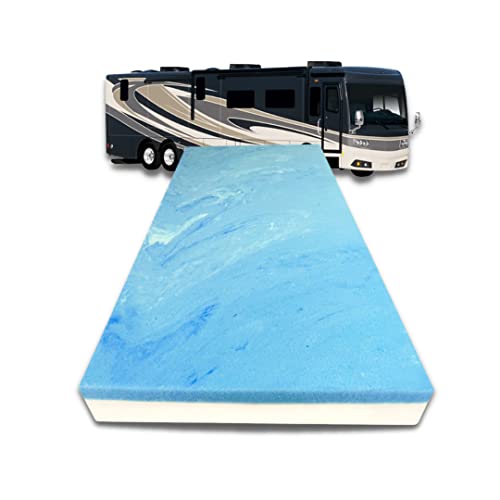
FoamRush 7-Inch Gel Memory Foam RV Mattress stands out for travelers who need a durable, adaptable sleeping surface in tight spaces. It measures 30 by 72 inches and combines ventilated gel memory foam with a high-density support base, offering medium firmness, pressure relief, and better airflow. The gel infusion helps reduce heat buildup, so you’re less likely to overheat at night. I can trim it with a sharp knife to fit odd-shaped bunks or stack layers for extra thickness. It works well not just as an RV mattress but also for boats, cots, or DIY projects. There’s no cover, but that makes customization easier. Made in the USA, it balances comfort, support, and flexibility for different sleep setups.
Best For: Travelers and DIY enthusiasts needing a customizable, medium-firm foam mattress for RVs, boats, or compact living spaces.
Pros:
- Combines ventilated gel memory foam with high-density support foam for pressure relief and improved airflow
- Can be easily trimmed or stacked for custom fits and added thickness in various applications
- Made in the USA and suitable for diverse uses beyond bedding, including seating and restoration projects
Cons:
- Does not include a cover, requiring separate purchase for protection or aesthetics
- May require cutting for non-standard bunk or furniture sizes, adding setup effort
- Gel infusion helps with heat, but memory foam may still retain some warmth during extended use
SINWEEK Gel Memory Foam Mattress Topper

A CertiPUR-US certified gel memory foam construction makes the SINWEEK Gel Memory Foam Mattress Topper a solid choice for RV owners who value clean materials and consistent support in compact sleeping spaces. I’ve found the gel swirl foam adapts well to body contours, easing pressure points and improving sleep quality. It stays cooler than traditional foam by boosting airflow and reducing heat buildup. Keep it flat for 48–72 hours after unboxing so it expands fully. I avoid rolling or folding it to prevent damage. It may feel firmer in cold weather, so I let it acclimate. It’s backed by a 3-year warranty and 24/7 customer support, which gives me peace of mind during long trips.
Best For: RV owners seeking a durable, high-quality foam topper that ensures comfort and support in compact sleeping environments.
Pros:
- CertiPUR-US certified for safety, durability, and low emissions
- Gel swirl memory foam enhances breathability and reduces heat retention
- 3-year warranty and 24/7 customer support provide long-term peace of mind
Cons:
- May feel firmer in colder temperatures, requiring acclimation time
- Requires 48–72 hours to fully expand after unboxing
- Sensitive to folding or rolling, which can cause permanent damage
FoamRush 6-Inch Bunk Mattress (28″ x 75″)

One standout option for compact sleeping spaces is the FoamRush 6-Inch Bunk Mattress, ideal for RV owners who prioritize comfort without sacrificing flexibility. I chose this mattress because its gel memory foam core offers medium firmness, supporting better spinal alignment, which can ease mild back discomfort during long trips. It’s CertiPUR-US certified, so I know the foam is safe and durable. The cotton cover feels breathable, and since it’s made in the USA, quality feels reliable. I can trim or layer it if needed-perfect for odd-sized bunks. Once unboxed, I let it expand fully before use to avoid off-gassing issues.
Best For: RV, travel camper, and truck owners seeking a customizable, comfortable, and certified bunk mattress for compact sleeping spaces.
Pros:
- CertiPUR-US certified gel memory foam ensures safety, durability, and medium firmness for improved spinal alignment
- Cotton cover provides breathable comfort, and the foam can be trimmed or layered for custom fits in odd-sized bunks
- Made in the USA and suitable for a wide range of applications beyond beds, including DIY projects and furniture restoration
Cons:
- May require time to fully expand after unboxing, during which off-gassing odors could be noticeable
- 28″ x 75″ size may not fit all bunk configurations without modification
- Higher firmness preference users may find the medium firmness too soft for their liking
Cozyway 4″ RV Bunk Memory Foam Mattress

If you’re outfitting an RV bunk for occasional use or frequent road trips, the Cozyway 4″ RV Bunk Memory Foam Mattress stands out with its precise 51″ x 74″ size and 22-inch corner cut, ensuring a snug fit in most camper bunk beds without excess overhang. I’ve found its high-density memory foam cradles your body well, offering solid support and easing pressure points that can disrupt sleep. The reversible design lets you switch between a softer or firmer feel, which helps if your comfort needs change. Plus, the water- and stain-resistant cover holds up well on the road and wipes clean easily. It’s made for compact spaces, so it won’t take up extra room, and while it doesn’t come with a trial, its durability makes it a dependable pick for regular or occasional use.
Best For: RV and camper owners seeking a durable, well-fitting mattress for bunk beds that offers customizable comfort and easy maintenance.
Pros:
- High-density memory foam provides excellent support and pressure point relief for improved sleep quality
- Reversible soft and firm comfort options allow personalized sleeping preferences
- Water- and stain-resistant cover is ideal for travel and camping environments, requiring minimal upkeep
Cons:
- 4-inch thickness may feel too thin for those who prefer plush, luxurious bedding
- Corner cut design limits compatibility to specific RV bunk beds, reducing universal fit
- No sleep trial or return option offered, which may be a risk for first-time buyers
FoamRush 6″ Bunk Mattress RV Replacement
You’ll find the FoamRush 6-Inch Bunk Mattress especially helpful if you need a durable, adaptable sleep solution for tight RV spaces. I’ve used it in my camper, and its 28 by 72-inch size fits snugly without sacrificing comfort. It’s made in the USA with a gel-infused memory foam top and high-density support base, offering medium firm support that eases pressure points. The ventilated design helps regulate temperature, so I don’t wake up overheated. You can trim it with a sharp knife or foam cutter to fit odd corners or stack layers for extra thickness. It works well in bunks, but I’ve also repurposed scraps for boat cushions and seat pads. While it doesn’t come with a cover, its sturdy foam holds shape even after cutting. It’s a practical pick if you value customization and long-term use across different setups.
Best For: RV owners and DIY enthusiasts who need a customizable, medium-firm foam mattress for compact sleeping spaces or multi-use applications.
Pros:
- Combines cooling gel memory foam with high-density support foam for comfort and durability
- Can be trimmed, stacked, or reshaped for custom fits in RVs, boats, or furniture
- Versatile beyond bedding-ideal for cushions, seat pads, and restoration projects
Cons:
- Does not include a cover, requiring a separate purchase for protection or aesthetics
- Firmness may be too soft for those preferring a very firm sleeping surface
- Gel-infused layer helps with heat dissipation but may not fully prevent warmth buildup in hot climates
FoamRush 3-Inch RV Bunk Mattress
The FoamRush 3-Inch RV Bunk Mattress is a strong choice for travelers who need a durable, supportive sleeping surface that fits snugly in tight mobile spaces. I’ve found it offers medium-firm comfort with a 1.8 lb/ft³ density and 44 ILD, striking a balance between softness and structural support. Made in the USA and CertiPUR-US certified, it meets strict safety and environmental standards, emitting low VOCs for better indoor air quality. Its high-density foam resists sagging, lasting 7–12 years under regular use. I appreciate that it’s easy to customize-just cut or layer it for a perfect fit. Ideal for RVs, boats, or guest beds, it recovers well after compression and provides reliable comfort for consistent, restful sleep.
Best For: Travelers and RV owners seeking a durable, customizable, and supportive bunk mattress for compact sleeping spaces.
Pros:
- Medium-firm comfort with high-density foam (1.8 lb/ft³, 44 ILD) provides balanced support and pressure relief
- CertiPUR-US certified for safety, low emissions, and environmental compliance
- Easily customizable-can be cut, trimmed, or layered for unique fits and thicknesses
Cons:
- At 3 inches thick, may feel too thin for those preferring plush, deep mattresses
- Firmness may not suit side sleepers needing extra cushioning for hips and shoulders
- Potential off-gassing odor upon unboxing, common with new foam products
Factors to Consider When Choosing an RV Bunk Mattress
When picking an RV bunk mattress, you’ll want to check the size and fit first-most bunks need a custom or standard cut to avoid gaps. Think about firmness level and material quality, since they affect comfort and support, especially if you have back pain or move a lot at night. Look for odor-resistant foams and reinforced edges that hold up over time, and pick models with trial periods so you can test durability without risk.
Size And Fit
Getting the right size and fit starts with accurate measurements, since even a small mismatch can lead to shifting during transit or difficulty installing safety rails. You’ll often find RV bunks in standard sizes like 28″ x 72″, 30″ x 75″, or 74″ x 51″, but older or custom models may have irregular dimensions or cut corners. Measure your frame at multiple points-length and width-since shapes vary. Don’t assume standard sizes apply. Most mattresses ship compressed, but they expand to full size, so verify final dimensions match your frame. A mattress too large can damage surrounding walls or block safety rails, while one too small creates gaps and slips. Account for bedding and protectors, as extra thickness can affect fit. Precise sizing guarantees stability and comfort, especially on bumpy roads.
Firmness Level
You’ve measured your bunk frame carefully, so now focus on how firmness affects both comfort and support during travel. A medium firm feel, usually with an ILD between 40–50, balances cushioning and spinal alignment while supporting pressure points. High-density foams hold their firmness longer, so they resist sagging even after repeated use on bumpy roads. If your sleep needs change, dual-sided models offer different firmness levels-perfect for switching between back and side sleeping. Gel-infused memory foam helps too, keeping the mattress from softening too much due to heat buildup. That means consistent support night after night. You’ll want to check trial periods and warranties, since firmness is personal and long-term comfort matters. Pick a level that supports your body type and sleep style without guessing-test options if you can. Firmness isn’t one-size-fits-all, but the right balance helps you rest better on every trip.
Material Quality
Material quality makes all the difference in how well your RV bunk mattress holds up and feels night after night. Choose foams with CertiPUR-US certification to guarantee they’re free from harmful chemicals and meet strict safety and durability standards. High-density foam, at 1.8 lb/ft³ or higher, resists sagging and offers long-term support, which is key for frequent travelers. If you sleep hot, go for gel-infused memory foam-it helps move heat away and improves airflow. Mattresses with layered construction, like a dense base paired with a cushioned memory foam top, balance support and comfort. Look for ILD values between 44 and 50; this range delivers a medium-firm feel that supports pressure relief without sacrificing stability. These materials work together to keep your spine aligned and reduce discomfort, giving you better rest on the road.
Odor Resistance
A good night’s sleep in your RV starts with a mattress that stays fresh over time, and odor resistance plays a key role in maintaining a clean sleeping environment. You’ll want a mattress with foams infused with natural odor-neutralizing agents like green tea or charcoal, which help keep smells at bay. Look for CertiPUR-US certified foams, since they’re tested for low emissions and reduce off-gassing. Covers with OEKO-TEX certification guarantee no harmful chemicals contribute to unwanted odors. High-density foams with closed-cell structures resist moisture, cutting down on mildew buildup. Ventilated or gel-infused layers improve airflow, helping dissipate heat and humidity that can lead to lingering smells. These features work together to give you a cleaner, fresher sleep surface throughout your trips. Choosing smart materials means fewer surprises and better long-term comfort.
Durability And Lifespan
Longevity begins with smart construction when it comes to choosing an RV bunk mattress that holds up over time. You’ll want high-density foam-1.8 lb/ft³ or higher-since it resists wear and often lasts 7 to 12 years. Look for CertiPUR-US certified foam, which meets strict standards for durability and emissions. Multi-layer designs, especially those combining support foam with memory foam, maintain shape and resist sagging longer. Gel-infused or ventilated foams help, too, by reducing heat buildup that can break down materials. To extend its life, let the mattress fully expand after unpacking and avoid leaving it compressed. Proper care keeps the foam resilient and performance strong. Choosing a model with a solid warranty lets you test it with confidence, knowing you’re protected if long-term issues arise. Smart picks today mean better sleep for years on the road.
Ease Of Setup
Getting your RV bunk mattress set up right starts the moment the package arrives. You’ll want to unbox it immediately to avoid delays in expansion and off-gassing. Most compressed mattresses take 1 to 4 days to fully regain their shape, so plan accordingly. Let it air out for 48–72 hours in a well-ventilated area to clear any initial odor and reach full thickness. Don’t use sharp tools when cutting the packaging-tears or punctures in the foam can ruin the mattress before it’s even in use. Once expanded, double-check the dimensions to make sure it fits snugly in your bunk frame. A proper fit prevents shifting during travel. Smooth setup means less frustration and quicker rest.
Temperature Regulation
If you run hot at night, pay close attention to how well an RV bunk mattress manages heat, since confined spaces can trap warmth and disrupt sleep. Look for gel-infused memory foam-it pulls heat away from your body and reduces retention. Ventilated foam layers and open-cell structures boost airflow, helping you stay cooler. A breathable cover made of cotton or knit fabric wicks moisture and improves circulation better than synthetic, non-porous materials. Keep in mind that high-density foam often traps more heat unless it includes cooling additives. Also, temperature affects performance: in cooler RVs, memory foam may feel firmer and respond slower. Choosing a mattress with balanced breathability and adaptive materials helps maintain comfort across conditions. Check trial periods and warranties to test temperature performance on the road.
Frequently Asked Questions
Can I Use a Sheet From a Regular Twin Mattress on an RV Bunk?
You can use a regular twin sheet on an RV bunk, but it might not fit right. Most RV bunks are shorter or narrower than standard twins, so the sheet may feel loose or won’t stay on. Check your mattress size first-common RV dimensions are 73” x 30” or 75” x 40”. Fitted sheets with deep pockets and elastic all around hold better. Try a few options, and keep ones with good stretch and secure corners.
How Do I Clean and Maintain My RV Bunk Mattress?
You clean your RV bunk mattress by spot-treating stains with a mild detergent and water, avoiding soaking the foam. You let it air dry completely before remaking the bed to prevent mold. You protect it with a waterproof, breathable cover. You rotate it every few months for even wear. You check the warranty-many brands offer stain exclusions, so proper care keeps your coverage active and extends the mattress life.
Are RV Bunk Mattresses Compatible With All Types of RVS?
No, RV bunk mattresses aren’t universally compatible with all RVs. You must measure your bunk first-length, width, and height clearance-before buying. Most use standard sizes like twin or bunk-specific dimensions, but custom cuts exist. Check frame support type too; some need low-profile mattresses. Foam works well in tight spaces, while innerspring may add bulk. Always confirm weight limits and ventilation needs. Opt for models with trial periods so you can test comfort and fit safely.
Do RV Bunk Mattresses Off-Gas Like Regular Memory Foam Mattresses?
Yes, some RV bunk mattresses do off-gas, especially if they contain memory foam. You’ll notice a chemical smell when first unboxed, but it usually fades in a few days. Look for CertiPUR-US® certified foams-they emit fewer volatile organic compounds. Air out the mattress in a well-ventilated space before use. Models with plant-based or low-VOC foams reduce odors and are safer for indoor air quality over time.
Can I Fold or Roll up My RV Bunk Mattress for Storage?
You can fold or roll most RV bunk mattresses for storage if they’re made of low-density foam or flexible hybrid materials, but high-density memory foam may crack if bent. Check the manufacturer’s guidelines-some allow rolling for short periods, others advise against it. Models with thinner profiles and flexible cores handle folding better. Over time, repeated bending may reduce support. Look for warranties that cover damage from proper storage to protect your investment.