Best Portable Power Stations for CPAP Machines (Trusted by Travelers)
You can power your CPAP all night with a portable station like the Jackery Explorer 300, which offers 293Wh and runs most machines without heated settings. For longer use or added accessories, pick models like the Anker SOLIX C1000 Gen 2 with 1,024Wh and LiFePO4 longevity. Pure sine wave inverters guarantee safe operation, while regulated 12V outputs extend runtime. Units such as the PROGENY 300W support pass-through charging, giving reliable performance on trips-options vary by capacity, weight, and recharging flexibility.
We are supported by our audience. When you purchase through links on our site, we may earn an affiliate commission, at no extra cost for you. Learn more. Last update on 19th July 2026 / Images from Amazon Product Advertising API.
Notable Insights
- Choose a power station with at least 300Wh capacity for reliable overnight CPAP use, especially with heated humidifiers or tubing.
- Ensure the unit has a pure sine wave inverter and regulated 12V output for safe, stable CPAP power delivery.
- Prioritize models with pass-through charging to run your CPAP while recharging via solar, wall, or car.
- Opt for lightweight, portable designs under 7 pounds with compact dimensions for easy travel and transport.
- Select units with efficient solar charging and MPPT controllers for off-grid reliability during extended trips.
Jackery Explorer 300 Portable Power Station

Who wouldn’t want a reliable power source for their CPAP machine during a blackout or while camping? I’ve used the Jackery Explorer 300, and its 293Wh battery consistently powers my CPAP for hours, even on medium settings. It delivers 300W through two pure sine wave outlets, which keep sensitive electronics safe. Charging is flexible-plugging in the wall and USB-C PD at once gets me to 80% in two hours. At 7.1 pounds, it’s light enough to carry anywhere, and I can run up to six devices, including my CPAP, phone, and lamp. Solar charging works well with the separate SolarSaga 100 panel, making it a solid, portable choice for dependable nighttime support.
Best For: Individuals needing a lightweight, portable power solution for running CPAP machines, charging multiple devices, and powering essentials during camping trips or blackouts.
Pros:
- 293Wh battery with 300W pure sine wave output safely powers sensitive electronics like CPAP machines
- Charges to 80% in 2 hours using dual-input (AC + USB-C PD) and supports solar charging with SolarSaga 100 panel
- Compact and lightweight at 7.1 pounds with multiple ports to charge up to 6 devices simultaneously
Cons:
- Solar panel not included, sold separately, increasing total cost
- Limited 293Wh capacity may require recharging for extended off-grid use
- Single DC car port limits simultaneous car charging options
PROGENY 300W Portable Power Station (299Wh)
The PROGENY 300W Portable Power Station stands out for people who rely on CPAP therapy and need a dependable power source during travel or power outages. I’ve found its 299Wh capacity reliably powers my CPAP for 2–4 nights with a DC converter, especially off-grid. At just 7lb, it’s light enough to carry camping or during emergencies. It runs smartphones up to 40 times and small appliances like mini fridges for hours. With a pure sine wave inverter, 300W AC output, and regulated 12V port, it keeps sensitive devices stable. Pass-through charging lets me recharge while powering gear.
Best For: Travelers, campers, and CPAP users needing a lightweight, reliable power source for off-grid or emergency use.
Pros:
- Powers CPAP machines for 2–4 nights and smartphones up to 40 times on a single charge
- Lightweight (7lb) design with pass-through charging and pure sine wave inverter for safe device charging
- Regulated 12V output and multiple ports support diverse devices, including mini fridges and laptops
Cons:
- 300W rated output may not support high-power appliances like microwaves or heaters
- Solar panel not included; required for solar recharging (sold separately)
- Recharge time of 6–8 hours may be slow for some users during extended outages
EnginStar Portable Power Station 300W (296Wh)

I’ve found the EnginStar Portable Power Station 300W (296Wh) works best for travelers or backup users who need a reliable, lightweight power source for CPAP machines without the bulk of larger units. It weighs just 7.92 pounds and fits easily in a car or backpack. With a 300W pure sine wave AC outlet, it safely powers most CPAP machines. The lithium-ion battery offers 296 watt-hours and supports over 1,000 cycles. I appreciate the built-in safety features and ETL certification, which add peace of mind. It recharges via wall, car, or solar, reaching 80% in about two hours. I’d recommend charging it every few months to maintain performance.
Best For: Travelers and backup users needing a lightweight, reliable power source for CPAP machines and essential electronics on the go.
Pros:
- Lightweight and portable at 7.92 pounds with a durable build for easy transport
- Pure sine wave AC output safely powers sensitive devices like CPAP machines and laptops
- Multiple charging options including solar, wall, and car with fast 80% recharge in 2 hours
Cons:
- Solar panel not included, required for solar charging
- Limited 12-month warranty compared to longer coverage on competing models
- 300W output may not support high-power appliances like large refrigerators or heaters
GRECELL Portable Power Station 300W (230.88Wh)

You’ll find the GRECELL Portable Power Station 300W (230.88Wh) especially handy if you rely on a CPAP machine during camping trips, travel, or power outages, since it delivers steady, clean power with a pure sine wave inverter that matches wall outlet quality. I’ve used it to run my CPAP all night without issues, and its 230.88Wh capacity typically lasts 1–2 nights, depending on settings. It’s lightweight at just over six pounds, making it easy to carry. With six output ports, I can charge my phone, tablet, and CPAP at once. It recharges via AC, car, or solar, and the MPPT controller boosts solar efficiency. Dual cooling fans and a solid BMS keep it safe and quiet.
Best For: Travelers, campers, and home users needing reliable, portable power for CPAP machines, electronics, and small appliances during outages, outdoor trips, or on-the-go charging.
Pros:
- Supports multiple devices with 6 output ports including a 110V pure sine wave AC outlet and fast-charging USB-C PD 60W
- Lightweight and portable at just over 6 pounds, ideal for camping, travel, and emergency backup
- Efficient solar charging with MPPT controller and dual cooling fans for quiet, safe operation
Cons:
- Limited capacity (230.88Wh) may not power high-wattage devices for extended periods
- Solar panel not included, requiring an additional purchase for solar setup
- No display screen to monitor battery percentage or power consumption in real time
EASYLONGER ES400 AIR CPAP Battery (148Wh)

For travelers and outdoor enthusiasts who rely on CPAP therapy, the EASYLONGER ES400 AIR CPAP Battery offers a compact power solution tailored to keep lightweight, portable machines running through the night. I’ve found it works well with popular models like the ResMed AirMini, AirSense 10, and Philips DreamStation 1. Its 148Wh capacity typically powers most setups for a full night, though using heated features shortens runtime. I appreciate the pass-through charging-it lets me run my CPAP while recharging the unit. I can recharge it via AC, car, or solar (80W+ panel, sold separately). It includes four CPAP cables, a 160W car socket, USB ports, and a safety-focused BMS to prevent common power issues.
Best For: Travelers and outdoor enthusiasts who need a reliable, portable power source for CPAP machines during off-grid adventures or emergencies.
Pros:
- Provides full-night CPAP power for most portable devices with a 148Wh capacity
- Supports pass-through charging for uninterrupted CPAP use while recharging
- Multiple recharge options including solar (80W+), car, and AC adapters for versatile use
Cons:
- Heated tubing or humidifier use significantly reduces runtime
- Solar panel not included despite solar charging capability
- Not compatible with CPAP models requiring heated tube support like Luna G3
Renogy 266Wh Power Bank with USB-C & Wireless Charging

If portability and multi-device charging matter most, the Renogy 266Wh Power Bank stands out for CPAP users who also rely on smartphones, tablets, or laptops during travel. It delivers 60W via one USB-C port to charge laptops, while a second USB-C and 10W wireless pad keep your phone powered. I can run my Philips DreamStation 1 or ResMed AirSense 10 using the 12V port, though I need a separate adapter. Turning off the heater and humidifier extends runtime. It recharges in 3–4 hours with solar or 5–6 via USB-C, but not both at once. I appreciate the flashlight and clear indicators, though I can’t bring it on planes.
Best For: CPAP users and off-grid travelers who need reliable, high-capacity power for medical devices, laptops, and smartphones across multiple charging methods.
Pros:
- Delivers 60W USB-C PD for fast laptop charging and supports simultaneous multi-device charging via dual USB-C, wireless pad, and 12V output
- Specifically designed for popular CPAP machines like Philips DreamStation and ResMed AirSense models with efficient battery management and up to 90% energy conversion
- Fast solar recharge in 3–4 hours and includes useful features like a built-in flashlight and real-time smart indicators
Cons:
- Not allowed on airplanes, limiting travel use despite its portability focus
- Wireless charging pad does not support low-power devices like earbuds or smartwatches
- Cannot use USB-C and DC ports simultaneously for recharging, slowing overall recharge flexibility
EF ECOFLOW DELTA 2 Portable Power Station

The EF ECOFLOW DELTA 2 Portable Power Station stands out for CPAP users who need reliable, long-lasting power during travel or outages, especially those prioritizing battery durability and fast recharge times. I rely on its 1024Wh LiFePO4 battery, which lasts over 3000 cycles-six times longer than standard lithium-ion. It powers my CPAP all night and recharges to 80% in just 50 minutes. With 15 outlets, including 1800W AC and 100W USB-C, it handles most devices. I can expand it to 3kWh, and the BMS keeps it safe. Weighing 27 pounds, it’s portable enough for camping or home backup. It includes a 5-year service warranty.
Best For: CPAP users and outdoor enthusiasts who need a durable, fast-charging portable power station with long cycle life and high-output capability for travel, emergencies, or off-grid living.
Pros:
- 1024Wh LiFePO4 battery offers over 3000 charge cycles, lasting 6x longer than standard lithium-ion batteries
- Recharges from 0–80% in just 50 minutes with fast AC charging and supports up to 500W solar input
- Expandable capacity from 1kWh to 3kWh with multiple output options, including 1800W AC and 100W USB-C
Cons:
- Solar panels sold separately, increasing total cost for off-grid setups
- Weight of 27 pounds may be cumbersome for some users despite portability
- High-power devices may require careful load management to stay within surge limits
Anker SOLIX C1000 Gen 2 Portable Power Station

Anker’s SOLIX C1000 Gen 2 stands out for travelers and home users who rely on consistent, quiet power for CPAP machines, especially during blackouts or outdoor adventures. I appreciate its 1,024Wh LiFePO4 battery, which maintains 80% capacity after 4,000 cycles-ideal for long-term use. With 2,000W output and a 10 ms UPS switchover, it keeps my CPAP running without interruption. It recharges fully in 49 minutes using HyperFlash or 1.8 hours with 600W solar. Weighing 24.9 pounds, it’s portable, compact, and supports 10 devices. The Anker app adds smart control, and its 10-year life expectancy gives me confidence in its reliability.
Best For: Homeowners, campers, and van lifers who need a reliable, long-lasting power source for CPAP machines and multiple devices during outages or off-grid adventures.
Pros:
- Delivers 2,000W continuous power with 10 ms UPS switchover, ensuring uninterrupted operation for critical devices like CPAP machines
- LiFePO4 battery retains 80% capacity after 4,000 cycles, supporting up to 10 years of daily use
- Rapid 49-minute recharge via HyperFlash and solar-ready with 600W input for off-grid flexibility
Cons:
- Solar panels sold separately, increasing total cost for off-grid setups
- 24.9-pound weight may be cumbersome for some users despite its compact size
- App-dependent features like HyperFlash activation may frustrate users preferring manual control
Enginstar Solar Generator 296Wh Portable Power Station
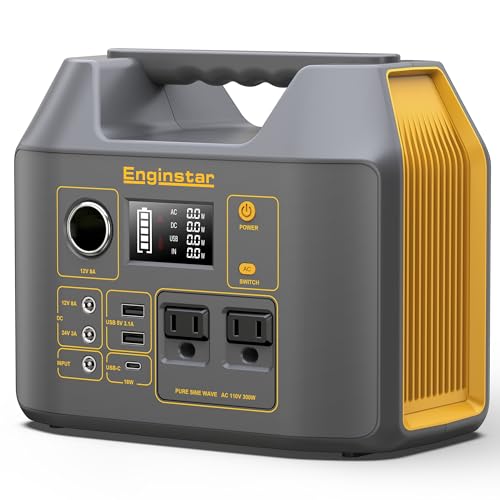
You’ll find the Enginstar Solar Generator 296Wh a solid match if you use a CPAP machine and need reliable, portable power for camping, travel, or emergency backup. It delivers 300W through pure sine wave AC outlets, safely running most CPAP models, plus phones, lamps, or small fans. I appreciate its 296Wh capacity, which typically powers a CPAP all night, especially with a 12V DC connection. Weighing just 6.5 pounds, it’s easy to carry, and the built-in LCD shows battery status clearly. I recharge it via wall outlet in about 7 hours or use a solar panel (sold separately). It includes a car charger, home adapter, and even a USB LED light. With over 1,000 charge cycles and safety protections for temperature and voltage, it’s built to last. I store mine at around 50% charge and top it off every few months, as recommended. The 1-year warranty gives me added peace of mind.
Best For: People who need a reliable, portable power source for running CPAP machines, charging small electronics, and using during camping, travel, or emergencies.
Pros:
- Powers CPAP machines efficiently, especially when using the 12V DC connection, and can last through a full night’s use
- Lightweight and portable at 6.5 pounds with a clear LCD display for easy monitoring of battery status
- Multiple charging options including wall outlet, car charger, and solar panel (sold separately), with over 1,000 charge cycles for long-term durability
Cons:
- Does not support high-wattage appliances over 300W, such as microwaves or electric heaters
- Solar panel not included, adding extra cost for full off-grid functionality
- 7-hour recharge time via wall outlet is slower compared to some competing models
HOWEASY Portable Power Station 300W (222Wh)

Running on pure sine wave power and tipping the scales at just 5.5 pounds, the HOWEASY Portable Power Station 300W (222Wh) becomes a reliable travel companion for CPAP users who value quiet, clean energy and compact design. Its 222Wh capacity efficiently runs most CPAP machines through the night, even with humidifiers. I appreciate the folding handle-it saves space by 28%-and the ability to charge via solar, car, or wall outlet keeps me powered anywhere. The 65W USB-C and multiple ports let me run nine devices at once, while the built-in LED light offers steady or SOS modes. With a 24-month warranty and BMS protection, it’s a solid, low-maintenance choice for travel or emergencies.
Best For: CPAP users and outdoor enthusiasts seeking a lightweight, portable power solution with clean, reliable energy for travel, camping, or emergencies.
Pros:
- 222Wh capacity efficiently powers CPAP machines overnight, even with humidifiers, and supports multiple devices via 9 output ports including 65W USB-C and pure sine wave AC outlets
- Ultra-portable at 5.5 pounds with a space-saving folding handle that reduces footprint by 28%, ideal for travel and outdoor use
- Flexible charging options via solar, car, or wall outlet, plus a built-in LED light with SOS mode and comprehensive safety features including BMS protection and a 24-month warranty
Cons:
- 300W output limit may not support high-power appliances like microwaves or electric kettles
- Solar panel not included, requiring an additional purchase for solar charging capability
- Requires monthly maintenance charging to preserve battery health, which may be inconvenient for infrequent users
Factors to Consider When Choosing a Portable Power Station for CPAP
You’ll want to check the battery capacity first, since your CPAP machine needs enough watt-hours to run all night without cutting out. Make sure the power station delivers the right voltage and has compatible ports, so your device operates smoothly and safely. Think about how easy it is to carry, how long it takes to recharge, and whether the runtime estimates match real-world use-some models even offer trial periods to test it at home.
Battery Capacity Requirements
A good starting point for reliable CPAP power off-grid is a portable station with at least 150 watt-hours (Wh) of battery capacity, since most machines use between 25 and 55 Wh per night depending on settings. If you use a heated humidifier or heated tubing, your power needs can jump two to three times, so plan accordingly. You should also account for inverter efficiency losses-typically 10–15%-which reduce usable energy. Over time, battery capacity degrades, so picking a unit with 20–30% more capacity than you think you’ll need helps maintain performance after many charge cycles. For longer trips or higher settings, consider 300Wh or more to avoid daily recharging. Matching your CPAP’s nightly draw with a buffer guarantees uninterrupted therapy and peace of mind while traveling.
Power Output Compatibility
Power output matters just as much as battery capacity when picking a portable station for your CPAP. You need a unit that delivers continuous power matching your machine’s wattage, usually between 30W and 100W, depending on settings. Make sure the station exceeds this range to handle peak startup power, which can briefly surge higher. Always choose a model with a pure sine wave inverter-this provides clean, stable energy safe for your CPAP’s sensitive electronics. Check that the AC outlet is rated for at least 300W, ensuring it can manage maximum loads without issue. If using a DC connection, confirm the station offers a regulated 12V output to prevent voltage drops when the battery runs low. That way, your therapy stays uninterrupted through the night.
Portability And Weight
While balancing performance and convenience, choosing a portable power station that’s easy to carry makes a real difference-especially when traveling or moving it frequently. Aim for models under 7 pounds so you’re not weighed down, particularly on longer trips or when switching locations. Compact sizes-under 10 inches wide and long-slip easily into tight spaces like car trunks, tents, or bedside nooks. Look for a folding handle or built-in carry design; these make transport smoother and help the unit stow flat when not in use. Units with 250Wh to 300Wh capacity often strike the best balance, giving enough power for CPAP use through the night without adding bulk. Lightweight materials like plastic-rubber composites keep the build durable but light. These features together guarantee you stay powered without sacrificing mobility.
Charging Options Available
When you’re relying on a CPAP machine for uninterrupted sleep, choosing a portable power station with flexible charging options guarantees you won’t run out of power away from an outlet. You can recharge most units via AC wall outlets, car chargers, or solar panels, so you’re covered whether you’re in a hotel, vehicle, or off-grid. Look for models with high input wattage-65W or more-since they recharge much faster, some hitting 80% in just two hours using AC and USB-C PD together. Solar charging works well with built-in MPPT controllers, which boost efficiency in changing sunlight. Some stations support pass-through charging, letting you power your CPAP while recharging the unit. That’s handy during long trips or unexpected delays. Recharge times vary, so check specs carefully to match your travel routine.
Runtime Estimation Accuracy
To get the most reliable estimate of how long your portable power station will run your CPAP machine, start by comparing the unit’s watt-hour (Wh) capacity to your device’s actual power use, which usually falls between 25W and 60W depending on pressure settings and added accessories. Use the formula (Wh × 0.85) / CPAP wattage to account for inverter losses and battery cutoffs. You’ll find actual runtime varies with higher pressure, heated tubing, or cold temps reducing performance. A power station with a regulated 12V DC output often runs your CPAP longer and more predictably than AC mode. Lithium-ion batteries also drop voltage quickly below 80%, so estimates assuming steady discharge are often too optimistic. Check real-world tests and warranty policies to verify performance claims before relying on it for sleep therapy.
Pure Sine Wave Technology
Power quality matters when your CPAP depends on a portable power station. You need clean, stable energy to keep your therapy running smoothly all night. Pure sine wave technology delivers power just like your wall outlet, making it safe for sensitive electronics. Your CPAP’s heater, humidifier, and digital display work best with this smooth output and are less likely to glitch or shut down unexpectedly. Unlike modified sine wave inverters, pure sine wave options produce less electrical noise, reducing wear on internal components and helping avoid malfunctions. Many CPAP makers recommend or require pure sine wave power to keep your warranty valid. These inverters run more efficiently, with less distortion, so your machine gets consistent voltage. Choosing a power station with pure sine wave output means cleaner energy, quieter operation, and greater peace of mind. It’s a smart move when reliable therapy matters most.
Pass Through Charging Support
While your CPAP keeps you breathing steadily through the night, a portable power station with pass-through charging lets you run your machine and recharge the unit at the same time-no interruptions needed. You’ll stay powered through long outages or travel stretches, as the station feeds energy to your CPAP while accepting incoming charge from solar panels or wall outlets. Not all models allow this, so check specs carefully. Some limit AC output during charging, while others deliver full power. A few even block pass-through if the system overheats or gets unstable input. When it works, your CPAP runs continuously, even with a low battery, as long as external power’s connected. This feature adds real reliability for extended trips or uncertain conditions, making your sleep therapy seamless and stress-free.
Safety And Protection Features
You can keep your CPAP running smoothly through the night, but only if your power station protects both the device and itself from common risks. Look for a built-in Battery Management System (BMS) that prevents overcharging, over-discharging, short circuits, and overheating. Choose a model with a pure sine wave inverter-this delivers clean, stable power safe for sensitive medical gear. Overload protection is key, especially during CPAP motor startup surges. A regulated 12V DC output keeps voltage steady, so your CPAP won’t shut down unexpectedly when battery levels drop. Thermal protection and auto-shutdown features help maintain safe temperatures during long use. These safeguards guarantee reliable performance all night, especially off-grid. When comparing units, confirm these protections are included so you can sleep without worry.
Frequently Asked Questions
Can I Use a Car Adapter to Charge My CPAP Power Station?
Yes, you can use a car adapter to charge your CPAP power station, and it’s a reliable option when wall outlets aren’t available. Most models support 12V car charging, though charging takes longer than with AC. Always check your unit’s input specs-some need adapters to handle voltage differences. A car adapter’s useful during travel, but keep your battery charged ahead of time. Test it beforehand so you know it works smoothly when needed.
How Long Does It Take to Fully Recharge a Portable Power Station?
It usually takes 4 to 8 hours to fully recharge your portable power station, depending on its capacity and charging method. You’ll recharge faster using AC outlets, while solar or car charging takes longer. Smaller units charge in under 5 hours, but high-capacity models may need over 7. Check the specs for exact input rates-faster charging needs higher wattage. Most units show charging status, and lithium-ion models hold efficiency well over time. Always follow the warranty guidelines for best performance.
Are Portable Power Stations Allowed on Airplanes for CPAP Use?
Yes, you can bring portable power stations on airplanes for CPAP use, but they must follow TSA and airline rules. You’re allowed to carry them only in carry-on luggage if they’re under 100 watt-hours; some airlines permit up to 160 watt-hours with approval. Always check your airline’s policy first. Lithium-ion units must be protected from damage and accidental activation. Keep your device accessible and be ready to show it during security screening.
Do I Need a Pure Sine Wave Inverter for My CPAP Machine?
Yes, you need a pure sine wave inverter for your CPAP machine because it delivers smooth, consistent power like a wall outlet, protecting sensitive electronics. Most CPAPs won’t run properly-or could get damaged-on cheaper modified sine wave inverters. Portable power stations with pure sine wave output guarantee safe, reliable performance. Check the specs before buying, and choose one with a warranty so you can test it confidently during actual use.
Can I Charge My Phone While Running My CPAP Machine?
Yes, you can charge your phone while running your CPAP machine, as long as the power station has enough capacity and output ports. Most models support simultaneous device use through USB and AC ports. Just check the wattage limits-running both devices draws more power, so monitor battery life. Units with pass-through charging let you recharge the station while powering your CPAP. Test setups at home first to guarantee stable performance and avoid surprises during travel.