Best Pillows for Kyphosis That Support Spinal Alignment
You should look for a pillow with a contoured, ergonomic design that supports your neck’s natural curve while aligning with your rounded upper back. Models with a 15-degree tilt or C-curve help maintain spinal alignment, and dual-height options let you adjust for side, back, or stomach sleeping. Choose CertiPUR-US certified, high-density memory foam for durability and safety. Cooling covers enhance comfort, and removable, washable cases support hygiene. Many come with a 100-night trial and warranty, so you can test the fit with minimal risk-better choices reveal themselves with closer comparison.
We are supported by our audience. When you purchase through links on our site, we may earn an affiliate commission, at no extra cost for you. Learn more. Last update on 20th July 2026 / Images from Amazon Product Advertising API.
Notable Insights
- Ergonomic, contoured designs support natural cervical curvature and align with kyphotic upper back posture.
- 15-degree tilted hollow concave shape maintains proper spinal alignment for kyphosis sufferers.
- Raised edges and C-curve bolsters cradle the head and support neck and upper spine.
- Adjustable loft options (3.7”–5.5”) accommodate sleep positions while preserving cervical alignment.
- High-density, breathable memory foam promotes spinal support and temperature regulation overnight.
Ultra Pain Relief Cooling Neck Pillow

If you’re dealing with kyphosis and need consistent neck support that also keeps you cool, the Ultra Pain Relief Cooling Neck Pillow stands out as a strong option. I’ve found its 15-degree tilted hollow concave design helps maintain my natural neck curve and aligns my spine. Six contour zones support my neck, shoulders, and arms, easing stiffness. The Q-Max 0.4 Arc-Chill cover lowers skin temperature by 5℃, and the 98% breathable memory foam allows steady airflow. I rotated the insert for a better fit-ideal for side or back sleeping. At 23.2 inches long, it fits most beds. I aired it 48 hours to reduce the slight off-gassing. With a 100-night trial, testing it risk-free makes trying it practical.
Best For: Individuals with kyphosis or neck pain seeking a cooling, ergonomically designed pillow that supports spinal alignment and enhances sleep comfort.
Pros:
- Ergonomic 15-degree hollow concave design promotes natural neck curvature and spinal alignment
- Q-Max 0.4 Arc-Chill cooling cover reduces skin temperature by 5℃ for a comfortable sleep
- Adjustable support with removable insert and 100-night risk-free trial for personalized comfort
Cons:
- Slight off-gassing odor requires 48-hour airing before optimal use
- May require an adjustment period for users to get accustomed to the contouring
- Manual measurement may result in slight size variances (0.5–1 inch deviation)
Osteo Cervical Pillow for Neck Pain
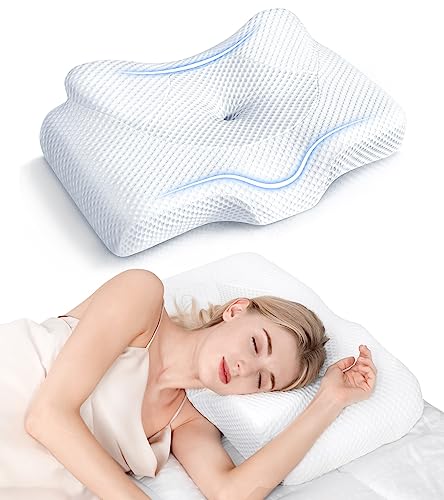
The Osteo Cervical Pillow stands out as a strong choice for people with kyphosis who also deal with neck pain, thanks to its patent-pending hollow center that actively supports the neck’s natural curve. I’ve found it helps keep my spine aligned, easing pressure that causes stiffness and headaches. It works whether I sleep on my side, back, or stomach, and I can flip it or remove the insert to adjust height. The memory foam is certified safe, with no harsh smells, and the breathable cover keeps me cool. If it doesn’t feel right, the company resolves issues without returns-just air it first for 48 hours.
Best For: Individuals with neck pain, kyphosis, or spinal alignment issues seeking a customizable, non-toxic pillow that adapts to various sleep positions and promotes proper cervical support.
Pros:
- Features a patent-pending ergonomic design with a hollow center that supports natural cervical curvature and improves spinal alignment
- Offers adjustable height with dual-density construction and a removable insert for personalized comfort across side, back, and stomach sleeping positions
- Made with CertiPUR-US and Oeko-Tex certified memory foam, ensuring it is free from harmful chemicals and persistent odors, with a breathable 3D mesh cover for cooling
Cons:
- May require a 48-hour airing period before use to fully expand and dissipate initial off-gassing
- Adjustability may not suit all body types or neck curvatures, with comfort varying based on individual sleep preferences
- Higher price point compared to standard pillows, which may not fit all budgets
Cervical Neck Pillow for Pain Relief

You’ll find this cervical neck pillow especially helpful if you’re dealing with kyphosis and need consistent neck support through the night. Its butterfly shape cradles your head and neck, evenly distributing pressure to ease discomfort. The high-density memory foam-CertiPUR-US and Oeko-Tex certified-offers firm yet responsive support, rebounding in 3–5 seconds. You can flip it for 5.5-inch or 3.7-inch height, suiting side, back, or stomach sleepers. The removable ice silk cover feels soft, stays cool, and resists odors. It’s machine washable, too. Plus, the 100-night trial means you can test it risk-free.
Best For: People seeking targeted neck support and pain relief, especially those with kyphosis or who sleep in varying positions.
Pros:
- Ergonomic butterfly design provides balanced support and pressure distribution for improved spinal alignment
- Dual-height option accommodates side, back, and stomach sleepers with customizable comfort
- Removable, cooling, and machine-washable ice silk cover enhances hygiene and temperature regulation
Cons:
- Memory foam may feel too firm for users preferring plush pillow feel
- Adjustable height requires manual flipping, which may be inconvenient for some
- Premium price point may be higher than standard pillows
DONAMA Cervical Pillow for Neck Support

A supportive sleep surface makes all the difference when managing kyphosis, and the DONAMA Cervical Pillow stands out for those needing reliable neck and spinal alignment. I’ve found its contoured design helps cradle my head and neck while supporting my shoulders and back. The dual-height sides-3.54″ and 5.51″-let me switch between sleeping positions comfortably. Made with CertiPUR-US certified memory foam, it offers firm, consistent support and needs 24+ hours to fully expand. The removable, breathable cotton-polyester cover stays cool and washes easily. While it’s not a medical fix, it promotes better posture and reduces discomfort during sleep.
Best For: Individuals seeking improved neck and spinal alignment during sleep with a supportive, ergonomic pillow that accommodates various sleeping positions.
Pros:
- Ergonomic contoured design with dual heights supports proper spinal alignment for side, back, and stomach sleepers
- Made with CertiPUR-US certified memory foam for firm, durable support and safety
- Removable, breathable, and machine-washable cover enhances comfort and hygiene
Cons:
- Requires 24+ hours to fully expand after unboxing, delaying immediate use
- Not suitable as a medical treatment for diagnosed conditions like kyphosis or sleep disorders
- High side may be too firm or lofty for some lightweight or sensitive users
Cervical Neck Pillow for Pain Relief

When choosing a cervical neck pillow for pain relief, especially with kyphosis, support that adapts to your sleep position makes all the difference, and that’s where a dual-height contour design really stands out. I use the 5.5-inch side as a side sleeper-it clears my shoulders and aligns my spine. Back and stomach sleepers flip to the 3.8-inch height for neutral alignment. The contoured core supports my neck’s natural curve, reducing pain and numbness. Ice silk cover stays cool, breathes well, and washes easily. High-density, certified foam holds its shape without heat buildup. It’s not a medical fix, but it helps me sleep better. If it doesn’t ease discomfort, I can return it-no risk.
Best For: Individuals with neck pain, poor spinal alignment, or kyphosis seeking a supportive, cooling pillow that adapts to side, back, and stomach sleeping positions.
Pros:
- Dual-height design (5.5″ and 3.8″) accommodates all sleep positions with proper spinal alignment
- Cooling ice silk cover is breathable, washable, and stays cool to the touch
- Made with CertiPUR-US and Oeko-Tex certified high-density memory foam for durable, chemical-free support
Cons:
- May feel too firm for those who prefer plush, soft pillows
- Not a medical device-results may vary depending on individual conditions
- Higher price point compared to standard pillows without contour support
RESTCLOUD Neck and Shoulder Relaxer (Black)

The RESTCLOUD Neck and Shoulder Relaxer (Black) works best for people with kyphosis who need targeted cervical support during short, therapeutic stretching sessions rather than overnight sleep. I use it on a firm floor or yoga mat for 10-minute sessions to gently traction my neck and realign my spine. Its polyurethane foam shape cradles my neck in a natural C-curve, offering vertical and horizontal support. I never exceed 30 minutes a day, and I stop right away if I feel numbness or dizziness. It’s lightweight, portable, and needs no setup-just lie back and relax. While not a sleep pillow, it helps maintain cervical health with consistent, careful use.
Best For: People with kyphosis or cervical misalignment seeking short, therapeutic neck traction sessions to support spine realignment.
Pros:
- Provides targeted cervical support with ergonomic C-curve design for natural spine alignment
- Lightweight, portable, and easy to use on firm surfaces with no setup required
- Helps relieve neck pain, stiffness, and headaches through gentle, passive traction
Cons:
- Not suitable for extended or overnight use as a sleep pillow
- May cause discomfort or adverse effects if used longer than recommended
- Not intended for individuals who experience pain, numbness, or dizziness during use
Cervical Memory Foam Pillow for Neck Pain

If you’re dealing with neck pain from kyphosis, a cervical memory foam pillow can make a real difference in how you feel each morning. I use one with an ergonomic contour that supports my head, neck, and shoulders, aligning with my spine’s natural curve. It has two heights-one side at 5.3 inches, the other at 3.7-so I switch depending on whether I sleep on my side or back. The high-density memory foam stays firm, lasts longer, and doesn’t sag. A removable, cooling cover with cold silk fabric keeps me comfortable, and it zips off for easy washing.
Best For: Individuals seeking relief from neck pain and spinal misalignment, especially those with kyphosis or who sleep in multiple positions.
Pros:
- Ergonomic dual-height design accommodates side, back, and stomach sleeping for personalized neck support
- High-density, CertiPUR-US certified memory foam provides durable, consistent support without sagging
- Removable, cooling cover with cold silk fabric enhances comfort and is machine-washable for easy care
Cons:
- Slight initial odor may require airing out for 3–5 days before optimal use
- May feel too firm for users preferring plush pillows
- Not a medical device; results may vary based on individual spine curvature and sleep habits
Cervical Neck Pillow Cooling Ergonomic Support

You’ll find the Cervical Neck Pillow Cooling Ergonomic Support especially helpful if you have kyphosis and need targeted alignment for your cervical spine, since its butterfly-shaped design pairs ergonomic neck support with a traditional pillow profile to maintain the neck’s natural curve. I appreciate how the dual-height design-4.72 inches and 3.93 inches-lets me switch sides depending on whether I’m sleeping on my back or side. The CertiPUR-US certified memory foam offers firm support, contouring closely to reduce pressure. While it’s not soft, that firmness helps keep my spine aligned. The ice silk cover stays cool, wicks sweat, and removes for washing, which I find practical. I let mine air out for a few days to clear the slight off-gassing smell-totally normal. It works well for me, though results can vary based on body type or severity of neck issues. If pain persists, I’d check with a doctor.
Best For: People with neck pain or cervical spine issues like kyphosis who want firm, ergonomic support to maintain proper spinal alignment during sleep.
Pros:
- Dual-height design accommodates multiple sleeping positions for personalized comfort
- CertiPUR-US certified memory foam provides durable, firm support and pressure relief
- Cooling ice silk cover is breathable, removable, and machine washable
Cons:
- Firm texture may not suit those preferring a soft pillow feel
- Initial off-gassing odor requires airing out for a few days
- Results may vary depending on individual body type or severity of neck condition
Cervical Neck Pillow for Pain Relief

Though I have kyphosis and need reliable neck support, a cervical pillow with an ergonomic butterfly design helps maintain proper spinal alignment by cradling the head and supporting the neck’s natural curve. Made with CertiPUR-US and Oeko-Tex certified memory foam, it’s firm yet comfortable, adapting to my posture without flattening. One side offers 5.3-inch height for side sleeping, the other 3.7 inches for back or stomach sleepers. The removable ice silk cover stays cool, breathes well, and zips off for easy washing. A slight odor fades in a few days. It’s not medical treatment, but it can help ease discomfort related to poor alignment.
Best For: Individuals seeking a supportive, non-medical sleep solution to help maintain proper spinal alignment and relieve neck pain due to poor posture or conditions like kyphosis.
Pros:
- Ergonomic butterfly design with dual-height contours supports side, back, and stomach sleepers while promoting natural spinal alignment
- Premium CertiPUR-US and Oeko-Tex certified memory foam offers durable, slow-rebound comfort that resists flattening over time
- Removable, breathable ice silk cover enhances cooling, allows easy washing, and improves long-term hygiene and comfort
Cons:
- Slight initial odor may occur due to compressed packaging, requiring 3–5 days to dissipate
- Not intended as a medical treatment; may not suit individuals with severe sleep or neck disorders
- Personal comfort varies based on body shape and sleep habits, so results may differ per user
C CUSHION LAB Deep Sleep Pillow
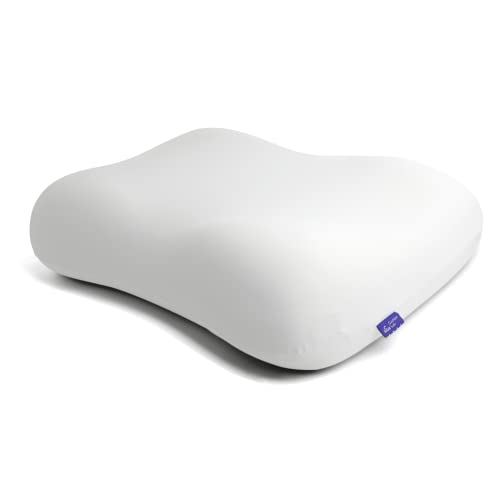
The C CUSHION LAB Deep Sleep Pillow stands out for side and back sleepers needing structured neck support, especially those managing kyphosis who benefit from consistent spinal alignment. I’ve found its patented contour design, crafted by ergonomists, keeps my neck and spine aligned, while dual-density memory foam offers softness on top and firm support underneath. The sculpted bolsters cradle my shoulders during side sleep, and the cool, washable cover reduces skin friction. It’s CertiPUR-US certified, weighs 4 pounds, and fits standard pillowcases. A machine-washable cover and included warranty make it a practical long-term choice.
Best For: Side and back sleepers seeking orthopedic neck support and spinal alignment, especially those with neck pain or kyphosis.
Pros:
- Patented ergonomic design promotes proper cervical alignment and reduces neck tension
- Dual-density memory foam provides soft comfort with firm, adaptive support
- Cool, washable anti-aging pillowcase helps prevent skin creasing and hair frizz
Cons:
- At 4 pounds, the pillow may feel heavy or bulky for some users
- Solid foam core is not machine washable, limiting deep cleaning options
- Wedge shape may not suit stomach sleepers or those who prefer flat pillows
Factors to Consider When Choosing Pillows for Kyphosis
You’ll want a pillow that supports your neck and keeps your spine aligned, since proper positioning can ease discomfort from kyphosis. Look for models with adjustable height and breathable, cooling materials that meet safety standards, so you stay comfortable all night. Many top options also come with trial periods or warranties, letting you test the fit without risk.
Support Level Needs
A well-chosen pillow can make a meaningful difference in managing kyphosis by supporting proper spinal alignment throughout the night. You need a pillow that’s firm enough to support your cervical curve but soft enough to let your head tilt naturally, reducing forward head posture. Look for heights between 3.5 and 5.5 inches on the higher side, or 3.7 to 4 inches on the lower side, depending on your sleep position. Contoured designs with a dipped center and raised edges help align your neck with your rounded upper back. Adjustable-height pillows let you fine-tune support as needed. High-density memory foam holds its shape after compression, offering lasting support that minimizes muscle strain. These features work together to keep your spine balanced without forcing it into an unnatural position.
Neck Alignment Priority
While sleeping, your neck needs consistent support that keeps the cervical spine aligned with the rest of your spine, especially if you live with kyphosis. You need a pillow that maintains your natural cervical curve, ideally supporting a 15-degree angle to promote spinal neutrality. Contoured pillows with raised edges and a central hollow cradle your head while supporting your neck, helping align your spine. Pillow height matters-side sleepers usually need 5 to 5.5 inches of loft, while back sleepers do best with 3.5 to 4 inches. If your pillow is too high or too low, it can force your neck into flexion or extension, increasing strain. A high-density memory foam pillow holds its shape all night, offering steady support without sagging. Choosing the right fit helps reduce misalignment and discomfort over time. Many quality brands offer trial periods, so you can test support and comfort risk-free.
Material Safety Standards
Since your comfort and health depend on clean, safe materials, prioritize pillows that meet rigorous safety certifications. Look for CertiPUR-US certification to guarantee memory foam is free from formaldehyde, phthalates, and heavy metals. Choose Oeko-Tex certified pillows, which confirm all components are tested for toxic substances and safe for sensitive skin. Avoid strong off-gassing odors, as they likely signal VOCs that can trigger headaches or breathing issues, especially in tight sleeping spaces. Instead, opt for non-toxic, odorless foams like high-density, slow-rebound memory foam backed by third-party testing. These materials maintain their shape while limiting harmful emissions. Stay away from flame retardants or chemical additives that don’t meet federal or global safety standards. Pillows meeting these benchmarks support better indoor air quality and long-term well-being. Always check labels for verified claims.
Cooling For Comfort
You’ve already prioritized clean, non-toxic materials for your pillow, but staying cool at night is just as important when managing kyphosis. Look for cooling pillowcases made with high thermal conductivity-those with Q-Max ratings near 0.4 can lower skin temperature by up to 5°C. Covers made of 3D mesh fabric boost airflow by 30% over regular polyester, helping air circulate all night. Materials like ice silk give an instant cool-to-the-touch feel, keeping your sleeping surface comfortable in warm rooms. Inside, breathable memory foam with open-cell structures lets heat escape, so you don’t overheat. Removable, machine-washable covers made from sweat-wicking fabrics maintain cooling performance by removing moisture and oils. These features work together to keep you thermally neutral and support uninterrupted rest, which is key for spinal comfort and recovery during sleep.
Adjustable Height Options
Many pillows designed for kyphosis offer adjustable height options to help you find the right support for your spine. You can choose from dual-height designs that range from about 3.7 to 5.5 inches, letting you pick the best loft for your sleep style. Some models include removable inserts or allow 180-degree rotation, so you can fine-tune the thickness based on your neck’s natural curve. Side sleepers usually need more height-around 5 to 6 inches-to keep the spine aligned, while back and stomach sleepers often do better with a lower profile of 3.5 to 4.5 inches. Adjustability helps maintain proper cervical alignment, reducing strain over time. It also supports shifts in your sleep posture, giving steady relief throughout the night. Look for models with easy customization and a solid trial period so you can test the fit risk-free.
Sleep Position Compatibility
Choosing the right pillow for kyphosis means matching the support to your typical sleep position, since how you rest at night directly affects spinal alignment. If you sleep on your side, go for a higher-loft pillow-5 to 6 inches-to bridge the gap between your shoulder and neck. Back sleepers should pick a moderately thick, contoured pillow that supports the natural curve of the cervical spine without pushing your head too far forward. Stomach sleepers need a low-profile option under 4 inches to avoid straining your neck or twisting your spine. Consider a dual-height or adjustable pillow if you shift positions at night-it lets you switch support levels seamlessly. Contoured pillows with a butterfly shape help spread pressure evenly, keeping your spine aligned. These features work together to suit your habits and improve comfort over time.
Build Quality And Durability
Durability starts with the core. You need high-density memory foam-it keeps its shape for 3–5 years and resists flattening, so your spine stays aligned night after night. Look for slow-rebound foam with a 3–5 second recovery time; it adjusts to your neck’s curve without sagging. Dual-density layers help, too: a soft top cradles your head while a firm base prevents core collapse. That combo boosts longevity. Check for CertiPUR-US or Oeko-Tex certifications-these mean the foam’s free from harmful chemicals and built to last. A strong cover matters just as much. Reinforced 3D mesh or double-layer fabrics hold up to washing and resist wear, keeping the pillow’s structure intact. These features work together, so you’re not replacing it every year. When you invest in solid build quality, you’re really investing in consistent, reliable support-something your posture will notice over time.
Frequently Asked Questions
How Long Does It Take to Adjust to a Cervical Pillow?
You’ll usually adjust to a cervical pillow in 3 to 7 days, though some need up to two weeks. Your neck and shoulders might feel odd at first as your body adapts to better alignment. Give it a full night or two before deciding it’s not right-you’re retraining posture built over years. Most brands offer sleep trials, so use one to test comfort. Firmness, height, and material all affect how quickly you adapt.
Can I Use a Cervical Pillow if I Don’T Have Kyphosis?
You can use a cervical pillow even if you don’t have kyphosis. These pillows support your neck’s natural curve, which helps maintain spinal alignment whether you sleep on your back or side. They’re made with contouring foam that keeps your head from tilting too far forward or backward. Most brands offer trial periods, so you can test comfort and adjust over a few weeks without risk.
Are Cervical Pillows Safe for Side Sleepers With Kyphosis?
Yes, you can safely use a cervical pillow as a side sleeper with kyphosis, as long as it supports your neck’s natural curve. Look for a firm, contoured design with extra height under your neck to keep your spine aligned. Many cervical pillows have memory foam that molds to your shape, reducing pressure. Try ones with removable inserts so you can adjust firmness. Pick a model with a trial period, so you can test comfort and support risk-free.
Do Cervical Pillows Help With Headaches Caused by Poor Posture?
Yes, cervical pillows can help reduce headaches from poor posture by supporting your neck’s natural curve while you sleep. You’ll keep your spine better aligned, which may relieve tension that leads to head pain. Look for memory foam with a contoured design that cradles your neck and lifts your head slightly. Most quality models offer a trial period, so you can test comfort and effectiveness over time before committing.
Can I Wash the Cover of My Kyphosis Pillow at Home?
Yes, you can wash the cover of your kyphosis pillow at home if it’s removable and labeled machine-washable. Check the care instructions first-most covers tolerate cold water and gentle cycles. Avoid bleach and high heat, which can degrade fabric and elasticity. Air-dry or use low heat to prevent shrinkage. A pillow protector helps reduce washing frequency and extends cover life. Always recheck alignment after washing to make certain support stays consistent.