Best Mattress Toppers for Hospital Beds for Ultimate Comfort
You’ll sleep better with a hospital bed mattress topper that combines pressure relief and comfort. The SINWEEK Gel Memory Foam topper uses cooling gel and CertiPUR-US foam to reduce heat while supporting your spine. For bed sore prevention, alternating air pads like the Vive or Drive Medical models use cycling air cells to shift pressure and improve circulation. Most feature quiet pumps, machine-washable covers, and secure fits. Each comes with a trial or warranty, so you can test what works best for your comfort and care needs.
We are supported by our audience. When you purchase through links on our site, we may earn an affiliate commission, at no extra cost for you. Learn more. Last update on 19th July 2026 / Images from Amazon Product Advertising API.
Notable Insights
- Gel memory foam toppers offer pressure relief and cooling comfort with CertiPUR-US certified foam for safe, restful sleep.
- Alternating air pressure pads use 130+ cycling air cells to prevent bed sores and improve circulation for long-term bed rest.
- Convoluted airflow foam toppers enhance breathability and pressure distribution, ideal for preventing heat buildup and bed ulcers.
- Waterproof, durable vinyl construction with secure fitted flaps ensures stability and easy cleaning during continuous use.
- Removable, machine-washable OEKO-TEX certified covers provide hygiene and comfort while blocking allergens and irritants.
SINWEEK Gel Memory Foam Mattress Topper

The SINWEEK Gel Memory Foam Mattress Topper works best for patients who need pressure relief and temperature control in a hospital bed setting. I’ve found its CertiPUR-US certified gel swirl foam molds to your body, easing pressure points while staying durable over time. It circulates air well, so I don’t overheat, even during long rests. The foam expands fully in 48–72 hours if left flat and ventilated-don’t roll or crush it. Cold rooms make it feel firmer, so keep that in mind in winter. I appreciate the three-year warranty and 24/7 support if issues come up. It’s not perfect, but it balances comfort, care, and breathability well.
Best For: Patients seeking pressure relief and temperature regulation in a hospital or home care bed setting.
Pros:
- CertiPUR-US certified gel memory foam provides durable, safe, and adaptive support
- Excellent breathability and heat dissipation for cooler, more comfortable sleep
- Comes with a three-year warranty and 24/7 customer support for added peace of mind
Cons:
- Requires 48–72 hours to fully expand; must be left flat and undisturbed
- Can feel firmer in cold environments, reducing perceived comfort in winter
- Not recommended for rolling or folding, which may limit storage options
Alternating Air Pressure Mattress Pad for Bed Sores
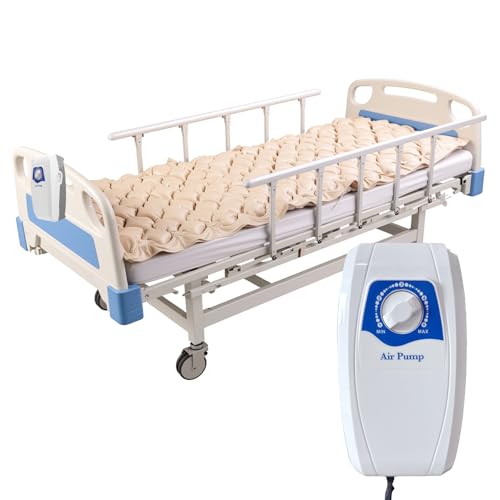
If you’re caring for someone with limited mobility or managing long-term bed rest, an alternating air pressure mattress pad becomes a practical ally in preventing bed sores. I rely on its 130 independent air cells to shift pressure evenly, reducing risk of ulcers. The whisper-quiet pump runs under 40 decibels, so it won’t disturb sleep, and five pressure settings let me adjust firmness for comfort. It fits standard and hospital beds at 75” x 35” and supports up to 300 pounds. Durable, waterproof vinyl resists heat and wear, and the surface wipes clean easily, simplifying hygiene. I find it a solid, low-maintenance choice for ongoing care.
Best For: Individuals with limited mobility or those undergoing long-term bed rest who need effective pressure relief and bed sore prevention.
Pros:
- Utilizes 130 independent air cells with alternating pressure technology to evenly distribute weight and prevent pressure ulcers
- Operates quietly at under 40 decibels with five adjustable firmness settings for personalized comfort
- Made from durable, waterproof vinyl that’s easy to clean and resistant to heat and wear
Cons:
- May require an adjustment period for users unaccustomed to the sensation of shifting air cells
- Limited weight capacity of 300 pounds, which may not suit all users
- Requires access to a power source for continuous operation, limiting portability
Vive Air Pressure Mattress Pad for Bed Sores
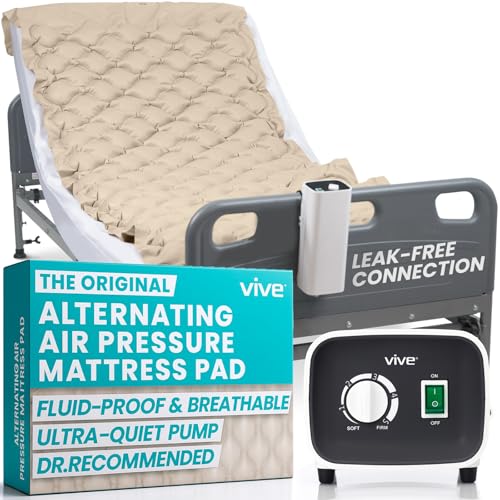
You’ll find the Vive Air Pressure Mattress Pad especially helpful if you’re caring for someone prone to bed sores or recovering from limited mobility. It uses 130 heat-sealed air cells that alternate every six minutes, evenly distributing weight and reducing pressure points. The whisper-quiet pump runs at just 22 dBA, offering multiple pressure settings without disturbing sleep. Made from durable, waterproof vinyl, it supports up to 300 pounds and stays secure with fitted flaps. I appreciate the leak-proof design and flexible hoses, which make setup easy on most hospital or home beds. With a 1-year guarantee and risk-free trial, it’s a reliable choice for long-term care and comfort.
Best For: Individuals caring for bedridden or immobile patients who are at risk of developing bed sores or require pressure relief for improved circulation and comfort.
Pros:
- Utilizes 130 heat-sealed air cells with alternating pressure therapy to effectively reduce pressure points and promote healing
- Whisper-quiet pump operates at 22 dBA, ensuring undisturbed sleep with customizable pressure settings
- Durable, waterproof vinyl construction with secure flaps and a 1-year guarantee for long-term, reliable use
Cons:
- Maximum weight capacity of 300 pounds may not suit all users
- Alternating cycle fixed at six minutes, offering limited control over timing
- Requires continuous power supply, which may limit portability during use
SINWEEK Gel Memory Foam Mattress Topper

Looking for relief from nighttime aches without replacing your entire hospital bed mattress? I’ve found the SINWEEK Gel Memory Foam Mattress Topper helps by evenly distributing body weight and reducing pressure points. It’s 2 inches of CertiPUR-US certified foam with cooling gel infusion, which supports temperature regulation. The removable, OEKO-TEX certified cover is machine-washable and stays in place with elastic straps. It works especially well on firm or sagging mattresses, adding softness while helping with back pain. Just let it expand 48–72 hours after unpacking. A cooler room, around 78°F, speeds expansion.
Best For: Individuals seeking to improve comfort and relieve back pain on firm or sagging hospital or regular mattresses without a full replacement.
Pros:
- CertiPUR-US certified gel memory foam provides safe, supportive comfort with enhanced temperature regulation
- Removable, machine-washable OEKO-TEX certified cover ensures hygiene and ease of maintenance
- Reduces pressure points and improves sleep quality by evenly distributing body weight
Cons:
- Requires 48–72 hours to fully expand, with longer wait times in cooler temperatures
- Limited to 2 inches of thickness, which may not provide enough cushioning for some users
- Twin size only may not fit all bed types or user preferences
Drive Medical 14893 Premium Guard Gel Mattress Overlay, Blue

The Drive Medical 14893 Premium Guard Gel Mattress Overlay, Blue is built for patients needing strong pressure relief and durability during extended bed rest, especially those at risk for pressure ulcers. I use 15 gel bladders that cover the entire surface, evenly distributing weight and reducing pressure points. My fluid-resistant nylon top and waterproof vinyl bottom prevent leaks while staying comfortable. I measure 76 inches long and 3.5 inches high, supporting people weighing 300 to 500 pounds. You can clean me easily with a damp cloth, warm water, and mild soap. I’m not washable, but my durable nylon construction holds up well over time.
Best For: Individuals weighing 300 to 500 pounds who need effective pressure ulcer prevention and durable, long-term bed support.
Pros:
- Features 15 gel bladders for superior pressure redistribution and comfort across the entire surface
- Fluid-resistant nylon top and waterproof vinyl bottom provide excellent protection against leaks and spills
- Easy to clean with just a damp cloth, warm water, and mild detergent for low-maintenance care
Cons:
- Heavy at 47.8 pounds, making it difficult to move or reposition without assistance
- Not machine washable, limiting cleaning to surface wiping only
- Designed for higher-weight individuals, which may make it unsuitable for lighter users seeking a softer feel
Airflow Foam Mattress Topper 2x33x72

One of the best choices for patients needing extra support and comfort on hospital beds is this 2-inch thick airflow foam topper sized at 33×72 inches, designed specifically to fit standard medical bed frames. I’ve found it helps improve airflow and reduce pressure points, thanks to its convoluted egg-crate surface. Made from CertiPUR-US certified foam, it’s free from harmful chemicals and produced right here in the U.S. It’s latex-free and hypoallergenic, which makes it safer for sensitive skin. The open-cell structure supports even weight distribution, helping prevent bed sores. It’s not overly firm, so it balances support and softness well.
Best For: Patients requiring pressure relief and enhanced comfort on hospital or medical beds, especially those at risk of developing pressure sores.
Pros:
- CertiPUR-US certified foam ensures safe, chemical-free materials made in the USA
- Egg-crate design improves airflow and promotes even weight distribution to prevent bed sores
- Latex-free and hypoallergenic, making it ideal for sensitive skin and medical environments
Cons:
- At 2 inches thick, it may not provide sufficient cushioning for those needing deep pressure relief
- Designed specifically for hospital bed frames, so it may not fit all standard household mattresses perfectly
- Convoluted foam surface may wear faster with frequent use compared to solid foam toppers
MABOZOO Waterproof Bed Sore Mattress Topper
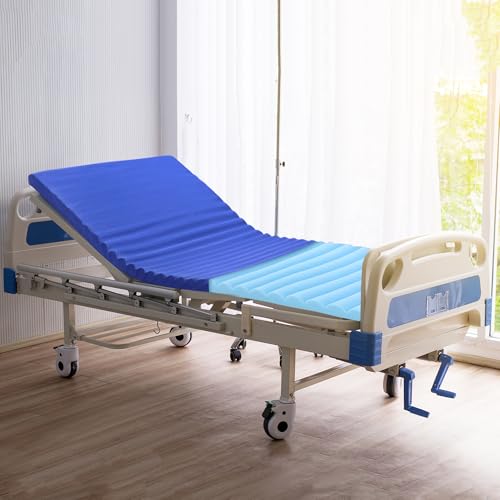
If you’re caring for someone with limited mobility or managing bed sores, the MABOZOO Waterproof Bed Sore Mattress Topper offers targeted pressure relief through its one-piece wave-cut foam design, which spreads body weight evenly and reduces pressure points. I’ve found its high-density foam supports long-term comfort while helping prevent pressure ulcers. The 100% Oxford cloth cover is waterproof and easy to wipe clean, and non-slip dots keep it stable on hospital beds. It’s FDA-registered as a Class I medical device, so it’s trustworthy for clinical use. Measuring 78” x 36” x 1.7”, it fits standard beds. Just remember it needs 24–48 hours to fully expand after unpacking.
Best For: Individuals with limited mobility or those managing bed sores who need reliable pressure relief and waterproof protection in home or clinical settings.
Pros:
- One-piece wave-cut foam design evenly distributes weight and reduces pressure points to help prevent bed sores
- Waterproof 100% Oxford cloth cover is easy to clean and features non-slip dots to prevent shifting
- FDA-registered Class I medical device, suitable for therapeutic use in clinical and home environments
Cons:
- Requires 24–48 hours to fully expand after unpacking, delaying immediate use
- At 1.7 inches thick, may not provide sufficient cushioning for users needing deeper pressure relief
- Designed for standard hospital beds, so may not fit adjustable or non-standard mattress sizes perfectly
SINWEEK 2″ Memory Foam Mattress Topper

Looking for relief from back pain while sleeping on a firm hospital bed? I’ve found the SINWEEK 2″ Memory Foam Mattress Topper helps by improving spinal alignment with its egg crate design, which spreads pressure evenly. Made with cooling gel-infused foam, it fights heat buildup and boosts airflow, so you stay comfortable. It’s CertiPUR-US certified, meaning it’s durable, resists tearing, and contains no harmful chemicals. Fresh out of the box, it’s compressed-just let it expand 24 to 72 hours, ideally in a 78℉ room. The vibrant look adds style, but the real benefit is softer, more supportive rest.
Best For: Individuals seeking pressure relief and improved spinal alignment, especially those sleeping on firm mattresses or hospital beds.
Pros:
- Egg crate design enhances pressure distribution and spinal support for reduced back pain
- Cooling gel-infused foam and breathable structure minimize heat retention for a comfortable sleep
- CertiPUR-US certified for durability, safety, and freedom from harmful chemicals
Cons:
- Requires 24–72 hours to fully expand, which may delay immediate use
- Expansion time is slower in cooler temperatures, needing optimal conditions around 78℉
- Vibrant color, while stylish, may not match all bedroom decors
EGO 2″ Memory Foam Mattress Topper

The EGO 2″ Memory Foam Mattress Topper is a solid choice for individuals who need better pressure relief and support in a hospital bed setting, especially those spending extended hours lying down. Its 2-inch AeroFusion foam molds to your body, while gel infusion helps manage heat and deliver targeted support. Ventilated holes improve airflow, so you stay cooler through the night. It’s CertiPUR-US certified, meaning it’s made without harmful chemicals and meets strict safety standards. I appreciate that it ships compressed, making setup quick-just unbox and let it expand in about three minutes. It includes a 5-year warranty, and if anything goes wrong, U.S.-based support is ready to help.
Best For: Individuals seeking enhanced pressure relief and cooling comfort in a hospital bed or during prolonged bed rest.
Pros:
- 2-inch AeroFusion memory foam provides conforming support and relieves pressure points
- Gel infusion and ventilated holes improve cooling and airflow for comfortable sleep
- CertiPUR-US certified, compressed for easy delivery, and backed by a 5-year warranty with U.S.-based support
Cons:
- May have an initial off-gassing odor upon unpacking
- Not ideal for those who prefer a firm, non-sinking feel
- Limited thickness may not fully correct underlying mattress imperfections
Alcedo Air Pressure Mattress Pad

Though I prioritize comfort, I know healing matters most-so when preventing bedsores in loved ones with limited mobility is the goal, the Alcedo Air Pressure Mattress Pad stands out. It uses alternating pressure technology to boost circulation and reduce pressure on sensitive areas, helping prevent ulcers. Built with high-density materials and reinforced seams, it supports up to 300 lbs and resists wear. The 75 x 35-inch inflatable surface fits most hospital and home beds securely. Its quiet pump offers five pressure settings, letting me customize firmness without disturbing rest. The waterproof, breathable cover wipes clean easily, and the pad qualifies for FSA/HSA reimbursement, helping manage costs effectively.
Best For: Individuals with limited mobility or those at risk of bedsores who need reliable, medical-grade pressure relief and circulation support at home or in care settings.
Pros:
- Utilizes alternating pressure technology to prevent bedsores and enhance circulation
- Durable construction with high-density materials and reinforced seams supports up to 300 lbs
- Quiet pump with 5 adjustable settings and FSA/HSA eligibility for customizable comfort and cost savings
Cons:
- Requires continuous power for alternating pressure function
- May take time to adjust to the sensation of shifting air cells
- Not suitable for individuals exceeding 300 lbs weight capacity
Factors to Consider When Choosing a Mattress Topper for Hospital Bed
You’ll want to check the pressure relief technology first, since it affects comfort and helps reduce the risk of sores during long bed rests. Make sure the topper meets material safety standards, fits your hospital bed type, and is easy to clean-features that matter for both health and hassle-free upkeep. Quiet operation is also key, especially in shared rooms, so pick one that won’t disrupt sleep with creaks or motor noise.
Pressure Relief Technology
How do you guarantee proper pressure relief when choosing a mattress topper for a hospital bed? You look for technology that actively redistributes body weight. Alternating pressure systems use 130 or more air cells that inflate and deflate every six minutes, reducing pressure on sensitive areas and improving circulation. This helps lower the risk of pressure ulcers over time. Gel-infused memory foam conforms closely to your body while releasing excess heat, offering comfort without overheating. Egg crate or wave-cut foam designs spread your weight across a larger surface, minimizing pressure points. High-density convoluted foam with medical-grade certification gives durable support and increases airflow, protecting skin integrity. Together, these features balance support, cooling, and pressure management. Choosing a topper with proven pressure relief tech means better rest and reduced discomfort during long-term bed use.
Material Safety Standards
When selecting a mattress topper for a hospital bed, prioritize materials that meet strict safety certifications to protect both skin and respiratory health. Look for foam with CertiPUR-US certification, ensuring it’s free from harmful chemicals, heavy metals, and has low VOC emissions-below 0.5 parts per million. Choose covers tested under OEKO-TEX Standard 100, confirming they’re safe for skin contact and free from over 100 toxic substances. Opt for latex-free and hypoallergenic materials to reduce allergy risks, especially for sensitive users. Consider medical-grade products listed as FDA Class I devices, which meet regulatory standards for therapeutic safety and performance. These certifications don’t guarantee comfort, but they do verify that materials support healthier indoor air and minimize exposure risks during extended use. Prioritizing verified materials helps you balance safety with comfort when managing medical recovery or sleep challenges.
Compatibility With Bed Types
While hospital beds vary in design and function, choosing a compatible mattress topper starts with matching dimensions and features that support safe, stable use. Measure your mattress-you’ll typically need a topper between 33 and 36 inches wide and 75 to 80 inches long. Pick one with elastic straps or fabric flaps so it stays put when the bed adjusts. Keep thickness in mind; most toppers range from 1.7 to 3.5 inches, but too much bulk can limit rail use or interfere with the bed’s movement. If you use a bariatric bed, check the weight limit-some toppers support up to 500 pounds. Opt for waterproof or fluid-resistant materials to protect the mattress and keep things hygienic. These features help your topper work smoothly with adjustable frames while maintaining safety and comfort.
Ease Of Maintenance
You’ve checked the fit and made sure the topper works with your hospital bed’s adjustments and rails-now consider how easy it is to keep clean and in good shape over time. Look for a waterproof surface so spills wipe away quickly, helping maintain hygiene with minimal effort. Choose models with removable, machine-washable covers made from breathable, skin-friendly fabrics for hassle-free cleaning. A non-slip bottom keeps the topper in place during use and when you clean around it, reducing constant readjusting. Materials like medical-grade vinyl or fluid-resistant fabric stand up to daily wear, resist punctures, and inhibit microbial growth-ideal for long-term care. Most toppers need just 24 to 72 hours to off-gas after unpacking, so they’re ready fast. These features together simplify upkeep, support infection control, and extend the topper’s life without extra work on your part.
Noise Level Considerations
How quiet does your sleep environment need to be? If you’re sensitive to sound, look for alternating pressure mattress pads with pumps that operate below 40 decibels-about the volume of a whisper. Some models use sound-dampening tech to hit 22 dBA, making them nearly silent in a quiet room. Placement matters: setting the pump farther from the bed can reduce how much noise you notice. Keep in mind, pumps with automatic pressure cycles may make soft, intermittent sounds every few minutes. If these exceed 30 decibels, they might disturb light sleepers. For steady, restful sleep, choose a system that runs continuously under 35 decibels. Check product specs for noise ratings and consider in-home trials, if available, to test real-world performance.
Temperature Regulation Features
Since staying cool during sleep can improve comfort and rest quality, look for mattress toppers with materials and designs that actively manage heat. Choose gel-infused memory foam-it contains cooling agents that draw heat away from your body and reduce warmth buildup. Opt for convoluted or egg-crate foam patterns, which increase air circulation through distributed air pockets and enhance breathability. Avoid waterproof covers made of vinyl or nylon, as they tend to trap heat; instead, pick models with breathable, moisture-wicking fabric for better airflow. If you use an alternating pressure air pad, you’ll benefit from continuous air movement between cells, which helps prevent overheating better than solid foam. Keep in mind that foam responds to room temperature-colder environments may stiffen the material, reducing its ability to ventilate. Check if the product includes a trial period or warranty, so you can assess its cooling performance over time.
Weight Capacity Limits
A mattress topper’s ability to support your weight safely depends on its design and materials, so checking the weight capacity is essential for long-term comfort and performance. Some models support up to 300 pounds, which works well for most users, but if you weigh more, look for options rated between 300 and 500 pounds. These higher-capacity toppers use high-density foams and reinforced seams for better durability and structural support. The material density and build quality directly affect how well the topper handles pressure over time. Exceeding the recommended limit can cause early wear, sagging, or loss of pressure relief. Always check the manufacturer’s stated weight limit before buying, especially in medical settings where reliability matters. Choosing the right capacity guarantees consistent comfort, support, and longer use without damage.
Frequently Asked Questions
How Long Does a Gel Memory Foam Topper Last?
You can expect a gel memory foam topper to last between 3 to 5 years with regular use. You’ll notice it holds up well under daily pressure, especially if it’s high-density foam. Over time, you might see slight sagging or reduced cooling. Flipping it monthly helps even out wear. Most come with a 1–3 year warranty, so check coverage. A quality cover also extends its life.
Can Air Pressure Pads Be Used on Regular Beds?
Yes, you can use air pressure pads on regular beds, and they work well if your mattress supports their structure. You install them directly over your existing mattress, and they gently cycle air through chambers to relieve pressure points. They’re helpful if you stay in bed long-term or have circulation concerns. Most models include pumps with adjustable firmness, trial periods, and multi-year warranties, so you can test comfort safely and make a practical choice.
Are Waterproof Toppers Noisy During Movement?
Yes, some waterproof toppers can be noisy when you move, especially if they have plastic-like backing or laminated layers. You’ll hear crinkling as the material shifts under pressure. Look for ones with soft, fabric-encased waterproofing-those tend to stay quiet. Toppers using polyurethane membranes bonded to fabric usually offer silent performance. Test models with a trial period, so you can check noise levels in real use without risk.
Do Foam Toppers Retain Body Heat?
Yes, foam toppers do retain body heat, especially dense memory foam, because it molds closely to your shape and traps warmth. You’ll feel warmer sleeping on it, which can be comfortable in cool rooms but too hot in warm ones. Look for gel-infused or open-cell foam if you sleep hot-it helps dissipate heat. Always check trial periods so you can test comfort and temperature regulation.
Is It Safe to Stack Multiple Toppers?
You shouldn’t stack multiple toppers-it can make the bed too soft or unstable, increasing fall risk and reducing support. Most toppers are designed to work alone, and layering them may block airflow, trap heat, or interfere with pressure relief. If you need more comfort, look for a single thicker topper, like 3–4 inches of high-density foam or gel-infused memory foam. Check warranties, too-some brands void coverage if you modify setup.