Best Inflatable Sleeping Pads for Ultimate Camp Comfort
You’ll sleep better on an inflatable pad with 3 to 5 inches of thickness for cushioning and insulation. Look for built-in foot pumps to inflate in under a minute and dual-layer valves to lock in air. Models with R-values between 2 and 4 work well for most seasons, while TPU-coated nylon offers durability and moisture resistance. Built-in pillows add comfort, and weights under 2 pounds save space on the trail-options like the Nemo Roamer or Big Agnes Divide balance these features well, and many include warranties to test their performance.
We are supported by our audience. When you purchase through links on our site, we may earn an affiliate commission, at no extra cost for you. Learn more. Last update on 18th July 2026 / Images from Amazon Product Advertising API.
Notable Insights
- Look for pads with 3–5 inches of thickness and supportive structures like egg-cell or V-beam designs for maximum comfort.
- Choose models with built-in foot pumps to inflate fully in under 60 seconds without manual effort.
- Opt for durable 40D–50D nylon with TPU coating to resist punctures and moisture while staying lightweight.
- Prioritize pads with dual-layer or anti-leak valves to maintain air pressure throughout the night.
- Consider integrated features like built-in pillows and U-shaped contours for enhanced sleep comfort and support.
Camping Sleeping Pad with Built-in Pump

If you’re a backpacker who values both comfort and efficiency, the camping sleeping pad with a built-in pump stands out as a smart choice, especially when every second counts after a long hike. I find its 78 x 27 x 8-inch size gives me full support, while the 3-inch thickness and egg-shaped air cells cushion my joints on rocky ground. The built-in foot pump inflates it in under a minute-no breath or extra gear needed-and the dual-layer valve deflates it fast without leaks. It’s ultralight, packs small, and fits easily in my backpack. Made from 40D nylon with a TPU coating, it resists tears and weather, and I can wipe it clean after trips. Side buttons let me link it to another pad for shared camping, which works well for couples.
Best For: Backpackers and outdoor enthusiasts who prioritize comfort, quick setup, and portability in their gear.
Pros:
- Built-in foot pump allows fast inflation in 30–60 seconds without needing a mouth or external pump
- 3-inch thick egg-shaped air cells and integrated pillow provide excellent support and comfort on uneven terrain
- Ultra-lightweight and compact design makes it easy to carry, ideal for backpacking, hiking, and travel
Cons:
- Limited color options may not appeal to all users
- Dual-layer valve, while leak-resistant, may require careful handling to avoid debris interference
- Connectivity feature requires a second compatible pad, sold separately, to create a shared sleeping surface
Gear Doctors Ether 17.5oz Ultralight Sleeping Pad

The Gear Doctors Ether 17.5oz Ultralight Sleeping Pad stands out as a top pick for backpackers and hikers who need reliable comfort without the weight. At just 17.5 ounces, it packs down to the size of a water bottle and inflates quickly using the included foot pump-no lung effort needed. Its U-shaped design cradles your body, offering 3.35 inches of cushioning at the edges and 2.36 in the center for solid support. With an R-value of 2, it’s best for spring and summer. The anti-leak valve seals tight, and the durable 20D nylon withstands rough use. I appreciate the lifetime warranty-no returns required.
Best For: Backpackers, hikers, and campers seeking a lightweight, compact sleeping pad with easy inflation and reliable comfort for three-season use.
Pros:
- Ultralight at 17.5 oz and packs down to water bottle size for maximum portability
- Fast inflation with included foot pump and anti-leak valve ensures hassle-free setup
- Durable 20D nylon with TPU coating and lifetime warranty enhance long-term reliability
Cons:
- R-value of 2 limits use to warmer conditions, not ideal for cold weather
- Weight capacity discrepancy-listed as 350 lb in product info but 440 lb in description may cause confusion
- Tapered U-shape design may offer less shoulder room for wider sleepers
Sleeping Pad with Pillow & Pump (Gray)

I prefer this Inflatable Sleep Pad when I need comfort without sacrificing pack space, especially on solo trips where every ounce matters. It weighs just 1.47 pounds and packs into a 12.99L x 5.51W x 4.72Th size, thanks to its self-inflating design and built-in foot pump-you just step to inflate. The 40D nylon is waterproof and tear-resistant, with sealed edges for durability. A built-in pillow adds comfort, eliminating extra gear. I close the valve before use to keep it airtight, and it holds medium firmness well for side or back sleeping. It includes a storage bag, tie rope, and two repair patches. Released December 2, 2025, by exsulity (ASIN: B0G4RF51KH), it’s practical for camping, hiking, or road trips.
Best For: Outdoor enthusiasts and solo travelers who prioritize lightweight, compact gear with built-in comfort features for camping, hiking, or road trips.
Pros:
- Lightweight and highly portable at just 1.47 pounds with a compact folded size for easy packing
- Built-in foot pump and self-inflating design allow for quick, tool-free setup
- Durable 40D nylon with waterproof coating and sealed edges enhances longevity in rugged conditions
Cons:
- Single-person design limits use for couples or shared sleeping setups
- Medium firmness may not suit users who prefer softer or firmer sleeping surfaces
- Built-in pillow offers convenience but may lack adjustability for personalized comfort
Ultralight Inflatable Camping Air Mattress

You’ll find the Sleepingo Ultralight Inflatable Camping Air Mattress a strong pick if you’re a backpacker or hiker prioritizing weight and pack size without giving up comfort. I’ve used it on multiple overnight trips, and it packs down small-just over 11 inches in the included carry bag-making it easy to stash in a pack. At under 400 grams, it’s light but still durable, thanks to ripstop nylon that resists tears. The 73.5 x 21.5–inch surface gives enough room to sleep comfortably, and the design inflates quickly by mouth. It also holds insulation well, helping retain body heat on cold ground.
Best For: Backpackers and hikers seeking a lightweight, compact sleeping mat that balances comfort and portability for outdoor adventures.
Pros:
- Weighs under 400 grams and packs down to just over 11 inches, making it highly portable for backpacking
- Made with durable ripstop nylon that resists tears and withstands rugged outdoor use
- Quick inflation and deflation with effective insulation to retain body heat on cold ground
Cons:
- Manual mouth inflation may be tiring and less convenient compared to pump-compatible models
- Limited size options, currently only available in a single sleeping pad configuration
- Blue color may show dirt and scuffs more easily with extended use
Camping Sleeping Pad with Built-in Pillow (5-Inch)

One standout option in the lineup delivers both comfort and convenience for back and side sleepers who value rest in the wild without the bulk-this 5-inch-thick inflatable pad includes a built-in pillow, offering hotel-like support right where it’s needed. I weigh just 1.98 pounds, pack down to backpack size, and inflate in 60 seconds using my built-in foot pump-no extra gear required. My 50D nylon top with TPU coating resists punctures, supports up to 800 pounds, and handles rough terrain. The egg-cell structure cushions pressure points, while the drawstring design evenly distributes weight. I work well for camping, hiking, or even guest use, and come with a 1-year warranty.
Best For: Back and side sleepers who want hotel-like comfort and convenience during camping, backpacking, or guest use without added bulk.
Pros:
- Includes a built-in pillow and 5-inch thickness for superior comfort and support
- Ultra-lightweight at 1.98 pounds with a compact, backpack-friendly design and built-in foot pump for quick inflation
- Durable 50D nylon top with TPU coating supports up to 800 lbs and resists punctures on rough terrain
Cons:
- Actual weight is 4.2 lbs, significantly heavier than advertised 1.98 lbs, affecting portability
- Built-in pillow may not suit all sleeping preferences or positions
- Higher price point compared to basic sleeping pads without similar features
Camping Sleeping Pad with Built-in Pump & Pillow

A camping sleeping pad with a built-in pump and pillow stands out for backpackers and car campers who value comfort without sacrificing setup speed. I find the 4-inch thickness and V-shape support cradle my hips and shoulders, especially as a side sleeper, while the contoured pillow aligns my neck. The built-in foot pump inflates it in 30 seconds-way faster than hand pumping-and the no-leak valve holds air for 24 hours. It deflates in one second, packs small (9.4 x 4.3 inches), and weighs just 1.9 pounds. Made of 40D TPU nylon, it resists tears, insulates well, and wipes clean. I can link pads for couples or families. It’s sturdy, versatile, and ready wherever I camp.
Best For: Side sleepers and outdoor enthusiasts who prioritize comfort, quick setup, and portability in camping sleep systems.
Pros:
- 4-inch thick V-shape support and contoured pillow provide excellent pressure relief and spinal alignment for side sleepers
- Built-in foot pump inflates the pad in 30 seconds, and the no-leak valve maintains air for up to 24 hours
- Lightweight at 1.9 pounds and packs down to 9.4 x 4.3 inches, making it highly portable and easy to store
Cons:
- May be too firm for users who prefer a softer sleeping surface
- Limited color or design options based on current product details
- Potential risk of puncture in extremely sharp terrain despite durable 40D TPU nylon construction
Sleeping Pad with Pillow for Camping
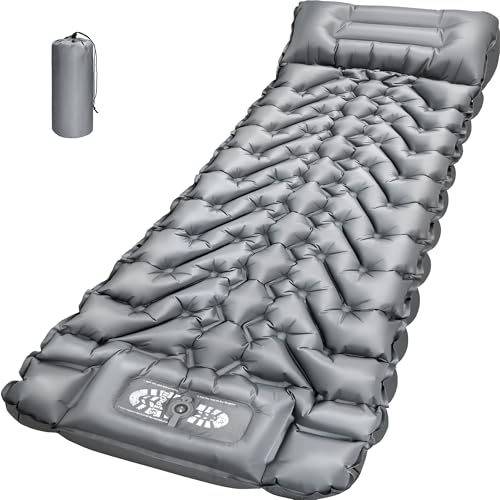
This inflatable sleeping pad stands out for campers who value comfort without sacrificing packability, especially side sleepers needing extra neck support from the built-in 6-inch pillow. At 4 inches thick, it offers firm support and raised edges to keep you from rolling off. The built-in foot pump inflates it in 60 seconds, and it deflates in one second, packing down to just 11 x 3.9 inches. Weighing only 1.9 pounds, it’s light for backpacking. The TPU-coated polyester top feels soft and quiet, while the nylon bottom resists punctures. An air lock valve prevents leaks, maintaining consistent inflation all night.
Best For: Side sleepers and backpackers seeking a comfortable, lightweight, and packable sleeping pad with built-in pillow support for camping and outdoor adventures.
Pros:
- 4-inch thickness and integrated 6-inch pillow provide excellent comfort and neck support, especially for side sleepers
- Quick 60-second inflation and 1-second deflation with built-in foot pump, enhancing convenience and portability
- Durable TPU-coated polyester top and rugged nylon bottom resist punctures, noise, and wear on rough terrain
Cons:
- Single size may not accommodate taller or larger users comfortably
- Firm firmness may not suit those preferring a softer sleeping surface
- Limited thermal rating information provided for cold-weather use
Big Agnes Divide Sleeping Pad

The Big Agnes Divide Insulated Sleeping Pad stands out for campers who prioritize warmth and stable support without adding bulk to their pack. I use it when I need reliable 3-season comfort, thanks to its 4.0 R-value, THERMOLITE insulation, and heat-reflective film. The 3.25-inch thick I-Beam design gives me stable, cushioned sleep, while the recycled nylon ripstop and TPU lamination hold up well. It packs small and weighs just 30 oz. I appreciate the high-volume valve and included inflation sack-no breath needed. It comes with repair gear, a storage sack, and a lifetime warranty, which makes testing it risk-free.
Best For: Backpackers and campers seeking a lightweight, warm, and durable 3-season sleeping pad with excellent insulation and packability.
Pros:
- 4.0 R-value with THERMOLITE insulation and heat-reflective film provides reliable warmth for 3-season use
- Lightweight at 30 oz and packs down small (5.5” x 8”) while offering stable 3.25-inch I-Beam support
- Includes inflation sack, repair kit, and storage sack; backed by a lifetime warranty
Cons:
- May be less suitable for extreme winter conditions without additional insulation
- Higher price point compared to non-insulated or lower R-value pads
- Hand wash only, requiring careful cleaning to maintain durability
A2C Camping Sleeping Pad with Built-in Pillow

Though many sleeping pads claim comfort, the A2C Camping Sleeping Pad with Built-in Pillow stands out if you value integrated support and quick setup, especially when packing light for backpacking or family trips. I appreciate its 77 x 26-inch size and 4.7-inch thickness, offering plush firmness without excess bulk. The built-in 6-chamber pillow supports my neck well, and the foot pump inflates it in under a minute. Made from 40D nylon with TPU coating, it resists tears and leaks, even on rough terrain. At just 1.98 pounds, it packs small and carries easily. Side connectors let me link two pads, and the double-layer valve guarantees steady air retention.
Best For: Backpackers and campers seeking a lightweight, durable sleeping pad with built-in pillow support and quick inflation for comfortable outdoor rest.
Pros:
- Integrated 6-chamber pillow provides excellent neck and head support
- Foot pump inflates the pad in under a minute with effortless 1-second deflation
- Lightweight at 1.98 lbs and compact when packed, ideal for portability
Cons:
- Limited color options available, currently only offered in green
- Hand wash only care may be inconvenient for frequent users
- Single chamber firmness adjustment may not suit all sleep preferences
Ultralight Inflatable Camping Sleeping Mat

You’re carrying every ounce on your back, so when trail weight matters most, this ultralight inflatable camping sleeping mat from Sleepingo becomes a go-to choice for backpackers and hikers aiming to cut load without sacrificing rest. At just 396.89 grams, it packs down to 11.18 inches and fits easily in my pack. Made from ripstop nylon, it resists tears and handles rugged ground. The 73.5 x 21.5-inch sleep surface inflates fast and deflates quickly, saving time and effort. With air-filled cushioning, it offers decent insulation and support, helping maintain restful sleep in changing outdoor conditions. The included carry bag adds convenience, making it a reliable option for lightweight comfort.
Best For: Backpackers and hikers seeking a lightweight, packable sleeping mat that balances comfort and durability for outdoor adventures.
Pros:
- Ultra-lightweight at just 396.89 grams, ideal for minimizing pack weight
- Durable ripstop nylon construction resists tears on rugged terrain
- Fast inflation and deflation with compact packed size for easy transport
Cons:
- Limited insulation for extreme cold weather conditions
- Air-filled design may require overnight top-ups due to slight air loss
- Single-layer material may be less cushioned compared to thicker pads
Factors to Consider When Choosing an Inflatable Sleeping Pad
You’ll want to think about thickness and support, since a pad that’s too thin might leave you feeling the ground but one that’s too thick can be awkward to inflate and pack. Consider how easy it is to inflate and deflate, along with the weight and portability-lighter models save effort on the trail but sometimes trade off durability. Materials matter for long-term use, and don’t overlook thermal insulation, especially if you camp in cooler weather, as some pads help retain body heat better than others.
Thickness And Support
A thickness between 2 and 5 inches makes a noticeable difference in both comfort and insulation, with models at 4 to 5 inches offering more cushioning over rough or uneven ground. You’ll get better support and reduced pressure points, especially if you weigh more or prefer sleeping on your side. Pads with egg-cell or V-shaped internal structures help maintain spinal alignment and distribute weight evenly. Firmness varies-extra firm options resist bottoming out and offer stability, while medium firmness suits those wanting a softer feel. Multi-chamber designs provide targeted support and reduce air movement, boosting comfort. Raised edges or built-in pillows keep your body centered and aligned through the night. These structural details improve sleep quality by supporting natural posture. When choosing, consider how your sleep style interacts with the pad’s thickness and internal design to guarantee restful, uninterrupted sleep outdoors.
Inflation And Deflation
While some pads require considerable effort to inflate, models with integrated foot pumps or detachable pump sacks let you fill the mattress quickly and with minimal strain, often in under a minute. You can fully inflate high-quality pads in as little as 30 seconds using built-in foot pumps, eliminating the need for lung power. Dual-layer or anti-leak valve systems prevent air loss during inflation and help maintain steady pressure all night, so you won’t need to top up. When it’s time to pack up, quick-release valves let you deflate the pad in under a second, speeding up airflow without tools. Look for heat-sealed edges and TPU-coated fabrics-they reduce micro-leaks and support consistent firmness over time. These features improve air retention, giving you reliable comfort night after night. Choosing a pad with smart inflation and deflation design saves time, effort, and hassle on every trip.
Weight And Portability
Think about how much you’re willing to carry when selecting a sleeping pad, because weight and packed size directly impact your comfort on the trail. Most lightweight pads weigh between 1.5 to 3 pounds, making them easy to pack for long hikes. If you’re trimming every ounce, ultralight options drop to just 17.5 ounces, offering big savings in pack weight without losing support. Look for pads that compress to under 10 inches long and about 4 inches wide-many fit neatly in side pockets or snug backpack sections. Some roll down to the size of a water bottle, freeing up valuable space. Materials like ripstop nylon and TPU coatings keep the pad tough yet light, helping you move efficiently. A smaller packed size and low weight mean less fatigue over time, especially on multi-day trips where every detail counts.
Material Durability
When you’re camping on rough ground, the materials your sleeping pad is made of can make the difference between a restful night and a leaky, uncomfortable mess. Choose pads built with 40D to 70D nylon or polyester-they resist abrasion and punctures far better than lighter fabrics. Higher denier materials, like 50D–70D, hold up longer on rocky or uneven terrain, especially where contact is constant. A TPU coating boosts durability by sealing fibers against tears and blocking moisture from entering. Look for heat-sealed seams and double-layer anti-leak valves; they reduce air loss and stand up to repeated inflation and deflation. Reinforced air strips and bonded baffles help maintain structure and air retention over time. These features work together to extend the pad’s life, even under tough conditions. Pads with strong construction often come with longer warranties, giving you confidence in their performance.
Thermal Insulation
If you’re camping in cool or cold conditions, thermal insulation becomes a critical factor in staying comfortable and safe through the night. You’ll want to check the R-value, which measures how well your pad resists heat loss. For warm weather, an R-value between 1.0 and 2.0 is usually enough. But when temperatures drop below 50°F, aim for at least 3.0. If you’re facing freezing conditions, go with 4.0 or higher to prevent body heat loss and reduce hypothermia risk. Insulation depends on both thickness and materials-pads with reflective layers or closed-cell foam cut down on radiant and convective heat transfer. Thicker air chambers also limit conductive cooling from the ground. Choosing the right balance guarantees restful sleep without overheating or shivering, letting you stay warm and recover well, night after night.
Pillow Integration
While comfort might not be the first concern when setting up camp after a long day, having a sleeping pad with integrated pillow support can make a noticeable difference in how well you rest. These built-in pillows usually add 4 to 6 inches of lift, helping keep your neck and spine aligned. They eliminate the need for a separate camp pillow, saving up to half a pound in pack weight and valuable space. Some models use adjustable air chambers, so you can fine-tune firmness or deflate it completely. Others have fixed pillows, which limit sleep positions but offer consistent support. Look for TPU-coated fabrics-they’re tough, quiet, and resist moisture. While integrated designs simplify setup, consider whether you prefer flexibility over convenience. Testing different styles guarantees better alignment and comfort, especially if you have sleep concerns.
Size And Fit
How much space do you really need under the stars? Inflatable sleeping pads typically range from 70 to 80 inches long and 20 to 28 inches wide, fitting most adults comfortably. If you’re taller or broad-shouldered, go for the larger end of that range. Thickness matters too-pads between 2 and 5 inches affect both comfort and packed size. Thicker models cushion well and add insulation, but they take up more room in your pack. Speaking of packing, some pads compress down to just 9 x 4 inches, slipping easily into side pockets. Weight varies from 1 to 4 pounds; ultralight options under 2 pounds help reduce strain on long hikes. Need more space? Some designs let you link two pads together with side clips, creating a shared sleeping surface. Consider your storage limits and sleeping habits when choosing size and fit.
Noise Level
Ever wonder why some sleeping pads crinkle like a potato chip bag when you move? That noise usually comes from thin nylon or basic PVC materials rubbing together. If you want quieter sleep, choose pads made with TPU-coated fabrics and multi-layer construction-they’re designed to reduce sound. Internal baffles or welded chambers also help by limiting surface friction when you shift. A textured or brushed top layer can cut down on squeaking between your sleeping bag and the pad. Look for airtight valves and strong air retention, too, since those stop hissing from slow leaks. Thicker pads with structured air cells-like egg-celled or V-shaped designs-dampen noise by spreading pressure evenly. Quieter pads often cost a bit more, but many brands offer trial periods, so you can test them quietly at home. Check warranty terms before buying to guarantee long-term confidence.
Frequently Asked Questions
Can I Repair a Punctured Sleeping Pad Myself?
Yes, you can repair a punctured sleeping pad yourself. Most brands include a patch kit with adhesive patches and instructions. First, locate the leak by inflating the pad and listening or using soapy water. Once found, clean and dry the area, then apply the patch firmly. For larger tears, use a gear repair adhesive. Many pads also qualify for warranty service if DIY fixes fail, so check the manufacturer’s policy before heading out again.
How Do I Clean an Inflatable Sleeping Pad?
You clean an inflatable sleeping pad with mild soap, lukewarm water, and a soft cloth. Wipe down both sides gently, avoiding harsh chemicals or submersion. Rinse thoroughly, then air-dry it completely before storage-keeping it flat and unrolled prevents mold. Most pads use durable, wipeable fabrics like nylon or TPU, which resist wear. Check the manufacturer’s instructions; some models aren’t machine-washable. Regular cleaning extends lifespan and maintains performance, especially after muddy or sweaty trips.
Are Inflatable Sleeping Pads Suitable for Cold Weather?
Yes, you can use inflatable sleeping pads in cold weather, but you must choose one with a high R-value-typically 4.0 or higher-for effective insulation. Many models use reflective films, synthetic fill, or air-trapping baffles to boost warmth. Always check the manufacturer’s temperature rating and pair the pad with a sleeping bag suited to the conditions. Some brands offer warranties or trial periods, so test it at home first to guarantee it meets your comfort and warmth needs.
Do Sleeping Pads Lose Air Overnight?
Yes, sleeping pads can lose air overnight, but it’s usually due to small punctures, valve issues, or temperature changes-not design flaws. You’ll notice slight deflation in colder temps as air contracts. Check valves are tight and inspect for debris. Most quality pads hold air fine; models with welded seams and reliable valves perform best. Try yours at home first. Manufacturers often offer warranties or repair kits, letting you test with confidence and fix minor issues easily.
Can I Use a Sleeping Pad for Backpacking?
You can use a sleeping pad for backpacking as long as it’s lightweight and packable. Look for pads with a low packed size and weight under 2 pounds. Most inflatable pads use ripstop nylon with a TPU or polyester backing to stay durable yet light. Check the R-value-aim for 3.0 or higher in cold weather. Many brands offer trial periods, so test one at home first to guarantee comfort and ease of use before hitting the trail.