Best Infant Cribs Parents Trust for Safe, Sweet Dreams
You can trust cribs like the Dream On Me Synergy and Delta Children Essex for safe, restful sleep because they meet strict ASTM, CPSC, and GREENGUARD Gold standards, use solid pine or sustainably sourced wood, and include adjustable mattress heights to support your baby’s growth. Reinforced frames boost stability, while non-toxic finishes reduce chemical exposure. Most require separate conversion kits and have weight limits around 50 pounds, with warranties from 90 days to a year-conditions worth reviewing as you compare long-term use. You’ll find more details on how each model supports changing sleep needs just ahead.
We are supported by our audience. When you purchase through links on our site, we may earn an affiliate commission, at no extra cost for you. Learn more. Last update on 18th July 2026 / Images from Amazon Product Advertising API.
Notable Insights
- Cribs from trusted brands meet rigorous safety standards like ASTM, CPSC, and GREENGUARD Gold Certification for low emissions.
- Solid wood construction, especially from sustainably sourced New Zealand pinewood, ensures durability and long-term use.
- Adjustable mattress heights support infant development and reduce caregiver strain during lifts and tucks.
- JPMA certification and third-party testing confirm compliance with U.S. safety regulations for infant sleep.
- Conversion capabilities extend crib use into toddler and full-size beds, reducing replacements and long-term costs.
Dream On Me Synergy 5-in-1 Convertible Crib

If you’re looking for a crib that grows with your child, the Dream On Me Synergy 5-in-1 Convertible Crib stands out as a practical long-term choice. I’ve found it adapts easily from infancy to adolescence, converting into a toddler bed, daybed, or full-size bed-though conversion kits and mattress are sold separately. Its three adjustable mattress heights make lowering the base simple as your baby starts sitting or standing. Built from sustainably sourced New Zealand pinewood with a sturdy metal frame, it’s durable and stable. It meets ASTM and CPSC standards, is GREENGUARD Gold Certified, and CPSIA compliant, ensuring low chemical emissions. A 1-year warranty covers defects, and assembly is required.
Best For: Parents seeking a durable, eco-friendly convertible crib that adapts from infancy through childhood with multiple bed configurations.
Pros:
- Converts into five configurations: crib, toddler bed, daybed, and full-size bed with or without footboard for long-term use
- Made from sustainably sourced New Zealand pinewood with a heavy-duty metal frame for durability and stability
- GREENGUARD Gold Certified, meeting strict standards for low chemical emissions and indoor air quality
Cons:
- Conversion kits and mattress sold separately, increasing overall cost
- Requires assembly, which may be time-consuming for some users
- Limited warranty of only 1 year compared to longer warranties on competing models
Delta Children Essex 4-in-1 Crib (Bianca)
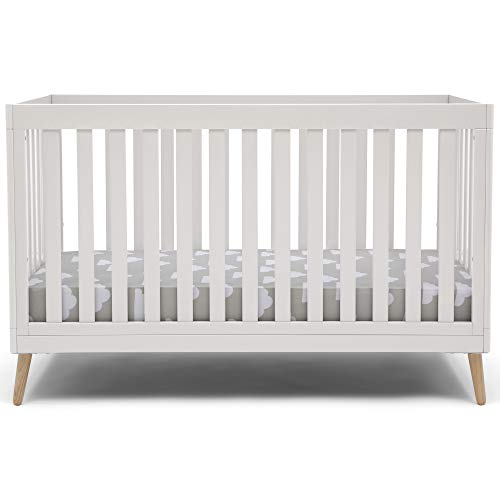
The Delta Children Essex 4-in-1 Crib in Bianca stands out for parents seeking a crib that adapts as their child grows, thanks to its convertible design that shifts smoothly from infant crib to toddler bed, daybed, and finally sofa. I appreciate the solid pine angled legs and Bianca White finish, which blend durability with a clean, modern look. It offers three mattress heights for safety and convenience, and it’s JPMA certified, meeting all ASTM and U.S. safety standards. While the toddler guardrail (model 0094) sells separately, the included rails support safe transformations. It fits standard crib mattresses and pairs well with Delta, Serta, or Beautyrest brands.
Best For: Parents looking for a durable, stylistically versatile crib that transitions through multiple stages of a child’s development.
Pros:
- Converts into toddler bed, daybed, and sofa for long-term use
- Made with solid pine legs and a JPMA-certified, safety-tested design
- Clean, modern Bianca White finish complements a variety of nursery decors
Cons:
- Toddler guardrail (model 0094) sold separately, adding to overall cost
- Crib mattress not included, required for use
- Some assembly required despite easy setup claims
Graco Benton 5-in-1 Convertible Crib
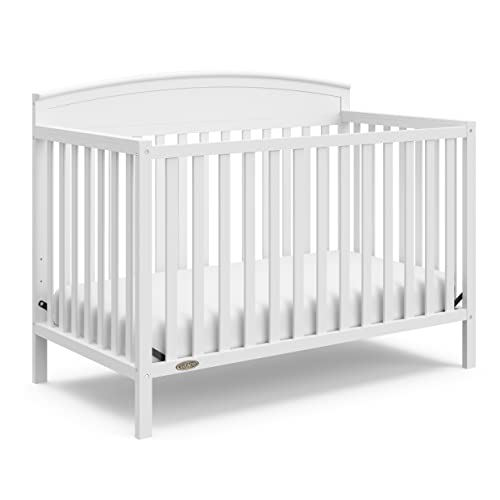
I look for cribs that grow with my child, and the Graco Benton 5-in-1 Convertible Crib stands out for families wanting long-term use from infancy through childhood. It converts into a toddler bed, daybed, and full-size bed, though conversion kits and mattresses are sold separately. Built with pine wood and engineered wood composites, it’s sturdy and meets ASTM, CPSIA, and GREENGUARD Gold standards, ensuring low chemical emissions. The adjustable mattress base has four height positions, and the white finish fits most nurseries. It’s JPMA certified, with a 50-pound weight limit and 42-inch height recommendation. Assembly is required, and a 1-year warranty covers manufacturer defects.
Best For: Families seeking a durable, long-lasting crib that transitions from infancy through childhood with multiple bed configurations.
Pros:
- Converts from a crib to toddler bed, daybed, and full-size bed for long-term use
- GREENGUARD Gold and JPMA Certified, ensuring low chemical emissions and safety compliance
- Sturdy construction with pine wood and engineered wood composites in a versatile white finish
Cons:
- Conversion kits and mattresses sold separately, increasing overall cost
- Assembly required, which may be time-consuming for some users
- Weight limit of 50 pounds and height recommendation of 42 inches may restrict older toddlers
Dream On Me Carson Classic 3-in-1 Convertible Crib in Natural

You’ll find the Dream On Me Carson Classic 3-in-1 Convertible Crib in Natural especially suited if you’re looking for a durable, safety-focused crib that grows with your child through multiple stages. I appreciate its sturdy New Zealand pinewood construction and non-toxic, water-based finish, which support long-term use and cleaner indoor air. It’s GREENGUARD Gold Certified, meeting strict standards for lead, phthalates, and emissions. The stationary sides and teething rails enhance safety, while four mattress heights and locking casters offer flexibility and stability. Though conversion kits are sold separately, it adapts from crib to toddler bed and daybed, supporting shifts that may help ease sleep routine changes over time.
Best For: Families seeking a durable, non-toxic, and safety-certified convertible crib made from sustainable materials that transitions from infancy through toddlerhood.
Pros:
- Crafted from sustainable New Zealand pinewood with non-toxic, water-based finishes for long-lasting, eco-friendly use
- GREENGUARD Gold Certified, meeting rigorous safety standards for lead, phthalates, and low emissions
- Converts from crib to toddler bed and daybed, offering multi-stage functionality with included safety features like teething rails and locking casters
Cons:
- Conversion kits required for toddler bed and daybed modes are sold separately, adding to overall cost
- Maximum weight capacity of 50 pounds may limit extended use for larger toddlers
- Assembly is required, which may be time-consuming for some users
Delta Children Perry 6-in-1 Crib – Bianca White

A solid pick for parents wanting long-term use from a single piece, the Delta Children Perry 6-in-1 Crib – Bianca White adapts as your child grows, converting into a toddler bed, daybed, sofa, and full-size bed. It’s Greenguard Gold and JPMA certified, tested for over 10,000 chemicals, and built with non-toxic finishes safe from lead and phthalates. Made from sustainable New Zealand pine, it weighs 60 pounds and measures 55L x 30.5W x 45H when assembled. The mattress support adjusts in three heights, fits standard crib mattresses, and supports kids up to 50 pounds or 45 inches tall. Rails for toddler and full-size configurations are sold separately.
Best For: Parents seeking a durable, eco-friendly, and adaptable crib that transitions through multiple stages of a child’s growth.
Pros:
- Converts into six different bed configurations, offering long-term use from infancy to adolescence
- Greenguard Gold and JPMA certified for low chemical emissions and compliance with strict safety standards
- Made from sustainable New Zealand pine with non-toxic, lead- and phthalate-free finishes
Cons:
- Toddler guardrail and full-size bed rails sold separately, adding to overall cost
- Warranty is limited to 90 days, shorter than some competitors
- Assembly required, which may be time-consuming for some users
Delta Children Folding Mini Baby Crib
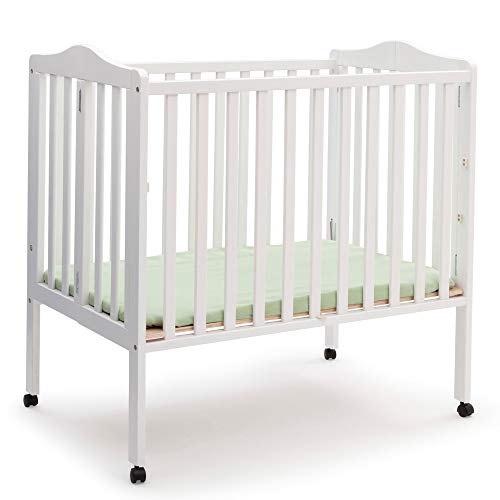
The Delta Children Folding Mini Baby Crib suits parents needing a space-saving, portable sleep solution without sacrificing safety or durability. I appreciate its compact design-it folds flat for travel or storage and includes room for a 37.5L x 23.25D x 1.5-inch mattress. Casters make it easy to move, and the 2-position mattress height adjusts as your baby grows. It’s built from sturdy wood, so it lasts from infancy through toddlerhood. I feel confident in its safety-it’s JPMA certified, meets ASTM standards, and is Greenguard Gold Certified, meaning it’s tested for toxins. At 39W x 25D x 37.25H, it fits neatly in small spaces.
Best For: Parents who need a portable, space-saving crib that’s safe, durable, and easy to store or transport.
Pros:
- Compact folding design with casters for easy mobility and storage
- Adjustable mattress height supports use from infancy through toddlerhood
- JPMA and Greenguard Gold Certified for safety and low emissions
Cons:
- Limited interior space may feel cramped for larger babies or toddlers
- No included mattress-must be purchased separately
- Not suitable for long-term, full-time use as a primary crib due to size
Dream On Me Synergy 5-in-1 Crib

Built to grow with a child through every stage, the Dream On Me Synergy 5-in-1 Crib stands out for parents who value adaptability and long-term use. I trust its JPMA certification, confirming it meets or exceeds CPSC and ASTM standards, and I appreciate the third-party testing for lead and toxins. It converts from a crib to a toddler bed, daybed, and full-size bed, though rails sell separately. Made from solid reclaimed New Zealand pine, it’s durable and sustainable. At 53” x 29”, it fits standard full-size, Greenguard-certified mattresses. With 13 finishes and a timeless design, it fits nurseries from ocean themes to minimalism.
Best For: Parents seeking a durable, eco-friendly, and stylish convertible crib that grows with their child from infancy through childhood.
Pros:
- JPMA, GreenGuard Gold, and BSA certified for safety, sustainability, and low emissions
- Made from solid reclaimed New Zealand pine wood for long-lasting, sustainable durability
- Offers 13 finish options and a timeless design that fits a variety of nursery aesthetics
Cons:
- Toddler guardrail, stabilizer, and full-size bed rails sold separately, increasing total cost
- Some assembly required, which may be time-consuming for some users
- Conversion to full-size bed requires additional rail purchase, limiting true “5-in-1” functionality without extra expense
Dream On Me Carson 3-in-1 Crib

If you’re looking for a safe, long-lasting crib that grows with your child, the Dream On Me Carson 3-in-1 Crib stands out as a practical choice, especially for parents who value sustainability and straightforward design. I’ve found it’s made from renewable New Zealand pinewood, with a non-toxic, water-based finish that meets GREENGUARD Gold standards. It converts from crib to toddler bed and daybed-conversion kits sell separately. With four mattress height positions, teething guards, and a stationary side rail, it balances safety and adaptability. It’s CPSIA compliant, tested for lead and phthalates, and includes a one-year warranty.
Best For: Parents seeking a durable, eco-friendly, and safe convertible crib that supports their child’s growth from infancy to toddlerhood with minimal design and strong safety certifications.
Pros:
- Constructed from sustainable New Zealand pinewood with a non-toxic, water-based finish, ideal for eco-conscious families
- GREENGUARD Gold Certified and independently tested for low emissions, lead, and phthalates, ensuring high indoor air quality and safety
- Converts into a toddler bed and daybed (with separate kits), offering long-term usability and value
Cons:
- Conversion kits for toddler bed and daybed must be purchased separately, increasing overall cost
- No drop-side rail design may limit ease of access compared to some modern cribs with that feature
- Assembly required and not portable, which may be inconvenient for frequent movers or small spaces
Delta Children Heartland 4-in-1 Crib

You’ll find the Delta Children Heartland 4-in-1 Crib a reliable choice if you’re looking for a long-lasting, safety-tested bed that grows with your child. I trust its sturdy wood construction and Greenguard Gold certification, which means it’s tested for toxins and supports healthier indoor air. It meets ASTM standards and has a non-toxic, charcoal-grey finish that resists ticks. The 3-position mattress adjuster helps as your baby grows, and it converts into a toddler bed, daybed, or full-size headboard-though you’ll need to buy the rail and frame separately. It fits standard mattresses, holds up to 50 pounds, and comes with a 90-day parts warranty.
Best For: Families seeking a durable, safety-certified convertible crib that transitions from infancy through childhood with eco-friendly materials and sturdy construction.
Pros:
- Greenguard Gold and JPMA certified, ensuring low emissions and compliance with strict safety standards
- Converts into a toddler bed, daybed, and full-size headboard for long-term use
- 3-position mattress height adjustment supports baby from newborn to standing stages
Cons:
- Toddler guardrail and full-size bed frame sold separately, increasing total cost
- Limited 90-day parts-only warranty with no labor or coverage beyond components
- Heavier at 38 pounds, which may complicate assembly and room placement
Dream On Me Owen 5-in-1 Crib

The Dream On Me Owen 5-in-1 Crib stands out for parents seeking a long-term sleep solution that adapts as their child grows. It converts into a toddler bed, daybed, and full-size bed, though conversion kits cost extra. Made from sustainably sourced New Zealand pinewood, it’s sturdy and eco-friendly, with a heavy-duty metal mattress frame for stability. It meets ASTM and CPSC standards and is GREENGUARD Gold Certified, meaning it emits low VOCs for cleaner air. With three mattress positions, it supports safe sleep through infancy and toddlerhood. It measures 53.67L x 29.57W x 42.05H, holds up to 50 lbs, and comes with a 1-year warranty.
Best For: Parents looking for a durable, eco-friendly crib that adapts from infancy through childhood with multiple conversion options.
Pros:
- Converts into five bed types (crib, toddler bed, daybed, and full-size bed with or without footboard) for long-term use
- Made from sustainable New Zealand pinewood and GREENGUARD Gold Certified for low chemical emissions
- Meets ASTM and CPSC safety standards with a sturdy metal mattress frame and three adjustable mattress heights
Cons:
- Conversion kits required for later bed stages are sold separately, increasing overall cost
- Weight limit of 50 lbs may restrict longer use as a full-size bed
- Assembly required and does not include mattress or rail accessories
Factors to Consider When Choosing an Infant Crib
You’ll want to check that any crib you’re considering meets current safety standards, has sturdy construction, and includes certifications for air quality to guarantee a healthy sleep environment. Look for adjustable mattress heights so you can lower the bed as your baby grows, and consider a convertible design that can adapt into a toddler bed or daybed later on. Durable materials like solid wood or high-quality metal not only hold up over time but also support long-term use through different sleep stages.
Safety Standards Compliance
Check for cribs that meet or exceed ASTM and CPSC safety standards, ensuring sturdy construction, proper slat spacing, and secure hardware to prevent entrapment and support long-term stability. You’ll want models compliant with the CPSIA, which enforces strict limits on lead and phthalates. Look for GREENGUARD Gold certification to confirm low chemical and VOC emissions for cleaner nursery air. Choose cribs with fixed, non-drop side rails-the only type now allowed, eliminating dangerous drop-side mechanisms linked to infant injuries. Third-party certification from JPMA adds confidence, showing independent verification against U.S. safety rules. These details aren’t just labels-they reflect real design choices that affect durability, safety, and air quality. You’re not just buying a bed; you’re setting up a space where your baby sleeps for hours every night. Prioritizing certified safety means fewer risks and more peace of mind as you establish healthy sleep habits from day one.
Convertible Design Options
While your baby grows quickly, a convertible crib can adapt alongside them, changing from an infant bed into multiple configurations like a toddler bed, daybed, or even a full-size bed with the right conversion kit. You’ll typically get between three and six setup options, letting you extend the crib’s use through early childhood. Most models support up to 50 pounds and fit kids up to 35–45 inches tall, depending on the design. To switch stages, you’ll usually need to buy separate conversion kits-like guardrails or frame extensions-so factor those costs upfront. These cribs maintain safety across transformations, meeting JPMA, ASTM, and CPSC standards to guarantee durability and non-toxic materials. Since the mattress support adjusts in height-though not the focus here-the shift between stages stays secure. Choosing one means fewer bed replacements and steady performance through growth spurts, sleep changes, and nighttime routines.
Adjustable Mattress Heights
A convertible crib’s long-term value lies in its ability to adapt, but just as important is how well it supports your baby’s safety and comfort from day one. You’ll want a mattress base with 3 to 4 adjustable heights so you can lower it as your child grows. Start with the highest setting to reduce back strain when lifting your newborn in and out. Once your baby begins to sit, stand, or pull up-usually around 35 inches tall-you’ll lower the mattress to prevent climbing or falls. The lowest position keeps the rails safely out of reach. Make sure the locking mechanism clicks securely into each level to prevent shifting or collapse. You’re balancing convenience and safety, so test the adjustments yourself if possible. A well-built system offers smooth, reliable height changes that support your baby’s development without compromising nighttime security.
Material Quality And Durability
When choosing a crib, the materials used in construction play a critical role in both safety and longevity. You’ll want solid pine or sustainably sourced hardwoods like New Zealand pinewood-they offer strong structure and endure years of use. These woods resist warping and support steady wear, especially when paired with reinforced metal mattress frames that boost weight capacity and stability. If you’re on a budget, engineered wood composites can work, but they often don’t last as long as solid wood. Look for non-toxic, water-based finishes; they keep surfaces safe for babies and preserve the wood’s strength over time. Cribs with heavy-duty metal support frames handle shifting weight and movement better, especially as kids grow and become more active. While material resilience varies, solid wood with safe finishes gives you a reliable balance of performance and durability. Choosing well-built materials means your crib stays safe and functional through nightly use.
Certifications For Air Quality
Since indoor air quality matters most in the spaces where infants spend hours each day, checking for certifications that verify low chemical emissions is essential. Look for the GREENGUARD Gold Certification-it means the crib’s been tested for over 10,000 chemicals and VOCs, ensuring cleaner indoor air. You’ll also want products compliant with ASTM, CPSC, and CPSIA standards, which set strict limits on lead, phthalates, and other toxins. These third-party verifications confirm that the crib meets or exceeds federal safety levels for babies’ sleep environments. Low emissions are especially important in small, enclosed rooms where pollutants can build up. Cribs with these certifications help reduce exposure during critical developmental stages. While no sleep product eliminates all risks, choosing one with verified air quality testing gives you reliable data to make smarter decisions. Always check labels and manufacturer reports before buying.
Frequently Asked Questions
Can I Use a Crib After Its Expiration Date?
You shouldn’t use a crib past its expiration date because materials degrade and safety standards change. Manufacturers set expiry dates based on wear testing and regulatory updates, so using an old crib might risk structural failure or noncompliance. Check for recalls, inspect for loose parts or broken slats, and confirm current safety certifications. Even if it looks sturdy, outdated cribs may lack modern ventilation or meet updated drop-side bans-stick to models within their usable lifespan for peace of mind.
Are Secondhand Cribs Safe for Newborns?
You can use secondhand cribs, but only if they meet current safety standards. Check for recalls, make certain slats and hardware are tight, and confirm the mattress fits snugly. Avoid cribs with drop-side rails or older models made before 2011. You’ll want a solid, wobble-free frame with no lead paint or splinters. Inspect thoroughly-any damage makes it unsafe. When in doubt, buy new; many modern cribs offer warranties and tested durability for peace of mind.
Do All Cribs Fit Standard Baby Mattresses?
No, not all cribs fit standard baby mattresses-some require specific sizes or shapes. You’ll need to check the manufacturer’s specs before buying a mattress. A proper fit means no gaps larger than two fingers between the mattress and crib sides. This guarantees safety and prevents trapping. Most full-size cribs use standard 28” x 52” mattresses, but mini or convertible models often differ. Always measure first, and consider a trial period or warranty when possible for peace of mind.
How Do I Dispose of an Old Crib Safely?
You disassemble the crib completely, removing slats, rails, and hardware to prevent hazards. You check local regulations-many cities ban curbside disposal of large furniture. You recycle metal or wood parts if possible, or you donate usable components to charities that accept baby gear. You confirm the recipient accepts cribs before donating. You never resell recalled or damaged models. You break down wood frames responsibly to avoid injury or environmental harm.
Are Crib Teething Pads Necessary for Safety?
You don’t need crib teething pads for safety-cribs meet strict standards that already protect against chewing risks. Most pediatricians don’t recommend them, as they can pose suffocation or strangulation hazards if improperly secured. If teething discomfort bothers your baby, try a safe teether instead. Always check product recalls and avoid adding aftermarket items. Test breathable crib designs or monitor teething symptoms closely to decide what works best during sleep trials.