Best Hypoallergenic Comforters for a Clean, Cozy Sleep
Choose a hypoallergenic comforter with tightly woven microfiber or bamboo fabric to block dust mites and resist odors, like the Serta Down Alternative or Olive + Crate Bamboo models. Look for OEKO-TEX certified fills to avoid harmful chemicals. Box-stitch construction keeps the fill evenly distributed, while machine-washable designs make cleanup easy. Lightweight, breathable materials work well year-round, especially if you overheat. You’ll find more details on how each model balances softness, durability, and cleanability just ahead.
We are supported by our audience. When you purchase through links on our site, we may earn an affiliate commission, at no extra cost for you. Learn more. Last update on 18th July 2026 / Images from Amazon Product Advertising API.
Notable Insights
- Hypoallergenic comforters use tightly woven microfiber or bamboo shells to block dust mites and allergens effectively.
- OEKO-TEX Standard 100 certification ensures no harmful chemicals, dyes, or allergenic substances are present in the materials.
- Synthetic fills like polyester or bamboo-blend provide down-like comfort without triggering feather or dust allergies.
- Box-stitch or baffle-box construction prevents fill shifting and maintains even warmth distribution for cozy, allergen-free sleep.
- Machine-washable designs with moisture-wicking fabrics support easy cleaning and long-term hygiene for sensitive sleepers.
Serta Goose Feather Down Comforter Queen
Who wouldn’t want a comfortable night’s sleep without worrying about allergens? I’ve found the Serta Goose Feather Down Comforter Queen helps keep my sleep clean and cozy. Its 90% goose feather and 10% down filling uses FreshLoft technology, making it hypoallergenic and odorless. The 100% cotton shell feels soft and breathes well. With box construction, the fill stays evenly distributed, and self-piping adds durability. I attach it to my duvet cover using the four corner loops-no shifting. It comes in three warmth levels; I use the All Seasons Medium, perfect for warmer nights. Dry clean only, and it ships compressed-just air it out first.
Best For: Allergy-sensitive sleepers seeking a breathable, cozy, and durable hypoallergenic down comforter with reliable fill distribution.
Pros:
- Hypoallergenic filling with FreshLoft technology ensures a clean, odorless sleep environment
- Box construction and self-piping prevent fill shifting and enhance durability
- Includes four corner loops for secure duvet cover attachment and easy use
Cons:
- Dry clean only, limiting at-home care options
- Requires time to expand after vacuum-packed shipping
- Cotton shell may require extra maintenance to preserve softness over time
SERTA Down Alternative Comforter Full/Queen
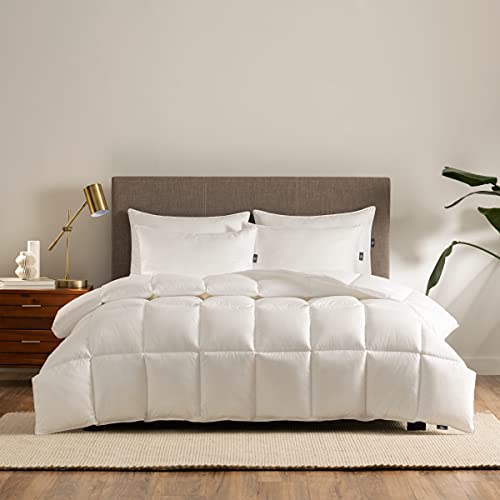
I find the SERTA Down Alternative Comforter in Full/Queen size works best for people sensitive to allergens or those who tend to overheat at night, acting like a breathable shield that keeps irritants out while maintaining a steady sleep temperature. It’s 92” x 96”, so it fits most beds snugly, and the 300-thread-count microfiber feels soft but durable. The down alternative fill stays lofty without trapping heat, making it good for year-round use. Hypoallergenic treatment and tight weaving block dust mites and odors, which helps keep your sleep space clean. Four corner loops let you secure a duvet cover, so it won’t shift. It’s machine washable, though I recommend using a large front-loader to avoid excess wrinkling.
Best For: People with allergies or sensitivities and hot sleepers who want a soft, breathable, and temperature-regulating comforter for year-round use.
Pros:
- Hypoallergenic treatment and allergen-barrier weaving help block dust mites, odors, and common allergens
- 300-thread-count microfiber fabric is soft, durable, and moisture-wicking for consistent comfort
- Corner loops and machine-washable design make it easy to secure in a duvet cover and maintain over time
Cons:
- May require a large front-loading washer and dryer to prevent wrinkling and ensure thorough cleaning
- Down alternative fill, while lofty, may not provide the same lightweight feel as real down for some users
- Polyester material, though breathable, might not be as cooling as natural fibers like cotton or linen
SERTA Hypoallergenic King Comforter Set
If you’re looking for a bedding upgrade that balances comfort with practical care, the SERTA Hypoallergenic King Comforter Set stands out as a smart choice-especially if allergies or nightly discomforts keep you from resting well. I appreciate its soft, durable polyester microfiber construction, which resists stains, wrinkles, and odors thanks to advanced treatments. The set includes a 104 x 90-inch comforter and two 20 x 36-inch pillow shams, all machine washable in cold water and safe for low-heat drying. Lightweight and versatile, it works well not just in bedrooms but also on couches or during travel.
Best For: Individuals seeking a hypoallergenic, low-maintenance bedding solution that offers comfort and durability for everyday use or travel.
Pros:
- Soft and durable polyester microfiber resists stains, wrinkles, and odors for long-lasting freshness
- Hypoallergenic treatment helps inhibit allergens, making it ideal for sensitive sleepers
- Machine washable and easy to care for, with versatility for use in bedrooms, on couches, or during travel
Cons:
- Made from synthetic materials, which may not appeal to those preferring natural fibers
- Lightweight design may not provide sufficient warmth in colder climates
- Limited color or style options may restrict aesthetic customization
Bedsure Comforter Duvet Insert Queen Size
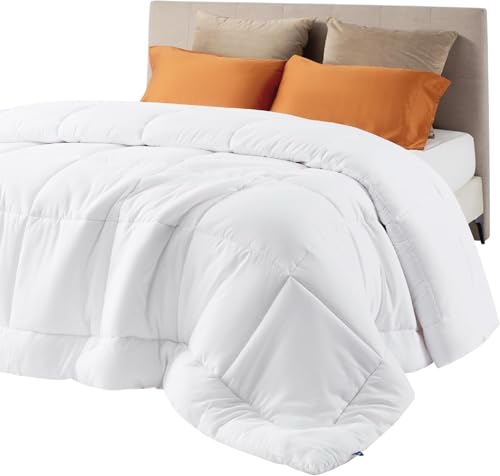
The Bedsure Comforter Duvet Insert, Queen Size, stands out for those seeking a hypoallergenic, low-maintenance bedding option that balances softness and durability without relying on real down. I’ve found its 100% polyester shell and fill offer a gentle, down-alternative feel that resists allergens and stands up to regular washing. The box-stitch construction keeps the fill evenly distributed, and the eight corner tabs secure it inside a duvet cover. It works year-round-warm in winter, breathable in summer-and regains shape after drying. I recommend letting it fluff 24–48 hours after unboxing for full loft.
Best For: Those seeking a hypoallergenic, low-maintenance down alternative duvet insert that offers year-round comfort and easy care.
Pros:
- Soft, durable 100% polyester down alternative filling resists allergens and maintains loft
- Box-stitch construction prevents fill shifting and ensures even warmth distribution
- Includes 8 corner tabs for secure fit inside duvet covers and regains shape after washing
Cons:
- May require 24–48 hours of fluffing after unboxing to reach optimal loft
- Polyester material may not appeal to those preferring natural down
- Tumble drying on low is necessary to maintain quality, limiting drying options
SERTA Down Alternative Comforter King/Cal King
When you’re dealing with allergies or sensitivities, finding a comforter that won’t trigger symptoms makes a real difference in sleep quality, and the SERTA Down Alternative Comforter in King/Cal King size is built with that need in mind. It’s made from 100% polyester microfiber with a 300-thread-count twill weave, so it’s soft, durable, and holds up well after many washes. The moisture-wicking fabric and allergen barrier weaving help block dust mites and odors, while the fluffy fill works year-round for balanced warmth. Four corner loops keep it secure inside a duvet, and it’s machine washable-just use cold water and low heat. A large washer and dryer work best.
Best For: People with allergies or sensitivities who want a soft, durable, and hypoallergenic comforter that offers year-round comfort and easy care.
Pros:
- Hypoallergenic construction with Allergen Barrier Weaving technology resists dust mites and odors
- Machine washable with cold water and low-heat drying, maintaining softness after repeated washes
- All-season performance with fluffy down-alternative fill and moisture-wicking polyester microfiber fabric
Cons:
- May require a large front-loading washer and dryer for best cleaning results
- Synthetic polyester feel may not appeal to those preferring natural down textures
- Lightweight design might not provide enough warmth for very cold sleepers in winter
UGG Leonora Comforter Set Full/Queen Charcoal Grey
I choose the UGG Leonora Comforter Set Full/Queen in Charcoal Grey when I need a reliable, hypoallergenic option that works for sensitive skin and supports restful, uninterrupted sleep. Made from 95 GSM polyester, it’s reversible and uses box-stitch construction to keep the fill evenly distributed, so warmth stays consistent. The down alternative filling is OEKO-TEX Standard 100 certified, meaning no harmful chemicals or dyes touch my skin. At 90×90 inches, it fits most full or queen beds, and the included shams measure 20×26 inches. It’s breathable, moisture-wicking, and durable, great for year-round comfort. I wash it on a gentle, cold cycle and tumble dry on low-no ironing needed. Using a large-capacity machine helps maintain its fluffiness over time.
Best For: Individuals with sensitive skin or allergies seeking a durable, hypoallergenic, and cozy comforter set for year-round comfort.
Pros:
- Reversible design and box-stitch construction ensure even fill distribution and long-lasting fluffiness
- OEKO-TEX Standard 100 certified, free from harmful chemicals and dyes, ideal for sensitive skin
- Breathable, moisture-wicking fabric with all-season weight makes it suitable for year-round use
Cons:
- Made from polyester, which may not appeal to those preferring natural fibers
- Requires large-capacity washer and dryer for optimal care and maintenance
- Tumble drying on low is necessary to preserve loft, which may be less convenient for some users
Utopia Bedding Duvet Insert Queen

You’ll find the Utopia Bedding Comforter Duvet Insert, Queen Size, especially helpful if you’re sensitive to allergens or prefer a soft, down-like feel without using actual down. I use 100% polyester microfiber and siliconized polyester fiberfill, so it resists allergens and stays fluffy over time. My box-stitched construction keeps the fill evenly distributed, while piped edges and a quilted design add durability. I’ve got four corner tabs that attach securely to duvet covers, reducing shifting. I’m machine washable in cold water and can be line dried or tumble dried with no heat, making me low-maintenance. I’m an affordable, practical choice for breathable, hypoallergenic comfort.
Best For: People seeking a hypoallergenic, soft, and low-maintenance down alternative duvet insert that resists allergens and provides consistent comfort.
Pros:
- Made with hypoallergenic materials ideal for sensitive sleepers
- Box-stitched construction prevents fill shifting and ensures durability
- Machine washable with easy care instructions for long-lasting freshness
Cons:
- May not provide the same breathability as natural down
- Synthetic feel may not appeal to those preferring organic materials
- Tumble drying requires no heat, which may extend drying time
Olive + Crate Bamboo Cooling Comforter King

The Olive + Crate Bamboo Cooling Comforter King stands out for hot sleepers seeking a breathable, eco-friendly option that balances comfort and durability. I appreciate its 100% bamboo viscose shell and blend of recycled polyester and bamboo fill, which offer a soft, cooling feel while supporting sustainable production. Box stitching keeps the fill evenly distributed, and corner ties prevent shifting. It’s machine washable, holds up well over time, and works beautifully with duvet covers. Oeko-Tex 100 certification means it’s free from harmful substances, making it a thoughtful pick for sensitive sleepers. Available in multiple sizes, it fits most beds and suits all-season use without overheating.
Best For: Hot sleepers who want a sustainable, soft, and cooling comforter that performs well in all seasons and fits securely in a duvet.
Pros:
- Made with 100% bamboo viscose and recycled materials, offering an eco-friendly and OEKO-TEX 100 certified design
- Lightweight, temperature-regulating fabric provides a cooling effect ideal for year-round comfort
- Durable construction with box stitching and corner ties ensures even fill distribution and secure fit
Cons:
- Higher price point compared to conventional polyester comforters
- Requires machine washing care, which may not suit all household laundry setups
- May be too lightweight for those who prefer a heavier, quilted feel in colder climates
Bedsure Queen Comforter Set (3-Piece)
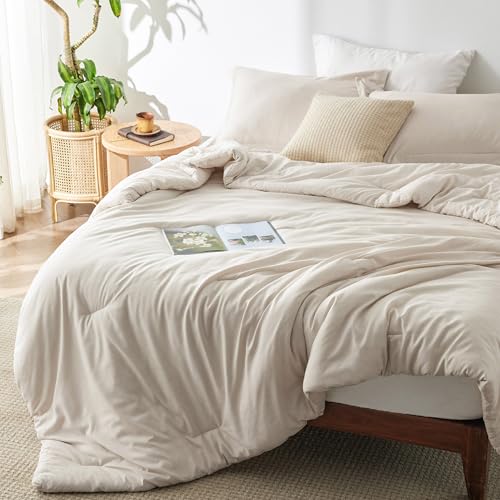
One standout option among hypoallergenic comforters for sleep is the Bedsure Queen Comforter Set (3-Piece), especially well-suited for those managing allergies or sensitivities without sacrificing comfort. I’ve found its 100% polyester microfiber shell and filling resist allergens well, while the brushed fabric feels soft against the skin. The heathered beige finish gives it a clean, relaxed look, and cationic dyeing helps colors last. Lightweight and breathable, it works year-round, and I appreciate the corner loops that keep it secure inside a duvet. It’s machine washable, durable, and holds up nicely in busy homes. With over 33,000 reviews averaging 4.5 stars, it’s a reliable pick for easy care and consistent performance.
Best For: Allergy sufferers and busy households seeking a soft, low-maintenance, all-season comforter set with durable, hypoallergenic materials.
Pros:
- Hypoallergenic 100% polyester microfiber resists allergens and is ideal for sensitive skin
- Lightweight, breathable design with corner loops for year-round comfort and secure duvet use
- Machine washable and durable, maintaining color and texture after repeated washing
Cons:
- Synthetic polyester may not appeal to those preferring natural fibers like cotton or down
- Some users may find the beige color shows stains more easily over time
- Lacks the plush thickness of higher-loft comforters for those who prefer extra warmth
Bedsure King Duvet Insert All Season

For anyone managing allergies without sacrificing comfort, the Bedsure King Duvet Insert All Season stands out as a reliable choice in hypoallergenic bedding. I’ve found its 100% polyester GentleSoft fill resists allergens while staying soft after multiple washes. The box-stitch design keeps the fill evenly distributed, so I don’t wake up on cold spots. It breathes well in summer but still keeps me warm in winter. Eight corner tabs hold it securely in any duvet cover. I recommend letting it fluff 24–48 hours after unpacking. Machine washable and durable, it’s a practical pick for year-round use.
Best For: Allergy sufferers and those seeking a durable, year-round hypoallergenic duvet insert with consistent comfort and easy care.
Pros:
- Hypoallergenic 100% polyester fill resists allergens and maintains softness after repeated washing
- Box-stitch construction prevents fill shifting and ensures even warmth without cold spots
- Features eight corner tabs for secure fit inside duvet covers and is machine washable for easy maintenance
Cons:
- May require 24–48 hours to fully fluff after unpacking, delaying initial use
- Polyester material, while soft, may not appeal to those preferring natural down
- Not ideal for individuals seeking a lightweight summer-only duvet due to all-season warmth
Factors to Consider When Choosing a Hypoallergenic Comforter
You’ll want to check the material composition first, since fabrics like microfiber, TENCEL™, or organic cotton resist allergens and offer breathability. Look for certifications like OEKO-TEX® or GOTS, because they confirm the comforter is free from harmful chemicals and produced responsibly. A well-constructed comforter with even fill distribution, strong stitching, and thoughtful details like baffled boxes helps regulate temperature and prevents clumping over time.
Material Composition
When choosing a hypoallergenic comforter, the material composition plays a key role in minimizing allergic reactions and supporting restful sleep. You’ll find synthetic fills like polyester fiberfill resist dust mites, mold, and mildew, making them reliable for allergy sufferers. Natural down or feathers can also be hypoallergenic if processed at high temperatures, though they require careful handling. Look for microfiber shells with tight weaves-300 thread count or higher-to block allergens while staying breathable and soft. Some comforters include moisture-wicking fabrics that reduce humidity, helping prevent mildew and dust mite growth. Manufacturers may apply anti-allergen coatings or integrate hypoallergenic technologies to neutralize allergens and inhibit bacteria. These features improve air quality and durability. Choosing the right blend means balancing comfort, cleanliness, and long-term performance.
Certifications Matter
While choosing a hypoallergenic comforter, paying attention to certifications can make a real difference in both safety and performance. Look for OEKO-TEX STANDARD 100, which confirms the fabric is free from harmful levels of toxins and allergens. Products with this label are tested for over 100 substances, including formaldehyde, heavy metals, and allergenic dyes, meeting strict human-ecological standards. That means less risk of irritation, especially if you have sensitive skin or allergies. You’re not just guessing-certifications offer third-party proof that materials and production meet international safety and sustainability rules. OEKO-TEX also limits irritants that cause odors, helping keep your bedding clean and hypoallergenic over time. These standards support healthier sleep by reducing exposure to common triggers. Choosing a certified comforter gives you a clearer picture of what you’re bringing into your bedroom.
Construction Quality
A comforter’s certification tells you what it’s made of, but its construction determines how well it performs over time. You’ll want box-stitch construction-it keeps fill evenly distributed and stops shifting, so warmth stays consistent. Sewn-through stitching, especially end-to-end box quilting, strengthens the fabric and traps filling where it should be. High-density quilting patterns do more than look tidy; they lock in loft and stop cold spots from forming. If you use a duvet cover, look for corner loops or tabs that anchor the comforter securely, reducing bunching after tossing and turning. Reinforced edges or self-piping help seams hold up to washing and nightly use, cutting down on fraying. These details won’t cure sleep issues, but they do support steady comfort night after night. Solid construction means fewer disturbances and less need to adjust, helping you stay settled longer.
Fill Distribution
Few things disrupt rest like a comforter that bunches or leaves you cold in spots-consistent warmth depends on even fill distribution. You’ll want fill that stays evenly spread, so no area feels too thin or overly thick. Sewn-through box construction locks the fill in place, reducing shift but sometimes limiting loft. Baffle box design uses vertical walls to let fill move and fluff up while still staying evenly dispersed-ideal if you value both stability and fluffiness. For long-term performance, continuous filament synthetic fibers resist clumping better than shorter fibers, maintaining smooth coverage. Look for reinforced stitching and piped edges, since strong seams help keep fill where it belongs over time. A well-distributed comforter supports steady comfort all night, which matters if you’re sensitive to temperature changes or wake easily. Checking warranty terms can also give clues about how well the brand expects the fill to hold up.
Temperature Regulation
Because you sleep more soundly when your body stays at a stable temperature, choosing a hypoallergenic comforter with strong temperature regulation matters-especially if you tend to overheat or wake due to chills. You’ll stay cooler with breathable natural fibers like cotton or bamboo viscose, which let air flow freely and reduce heat buildup. All-season options often use lightweight synthetic fills that wick moisture and disperse heat, so you won’t overheat at night. Look for moisture-wicking fabrics that pull sweat away from your skin, keeping you dry and comfortable. Some fills are temperature-neutral, adjusting to seasonal changes so you stay warm in winter and cool in summer. Box-stitch construction helps too-it stops the fill from clumping and guarantees even insulation, eliminating hot or cold spots. Together, these features support consistent thermal comfort, making it easier to fall and stay asleep.
Care Requirements
Staying cool and comfortable at night means more than just picking the right fill or fabric-how you care for your comforter affects both its performance and longevity. You should machine wash most hypoallergenic comforters in cold water on a gentle cycle to preserve fibers and maintain allergen resistance. High heat can damage materials, so you’ll want to use low heat when drying, if the label allows it. Tightly woven fabrics help block allergens and make cleaning more effective, supporting long-term hygiene. Washing regularly removes dust mites, dander, and trapped irritants, helping sustain hypoallergenic benefits. Comforters with chemical-free treatments often hold up better over time and tolerate repeated washing without losing effectiveness. Always follow care labels closely-you’ll protect your investment and keep your sleep environment cleaner. Proper maintenance balances ease and performance, giving you consistent results night after night.
Size Options
When choosing a hypoallergenic comforter, size matters just as much as material or fill-getting the right fit guarantees even coverage and keeps you comfortable all night. Standard sizes include Twin (68 x 90 inches), Full/Queen (90–92 x 90–96 inches), and King (104–110 x 90–96 inches), with specialty options like California King (102 x 96 inches) offering a longer, narrower fit for larger mattresses. If you use a duvet cover, make sure the comforter matches within 1–2 inches to prevent bunching. For oversized or custom beds, look for extended sizes like Twin XL, Oversized Queen, or Alaskan King. Lightweight or all-season models often come in more size choices, giving you flexibility. A properly sized comforter lies flat without shifting, so measure your mattress first. When in doubt, check the product specs-many brands list exact dimensions and offer trial periods to test fit.
Frequently Asked Questions
Can I Wash These Comforters in a Home Machine?
Yes, you can wash these comforters in a home machine if they’re lightweight and made with durable, washable materials like polyester or microfiber. Always check the care label-some need gentle cycles and low-heat drying. Larger or heavily filled models might require a commercial washer to avoid damage. Regular cleaning helps maintain hypoallergenic properties, and proper upkeep extends lifespan, ensuring comfort and performance over time.
Are These Comforters Safe for Kids With Allergies?
Yes, you can safely use these comforters for kids with allergies. They’re made with tightly woven, hypoallergenic fabrics that block dust mites, mold, and pet dander. Most feature synthetic fills that resist allergens and won’t clump over time. The covers are removable and machine-washable, so you can clean them easily at home. Look for models with antimicrobial treatments and allergen-certified labels. Check warranty terms that cover performance over time.
Do Any of These Comforters Come With a Warranty?
Yes, some of these comforters come with a warranty-you’ll typically get a 1–5 year coverage that protects against defects in materials or workmanship. Always check the brand’s policy, since terms vary; some include stitching flaws or fabric wear, while others exclude damage from improper washing. A warranty doesn’t cover normal wear, but it can offer peace of mind, especially if the comforter’s construction includes premium fills or tightly woven hypoallergenic shells.
Will These Comforters Shrink After Washing?
You won’t see much shrinkage after washing these comforters-they’re made with tightly woven, stable fabrics like microfiber or down alternative that hold their shape well. Most brands pre-wash materials to minimize shrinking. Just follow care labels: use gentle cycles and low heat. Doing this keeps the fill evenly distributed and maintains loft over time. It’s a small step that helps you get lasting performance without surprise size changes.
Are the Materials Sustainably Sourced?
Yes, you’ll find these materials are sustainably sourced-brands often use recycled fibers or organic cotton and down alternatives certified by trusted eco-standards. You’re getting durability and eco-care without sacrificing performance. Many feature tightly woven, breathable fabric that resists allergens. Construction stays intact through washes, and with trial periods up to 100 nights plus extended warranties, you can test comfort and sustainability confidently.