Best Baby Sleep Regression Aids That Bring Back Peace
You can ease sleep regressions with natural drops like Pink Stork’s magnesium and herbal formula, or Mommy’s Bliss paci gel for soothing at naptime. Try Zarbee’s spray or Oilogic’s roll-on for calming scents, or use Frida’s bath drops for a relaxing wind-down. Sound aids like the Sleepy Baby Shh machine or DEARBABY’s heartbeat soother offer familiar cues that support routine. Each option balances safety, ease, and consistency-key for unsettled nights. More details on matching the right aid to your baby’s needs follow.
We are supported by our audience. When you purchase through links on our site, we may earn an affiliate commission, at no extra cost for you. Learn more. Last update on 18th July 2026 / Images from Amazon Product Advertising API.
Notable Insights
- Natural herbal sleep drops with chamomile and lemon balm support calm, melatonin-free sleep during regressions.
- Organic pacifier gels with chamomile and passionflower help soothe bedtime resistance safely for nursing babies.
- Aromatherapy sprays with lavender and chamomile create a relaxing bedtime routine without direct ingestion.
- White noise machines with womb-like sounds promote sleep continuity during developmental sleep disruptions.
- Vibration soothers with gentle rhythmic motion mimic parental touch, helping babies self-soothe during night wakings.
Pink Stork Baby Sleep Drops for Infants & Kids

If you’re looking for a gentle, non-habit-forming way to support your child’s sleep-especially during common regression phases around four months or toddlerhood-Pink Stork Baby Sleep Drops might be worth considering. I use them daily with my toddler, and they’ve become a reliable part of our routine. They contain natural ingredients like chamomile, passion flower, and lemon balm, which help calm the nervous system, plus magnesium citrate for muscle relaxation and digestion. There’s no melatonin, gluten, dairy, or artificial additives. The mango flavor’s a hit, even with picky eaters. I give 1 mL to my child’s inner cheek before bed, though you can mix it with milk or food. It’s third-party tested, developed by a women-led team, and fits well alongside other clean wellness products. Each bottle lasts about a month. It won’t force sleep, but it supports the body’s natural ability to settle and stay asleep-something especially helpful during unpredictable sleep regressions. I appreciate knowing it’s designed with safety, science, and real family needs in mind.
Best For: Parents seeking a natural, non-habit-forming sleep aid for infants and children aged four months and up, especially during sleep regressions.
Pros:
- Supports natural sleep with calming, research-backed ingredients like chamomile, passion flower, and lemon balm
- Free from melatonin, gluten, dairy, GMOs, and artificial additives, making it a clean option for sensitive systems
- Easy-to-administer mango-flavored liquid that can be given directly or mixed with food or milk
Cons:
- Results may vary and are not immediate or guaranteed, as it supports rather than induces sleep
- Some children may be sensitive to the flavor or form, despite its appeal to most picky eaters
- Requires consistent daily use for optimal effect, which may be challenging during travel or routine changes
Mommy’s Bliss Organic Baby Bedtime Paci Gel

My baby’s sleep routine gets a gentle boost with Mommy’s Bliss Organic Baby Bedtime Paci Gel, especially when nighttime fussiness or naptime resistance strikes. I apply a pea-sized amount to her pacifier, and the organic chamomile, passionflower, and lemon balm work quietly to support her natural sleep patterns-no melatonin, alcohol, or allergens. It’s USDA Certified Organic and NSF Certified, so I trust what’s going in her system. Developed by a pediatric nurse and mom, this U.S.-made gel offers a clean, mess-free option for naptime or bedtime. I appreciate the 100% satisfaction guarantee, which makes trying it feel risk-free.
Best For: Parents seeking a natural, melatonin-free solution to support healthy sleep patterns in infants 2 months and older.
Pros:
- USDA Certified Organic and NSF Certified for quality, safety, and label accuracy
- Contains calming, organic herbs like chamomile, passionflower, and lemon balm with no artificial additives or common allergens
- Mess-free, easy application via pacifier or fingertip, developed by a pediatric nurse and mom for trusted use
Cons:
- Only effective for babies who use pacifiers, limiting use for non-pacifier users
- Results may vary as herbal calming effects are subtle and not immediate
- Higher price point compared to conventional baby sleep aids due to organic certification and premium ingredients
Zarbee’s Baby Sleep Spray 2oz

I’ve found Zarbee’s Baby Sleep Spray 2oz works best for parents seeking a gentle, naturally inspired aid to support calm during sleep regressions, especially when consistency in routine matters most. It contains lavender and chamomile essential oils, known for soothing properties, and is free from artificial fragrances, parabens, and petroleum. Developed by a pediatrician and dad, it’s pediatrician-approved and part of the #1 recommended sleep support brand for kids. Just spray it into the air during bedtime to help signal it’s time to wind down. The 2oz bottle is travel-friendly and easy to use nightly. While it doesn’t treat medical issues, it can support a calming environment.
Best For: Parents looking for a gentle, natural sleep aid to help calm their infants during bedtime or naptime routines.
Pros:
- Formulated with soothing lavender and chamomile essential oils known for promoting relaxation
- Pediatrician-approved and developed by a pediatrician, making it a trusted choice for infant use
- Free from artificial fragrances, parabens, and petroleum, ensuring a clean, gentle product
Cons:
- Effects may vary and are not guaranteed, as it does not treat medical sleep conditions
- Limited to aromatic use only, requiring consistent routine integration for potential benefits
- Small 2oz bottle may require frequent repurchasing with nightly use
Oilogic Slumber Roll-On Essential Oil for Babies

The Oilogic Slumber Roll-On Essential Oil for Babies stands out as a safe, plant-based choice for parents seeking a natural aid during baby sleep regression, especially those prioritizing toxin-free products formulated with pediatric guidance. I use it on my baby’s neck, chest, and feet before bed, and it fits smoothly into our calming routine. The blend of lavender and chamomile, diluted in jojoba and grapeseed oils, feels gentle and mild, with no harsh ingredients. It’s vegan, cruelty-free, and made in the U.S. While it doesn’t replace medical treatment, it supports relaxation as part of a consistent sleep plan.
Best For: Parents seeking a gentle, natural, and pediatrician-tested aromatherapy solution to support calming bedtime routines for babies and toddlers.
Pros:
- Made with 100% pure lavender and chamomile essential oils diluted in safe carrier oils for infant use
- Free from parabens, phthalates, synthetic fragrances, and other harsh chemicals, making it suitable for sensitive skin
- Convenient roll-on application integrates easily into a 4-step calming bedtime routine
Cons:
- Aromatherapy effects are mild and may not be noticeable for all babies
- Requires consistent use as part of a broader sleep routine, not a standalone sleep solution
- Limited to topical use on specific areas, which may restrict application for some parents
Frida Baby Sleep Vapor Bath Drops

A calming bedtime routine can make all the difference for infants prone to sleep disruptions, especially during common regression periods, and Frida Baby Sleep Vapor Bath Drops offer a gentle, natural way to support that shift. I use the lavender-infused formula in my baby’s bath or with my Frida 3-in-1 Humidifier, and it helps signal it’s time to wind down. The organic, sulfate-free, paraben-free blend feels safe for my infant over 3 months old. A 0.32 fl oz bottle lasts about 10 baths or over 90 diffuser sessions, making it practical for nightly use. It doesn’t force sleep, but supports a soothing atmosphere that many parents find helpful.
Best For: Parents seeking a natural, gentle bedtime aid for infants 3 months and older to support relaxation and calming routines.
Pros:
- Organic, sulfate-free, paraben-free, phthalate-free, and dye-free formula ensures safe, clean ingredients for babies
- Can be used in bathwater or with the Frida 3-in-1 Humidifier for flexible, multi-use convenience
- Lavender essential oil provides soothing aromatherapy that helps signal bedtime and supports wind-down routines
Cons:
- Small 0.32 fl oz bottle may seem limited in quantity, despite multiple uses
- Aromatherapy effects are subtle and may not be noticeable for all babies
- Only suitable for infants 3 months and older, limiting use for younger newborns
TruHeight Kids Sleep Tincture (Watermelon, Ages 2+)

When nighttime rest feels just out of reach for your toddler, TruHeight Kids Sleep Tincture offers a gentle solution designed specifically for children ages 2 and up who need support settling into a consistent sleep routine. I use the watermelon-flavored tincture with my child, giving one dropper 30 minutes before bed. It blends melatonin, chamomile, and lemon balm to help regulate sleep and reduce stress, while elderberry, vitamin B6, riboflavin, zinc, and copper support immune health and development. It’s free from artificial additives, easy to mix with juice, and made by the #1 pediatrician-recommended brand for growth-though I always check with our doctor first.
Best For: Parents seeking a gentle, natural sleep aid to help children ages 2+ fall asleep faster and stay asleep longer while supporting overall growth and immune health.
Pros:
- Combines low-dose melatonin with calming herbs like chamomile and lemon balm to gently regulate sleep-wake cycles
- Includes essential vitamins and minerals such as vitamin B6, zinc, and copper to support healthy development and immune function
- Easy-to-use, great-tasting watermelon-flavored tincture that can be taken directly or mixed with drinks, free from artificial additives
Cons:
- Contains melatonin, which may not be suitable for all children and should be used under medical supervision
- Requires refrigeration after opening to maintain freshness and potency
- Some children may be sensitive to herbal ingredients, so consultation with a healthcare provider is necessary before use
Baby Vibrating Sleep Soother with 3 Modes

Looking for a sleep solution that adapts to your baby’s unique calming needs? I’ve found the Baby Vibrating Sleep Soother with 3 Modes offers practical, gentle support. Its adjustable vibrations-low, medium, and high-let me customize comfort based on my baby’s mood. I use it in the crib, stroller, or travel cot, and its compact size fits easily in my bag. The 90-minute timer gradually tapers off, preventing sudden stops that might wake my baby. It’s lightweight yet durable, built for daily use at home or on trips. Designed with newborn safety in mind, it delivers consistent soothing without harsh elements.
Best For: Parents seeking a portable, adjustable, and safe sleep aid to soothe newborns and improve naptime or bedtime routines.
Pros:
- Offers 3 adjustable vibration modes for personalized calming tailored to a baby’s needs
- Features a 90-minute gradual shutdown timer to prevent sudden stops and support uninterrupted sleep
- Compact, lightweight, and versatile for use at home or on the go in cribs, strollers, and travel cots
Cons:
- Vibrations may not be strong enough for babies who require more intense sensory stimulation
- Timer cannot be customized to shorter durations for quick naps
- Requires batteries or power source, which are not included and may need frequent replacement
Zarbee’s Baby Massage Oil (4oz)

This 4oz bottle of Zarbee’s Baby Massage Oil works best for parents seeking a gentle, naturally inspired aid to support newborns and infants through sleep regressions. I use it during our nightly routine to help signal it’s time to wind down, massaging a small amount onto my baby’s arms and legs. The blend of lavender and chamomile has a mild, calming scent that doesn’t overwhelm, and it absorbs quickly without feeling greasy. It’s free of artificial fragrances, dyes, and parabens, making it safe for sensitive skin and daily use. Developed by a pediatrician, this oil is gentle enough for babies 0+ months and fits well into a consistent sleep ritual.
Best For: Parents seeking a gentle, naturally inspired massage oil to help soothe newborns and infants during sleep routines.
Pros:
- Formulated with calming lavender and chamomile to support relaxation and sleep
- Free of artificial fragrances, dyes, and parabens, making it suitable for sensitive skin
- Developed by a pediatrician and safe for daily use on babies 0+ months
Cons:
- Scent may be too subtle for parents seeking a stronger aromatherapy effect
- Contains botanical ingredients that, while natural, could potentially cause reactions in rare cases of plant allergies
- Higher price point compared to some generic baby oils
Sleepy Baby Shh White Noise Machine
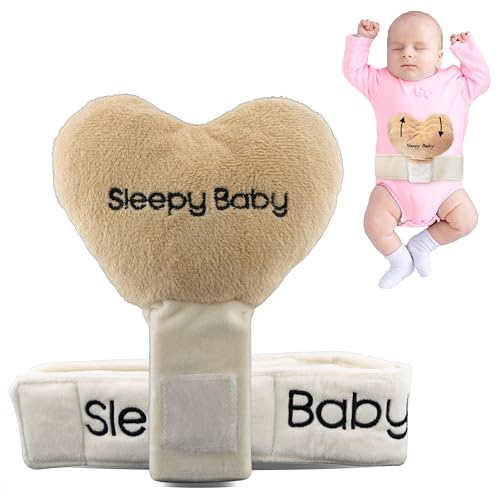
The Sleepy Baby Shh White Noise Machine stands out for parents seeking a reliable, multisensory solution during common sleep regressions, especially when newborns struggle with self-soothing. I’ve found its built-in Shh and white noise sounds effectively calm fussiness, working alone or with the rhythmic tapping feature that mimics gentle patting. The hands-free tapping reduces the need for constant rocking, and I can adjust the speed and fit with the soft, flexible belt for my baby’s comfort. It’s lightweight and compact, so I easily carry it in my diaper bag. The premium packaging also makes it a thoughtful, practical gift.
Best For: Parents seeking a portable, multisensory soothing solution for infants experiencing sleep difficulties or needing comfort during sleep regressions.
Pros:
- Combines effective white noise and rhythmic tapping to mimic parental soothing techniques
- Adjustable settings and soft belt ensure a customized, comfortable fit for different baby sizes
- Compact, lightweight design with premium packaging makes it ideal for travel and gifting
Cons:
- Tapping mechanism may be too soft or too intense for some infants, limiting effectiveness
- Sound options are pre-programmed with no option to add or customize audio
- Requires batteries or charging, which may be inconvenient for extended use away from power sources
DEARBABY Baby Sleep Soother with Heartbeat & Lullabies

When my baby started waking more often at night during the 4-month regression, I found that familiar sounds made a real difference, and the DEARBABY Baby Sleep Soother with Heartbeat & Lullabies became the best choice for infants comforted by prenatal auditory cues. It plays a mother’s heartbeat and classic lullabies, which help calm crying and support deeper sleep. The soft pink nightlight mimics the womb’s warmth, easing anxiety in dark rooms. Its plush body is super soft and safe for hugging, though I remove the sound module before machine washing. It runs on 3 AAA batteries and auto-shuts off after 20 minutes, preserving power and sleep cycles. I’ve used it in the crib, stroller, and during travel-it’s reliable, simple, and consistently soothing without overstimulating.
Best For: Infants and babies who respond well to prenatal auditory cues and soothing sensory stimuli, especially during sleep regressions or nighttime awakenings.
Pros:
- Emits calming heartbeat sounds and lullabies proven to comfort babies and support deeper sleep
- Features a warm pink nightlight and soft plush design that mimic the womb environment and reduce separation anxiety
- Auto-shutoff timer and removable sound module make it practical, travel-friendly, and easy to clean
Cons:
- Requires 3 AAA batteries (not included), leading to ongoing power costs
- Nightlight color is fixed (pink), which may not suit all preferences or environments
- Sound and vibration module must be removed before washing, adding a step to maintenance
Factors to Consider When Choosing Baby Sleep Regression Aids
You’ll want to check a sleep aid’s age appropriateness first, since babies’ needs change quickly in their first year. Look for natural formulations and ingredient safety, especially if your baby has sensitivities or you prefer non-chemical solutions. Also consider how easy it is to use, whether the device is portable, and if it comes with a trial or warranty to test effectiveness.
Age Appropriateness
While your baby’s age plays a key role in determining which sleep aids are safe and effective, always check the manufacturer’s minimum age guidelines before introducing any product. For newborns under 3 months, stick to non-invasive methods like swaddling, white noise, or gentle rocking-these support developing sleep patterns without overstimulation. Avoid sleep aids with melatonin for children under 2 unless a doctor advises it, since dosing and long-term effects aren’t fully clear. Topical essential oils must be diluted properly and are best avoided under 6 months due to sensitive skin and breathing systems. Devices with small or loose parts aren’t suited for infants under 3 months, as they may pose choking or suffocation risks; wait until your baby can move freely. Prioritize simple, low-risk solutions early on, and choose products designed specifically for your baby’s current stage.
Ingredient Safety
Choosing the right sleep aid for your baby means paying close attention to what’s inside the product, especially since their developing systems are more sensitive to certain ingredients. You should always pick products free from melatonin, artificial dyes, parabens, phthalates, and synthetic fragrances to lower health risks. Look for natural ingredients like chamomile, passionflower, and lemon balm, which are well-studied and historically safe for calming. Make certain the formula avoids common allergens such as dairy, soy, gluten, and nuts, particularly if your baby has sensitivities. Always check for transparent labeling that lists every ingredient, dose, and clear instructions so you know exactly what you’re giving. Choose options that are third-party tested and certified organic or non-GMO to confirm purity and reduce exposure to contaminants. This careful approach helps guarantee safety while supporting your baby’s sleep needs.
Ease Of Use
Since bedtime routines can easily be disrupted by complicated products, it helps to pick baby sleep aids that fit smoothly into your existing schedule. Choose items like pacifier-attached solutions or spray-based tools that integrate with your current routine, requiring no extra steps. Look for one-touch controls or automatic shut-offs so you can respond quickly during night wakings without fumbling. Opt for roll-ons or pre-measured drops-they’re mess-free and fast, which matters when you’re tired. Pick products with straightforward instructions and minimal prep, so consistency stays possible even late at night. If you travel or switch sleep spaces, go for compact, portable designs that work just as well in the nursery or a hotel room. These features reduce effort, save time, and support reliable use when sleep feels hardest to find.
Natural Formulations
What makes a baby sleep aid truly gentle on delicate systems? You’ll want natural formulations with calming ingredients like chamomile, lavender, lemon balm, and passionflower-traditionally used to ease infant relaxation. Skip synthetic additives like artificial fragrances, dyes, parabens, or phthalates to lower irritation risks. If using essential oils topically, mix them with safe carrier oils-jojoba or grapeseed oil help dilute potency for tender skin. Avoid melatonin in younger infants, since their sleep regulation is still developing and outside supplements may interfere. Instead, choose melatonin-free options designed with gentle support in mind. Look for USDA Certified Organic or pediatrician-tested labels to guarantee cleaner ingredients and stronger safety standards. These choices offer a balanced approach-supporting natural sleep patterns without overstepping a baby’s developing systems. Always review ingredient lists closely and test a small patch if applying topically.
Device Portability
While creating a consistent sleep routine, you’ll find it easier to stick to calming practices when your sleep aid travels well. Choose compact, lightweight designs that slip easily into diaper bags or travel carriers, so you’re never without it. Battery-powered operation keeps it running during car rides or outdoor naps-no outlet needed. Look for models that securely attach to strollers, car seats, or travel cribs, maintaining familiarity wherever your baby sleeps. Durable builds handle bumps, drops, and temperature shifts, staying reliable trip after trip. A minimalist, non-bulky shape fits snugly in tight spaces like bassinets or foldable cots, reducing clutter and safety risks. These features help you maintain calming cues across environments, supporting smoother shifts. Prioritize tested durability and versatile mounting options so the device stays functional and safe through daily use. A well-built, portable aid stays ready when you’re on the move.
Consistent Sleep Support
When your baby faces sleep regression, a reliable aid can make a real difference by reinforcing predictable routines that help regulate their circadian rhythm. You can use gentle sounds or dim lighting each night-these repeated cues signal it’s time to wind down. Keep the room’s temperature, noise, and bedding consistent to reduce disruptions. A stable environment helps your baby stay asleep during vulnerable developmental phases. Try following the same pre-sleep sequence nightly, like bathing, massaging, then rocking-this repetition builds strong sleep associations. You’ll likely see faster improvement if you stick to regular nap and bedtime schedules. The most effective aids support continuity, not just comfort. Look for products with simple operation, reliable performance, and flexible settings you can adapt over time. Many come with trial periods, so you can test how well they fit your routine.
Frequently Asked Questions
How Long Does Baby Sleep Regression Typically Last?
Baby sleep regression typically lasts 2 to 6 weeks, though it varies by child and developmental stage. You’ll notice changes around 4, 8, 12, and 18 months, often tied to growth spurts or new skills. You can’t rush it, but consistent routines help shorten the disruption. Track patterns closely-you’ll see gradual improvement. Most babies return to regular sleep within a month if you respond with patience and structure, not quick fixes.
Are Sleep Aids Safe for Newborns?
No, most sleep aids aren’t safe for newborns under 3 months. You risk choking, suffocation, or overheating with loose items like bumpers or weighted swaddles. The AAP recommends only a firm, flat mattress in a bare crib. You can use wearable blankets or swaddle sacks if they’re snug and meet safety standards. Avoid products claiming to reduce SIDS without proven evidence. Always check labels, look for recalls, and consult your pediatrician before trying anything new.
Can I Use Multiple Sleep Aids Together?
Yes, you can use multiple sleep aids together, but you’ve got to be careful. Combining white noise with a swaddle or using a sound machine alongside a pacifier is common and often effective. Just make certain each aid is safe and age-appropriate. Introduce one at a time to track what works. Avoid overcrowding the crib or relying too much on any single tool, and always follow AAP guidelines to keep your baby safe while you find the right balance.
Do Sleep Drops Contain Sugar or Alcohol?
You’ll find most sleep drops don’t contain sugar or alcohol, but you should always check the label. Some brands use glycerin or natural flavors instead, making them safer for infants. Alcohol-free formulas are standard in reputable products, and sugar-free options help avoid unnecessary additives. Always review ingredients and consult your pediatrician before starting any new sleep aid, especially if combining with other methods. A short trial period helps gauge effectiveness and safety.
Will These Products Work for Toddlers Too?
Yes, you can use these products for toddlers, though effectiveness varies by child. Most sleep aids, like drops or wearable monitors, are designed with adjustable dosing or settings to suit older infants and toddlers. Check labels for age-specific guidelines, ingredients, and concentration levels. Sugar-free and alcohol-free formulas are safer for prolonged use. Always trial under supervision and consult your pediatrician, especially if your toddler has sensitivities or health concerns. Warranties often cover defects, not results.