Best Anti Anxiety Teas That Calm Your Mind Naturally
You’ll find relief in teas with ashwagandha, chamomile, or kava, all shown to ease stress naturally. Look for organic, caffeine-free blends like Yogi or Traditional Medicinals, which use ethically sourced herbs and compostable bags. Some, like Hyleys Calm, come foil-wrapped for freshness, while variety packs let you test different formulas. Taste matters-smoother flavors help with daily use. If you’re sensitive to certain herbs, check labels carefully. Choosing the right blend means balancing ingredients, taste, and how they fit your routine. You’ll discover which works best with consistent use and attention to your body’s responses.
We are supported by our audience. When you purchase through links on our site, we may earn an affiliate commission, at no extra cost for you. Learn more. Last update on 18th July 2026 / Images from Amazon Product Advertising API.
Notable Insights
- Look for teas with adaptogens like ashwagandha and calming herbs such as chamomile to support natural anxiety relief.
- Choose USDA Organic, non-GMO blends with transparent sourcing to ensure purity and high-quality ingredients.
- Kava-based teas may calm the mind by interacting with GABA receptors, but avoid them with liver concerns or medication interactions.
- Opt for caffeine-free formulas with valerian, passionflower, or lavender to gently ease nervous system activity.
- Foil-wrapped or compostable tea bags help preserve potency and freshness of active herbal compounds.
Organic Stress Ease Tea with Adaptogens

If you’re looking for a natural way to manage occasional stress and support a balanced mood, this tea stands out because it combines adaptogens like ashwagandha with calming herbs such as honeybush and shatavari. I’ve found it helps me unwind without drowsiness, making it practical for daytime use. It’s USDA Organic, non-GMO, and the compostable bags align with eco-conscious habits. The flavor is mildly sweet and floral, so it’s easy to sip without added sweeteners. Since it’s caffeine-free, I often drink it in the afternoon or before bed if I feel tension building. It’s not a sleep aid, but its calming action supports relaxation, which can help prepare the mind for rest when stress interferes.
Best For: Individuals seeking a natural, caffeine-free way to manage occasional stress and support a balanced mood with adaptogenic and calming herbal support.
Pros:
- Combines powerful adaptogens like ashwagandha with calming herbs such as honeybush and shatavari for targeted stress relief
- USDA Organic, non-GMO, and compostable tea bags support clean, eco-conscious consumption
- Mildly sweet, floral flavor without added sweeteners makes it enjoyable and easy to drink daily
Cons:
- Effects are subtle and may not be noticeable for those expecting immediate or strong stress-relief results
- Not intended as a sleep aid, so may not be sufficient for those primarily seeking help with falling asleep
- Individual responses to adaptogens can vary, so results may differ from person to person
Yogi Tea, Kava Stress Relief, 16 Count
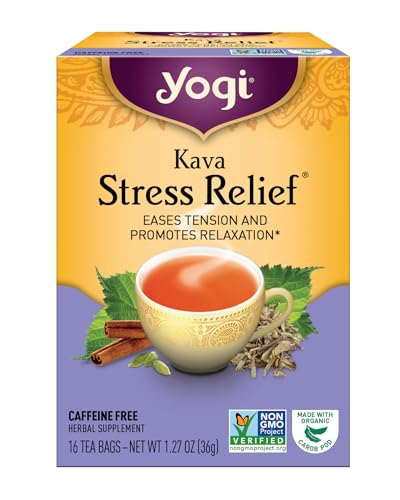
Yogi Tea, Kava Stress Relief, 16 Count stands out for those seeking a natural way to ease tension, especially when evening winds down and the mind won’t let go. I find its blend of kava, cinnamon, and organic carob pod gently calming, with a warm, slightly sweet spice that soothes without caffeine. The kava may help quiet mental chatter, supporting relaxation without drowsiness. Each compostable tea bag is caffeine-free, vegan, kosher, and non-GMO, making it a thoughtful choice if you watch ingredients. As a Certified B Corp, Yogi prioritizes ethical sourcing and sustainability, which adds peace of mind.
Best For: Individuals seeking a natural, caffeine-free way to support mental calm and relaxation, especially in the evening.
Pros:
- Blends kava and warming spices like cinnamon to promote relaxation without drowsiness
- Made with compostable tea bags and certified organic, non-GMO, vegan, kosher, and gluten-free ingredients
- Sourced and produced sustainably by a Certified B Corp with ethical and environmental commitments
Cons:
- Kava may not be suitable for those with liver conditions or on certain medications
- Limited quantity with only 16 tea bags per box
- May have a strong, earthy flavor that not all users enjoy
Organic Cup of Calm Tea (16 Bags)

When anxiety unsettles your thoughts and tightens your stomach, Organic Cup of Calm Tea offers a quiet retreat in a cup, especially for those who value certified organic ingredients and ethical sourcing. I rely on its blend of chamomile from Egypt’s Nile Valley and mint to ease tension and support digestion. The tea’s floral, honey-like flavor is gentle, caffeine-free, and smooth. Each of the 16 tea bags uses high-essential-oil chamomile for effectiveness. It’s USDA Organic, Non-GMO, Kosher, and comes from a Certified B Corp committed to fair trade. I find it helps quiet my mind before bed, making it a practical choice if you’re weighing natural sleep supports.
Best For: Individuals seeking a natural, organic tea to promote relaxation, support digestion, and ease anxiety before bedtime.
Pros:
- Features high-essential-oil chamomile from Egypt’s Nile Valley for potent calming effects
- USDA Organic, Non-GMO Verified, Kosher, and sourced from a Certified B Corp committed to ethical practices
- Caffeine-free with a gentle, floral, honey-like flavor enhanced by mint for smooth taste
Cons:
- Only 16 tea bags per carton, which may require frequent repurchasing for daily users
- Limited availability of chamomile sourcing transparency beyond region of origin
- Mild flavor may not satisfy those preferring stronger herbal or medicinal tastes
Organic Nighty Night Extra Tea (16 Bags)

I turn to Organic Nighty Night Extra Tea when deep relaxation and restful sleep are my top priorities, especially if I’m looking for a natural option without synthetic ingredients. This blend, the strongest in Traditional Medicinals’ sleep line, combines valerian root, passionflower, lemon balm, and peppermint to support calm and healthy sleep patterns. It’s USDA Organic, caffeine-free, and kosher, with compostable bags for eco-conscious use. The flavor is earthy and minty, not overly sweet. I find it best used as part of a quiet nighttime routine. There’s no trial period, but its herbal formulation offers a dependable, non-habit-forming choice for occasional sleep challenges.
Best For: Individuals seeking a natural, herbal sleep aid with a strong blend of valerian root and calming botanicals to support deep relaxation and restful sleep.
Pros:
- Formulated with a potent blend of organic valerian root, passionflower, lemon balm, and peppermint to promote healthy sleep
- USDA Organic, caffeine-free, kosher, and made with compostable tea bags for eco-friendly use
- Non-habit-forming and free of synthetic ingredients, ideal for those preferring a natural approach to sleep support
Cons:
- Earthy, minty flavor may not appeal to those who prefer sweeter or milder herbal teas
- Contains valerian root, which some find has a strong or unpleasant taste
- May not be potent enough for individuals with chronic insomnia or severe sleep disorders
Hyleys Calm Tea with Ashwagandha (25 Bags)

Hyleys Calm Tea with Ashwagandha stands out for those seeking a natural way to ease into relaxation at the end of a tense day. I’ve found its blend of chamomile, lavender, ashwagandha root, and blackberry leaf helps support mental calmness without drowsiness the next morning. The subtle manuka honey flavor pairs well with the floral notes, making it pleasant to sip nightly. Since it’s caffeine-free and made with 100% natural, non-GMO, gluten-free ingredients, it’s safe for most diets. Each of the 25 tea bags is foil-wrapped to lock in freshness, so every cup tastes just as clean and aromatic as the first.
Best For: Individuals seeking a natural, caffeine-free evening tea to support relaxation and improve sleep quality without compromising dietary restrictions.
Pros:
- Expertly blended with chamomile, lavender, ashwagandha root, and blackberry leaf to promote mental calmness and restful sleep
- Caffeine-free, non-GMO, gluten-free, dairy-free, sugar-free, and made with 100% natural ingredients, suitable for a wide range of diets
- Individually foil-wrapped tea bags preserve freshness, aroma, and flavor for consistent quality across all 25 servings
Cons:
- Subtle manuka honey flavor may not satisfy those seeking a stronger sweetness without added sugar
- Contains ashwagandha, which some individuals may be sensitive to or wish to avoid
- Premium packaging and ingredient quality may come at a higher price point compared to standard herbal teas
Yogi Tea Stress Relief Variety Pack (6-Pack)

If you’re looking for a convenient way to explore several herbal blends aimed at easing stress, the Yogi Tea Stress Relief Variety Pack (6-Pack) offers 96 tea bags across six caffeine-free options, including Bedtime, Kava Stress Relief, and Soothing Caramel Bedtime. I’ve found it helpful for unwinding at night or easing tension during the day. Each blend uses certified organic ingredients, rooted in Ayurvedic traditions, with quality spices and botanicals. The clear brewing instructions guarantee I get the most from each cup. With six varieties, I can test what works best for my routine without committing to just one flavor. It’s a practical way to compare natural options for better sleep and stress support.
Best For: Those seeking a diverse, caffeine-free selection of organic herbal teas to support relaxation, stress relief, and better sleep.
Pros:
- Offers six different organic, caffeine-free blends for variety and targeted stress or sleep support
- Made with certified organic ingredients rooted in Ayurvedic traditions for quality and efficacy
- Includes clear brewing instructions to maximize flavor and herbal benefits
Cons:
- Some blends contain kava, which may not be suitable for individuals sensitive to its effects
- Variety pack format may include flavors that don’t appeal to all taste preferences
- Individual tea cartons take up more storage space compared to a single large box
Yogi Tea Relaxation Variety Pack (3-Pack)

Though I might reach for a single herbal blend when unwinding, I find the Yogi Tea Relaxation Variety Pack (3-Pack) especially helpful if I’m exploring different moments of calm throughout my day. Each pack includes 16 USDA Organic tea bags across three blends: Honey Lavender Stress Relief, Bedtime Tea, and Comforting Chamomile, all crafted with high-quality botanicals. I appreciate the Ayurvedic approach-these herbs work gently to ease tension. Detailed brewing tips on each carton help me get the most from every cup. While not a substitute for medical treatment, this variety supports my efforts to manage stress naturally, offering flexibility to match tea to mood or time of day.
Best For: Individuals seeking a variety of USDA Organic herbal teas to support relaxation, manage mild stress, and promote calmness throughout the day using traditional Ayurvedic ingredients.
Pros:
- Offers three distinct, expertly blended herbal teas to match different moments of relaxation
- Made with USDA Organic certified ingredients for quality and flavor assurance
- Includes convenient brewing guidance to maximize taste and effectiveness
Cons:
- May not provide significant relief for individuals with severe anxiety or sleep disorders
- Flavor preferences may vary, and not all blends suit every palate
- Some users might prefer loose-leaf tea over tea bags for perceived freshness or environmental reasons
Yogi Tea Stress Relief Variety Pack

When you’re looking for a dependable option to ease daily tension and support relaxation, especially if you’re winding down at night or building a calming routine, the Yogi Tea Stress Relief Variety Pack stands out as a practical choice. I’ve tried all four blends-Blueberry Sage, Relaxed Mind, Kava, and Comforting Chamomile-and each delivers a smooth, calming experience. They’re USDA Organic, non-GMO, and vegan, with adaptogens like ashwagandha and kava root to support your body’s stress response. Yogi sources ingredients sustainably, follows Ayurvedic principles, and holds B Corp status, so you’re also supporting ethical practices. It’s an 80-tea set, giving you plenty to test what works best for your nights.
Best For: Individuals seeking a natural, caffeine-free way to manage daily stress and support relaxation, especially those incorporating mindful rituals into their evenings or bedtime routines.
Pros:
- Features organic, non-GMO, and vegan formulations with adaptogenic herbs like ashwagandha and kava root to help the body manage stress
- Variety of four soothing blends allows users to explore different flavor profiles and calming effects
- Ethically sourced and sustainably produced by a certified B Corporation committed to environmental and social responsibility
Cons:
- Contains kava, which may not be suitable for individuals with liver conditions or those on certain medications
- Some flavors may be too herbal or earthy for those who prefer milder tea tastes
- Individual responses to herbal ingredients can vary, so stress-relief effects may be subtle for some users
Twinings Superblends Calm Herbal Tea (18 Bags)
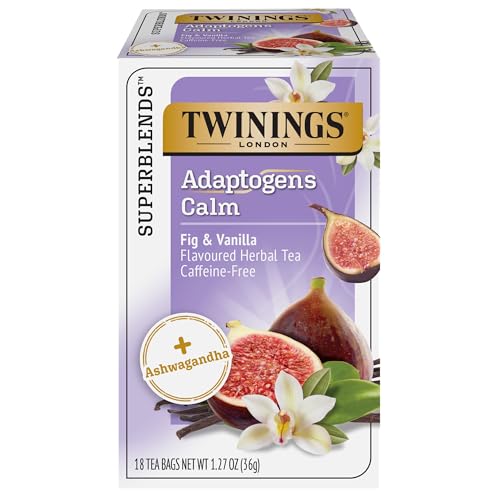
This Twinings Superblends Calm Herbal Tea stands out for anyone seeking a caffeine-free option that blends taste and wellness support without compromise. I find it works well when I need relaxation without drowsiness, thanks to adaptogens like ashwagandha. With 18 bags per pack, it lasts, and I can enjoy it hot or iced-two cups daily seems ideal. Sweet fig and vanilla give it a rich, smooth flavor, while rooibos and chicory add depth. Expertly blended by nine Master Blenders, it combines natural botanicals thoughtfully. Twinings also supports ethical sourcing, which adds to its appeal.
Best For: Individuals seeking a caffeine-free herbal tea that promotes relaxation with a delicious flavor profile and is part of a wellness-focused, ethically sourced product line.
Pros:
- Contains adaptogens like ashwagandha to support relaxation and overall well-being
- Expertly blended with natural botanicals for a rich, smooth taste featuring sweet fig and vanilla
- Ethically sourced with a commitment to improving tea-growing communities
Cons:
- Limited to 18 tea bags per pack, which may not last long with recommended daily use
- May not provide immediate or strong calming effects for those expecting potent herbal results
- Flavor may be too sweet or indulgent for individuals preferring earthier, more traditional herbal teas
Yogi Tea Kava Stress Relief (4 Packs)
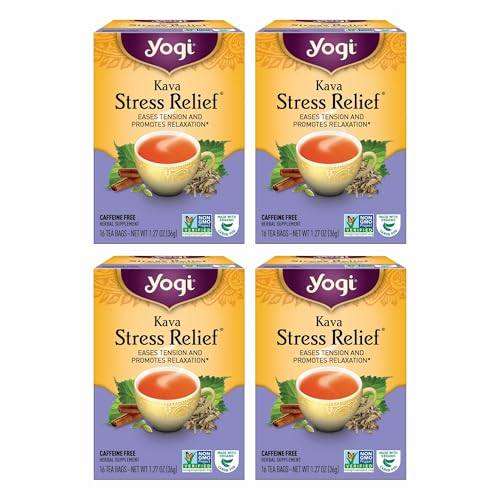
If you’re looking for a natural way to ease stress and support better sleep, Yogi Tea Kava Stress Relief (4 Packs) stands out with its thoughtfully blended, caffeine-free formula designed to calm both mind and body. I find it helpful that each pack holds 16 tea bags-four packs give me 64 total, so I’ve got a steady supply. I use organic Kava root, carob pod, Indian sarsaparilla, cinnamon, and ginger-all chosen for calming support. Steeping one bag in boiling water for 7 minutes works well; I’ll double it when I need deeper relaxation. It’s NON-GMO, vegan, and certified organic, which matters to me. Yogi’s blend balances herbal effectiveness with a warm, pleasant taste, making nightly use easy and consistent without heavy sedation.
Best For: Individuals seeking a natural, caffeine-free herbal tea to help reduce stress, support relaxation, and promote restful sleep without heavy sedation.
Pros:
- Combines certified organic, NON-GMO, and vegan ingredients known for calming effects, including Kava root and warming botanicals
- Thoughtfully formulated with 64 tea bags across 4 convenient packs for long-term, consistent use
- Offers a pleasant, warm flavor profile that makes daily consumption enjoyable while effectively supporting mental and physical relaxation
Cons:
- Contains Kava, which may not be suitable for individuals with liver conditions or those on certain medications
- Requires a 7-minute steep time for full potency, which may be longer than some users prefer
- Effects may vary by individual, with some potentially experiencing mild or delayed relaxation benefits
Factors to Consider When Choosing Anti-Anxiety Teas
You’ll want to check the herbal ingredients in any anti-anxiety tea, since things like chamomile, passionflower, and ashwagandha each affect stress differently. Look for certifications like USDA Organic or Non-GMO Project Verified to make sure you’re getting a clean, quality product. Also, consider caffeine content, flavor, and sourcing-these impact how easily you can stick with the tea and support ethical practices.
Herbal Ingredients Matter
Choosing the right anti-anxiety tea starts with understanding the herbal ingredients that drive its effects. You’ll want teas with adaptogens like ashwagandha, which helps your body manage stress by balancing cortisol and supporting adrenal function. If you’re feeling tense, kava root can ease nerves by interacting with GABA receptors, promoting calm without sedation. Chamomile’s apigenin binds to brain receptors linked to relaxation, offering mild, natural support. For deeper calm, valerian root boosts GABA levels, helping quiet nervous activity and support restful sleep. Lavender brings linalool and linalyl acetate, compounds shown to reduce anxiety symptoms when consumed consistently. You can mix these herbs depending on your needs-daytime calm or nighttime rest. Always check ingredient lists for purity and potency, and give each tea a few consistent uses to assess its effect. Your body responds differently to each compound, so patience helps you find what works.
Certifications Ensure Quality
Though herbal quality matters, the certifications on your tea box play an essential role in confirming what’s really inside. When you see USDA Certified Organic, you know the herbs were grown without synthetic pesticides, fertilizers, or GMOs. The Non-GMO Project verification gives you extra assurance the ingredients are free from genetically engineered components. If you follow specific dietary guidelines, Kosher certification means the tea meets strict production standards with third-party oversight. You’ll want caffeine-free labeling verified by a trusted body, so you’re certain no stimulants interfere with your calm. Vegan certification guarantees no animal-derived ingredients were used and that ethical practices were followed. These labels aren’t just seals-they’re proof of transparency, quality control, and care in sourcing. Checking for them helps you choose teas that align with your health goals and values, making your routine both safe and effective.
Flavor Affects Consistency
Flavor shapes habit. If you’re drinking tea nightly to manage stress or support sleep, taste directly impacts whether you’ll stick with it. Bitter or medicinal flavors might turn you off, making consistency tough-especially when daily use is key for results. Instead, blends with floral, sweet, or aromatic notes-like chamomile, lavender, or vanilla-feel more enjoyable and encourage routine use. Smooth, palatable teas are easier to look forward to, helping you build a lasting nighttime ritual. Warm temperature and rich aroma also boost the soothing experience, making the moment more comforting and sensory-driven. Since personal preference plays a big role, the best choice fits your taste-not just in theory, but in practice. When you enjoy the flavor, you’re far more likely to keep brewing it.
Caffeine Content Considerations
Since caffeine can worsen anxiety and interfere with sleep, you’ll want to stick with caffeine-free herbal teas when building a calming routine. Most herbal blends-like chamomile, valerian root, and passionflower-are naturally caffeine-free, making them ideal for relaxation. Even small amounts from green or black tea blends can disrupt your efforts to reduce stress, so check labels carefully. If you’re using adaptogens like ashwagandha or rhodiola, go for formulations without caffeine to get the full benefit. Drinking caffeinated tea late in the day can impair sleep quality, so choosing caffeine-free options in the evening supports both calmness and rest. Always read ingredient lists to confirm no hidden stimulants are present. That way, you’re not just relaxing-you’re setting up healthier sleep habits.
Sourcing Reflects Ethics
Your choice of anti-anxiety tea carries more weight than you might think, reaching far beyond the cup. When you choose teas sourced through ethical trading partnerships, you support fair wages and safe working conditions for farmers. Sustainable practices protect biodiversity and reduce environmental harm, while regenerative agriculture restores soil and captures carbon. Look for third-party certifications-they confirm no exploitative labor or ecological damage was involved. Transparent supply chains let you trace your tea from farm to cup, ensuring standards are met every step. These factors don’t just benefit people and the planet-they often mean higher-quality ingredients. You’re also more likely to get pure, potent herbs when producers follow ethical, traceable methods. It’s a thoughtful trade-off: paying slightly more could mean better efficacy and greater peace of mind. Try brands that openly share sourcing details-it’s an easy step toward responsible self-care.
Frequently Asked Questions
Can I Drink Anti-Anxiety Tea While Pregnant?
You shouldn’t drink anti-anxiety tea while pregnant without checking with your doctor first. Some herbs in these teas, like valerian or passionflower, may not be safe during pregnancy and could affect hormone levels or uterine activity. Even natural ingredients can carry risks. Your healthcare provider can guide you toward safer alternatives or confirm if any herbal teas are acceptable for your situation. It’s best to err on the side of caution.
How Long Before Tea Helps With Anxiety?
You’ll usually feel effects within 15 to 30 minutes after drinking tea for anxiety. The speed depends on ingredients-chamomile and passionflower work faster, while ashwagandha may take longer. Drinking it consistently helps maintain calm. Steep covered to preserve essential oils. Try a few brands or blends over a week to see what works. Most offer a 30-day return option, so test them during low-stress times to compare results.
Are There Side Effects From Drinking Calming Teas Daily?
You might experience side effects if you drink calming teas daily, especially ones with strong herbs like valerian or passionflower. Over time, your body can become tolerant, making them less effective. Some people report drowsiness, dizziness, or upset stomach. If you’re on medication, interactions could happen. It’s wise to take breaks and monitor how you feel. Consulting a healthcare provider guarantees safer, long-term use.
Can I Mix Anti-Anxiety Tea With Medication?
You shouldn’t mix anti-anxiety tea with medication without checking with your doctor first. Some herbal ingredients can interfere with prescriptions, altering how they work or increasing side effects. Chamomile, valerian, and passionflower, for example, may boost the effects of sedatives or antidepressants. Your doctor can help you assess risks based on your specific meds and health needs. When uncertain, hold off on combining them to stay safe.
Is It Safe to Drink These Teas Every Day?
Yes, you can drink these teas daily for the most part, but you still need to watch for side effects or interactions. Your body might react differently over time, especially if you’re sensitive to certain herbs. It’s smart to take short breaks now and then to see how you feel without them. Start with one cup daily, track your sleep and mood, and talk to your doctor if anything changes.