Best Alarms That Actually Get You Out of Bed
You’ll wake more reliably with alarms that use light, sound, or vibration. Sunrise simulators ramp up light over 30 minutes, easing you awake naturally. For deep sleepers, vibrating alarms like DreamSky offer adjustable intensity under your pillow. Loud models reach 112dB with multiple sound options to prevent habituation. Some combine light, sound, and vibration, while backup batteries keep your settings. Choosing the right mix improves wake-up success-especially when you test features during trial periods.
We are supported by our audience. When you purchase through links on our site, we may earn an affiliate commission, at no extra cost for you. Learn more. Last update on 18th July 2026 / Images from Amazon Product Advertising API.
Notable Insights
- Sunrise simulation alarms use gradual light increases to mimic dawn, helping regulate circadian rhythms for natural waking.
- Vibrating alarms offer adjustable intensity levels and can be placed under pillows or mattresses to wake heavy sleepers effectively.
- High-decibel sound alarms (up to 115dB) with multiple sound options prevent habituation and ensure loud, reliable wake-up calls.
- Multi-sensory alarms combine light, vibration, and sound to increase effectiveness, especially for deep sleepers or those with hearing loss.
- Alarm clocks with mobility features, like Clocky’s wheel movement, force physical engagement to prevent oversleeping.
Sunrise Alarm Clock for Kids & Heavy Sleepers

If you’re a heavy sleeper or shopping for a child who struggles to wake up, this sunrise alarm clock makes mornings easier by mimicking a natural dawn. I’ve used it with the 30-minute sunrise simulation, and it gently brightens to 100% light, helping me wake without shock. I can adjust the time to 20 or 10 minutes if I need a quicker rise. Seven natural sounds, like bird song or soft piano, play at my chosen volume-up to 16 levels. The dual alarms suit my family’s schedule, running on Weekday, Weekend, or Every Day modes. I appreciate the 9-minute snooze and 20 brightness levels across seven colors.
Best For: Heavy sleepers and children who need a gentle, natural wake-up experience with customizable light and sound options.
Pros:
- Sunrise simulation with adjustable duration (10, 20, or 30 minutes) and 7 natural alarm sounds helps ease waking
- Dual independent alarms with flexible scheduling (Weekday, Weekend, Every Day) and 9-minute snooze support family or shared use
- Multiple lighting modes (7 colors, 20 brightness levels) serve as a nightlight, reading light, or mood light for various nighttime needs
Cons:
- FM radio requires manual tuning and may have limited reception in low-signal areas
- LED display brightness options may still be too bright for users who prefer complete darkness
- Lack of battery backup means settings and time may reset during power outages
DreamSky Vibrating Alarm Clock Rechargeable
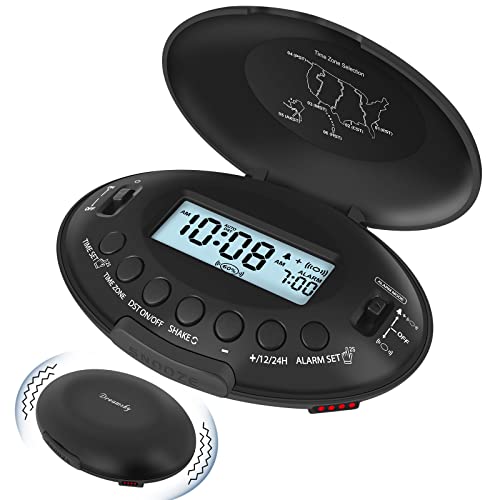
The DreamSky Vibrating Alarm Clock Rechargeable is a solid choice for heavy sleepers, people with hearing sensitivities, and frequent travelers who need a reliable way to wake up without depending on sound. I appreciate its five vibration levels and dual alarm modes-vibration only or with beeping-so I can customize my wake-up based on my sleep depth or environment. It’s wireless, rechargeable, and stays put under my pillow or mattress thanks to the included securing rope. The auto-setting display with DST and backlight makes nighttime use simple, and the 9-minute snooze or daily-off option gives me control. I can rely on it during trips since it holds a charge well and doesn’t need batteries.
Best For: Heavy sleepers, hearing-impaired individuals, and frequent travelers needing a reliable, portable, and customizable wake-up solution without relying on sound.
Pros:
- Offers five adjustable vibration intensities and dual alarm modes (vibration-only or vibration with beeping) for personalized wake-up experiences
- Rechargeable battery with power indication and auto DST-enabled digital display for convenience and accuracy
- Portable, cordless design with a securing rope makes it travel-friendly and prevents displacement during use
Cons:
- Vibration may not be strong enough for extremely deep sleepers despite maximum intensity setting
- LCD backlight only stays on for 15 seconds, which may be too brief in prolonged low-light use
- Lack of multiple alarm scheduling limits functionality for users needing varied weekday/weekend wake times
Housbay Wooden Sound Machine Alarm Clock

I find the Housbay Wooden Sound Machine Alarm Clock works especially well for light sleepers who need a calm, consistent wake-up that doesn’t rely on harsh buzzing or sudden volume spikes. It eases you awake with nature sounds like birdsong or ocean waves, gently increasing volume two minutes before your alarm. The compact wooden design fits neatly on a nightstand and blends with most decor. With 24 soothing sound options, it masks disruptive noise from traffic or pets, supporting deeper sleep. A soft nightlight reduces darkness without causing disturbance, and one-touch sleep mode helps you unplug fast. It’s simple to use, plug-in powered, and runs reliably with no charging hassles.
Best For: Light sleepers seeking a gentle, natural wake-up experience with soothing sound options and a minimalist, decor-friendly design.
Pros:
- Gradual alarm with nature sounds provides a calm, non-jarring start to the day
- 24 sound choices effectively mask disruptive background noise for improved sleep quality
- Compact wooden design with soft nightlight blends well in bedrooms and supports a phone-free bedtime routine
Cons:
- Alarm must be set at least 3 minutes in advance to function properly, limiting flexibility
- Plug-in only with no battery backup, reducing placement options
- Limited customization for alarm sound sequences or advanced sleep tracking features
ANJANK Extra Loud Alarm Clock with Bed Shaker

You’ll find the ANJANK Extra Loud Alarm Clock with Bed Shaker especially effective if you’re a heavy sleeper or deal with hearing challenges, since it combines a blaring 112dB front-facing speaker with a wireless bed shaker that vibrates through three intensity levels-High, Medium, and Low-reaching you even when sound alone falls short. I use the dual alarms to wake up steadily, picking from eight sounds like chime or rain, and adjust volume across 10 levels. The bed shaker runs up to three months per charge, recharging via Type-C or magnet. I appreciate the RGB display and 9-color night light, both adjustable. It lacks battery backup, so it needs constant power.
Best For: Heavy sleepers, individuals with hearing impairments, and anyone needing a reliable, multi-sensory wake-up experience.
Pros:
- Combines 112dB extra-loud alarm with a wireless bed shaker (up to 10-meter range) and three vibration levels for effective waking
- Dual alarms with 8 sound options, 10-level volume control, and long-lasting bed shaker battery (2–3 months per charge)
- Customizable lighting with RGB time display, 9-color night light, and USB-C port for charging devices overnight
Cons:
- No battery backup, so power outages disable the alarm
- Bed shaker requires a nonstandard battery
- Only supports basic USB-C and magnetic charging with no smart connectivity features
Cadmos Modern Curved LED Alarm Clock (Pink)

A bright, customizable wake-up experience defines the Cadmos Modern Curved LED Alarm Clock in pink, making it a strong pick for light-sensitive sleepers or those needing visual cues to start the day. I appreciate its large, easy-to-read digits and four brightness levels, which help reduce eye strain at night. The dynamic RGB display offers eight color options, and the built-in rainbow nightlight adds soft ambient light. Its loud 105 dB alarm has three volume settings and a 10-minute snooze. Dual alarms and weekday/weekend modes support flexible routines. Powered by USB, it includes a backup battery to keep settings during outages.
Best For: Light-sensitive sleepers and those who want a customizable, visually engaging alarm clock with vibrant display options and reliable dual alarms.
Pros:
- Large, easy-to-read LED digits with adjustable brightness reduce eye strain at night
- Dynamic RGB display with 8 color options and built-in 7-color rainbow nightlight enhances room ambiance
- Dual alarms with weekday/weekend modes and battery backup ensure flexibility and reliability during power outages
Cons:
- Plastic build may feel less durable compared to higher-end materials
- Limited to tabletop mounting, restricting placement options
- USB-powered design requires constant connection unless using backup battery for settings only
Super Loud Alarm Clock 115dB Gray

When waking up reliably matters most-especially for heavy sleepers or those with inconsistent schedules-the Super Loud Alarm Clock with 115dB output stands out as a practical solution. I rely on its high-volume alarm, which offers six distinct sounds to effectively wake me, whether I’m a student or a shift worker. Dual alarms help manage varying routines, and the snooze function gives me brief, controlled extra rest. It keeps settings during power outages thanks to AAA battery backup. The 4.2-inch LED display adjusts for night visibility without disturbing my sleep environment. USB charging lets me power devices overnight, which is handy in dorms or small spaces.
Best For: Heavy sleepers, students, shift workers, and busy professionals who need a reliable, high-volume alarm clock to wake up on time.
Pros:
- 115dB loud alarm with six sound options ensures effective waking for deep sleepers
- Dual alarms and snooze function support flexible or irregular daily schedules
- Battery backup preserves settings during power outages, and USB port enables device charging
Cons:
- Loud volume may be disruptive to others in shared sleeping spaces
- No dimming option below medium brightness may disturb light sleepers
- Battery backup does not power the alarm during outages-only maintains memory
REACHER Super Loud Vibrating Alarm Clock

The REACHER Super Loud Vibrating Alarm Clock stands out for heavy sleepers, shift workers, and teens who need a reliable jolt out of bed, thanks to its dual wake-up power of sound and vibration. I’ve found its 3.2-inch round, lightweight design easy to place under my pillow or on my nightstand, and the wireless setup means no cords. It runs on a rechargeable lithium-ion battery, giving me freedom during travel. I can choose sound, vibration, or both, with a full hour of alarm and endless snoozes. The digital display dims automatically, so it won’t bother me at night, and the tactile buttons help me adjust it while half-awake. It’s simple, effective, and backed by a 12-month warranty.
Best For: Heavy sleepers, shift workers, and teens needing a reliable, portable alarm clock with powerful sound and vibration alerts.
Pros:
- Super loud alarm and strong vibration mode effectively wake heavy sleepers, even when placed under a pillow
- Wireless, rechargeable design with cordless operation makes it ideal for travel and flexible placement
- Auto-dimming display and tactile buttons ensure easy nighttime use without disruption
Cons:
- No battery included, requiring immediate charging upon arrival
- Plastic and fabric build may feel less durable compared to metal or rigid casing alternatives
- Limited to a single alarm setup, which may not suit users needing multiple wake-up schedules
Reacher Digital Alarm Clock & White Noise Machine

If you’re someone who struggles to wake up due to light sensitivity or noise distractions, the Reacher Digital Alarm Clock & White Noise Machine offers a balanced mix of customizable sound and lighting to support a smoother morning routine. I use its 21 soothing sounds-like rain, thunder, or white noise-to quiet my mind at night, and choose gentler wake-up tones like bird chirping or flute in the morning. The 8-color night light and dimmable display reduce eye strain, while the 9-minute snooze and memory backup keep things consistent. Its compact size fits neatly on my nightstand, and the 59-inch cord gives me outlet flexibility.
Best For: Individuals seeking a versatile, compact alarm clock with white noise and customizable lighting to improve sleep quality and ease morning wake-ups.
Pros:
- Offers 21 soothing sounds and 7 wake-up tones for personalized sleep and wake experiences
- Features an 8-color night light and dimmable display for comfortable low-light use
- Includes battery backup and memory function to retain settings during power outages
Cons:
- Limited to one alarm setting, which may not suit households with multiple schedules
- Plastic construction may feel less durable compared to premium models
- No Bluetooth or smart features for integration with other devices or apps
REACHER Wood Grain Sunrise Alarm Clock
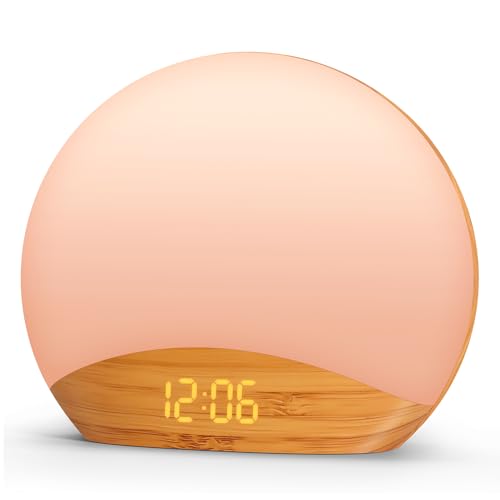
I’ve found the REACHER Wood Grain Sunrise Alarm Clock works especially well for light-sensitive sleepers or those easing into a gentler wake-up routine, thanks to its customizable sunrise simulation that ramps up brightness gradually over 5 to 60 minutes. It eases you awake naturally, reducing morning grogginess. With 26 sleep sounds like rain and ocean waves, it masks disruptions and supports deeper rest, shutting off automatically after 5–180 minutes. The dimmable display and eight soft-color nightlight settings let you adjust for comfort or reading. Its wood-grain design fits most rooms, the interface is simple to use, and a backup battery keeps settings during outages.
Best For: Light-sensitive sleepers or those seeking a gentler wake-up experience with customizable light and sound options.
Pros:
- Gradual sunrise simulation (5–60 minutes) promotes natural waking and reduces grogginess
- 26 built-in sleep sounds with auto-off timer (5–180 minutes) enhance sleep quality
- Dimmable display and 8-color nightlight provide customizable ambient lighting for comfort and safety
Cons:
- Requires LR44 battery (not included) for backup function, which may need periodic replacement
- No Bluetooth or smart home integration for expanded sound or control options
- Limited brightness adjustment for the clock display in very dark rooms despite dimming range
Clocky Alarm Clock on Wheels (Black)
Need an alarm clock that won’t let you hit snooze and roll back into dreamland? I rely on the Clocky Alarm Clock on Wheels to get me up. When the alarm sounds, it darts around the room, forcing me to chase it. Its 3.5-inch black plastic body runs on 4 AAA batteries-sold separately-and weighs only 3 grams. There’s no snooze, or just one, depending on the setting. Clocky works indoors, especially in bedrooms or dorms, and it’s great for travel. It’s not just for kids-it suits adults too. With a 4-star rating from thousands of users, a limited warranty, and steady availability since 2010, it’s a practical pick for anyone serious about waking up on time.
Best For: Heavy sleepers and anyone who needs a fun, effective way to get out of bed quickly, including students, professionals, and families.
Pros:
- Innovative design that forces users awake by running away when the alarm goes off
- Compact, lightweight, and portable for use at home, in dorms, or while traveling
- High customer rating of 4.0 stars from over 9,000 reviews with long-term market availability since 2010
Cons:
- Requires 4 AAA batteries (not included), adding to initial setup cost
- Limited snooze functionality-either one snooze or none, which may not suit all users
- Very lightweight (only 3 grams), which could make movement less effective on certain surfaces
Factors to Consider When Choosing Alarms to Wake You Up
You’ll want to check the alarm’s volume and clarity so it cuts through deep sleep without feeling harsh. Look for models with light simulation, vibration intensity, and sound options that match your sleep habits and any sensitivity you might have. Consider how it’s powered too-some use batteries as backup, which helps when outlets aren’t nearby.
Alarm Volume And Clarity
A loud, clear alarm can make the difference between a sluggish start and waking up alert, especially if you’re a heavy sleeper. Look for alarms that reach at least 105 dB, with some models going up to 115 dB for stronger wake-up power. Front-facing speakers project sound directly toward you, improving effectiveness. Choose alarms with multiple tone options-like beeps, chimes, or nature sounds-to prevent your brain from tuning them out over time. Volume controls with 10 or more levels let you adjust based on sensitivity or room size. Clear audio matters just as much as loudness; well-designed speakers and solid audio engineering reduce distortion at high volumes. Test models with volume and tone settings that allow gradual adjustment, and pick ones offering trial periods so you can confirm performance before committing.
Light Simulation Features
Ever wonder how light affects your wake-up experience? Sunrise simulation ramps up brightness from 1% to 100% over 5 to 60 minutes, mimicking dawn to ease you awake naturally. You can set the warm-up phase to start 2 to 30 minutes before your alarm, helping align your circadian rhythm. Look for models with 20+ brightness levels so you can adjust for your room’s size or lighting. Some alarms offer seven or more color options, letting you pick warmer tones that feel more like a real sunrise. The light usually peaks just before a sound alarm, giving you a gentle visual cue first. You’ll want to test different settings-what works in a dim bedroom might be too weak in a bright one. Many brands offer trial periods, so you can check if the light feature truly improves your mornings.
Vibration Intensity Options
Several vibrating alarms offer adjustable intensity levels-such as 20%, 40%, 60%, 80%, and 100%-so you can tailor the strength to match your sensitivity or sleep depth. If you’re a heavy sleeper or have hearing loss, higher intensities improve your chances of waking. You can start low for gentle mornings or boost the setting when reliability matters more. Many devices pair strong vibrations with sound for a multi-sensory trigger, which research shows increases wake-up success. Where you place the unit-under your pillow, mattress, or clipped to your pajamas-also affects how the vibration feels, so you might need to test different spots and settings. Look for alarms that let you experiment with intensity during a trial period. Models with long warranties often support this testing, helping you find your ideal level without risk.
Power Source Reliability
When the power cuts out in the middle of the night, you’ll want an alarm that still wakes you on time. Models with a backup battery, like a CR2032 coin cell, keep the clock running and preserve settings during outages. Some use AA or AAA batteries just for memory backup-they won’t power the alarm alone but prevent reset risks. If you prefer cordless freedom, alarms with rechargeable lithium-ion batteries let you place them anywhere, though you must charge them regularly or risk failure. Clocks relying only on AC power without any backup can fail completely during blackouts, which might cost you a morning. Look for models with USB ports offering constant power-they help maintain performance and can charge other devices overnight. Check warranty terms and test the alarm after setup to make sure backup systems engage when needed.
Sound Customization Choices
Even if your alarm has reliable power, the sound it uses to wake you matters just as much. You can choose from up to 26 built-in options, like bird chirping, ocean waves, piano music, or white noise, letting you match sounds to your waking style. Some alarms offer gradual volume increases over minutes, easing you awake instead of jolting you. You’ll find distinct categories-energizing beeps or soothing lullabies-so you can pick what works. Volume controls vary, with some models giving you 32 intensity levels for fine-tuned adjustments. You can even pair sounds with vibration or light, creating a multisensory wake-up that’s more effective, especially if deep sleep makes mornings tough. Not every sound fits every person, so having choices lets you test and adjust. Look for alarms that allow sound trials or come with a warranty, so you can explore options without risk.
Display Brightness Control
You’ll want an alarm clock with display brightness control that adapts to your room’s lighting and your sensitivity to light at night. Most models offer 3 to 20 brightness levels, so you can adjust the screen for daytime clarity or dim it for nighttime comfort. Many use automatic dimming or built-in light sensors to reduce glow in dark rooms, helping minimize sleep disruptions. If you’re very light-sensitive, look for a clock with a total display shut-off mode-it keeps the alarm working while giving you complete darkness. Some clocks also let you tweak the color temperature, switching between warm and cool white to better match your circadian rhythm. Controls are usually simple, with responsive buttons or touch interfaces that let you adjust settings fast, without fumbling. These features give you flexibility, letting you balance visibility with sleep quality-something worth testing before committing, especially if you have sleep issues.
Frequently Asked Questions
Can These Alarms Be Used Without Power?
Yes, you can use some alarms without power. Battery-operated models keep working during outages, and many portable alarms run on AA or AAA batteries. Solar-powered options charge in light and work at night. Look for low-battery alerts and long battery life-some last a year. Check trial periods; brands like Philips offer 30-day returns. Always test alarms weekly to verify they wake you reliably, especially if you’re a deep sleeper.
Are Replacement Parts Available for These Clocks?
Yes, you can usually get replacement parts for these clocks, but it depends on the model and brand. Manufacturers like Philips or Marsona often offer repair kits or sell components like vibrating pads or extra bulbs. Check warranty terms-many include one-year coverage for faulty parts. For long-term use, verify part availability before buying. Some budget models don’t support replacements, so choosing modular designs helps save money and reduces waste over time.
Do Any Models Sync With Smartphones?
Yes, some models sync with smartphones using Bluetooth or Wi-Fi. You can control them through apps, set schedules, or get sleep data. They often work with iOS and Android. Syncing helps match alarms to your sleep cycles. Look for ones with backup power and clear setup guides. Many offer free trial periods, so test one if sleep issues continue. Check warranty terms before buying.
Can I Turn off the Vibration Feature?
You can turn off the vibration feature on most models, so you’re not stuck with it if you don’t want it. Check the settings menu or app controls-many let you disable vibrations while keeping sound or light. Some devices offer full customization, others limit changes. Test during a trial period to confirm the adjustments work for your routine. Always review warranty terms before modifying use.
Are the Alarms Loud Enough Outdoors?
They’re loud, but outdoor effectiveness depends on your environment. If you’re near traffic or crowds, background noise can dampen the sound. Most use high-decibel alarms, some up to 100 dB, which cuts through moderate noise. Pairing audio with vibration helps, even if you disable vibration later. Test it outside first-many brands offer trial periods. Check the IP rating for weather resistance if you plan to use it outdoors regularly.