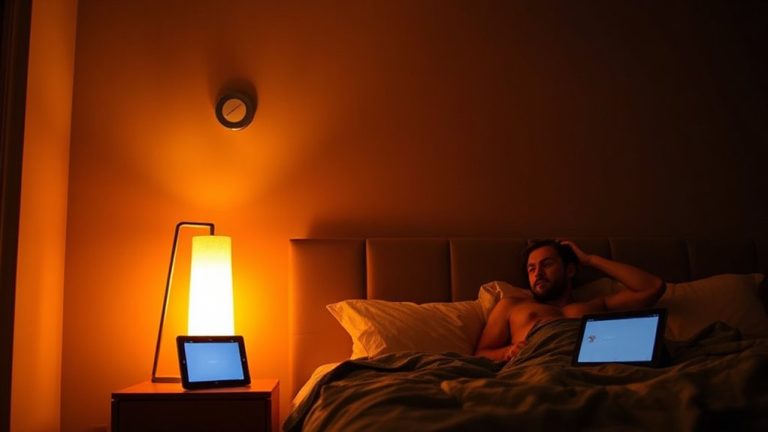
Yoga Nidra Practice Steps for Deep Non-Sleep Restorative States
You lie down in a quiet, comfortable space, set a positive intention like “I am calm,” and follow a guided voice through a body scan from toes to head, noticing sensations without judgment. You’ll breathe naturally or use counted breaths to stay aware, hovering at the edge of sleep while remaining conscious. This practice restores your nervous system deeply, often helping reduce reliance on sleep aids-especially with regular use. More benefits become clear when you experience the full sequence.
Notable Insights
- Find a quiet, comfortable space with minimal distractions to support deep relaxation.
- Set a sankalpa-a positive, present-tense intention-repeated silently at start and end.
- Follow a guided body scan, moving attention from toes to head to release physical tension.
- Focus on natural or counted breath to calm the mind and sustain gentle awareness.
- Remain in a state of relaxed awareness between wakefulness and sleep without losing consciousness.
What Is Yoga Nidra, and How Does It Differ From Sleep?
Why might you choose Yoga Nidra instead of relying on sleep aids or medication for rest? You experience deep restoration without the grogginess or dependency risks tied to pills. Yoga Nidra guides you into altered consciousness states-between waking and sleeping-where your body deeply relaxes while your mind stays receptive. Unlike regular sleep, where awareness fades, this practice maintains guided awareness through structured mental focus. You remain conscious, following a voice that leads you through body scans, breath observation, and visualization. These steps help regulate your nervous system, useful if you struggle with sleep onset or restless thoughts. While sleep is essential, Yoga Nidra offers a complementary tool for rest, especially when sleep feels elusive. It doesn’t replace sleep but supports recovery, mental clarity, and stress reduction. You can try it anytime, with no equipment or prescription needed. For optimal results, consider trying the best Yoga Nidra for deep sleep.
Set Up Your Space for Yoga Nidra Practice
You’re ready to begin your Yoga Nidra practice, and setting up a supportive space makes it easier to stay relaxed and undisturbed. Creating a comfortable environment helps your body release tension, while a quiet atmosphere supports mental clarity. Choose a spot free from interruptions-this could be a bedroom corner or a quiet living area. Use soft lighting and consider temperature control to maintain ease throughout the session. A high-quality cushioned pad can enhance comfort, especially during longer sessions, making your best mattress pads selection crucial for optimal rest. Below are key factors to assess before you begin:
| Feature | Recommendation |
|---|---|
| Surface | Firm mat with cushioned pad |
| Noise Level | Low, or use earplugs |
| Distractions | Turn off phones, close door |
| Covering | Light blanket for warmth |
Set Your Yoga Nidra Intention (Sankalpa)
A quiet resolve forms the foundation of every meaningful Yoga Nidra session, and that begins with your sankalpa-an intention set with care and consistency. You’ll want to choose a short, positive statement that reflects your soul intention, something aligned with your deepest values and healing. This isn’t a goal or a wish, but an inner resolve spoken as if it’s already true-like “I am calm” or “I accept myself fully.” Repeat it silently three times at the start and again near the end of your practice, planting it into your subconscious. Use this moment to support your rest without relying on sleep aids. The clarity of your intention may help regulate your nervous system over time, offering a natural complement if you’re managing sleep disorders. It won’t replace medical treatment, but with consistent use, it can become a grounding part of your rest routine.
Practice the Body Scan for Deep Relaxation
Once your sankalpa is set and resting in your awareness, you can begin the body scan, a systematic exploration of physical sensation that supports deep relaxation. You’ll move your attention slowly through each part of the body, from toes to the crown of the head, noticing tension without judgment. This practice builds body awareness, helping you identify where you hold stress and release it gently. As you linger in each area, you may notice shifts in temperature, tingling, or a sense of warmth-signs that energy flow is reawakening. Over time, regular body scanning can improve both sleep quality and your ability to enter restorative states without sleep aids. It’s a non-invasive technique that requires only attention and consistency. While results vary, many find it reduces reliance on medication for sleep disorders. Try it nightly for several weeks to assess its effect on your personal sleep patterns.
Calm Your Mind With Yoga Nidra Breathing
Breathing forms the bridge between body and mind, and in Yoga Nidra, it serves as a steady anchor during the shift to deep rest. You’ll use breath awareness to invite mental stillness without effort. Simply notice your inhales and exhales-no need to change them. This gentle focus quiets mental chatter and supports natural relaxation, which can ease sleep-related tension.
| Technique | How It Helps | What to Expect |
|---|---|---|
| Natural breathing | Builds breath awareness | Calmer thoughts, relaxed body |
| Counted breaths (4-4) | Deepens focus | Reduced mental distractions |
| Belly emphasis | Enhances oxygen flow | Softer muscle tension |
| Pause after exhale | Encourages mental stillness | Brief moments of inner quiet |
With regular practice, you might rely less on sleep aids. This method requires no equipment, has no side effects, and is safe to try with most health conditions.
Stay Present at the Edge of Sleep
How do you remain aware when your body is clearly ready to drift off? You don’t force wakefulness-instead, you soften into conscious awareness. Yoga nidra invites you to stay at the edge, where sleep and alertness meet. You’re not trying to fall asleep, nor are you fighting it. With mindful presence, you observe sensations, thoughts, and breath without reacting. This subtle balance trains your mind to rest deeply while staying gently aware. It’s common to dip into light sleep, but with practice, you’ll notice when you’ve drifted and return without judgment. You don’t need sleep aids or devices to achieve this state-it’s a natural skill built through repetition. Over time, your ability to sustain awareness without resistance improves, supporting healthier rest patterns. You’re not curing insomnia but cultivating a restful state that may reduce reliance on medications or external supports.
Make Yoga Nidra a Daily Habit
You’re already learning to rest without fully letting go, finding that quiet space where awareness meets deep relaxation. Now, making yoga nidra a daily habit strengthens this skill over time. Use consistency tracking-like marking a calendar or using an app-to see your progress and stay committed. This visibility helps you notice patterns, especially if sleep feels irregular. Try habit stacking: link your practice to an existing routine, like right after brushing your teeth or before bed. This builds automaticity, so it feels natural, not forced. Even five to ten minutes daily supports deeper rest and mental clarity. Over time, regular practice may reduce reliance on sleep aids by improving natural sleep regulation. It won’t replace medical treatment for sleep disorders, but it can complement other strategies. Give it a fair trial-30 days-to assess how it impacts your rest.
On a final note
You can try yoga nidra whenever sleep feels out of reach or unrefreshing. It’s not sleep, but a guided rest that supports recovery and mental clarity. Unlike sleep aids, it has no side effects and builds self-awareness over time. While it won’t replace medical treatment for disorders like insomnia, it may reduce reliance on pills. Most recordings offer free trials, and many come with satisfaction guarantees. A daily 20-minute session might help you rest more deeply-without fully falling asleep.