Breathwork Before Bed: 4-4-6-2 Technique to Calm Your Nervous System
You can calm your sympathetic nervous system before bed by using slow, rhythmic breathing that signals safety to your brain. Try diaphragmatic breaths: inhale through your nose for 4 counts, hold for 4, exhale through your mouth for 6, then pause for 2. This paced breathing lowers heart rate, eases tension, and supports sleep onset without pills or devices. Gentle, consistent patterns work better than forced ones-stick with what feels sustainable. Choosing the right technique for your stress level improves results, and regular practice builds lasting sleep resilience. There’s more to explore about matching breath to body and mind.
Notable Insights
- Activate the relaxation response by practicing slow, deep diaphragmatic breathing before bed.
- Use a 4-6-2 breath pattern: inhale for 4 counts, exhale for 6, pause for 2.
- Choose breathwork styles that match your stress level, like 4-7-8 for high stress.
- Avoid forced breath holds or rapid breathing to prevent triggering further stress.
- Practice for 4 minutes lying down to signal safety and shift from alertness to rest.
Why Stress Keeps You Awake (And How Breathing Helps)
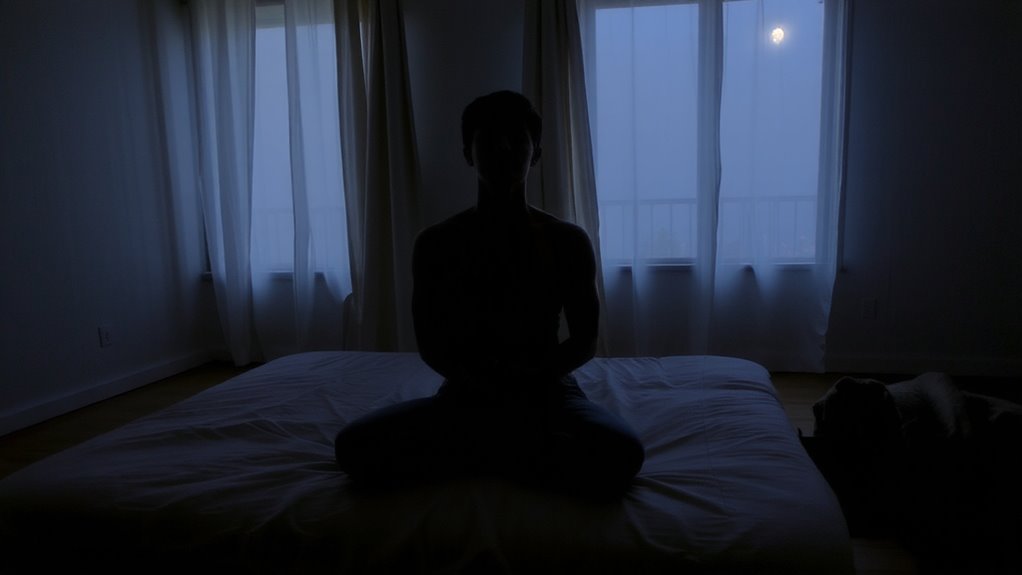
When stress lingers into the night, it keeps your nervous system on high alert, making it harder to fall asleep or stay asleep. Your body stays in fight or flight response mode, triggered by daily pressures, even when threats aren’t present. This survival mechanism raises heart rate, tenses muscles, and sharpens focus-great for danger, not for sleep. But you can shift this balance. Activating the relaxation reflex counters stress naturally, slowing your heart and easing tension. Deep, rhythmic breathing signals safety to your brain, helping move from alertness to rest. Unlike sleep aids, which may carry side effects or dependency risks, breathwork is free, always available, and non-invasive. It doesn’t require equipment or subscriptions. With consistent trial each evening, you can observe its impact on sleep quality. No warranty’s needed-your own experience becomes the evidence.
Calm Your Nervous System With Evening Breathwork
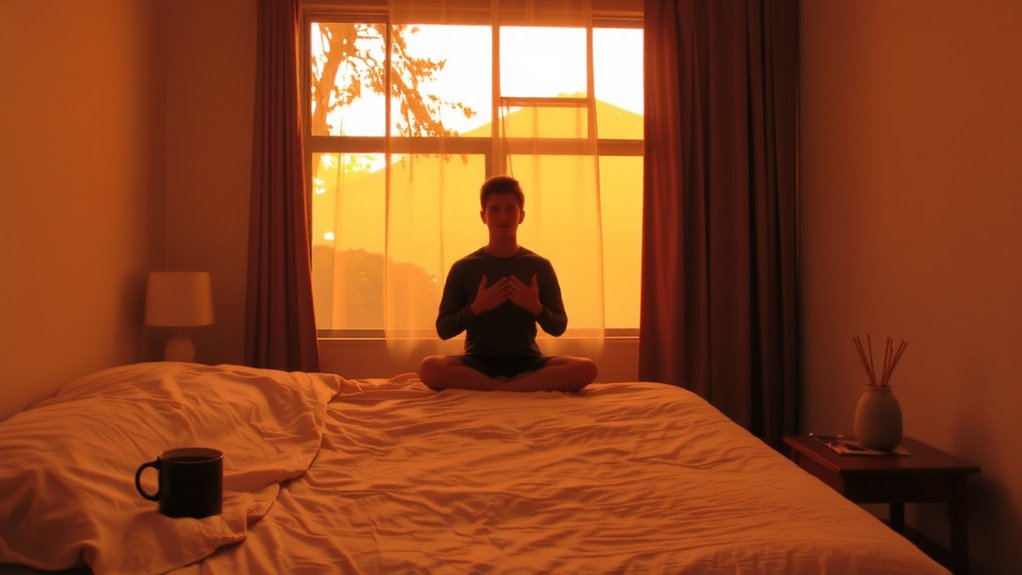
Why not take a moment tonight to see how just a few minutes of focused breathing might shift your evening routine? Evening breathwork helps your body shift from stress to rest, preparing you for deeper sleep. Pair it with a quick body scan or gentle stretching to release tension stored in your muscles. This combo supports better sleep onset and quality without reliance on sleep aids. Consider how small changes in your routine might reduce long-term dependency on medications or devices.
| Practice | Benefit | Time Needed |
|---|---|---|
| Body scan | Locates and releases tension | 3–5 min |
| Gentle stretching | Improves breath comfort | 5 min |
| Slow breathing | Lowers heart rate | 4–6 min |
| Breath awareness | Calms mind chatter | 3 min |
Try This 4-Step Bedtime Breathwork Routine
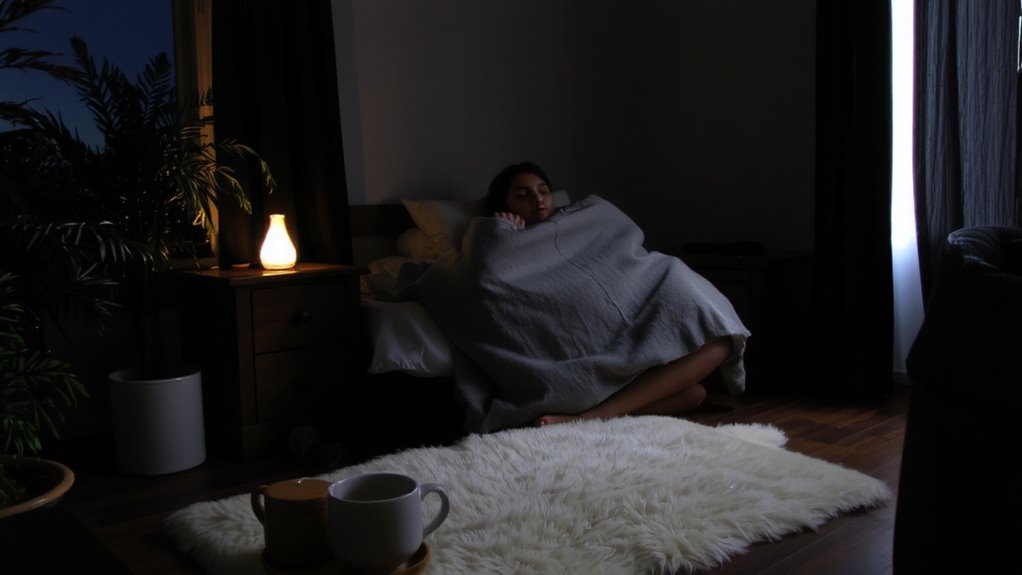
Though it might seem simple, a structured bedtime breathwork routine can make a meaningful difference in how your body prepares for sleep. Start by lying down and placing one hand on your chest, the other on your belly. Inhale slowly through your nose, letting your abdomen rise-this is diaphragmatic breathing. Exhale fully through your mouth. Next, practice paced respiration: inhale for four counts, hold for four, exhale for six, and pause for two. Repeat for four minutes. This method supports nervous system balance without medication or devices. You can try it nightly to observe effects on sleep onset and quality. It’s free, requires no tools, and carries no side effects. If you use sleep aids, consider how breathwork might reduce reliance over time. Give it a fair trial-consistency matters more than perfection.
Choose the Right Breathwork for Your Stress Level
If you’re feeling overwhelmed, a slower breathwork technique might serve you best-try extending the exhale to activate the parasympathetic nervous system, which helps the body wind down. Breath pattern selection should match your current state, ensuring effective stress intensity alignment. When your mind’s racing, gentle techniques work better than intense ones.
| Stress Level | Breath Pattern | Effect |
|---|---|---|
| High | 4-7-8 breathing | Calms nervous system quickly |
| Moderate | Box breathing (4-4-4-4) | Balances focus and relaxation |
| Low | Diaphragmatic breathing | Supports gentle wind-down |
| Restless mind | Alternate nostril | Enhances mental clarity |
Choose based on how you feel tonight. Consistency matters more than complexity. These methods require no tools, have no side effects, and can be adjusted nightly. Try each for a few days to see what fits your sleep rhythm.
Skip These Common Breathwork Mistakes at Night
One of the most common mistakes people make is pushing too hard during nighttime breathwork-forcing long holds or rapid cycles in an effort to fall asleep faster. This forced duration can activate your stress response instead of calming it. You might think intensity leads to quicker results, but incorrect pacing disrupts your body’s natural wind-down process. Instead of rushing, focus on smooth, gentle breaths that match your current state. Short, jagged inhales or overextended exhales strain your system, making rest harder. Aim for rhythms that feel sustainable, like 4-6-8 breathing, without straining. Listen to your body; if you feel lightheaded or tense, ease up. Nighttime breathwork isn’t about performance-it’s about signaling safety to your nervous system. By avoiding aggressive techniques and choosing relaxed, consistent patterns, you support better sleep onset and improve overall rest quality without relying on external sleep aids.
How to Stick to a Daily Evening Breathwork Routine
You’ve learned how avoiding intense breathwork can keep your nervous system from reacting to nighttime routines as a stressor. Now, making it a daily habit comes down to simple planning. Try habit stacking-pair breathwork with something you already do, like brushing your teeth or turning off your phone. That way, it becomes a natural next step, not another chore. Set a consistent time each evening, preferably during your wind-down window, to signal to your body that sleep is coming. Use consistency tracking, like a habit calendar or app check-in, to monitor your progress and stay aware of patterns. Don’t expect perfection; even three nights a week builds momentum. Over time, this regular practice supports better sleep onset and may reduce reliance on sleep aids. Track how you feel over two weeks to assess what’s working. Small, steady steps lead to lasting change.
On a final note
You can use breathwork to gently signal your body it’s time to rest, helping shift from stress to calm. Slow, intentional breathing lowers nervous system arousal, which may improve sleep onset and quality. Try simple patterns nightly, like 4-7-8 breathing, and stick with it for best results. If sleep problems persist, consider discussing them with a healthcare provider to explore underlying causes or suitable aids.