Chamomile Steam Inhalation for Sinus Insomnia: Step-by-Step
You can use chamomile steam inhalation to ease sinus pressure and support sleep. Boil water, add chamomile, and inhale the steam for 5–10 minutes, keeping a safe distance. Its anti-inflammatory effects may reduce nasal swelling, helping you breathe easier at night. Doing this 30–60 minutes before bed may calm your nervous system and improve sleep onset. Adding a drop of lavender or eucalyptus oil could enhance results. Try it nightly for best outcomes-there’s more to explore about optimizing the process.
Notable Insights
- Chamomile steam reduces sinus pressure through anti-inflammatory effects on nasal passages.
- Inhaling chamomile steam before bed helps clear congestion and promotes easier breathing for sleep.
- The calming aroma of chamomile supports relaxation and aids in natural sleep onset.
- Perform steam inhalation 30–60 minutes before bedtime to align with sleep preparation.
- Add lavender or eucalyptus essential oil to enhance relaxation and improve nasal airflow.
How Chamomile Eases Sinus Pressure and Insomnia
While chamomile might seem like a simple tea ingredient, its natural compounds can help ease both sinus pressure and sleep troubles in a gentle, non-drowsy way. You benefit from its anti-inflammatory properties, which reduce swelling in nasal passages and improve airflow. That means less congestion and a calmer breath, especially at night. Its soothing aroma acts directly on your nervous system, helping you relax without sedation. You’ll find it especially useful if you’re avoiding strong medications or dependency risks. Chamomile doesn’t knock you out-it supports your body’s natural shift into rest. Used regularly, it may help reset sleep patterns disrupted by chronic sinus issues. Consider trying it as part of a nighttime routine. It’s accessible, low-cost, and backed by both tradition and emerging research. While results vary, many report better sleep and reduced sinus discomfort after consistent use. Give it a fair trial before deciding. For best results, use high-quality dried chamomile flowers, such as those found in top-rated chamomile tea picks.
How to Do a Chamomile Steam Before Bed

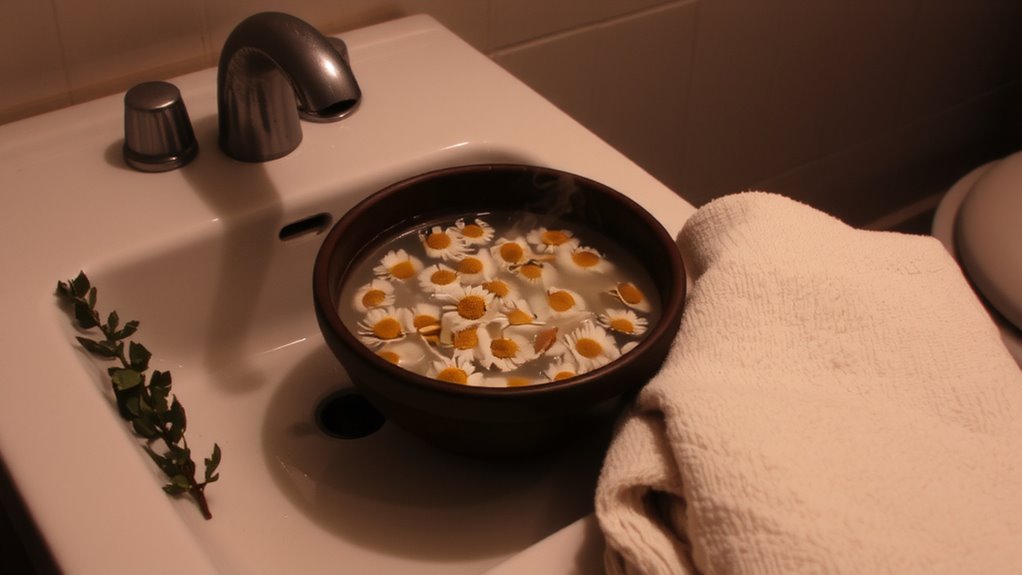
If you’re looking for a natural way to ease sinus pressure and prepare for rest, a chamomile steam before bed might be worth trying. Start with simple preparation steps: boil water and pour it into a heat-safe bowl. Add 2–3 tablespoons of dried chamomile flowers or a chamomile tea bag. For added support, include 1–2 drops of calming essential oils like lavender or eucalyptus-just be cautious with oil amounts to avoid irritation. Position your face about 8–10 inches above the bowl, drape a towel over your head, and inhale gently for 5–10 minutes. The warm steam helps loosen mucus while the chamomile’s soothing properties may support relaxation. Use clean equipment each time. This method is low-risk and can be tested over several nights to assess its effect on your sleep and sinus comfort.
Best Time to Use Chamomile Steam for Sleep

When should you time your chamomile steam for the best chance at better sleep? The best timing is about 30 to 60 minutes before you plan to sleep. This gives your body time to unwind while the steam clears sinus congestion and calms your nervous system. Adding it to your evening routine helps signal to your brain that it’s time to wind down. You might notice deeper breathing and reduced restlessness once your nasal passages open. Many people find that consistency improves results over time. You don’t need to do it every night-just when symptoms disrupt your rest. Think of it as a gentle, natural aid, not a cure. Used wisely, it complements other healthy sleep habits. The key is regularity and patience. Try it for a few nights to see how your sleep responds.
Stay Safe: Avoid Burns and Over-Inhalation
Since steam involves hot water, you’ve got to take simple precautions to keep the experience safe and effective. Keep the pot of chamomie tea just off the boil-boiling water increases burn risk and may worsen skin irritation. Sit a safe distance away, using a towel to tent your head without leaning directly over the pot. This reduces the chance of accidental splashes or burns. Limit your session to 5–10 minutes to prevent prolonged exposure, which can dry out nasal membranes or cause discomfort. If you feel any stinging or redness, stop right away. People with sensitive skin or respiratory conditions should test a short session first. Never leave the pot unattended, and keep it out of reach of children. Using a stable surface and handling the container with care guarantees performance without injury. These small steps help maintain both safety and comfort during use.
Boost It: Add Lavender or Eucalyptus to Steam
You can enhance your chamomile steam by adding a few drops of lavender or eucalyptus essential oil, both of which support relaxation and clearer breathing. These herb combinations work together to deliver added aromatherapy benefits, helping ease sinus pressure while calming the mind for sleep. Lavender promotes relaxation, which may improve sleep onset, while eucalyptus helps open nasal passages, making breathing easier during steam sessions. Use only pure, therapeutic-grade oils to guarantee safety and effectiveness. Add two to three drops maximum-more isn’t always better and could irritate your airways. Mix with a dispersant like carrier oil or milk if needed. This simple upgrade combines plant-based support with practical ease. Consider trying each oil separately first to see which works better for your symptoms. These additions won’t cure insomnia, but they may help manage sinus-related sleep disruptions safely and gently.
On a final note
You can try chamomile steam to ease sinus pressure that disrupts sleep, but results vary. It’s gentle and natural, though not a cure for chronic insomnia. Add lavender or eucalyptus for enhanced effect, if needed. Always test for sensitivity and avoid overheating. This method supports sleep hygiene when used safely before bed. Consider it one option among others, especially if symptoms persist.