Best Travel Mattress Toppers for a Comfortable Sleep Anywhere
You’ll sleep better on the go when you pick a topper that balances thickness, support, and portability. Choose high-density or memory foam for pressure relief and spinal alignment, especially on cots or hard surfaces. Models with R-values around 9.5 work well in cold weather, while inflatable pads with built-in pillows save space and support your neck. Look for durable 50D nylon, non-slip backs, and carry bags for ease. Test options with trial periods to find your best fit. More details on top performers can help narrow your choice.
We are supported by our audience. When you purchase through links on our site, we may earn an affiliate commission, at no extra cost for you. Learn more. Last update on 21st July 2026 / Images from Amazon Product Advertising API.
Notable Insights
- Choose ultra-thick toppers (5+ inches) with high-density foam for maximum support on cots or uneven surfaces.
- Prioritize memory foam layers with high-density polyurethane for pressure relief and body contouring during travel.
- Opt for inflatable pads with built-in pillows and fast inflation pumps for comfort and convenience anywhere.
- Select models with non-slip bottoms or secure straps to prevent shifting on cots, floors, or camping surfaces.
- Look for OEKO-TEX certified, machine-washable covers to ensure safe, clean, and durable use across multiple environments.
Quilted Foam Mattress Topper Pad 75″x30
If you’re someone who values consistent comfort on the move-whether sleeping on a camping cot, RV bunk, or even a hard office floor-the Quilted Foam Mattress Topper Pad 75″x30 offers a reliable layer of support without bulk. I find its quilted foam filling gently cushions pressure points, while the microfiber top feels soft against the skin. Anti-slip dots on the bottom, plus four adjustable straps, keep it firmly in place. At 75″x30″, it fits most narrow twin setups, from cots to chaise lounges. It’s lightweight, easy to pack, and machine washable-just use gentle cycles and low heat. Backed by the Moonsea Guarantee, it’s a practical choice if you need dependable comfort across varied sleep environments.
Best For: Travelers, campers, and outdoor enthusiasts who need a portable, comfortable sleeping surface for cots, RVs, or on-the-go naps.
Pros:
- Lightweight and compact design makes it easy to carry and store for travel or outdoor adventures
- Quilted foam and soft microfiber provide cushioning and comfort on hard sleeping surfaces
- Non-slip dots and adjustable straps ensure secure fit on cots, chaise lounges, and narrow beds
Cons:
- Limited to narrow twin-sized setups (75″x30″), which may not suit larger users or standard-sized beds
- Foam filling may compress over time with heavy use, reducing long-term support
- Care requirements restrict use of bleach, ironing, or dry cleaning, limiting cleaning options
Memory Sleeping Pad 3.1″ Ultra-Thick Foam

The Memory Sleeping Pad 3.1” Ultra-Thick Foam stands out as a top pick for travelers who prioritize cushioning and support, especially those with pressure-sensitive joints or a history of discomfort on standard sleeping surfaces. I rely on its 50D high-density memory foam and 3.1-inch thickness to evenly distribute weight and reduce pressure points, while the 800-lb capacity guarantees long-term durability. With an R-value of 9.5, it insulates well in cold and warm conditions, making it suitable year-round. Its self-inflation takes about 30 seconds, and the dual-layer valves allow quick deflation. The stretch-knit fabric is quiet, breathable, and comfortable against the skin, and though it weighs 6.59 lbs, the included carry bag makes transport manageable.
Best For: Outdoor enthusiasts, car campers, and guests seeking a thick, supportive, and durable sleeping surface with superior insulation and comfort.
Pros:
- 3.1-inch thickness with 50D high-density memory foam provides exceptional cushioning and pressure relief
- High R-value of 9.5 ensures excellent thermal insulation for year-round, all-season use
- Dual-layer valves enable fast self-inflation in 30 seconds and quick, controlled deflation
Cons:
- At 6.59 lbs, it is heavier than standard sleeping pads, less ideal for backpacking
- Larger size may not compress small enough for ultralight or space-constrained users
- Premium price point compared to basic camping pads due to advanced materials and construction
Camping Sleeping Pad with Built-in Pillow

I’ve found the camping sleeping pad with built-in pillow to be a solid choice for backpackers and car campers who want comfort without the bulk, especially since it combines a 5-inch thick, egg-cell cushioned surface with an attached pillow for side and back sleepers. It inflates in 60 seconds using the built-in foot pump and deflates instantly through a quick-release valve-no extra gear needed. Made from military-grade 50D nylon with TPU coating, it supports up to 800 pounds and resists tears and rough terrain. At 4.2 pounds and backpack-sized when packed, it’s portable yet durable. Use it for camping, hiking, or as a twin air mattress indoors. A 1-year warranty protects your trial; clean it with a damp cloth only.
Best For: Backpackers and car campers seeking a comfortable, portable sleeping solution with built-in support and pillow convenience.
Pros:
- Combines a 5-inch thick egg-cell mattress with an integrated pillow for enhanced comfort
- Inflates in 60 seconds with a built-in foot pump and deflates instantly via quick-release valve
- Durable military-grade 50D nylon with TPU coating supports up to 800 pounds and resists tears
Cons:
- No mention of insulation or R-value, limiting suitability for cold-weather camping
- Cleaning limited to damp cloth only, which may be inconvenient for heavy outdoor use
- Built-in pump may be less effective at high altitudes or with prolonged use over time
3-Inch Memory Foam Camping Mattress

You’ll find the 3-Inch Memory Foam Camping Mattress ideal if you prioritize consistent support during car camping or need a reliable guest bed indoors. I use the dual-layer foam-high-density polyurethane and memory foam-to balance comfort and durability, especially on cots or hard floors. The OEKO-TEX certified materials mean no harmful chemicals or off-gassing, which matters if you’re sensitive to smells or allergens. Its waterproof-backed, removable cover stays soft but protects against moisture, and I appreciate being able to wash it. At 12.8 pounds, it’s not ultralight, but the roll-up design and carrying case make transport manageable. It’s not for backpacking, but for car-based trips or spare beds, it’s practical. The 2-year warranty gives me confidence in its long-term use, especially since I value consistent sleep support when traveling or hosting guests.
Best For: Those who prioritize consistent comfort and support during car camping or need a reliable, high-quality guest bed for indoor use.
Pros:
- Combines high-density polyurethane and memory foam for excellent support and pressure relief on cots or hard surfaces
- Features a removable, washable, waterproof-backed cover made with OEKO-TEX certified materials for safety and durability
- Includes a carrying case and rolls up compactly for easy transport and storage, ideal for car-based adventures and home use
Cons:
- At 12.8 pounds, it’s too heavy for backpacking or long hikes
- Not inflatable or self-inflating, so it takes up more packed volume than air or foam pad alternatives
- Limited color options and relatively niche size (twin only), which may not suit all users
Foam Camping Mattress Portable Sleeping Pad
Looking for a reliable sleep companion that handles rugged outdoor trips and spontaneous guest stays? I recommend this foam camping mattress portable sleeping pad. It’s built with 30D high-resilience poly foam, offering firm support and pressure relief for a bed-like feel on floors, cots, or in tents. The removable, machine-washable plush cover keeps things clean with little effort. Non-slip backing prevents shifting on slick surfaces, while hook-and-loop straps and a travel bag make packing quick. It’s great for camping, guest rooms, or dorms. Let it expand 48–72 hours in a warm room after unboxing for best results.
Best For: Outdoor enthusiasts, frequent campers, and homeowners needing a versatile, durable sleeping solution for guests or temporary use.
Pros:
- High-density 30D poly foam provides excellent support and retains shape for long-term comfort
- Removable, machine-washable cover ensures easy cleaning and hygiene after indoor or outdoor use
- Compact, portable design with straps and travel bag makes it simple to store and transport
Cons:
- Requires 48–72 hours to fully expand after unboxing, which may delay immediate use
- Expansion can be slowed in cold environments, affecting setup timing
- Foam material, while durable, may be less cushioned than air or hybrid mattresses for some users
CYMULA Camping Cot Memory Foam Mattress

For campers and frequent travelers who prioritize comfort without sacrificing portability, the CYMULA Camping Cot Memory Foam Mattress stands out as a practical choice. I’ve used it on cots and even the sofa, and the 2-inch memory foam gives solid support, helping reduce pressure points. It fits most cots at 79 x 34 inches and stays put thanks to rubberized dots. The breathable, washable cover keeps things fresh. It rolls up with straps for easy carrying-just be sure to let it expand for up to 24 hours after packing. It doesn’t include a storage bag or cot, but it’s versatile for camping, travel, or even as a pet bed.
Best For: Campers and frequent travelers seeking a comfortable, portable memory foam sleeping surface that fits most cots and doubles as a versatile bedding option for various scenarios.
Pros:
- 2-inch memory foam provides excellent support and pressure relief for a restful sleep
- Breathable, machine-washable cover and non-slip rubberized bottom enhance comfort and stability
- Lightweight, roll-up design with securing straps makes it highly portable and easy to store
Cons:
- Does not include a storage bag or cot, requiring separate purchases
- Needs 6–24 hours to fully expand after unboxing, especially in cold conditions
- Limited to cot or flat-surface use, not a standalone bed solution
Cot Mattress Topper for Camping (Navy)

A cot mattress topper with improved thickness makes rest easier for campers who need extra cushioning without sacrificing portability. I find this 75″ by 30″ navy pad fits most standard cots and narrow twin beds snugly. At 2 inches thick, it offers moderate support and softness, thanks to its foam-quilted surface and polyester fiber filling. It’s lightweight, so I can pack it easily for camping or use it in an RV bunk. The fabric feels comfortable against the skin, and it helps reduce pressure points. While not memory foam, it balances comfort and practicality well for occasional or seasonal use.
Best For: Campers and outdoor enthusiasts seeking a portable, comfortable upgrade to standard cot padding with moderate cushioning and easy setup.
Pros:
- Provides improved 2-inch thickness for better support and pressure relief on cots or narrow twin beds
- Lightweight and portable design fits most standard cots, RV bunks, and chaise lounges
- Soft foam-quilted surface with polyester filling offers a comfortable, skin-friendly feel
Cons:
- Not made with memory foam, so it may lack the contouring support some users prefer
- Limited thickness for those needing maximum cushioning on uneven ground
- Navy color may show lint or debris more easily over time
Cot Mattress Topper 75″x30″ Navy
The Cot Mattress Topper 75″x30″ in navy stands out as a solid choice for campers and RV travelers who need extra cushioning on narrow sleeping frames. At 2 inches thick, it offers more support than most standard pads, helping reduce pressure points that can disrupt sleep. I’ve found the foam quilted with polyester fiber strikes a balance between softness and structure, conforming slightly without sagging. It fits snugly on most cots, RV bunks, or chaise lounges, measuring 75 by 30 inches. The navy fabric resists stains and adds durability. Since it’s just the pad, I recommend pairing it with fitted sheets for ease. While it doesn’t include a warranty, its build feels reliable for seasonal use.
Best For: Campers and RV travelers seeking extra cushioning and comfort on narrow sleeping frames like cots, RV bunks, or chaise lounges.
Pros:
- 2-inch thick foam quilted with polyester fiber offers enhanced comfort and support compared to thinner cot pads
- Sized at 75″x30″ to fit most standard cots, RV bunks, and narrow twin beds snugly
- Durable navy fabric resists stains and wear, ideal for outdoor and seasonal use
Cons:
- Does not include a warranty, which may concern buyers looking for long-term guarantees
- Pad only-requires additional bedding like fitted sheets for full comfort and protection
- May be too thick or bulky for compact storage in ultra-light camping setups
Thick Mattress Topper Twin Size Non-Slip

You’ll find this twin-size travel mattress topper ideal if you’re a side or back sleeper needing extra cushioning without sacrificing stability. I appreciate its quilted design-it’s soft like a hotel bed but still supportive. The blend of 50% polyester and 50% microfiber feels gentle on skin and breathes well, so I don’t overheat. At 39×75 inches, it fits standard twin beds, and the stretchy sides grip thick mattresses securely. Its non-slip base keeps it in place all night. I’ve used it on floors, in tents, and as a guest bed layer-it works anywhere. It’s machine washable, holds up well, and after 24 hours of airing, it’s fully plump. It helps extend my mattress life, too.
Best For: Side and back sleepers seeking extra cushioning and support on twin-size mattresses without sacrificing stability or comfort.
Pros:
- Luxuriously soft quilted design offers hotel-like comfort with balanced support and breathability to prevent overheating
- Non-slip base and stretchy sides ensure a secure fit on thick mattresses and prevent shifting during use
- Versatile for multiple uses including guest beds, floor sleeping, travel, and outdoor camping; machine washable and durable
Cons:
- Requires 24 hours of airing and fluffing after unpacking to reach full thickness, which may delay immediate use
- Twin size may not fit extra-long or non-standard mattresses despite stretchy sides
- Blend of polyester and microfiber, while soft, may not appeal to those preferring natural or organic materials
Ultralight Inflatable Sleeping Pad with Built-in Pillow
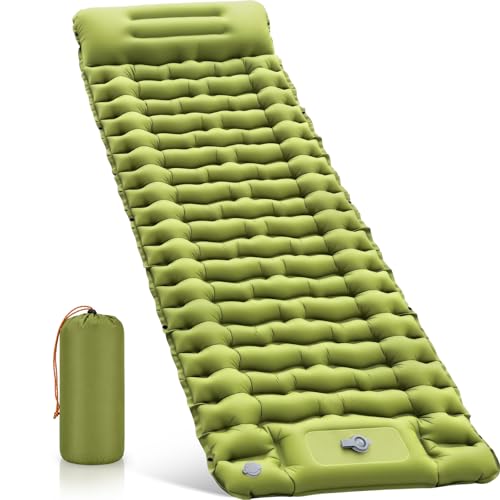
Since comfort matters most when sleeping on uneven ground, this ultralight inflatable sleeping pad with a built-in pillow stands out for backpackers and hikers who prioritize both support and packability. I find the wave-shaped air chamber adapts well to rugged terrain, offering balanced support while the built-in pillow reduces neck strain. It inflates in 50 seconds using the foot pump-no mouth inflation needed-and deflates instantly for quick packing. At just 1.5 lbs, it’s compact enough for tight spaces, and the 40D nylon with TPU coating resists punctures and moisture. I can also snap two together for a shared sleeping area, which works well for couples.
Best For: Backpackers, hikers, and outdoor enthusiasts who value comfort, lightweight gear, and quick setup in rugged terrain.
Pros:
- Wave-shaped air chamber and built-in pillow provide excellent support and neck comfort on uneven ground
- Rapid inflation and deflation via integrated foot pump eliminates need for mouth blowing or external pumps
- Ultralight at 1.5 lbs and pairs modularly with quick-snap connectors for shared sleeping setups
Cons:
- Higher price point compared to basic sleeping pads without built-in pillows
- Built-in pillow may not suit sleepers who prefer adjustable or firmer neck support
- TPU coating, while durable, may show wear over extended long-term use on abrasive surfaces
Factors to Consider When Choosing a Travel Mattress Topper
You’ll want to think about thickness for comfort, since even an inch can make a difference in how well you sleep on unfamiliar beds. Consider material quality, size, and how easily the topper packs down, because they all affect portability and long-term use. A stable, well-fitting topper that’s built to last can support better rest, especially if you’re sensitive to changes in sleep surfaces, so check warranties and try it out when possible.
Thickness For Comfort
A 2- to 3-inch travel mattress topper strikes a balance between portability and comfort, making it a practical choice for most sleepers, especially when used on cots or firm hotel beds. If you’re a side sleeper or rest on hard ground, consider a 3- to 5-inch option for better cushioning and pressure relief. For extended trips or uneven surfaces, ultra-thick toppers over 5 inches deliver mattress-level support. Keep in mind that thickness works best when paired with supportive materials-higher-density foams maintain shape and prevent sagging. Too much thickness without enough support, though, can misalign your spine and disrupt sleep quality. Always match the topper’s depth to your sleeping style and surface type. Test different levels if possible, especially if you have joint pain or prefer a plusher feel. Look for models with trial periods to guarantee the thickness suits your needs without compromising support.
Material Quality Matters
Durability starts with the materials. You’ll want high-density foam, like 30D to 50D, because it resists sagging and gives strong support over time. Memory foam layers help too, especially when paired with high-density polyurethane-they mold to your body and ease pressure points. Stretch knit or nylon with TPU coating stands up well to rough use, offering better tear resistance and water protection. If you’re using your topper indoors or out, OEKO-TEX certified fabrics add peace of mind by ensuring no harmful chemicals touch your skin. Look for reinforced parts, like dual-layer valves or rubberized bases, since they prevent leaks and slipping. These features together boost longevity and keep the topper working quietly beneath you. Choosing sturdy materials means fewer replacements and more consistent sleep, which matters if you travel often or need reliable comfort for health-related rest needs.
Size And Fit
Getting the right fit starts with accurate measurements-check your sleeping surface first, since travel mattress toppers range from 30 inches wide for compact cots to 38 inches for twin-size pads, and a mismatch can lead to overhang or instability. You’ll want to pick a topper that matches your pad or cot exactly, especially if space is tight. Look for stretchy or adjustable straps to keep the topper secure on elevated or thicker cots. Many models run 75 to 79 inches long, which works well for taller users or full-size mats. Check the thickness too-2 to 5 inches affects not just comfort but also whether it fits under tent ceilings or bunk frames. A non-slip bottom or anti-slip dots help prevent shifting on slick surfaces like RV bunks or hardwood. These features improve stability and support, helping you sleep better without constant readjusting.
Portability Considerations
Every ounce and inch counts when you’re on the move, so look for a travel mattress topper that weighs under 2 pounds and packs down to the size of a backpack-ideal for hikers and backpackers who need to conserve energy and space. Choose models with compact, foldable, or roll-up designs that include a carry bag; they store easily in your car, closet, or luggage. Self-inflating or foot-pump options save you time and effort, letting you set up quickly without tiring manual inflation. Many pack down to under 12 inches in diameter, fitting neatly in tight compartments. Lightweight 40D to 50D nylon or polyester fabrics keep the topper durable and easy to carry. These materials hold up well after repeated compressions, so your topper stays reliable trip after trip. Always check packed size and inflation method to match your travel style.
Durability And Stability
Long-term performance hinges on smart material and design choices, especially when you’re sleeping on uneven or rugged surfaces. You’ll want a topper made with 50D nylon or higher-density fabrics-they resist tears and handle repeated compression, even when packed and unpacked on tough terrain. Look for models tested to endure 10,000 compression cycles, so you know they’ll keep supporting you trip after trip. High-density memory foam, especially in 3-inch or thicker layers, distributes weight evenly and resists sagging over time. Stability matters, too: non-slip bottoms with rubberized dots or anti-slip coatings keep the topper from sliding on smooth surfaces. For inflatables, dual-layer valves lock in air, maintaining steady pressure even under heavy loads up to 800 lbs.
Ease Of Maintenance
A good night’s sleep on the road starts with a clean, well-maintained mattress topper, and your choice here affects both convenience and hygiene. Look for a model with a removable, machine-washable cover so you can freshen it easily after trips. Choose one safe for gentle machine washing up to 40°C (100°F) and tumble drying on low heat-this saves time and prevents damage. Avoid toppers that need dry cleaning, ironing, or bleach; those care steps add hassle and cost over time. Pick materials with moisture-proof or waterproof-coated layers that resist spills, dew, and damp surfaces, so deep cleaning stays rare. A breathable fabric keeps things fresh, while a non-slip or rubberized bottom reduces shifting, lowering wear and the need to adjust it nightly. These features combine to make upkeep simple, reliable, and gentle on your schedule.
Frequently Asked Questions
How Do I Clean a Travel Mattress Topper?
You spot-clean your travel mattress topper with mild soap and water, then let it air dry completely. Most aren’t machine-washable, so you avoid soaking them. You check the care label first-some have removable, washable covers. You never use harsh chemicals or bleach. For odor control, you sprinkle baking soda, wait, then vacuum. You store it rolled or flat, not compressed, to maintain support. You follow manufacturer guidelines to keep warranty coverage.
Can I Use a Topper on an Air Mattress?
Yes, you can use a topper on an air mattress, and it often improves comfort by adding cushioning and reducing pressure points. Most toppers fit securely, especially if they have elastic corners or straps. Memory foam ones add softness but may retain heat, while inflatable or lightweight models pack easier. Try one with a trial period so you can test it at home. Make sure the sizes match to avoid slipping or bunching during sleep.
Are Travel Toppers Suitable for Hot Climates?
Yes, you can use travel toppers in hot climates, especially if you pick ones with breathable materials like gel-infused memory foam or open-cell structures. You’ll stay cooler with lightweight, moisture-wicking covers that allow airflow. Some models include ventilation channels to reduce heat retention. Check if the manufacturer offers a trial period, so you can test comfort and temperature regulation. Always weigh heat dissipation against thickness and support when choosing.
Do Mattress Toppers Help With Back Pain?
Yes, mattress toppers can help with back pain by adding support and pressure relief. You’ll want one with medium-firm density and contouring memory foam or latex, which keep your spine aligned. Thicker toppers (2–3 inches) often work better for pain relief. Look for models with trial periods so you can test comfort. Always pair it with a supportive base-your combined setup must stabilize your back throughout the night.
Can I Pack a Foam Topper in Checked Luggage?
Yes, you can pack a foam topper in checked luggage, but it’s tight. Most standard foam toppers are too bulky and rigid to fit well in a suitcase. You’ll save space with a compressible memory foam or inflatable model. Roll or fold it tightly, then use compression bags. Keep in mind weight and airline size limits. Some brands offer travel-specific toppers with carry bags. Check warranty too-rips from forced packing may not be covered.