Best Mattresses for Degenerative Disc Disease Pain Relief
You need a mattress that supports spinal alignment and eases pressure on damaged discs. Models like the Drive Medical Gravity 7 or 15076 decompressing foam mattress offer zoned support and deep cushioning to reduce strain. Firm innerspring or high-density foam layers keep your spine neutral, while merino wool toppers add breathable comfort. Look for edge support, long warranties, and spot-cleanable covers. Each option balances support and softness, so testing within the trial period helps find your best fit. More details on how these features work together follow.
We are supported by our audience. When you purchase through links on our site, we may earn an affiliate commission, at no extra cost for you. Learn more. Last update on 20th July 2026 / Images from Amazon Product Advertising API.
Notable Insights
- Medium-firm mattresses with zoned support help maintain spinal alignment and reduce disc strain.
- High-density foam or innerspring cores provide stable support for even weight distribution.
- Pressure-relieving materials like memory foam or latex reduce stress on hips and shoulders.
- Breathable natural fabrics such as merino wool and organic cotton regulate temperature for comfortable sleep.
- Strong edge support and non-slip bases enhance stability and prevent spinal misalignment.
Wow Merino Wool Mattress Topper (King)
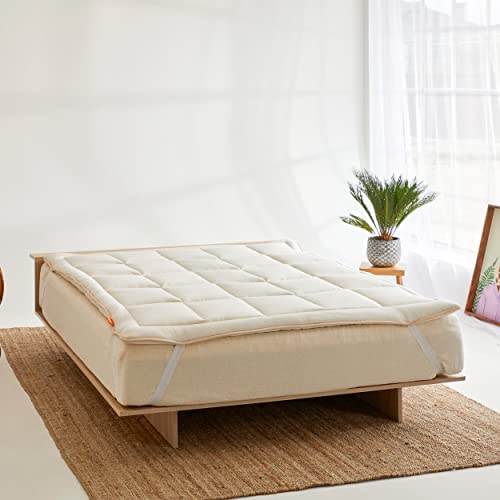
If you’re living with degenerative disc disease and need extra cushioning to ease pressure on your spine, the Wow Merino Wool Mattress Topper (King) might be one of the better choices for improving sleep comfort without replacing your entire mattress. I’ve found its 3-inch quilted pillow top adds a soft yet supportive layer that helps align my spine and reduce back pain. Made with merino wool, recycled down alternative, and a 400-thread-count organic cotton cover, it stays cool and breathable all night. It’s hypoallergenic, durable, and fits snugly under a fitted sheet. I spot clean it gently and air it out to keep it fresh. At 16 pounds, it’s heavy enough to stay put but easy to handle. With a 30-day return window and available warranty, trying it feels low-risk and practical.
Best For: Individuals with back pain or degenerative disc disease seeking a comfortable, cooling, and supportive mattress topper to enhance sleep quality without replacing their current mattress.
Pros:
- Provides targeted pressure relief and spinal alignment with its 3-inch quilted pillow top and medium plush firmness
- Made from natural, breathable materials like merino wool and organic cotton that regulate temperature and resist allergens
- Easy to maintain with spot cleaning and airing out, plus a 30-day return policy and warranty for risk-free trial
Cons:
- Not machine washable, requiring careful spot cleaning and air drying only
- Heavy at 16 pounds, which may make moving or adjusting it difficult for some users
- Not water resistant, so spills must be managed immediately to avoid damage
Wow Organic Merino Wool Mattress Topper
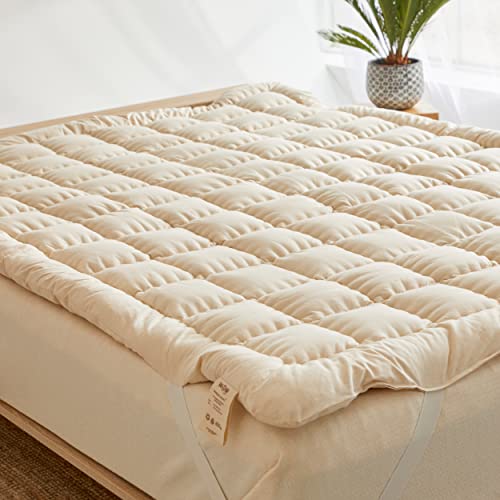
The Wow Organic Merino Wool Mattress Topper stands out for people with degenerative disc disease who need gentle support and natural materials to aid restful sleep. I find it helps relieve back pain by easing pressure points and supporting spinal alignment. Made with 13 pounds of organic merino wool and a 100% cotton cover, it wicks moisture and regulates temperature year-round. The quilted, handmade design offers medium firmness and may vary slightly in size. It’s not water resistant, so I spot clean it or dry clean only. After unboxing, I let it air for 72 hours-natural scent fades. It comes with a 30-day return policy, giving me peace of mind.
Best For: People with degenerative disc disease or back pain seeking a natural, temperature-regulating mattress topper made from organic, biodegradable materials.
Pros:
- Provides gentle support and pressure relief, improving spinal alignment for back pain sufferers
- Made with 100% organic merino wool and cotton for natural, hypoallergenic, and sustainable comfort
- Regulates body temperature and wicks moisture, offering year-round sleep comfort
Cons:
- Not water resistant and requires spot cleaning or dry cleaning only, limiting ease of maintenance
- Needs 72 hours to fully decompress after unboxing, delaying immediate use
- Natural wool scent may be strong at first, though it dissipates with airing
Drive Medical 15076 Decompressing Foam Mattress, Blue

Though I might not need intense spinal support, this mattress really helps if you’re dealing with degenerative disc disease and want targeted pressure relief. I like that it’s made by Drive Medical, a trusted name in medical care products, and it’s built with 8 inches of decompressing foam that eases pressure points. At 80 by 36 inches, it fits standard frames and holds up to 275 pounds. The removable, fluid-resistant nylon cover reduces friction and wicks moisture, which helps protect your skin. It comes with corner straps and a non-slip base to stay put. I recommend letting it expand 24–72 hours before use, and remember, it includes a one-year warranty.
Best For: Individuals with degenerative disc disease or those needing pressure-relieving support during bed rest who want a durable, low-maintenance foam mattress with skin-protective features.
Pros:
- Provides targeted pressure relief with 8 inches of decompressing foam, ideal for reducing discomfort from spinal or mobility issues
- Features a removable, fluid-resistant, low-shear nylon cover that helps manage moisture and protect sensitive skin
- Includes corner straps and a non-slip bottom to stay securely in place on standard hospital or home beds
Cons:
- Requires 24–72 hours to fully expand, which may delay immediate use after unboxing
- Weight capacity limited to 275 pounds, which may not suit all users
- Foam performance may vary in extremely cold environments due to extended expansion time
Drive Medical 15019 Therapeutic Foam Mattress, White

Looking for a mattress that supports your spine without adding stress to pressure points? I’ve found the Drive Medical 15019 Therapeutic Foam Mattress, White, helps by using horizontal cross-cut foam in five targeted zones to reduce pressure and friction. Its non-skid bottom keeps it stable, so it won’t shift during the night. I appreciate the removable nylon stretch cover-it resists fluids, allows vapor to escape, and reduces skin friction. Measuring 80” x 35” x 5.5”, it supports up to 350 pounds. The durable foam core is built for long-term use, especially in care settings, giving me confidence in its longevity and practical performance.
Best For: Individuals seeking a therapeutic mattress that provides pressure relief and stability, especially in home care or medical settings.
Pros:
- Utilizes horizontal cross-cut foam in 5 targeted zones to reduce pressure, shear, and friction
- Features a non-skid bottom and durable construction for stability and long-term use
- Includes a removable, fluid-resistant, vapor-permeable nylon cover for hygiene and skin protection
Cons:
- Limited weight capacity of 350 pounds may not suit all users
- 5.5-inch thickness may not provide enough cushioning for those needing deeper pressure relief
- Not compatible with adjustable bed frames due to its flat, therapeutic design
Drive Medical Gravity 7 Mattress (6.6′)

A solid choice for those managing degenerative disc disease, this mattress supports proper spinal alignment while relieving pressure on sensitive areas. I’ve found its three layers of latex-free, high-density therapeutic foam provide steady support, and the top layer’s die-cut design helps redistribute pressure evenly. The ultra-soft visco foam heel section reduces skin interface pressure, which matters if you’re sitting or lying for long stretches. Its fluid-proof, fire-retardant cover is easy to clean and offers good moisture control. Edge support is strong, making transfers safer, and with a 7-year foam warranty, it’s built for lasting use.
Best For: Individuals seeking a therapeutic, pressure-redistributing mattress ideal for long-term care or those managing conditions like degenerative disc disease.
Pros:
- Multi-layered high-density foam with die-cut design effectively redistributes pressure and supports spinal alignment
- Fluid-proof, fire-retardant, and easy-to-clean cover with low moisture transmission for superior hygiene and comfort
- Strong edge support and 7-year foam warranty enhance safety, durability, and long-term value
Cons:
- At 36 inches wide, it may feel narrow for larger adults or those preferring a wider sleeping surface
- 6-inch thickness may not provide sufficient cushioning for users needing deeper foam layers
- May require a compatible bed frame with raised rails for optimal patient safety and ease of use
Drive Medical Ortho-Coil Super-Firm Support Innerspring Mattress, 80″

If you need strong, reliable support for degenerative disc disease, the Drive Medical Ortho-Coil Super-Firm Support Innerspring Mattress, 80”, stands out as a solid choice, especially if you’re a heavier individual or need extra structural reinforcement. I’ve found its super-firm construction delivers consistent spinal alignment, which helps reduce pressure on your discs. Two polyester fiber pads sandwich the coils, adding slight cushioning while evenly distributing weight. The Mason Gard vinyl cover is waterproof, making cleanup easy and improving hygiene. It’s also fire-retardant, meeting strict CFR 16 Part 1633 standards. You get durability without sacrificing basic comfort, which matters when you need long-term support.
Best For: Individuals with degenerative disc disease or larger body types who need maximum support, durability, and a waterproof surface in a firm mattress.
Pros:
- Super-firm innerspring design promotes consistent spinal alignment and reduces pressure on discs
- Two polyester fiber pads enhance comfort and evenly distribute weight for improved support
- Mason Gard vinyl waterproof cover ensures easy cleaning and enhanced hygiene while meeting fire safety standards
Cons:
- Limited cushioning may feel too hard for those preferring a softer sleep surface
- Vinyl cover, while durable and waterproof, may trap heat and reduce breathability
- Heavy construction could make moving or rotating the mattress difficult without assistance
Factors to Consider When Choosing a Mattress for Degenerative Disc Disease
You’ll want to keep your spine properly aligned while easing pressure on sensitive areas, so look for a mattress that balances firm support with soft cushioning. Make sure the material allows heat to escape and holds up well at the edges, since both breathability and edge support affect how comfortable you’ll feel over time. A balanced firmness level and quality construction can make a real difference in how well you rest night after night.
Spinal Alignment Importance
Proper spinal alignment while you sleep plays a key role in managing degenerative disc disease. When your spine stays in a neutral position, the natural curve is preserved, reducing strain on discs and muscles. Your head, neck, and back should stay in a straight line so your body isn’t working to correct misalignment all night. A mattress that’s too soft lets you sink too deeply, throwing off your posture, while one that’s too firm may push against your spine’s natural shape. Medium-firm options often strike the right balance, offering enough give and support to keep everything aligned. Studies show this firmness level helps people with disc issues stay in better alignment. Over time, poor support can worsen pain and speed up disc wear. Choosing a mattress with consistent, even support helps you wake up with less stiffness and more comfort, letting your body heal while you rest.
Pressure Point Relief
Relief from persistent aches often begins with how well your mattress manages pressure points. You need a surface that redistributes weight evenly to reduce strain on degenerated discs and prevent added spinal stress. Materials like memory foam conform closely to your body, cushioning sensitive areas while supporting natural alignment. Look for viscoelastic layers that respond to your shape and temperature, offering targeted relief where you need it most. Zoned support-achieved through cross-cut or die-cut foam-adds extra give at the hips and shoulders, easing pressure without sacrificing stability. A fluid-resistant, low-shear cover helps minimize skin and tissue tension when you shift at night, especially if movement is limited. These features work together to deliver consistent comfort, reduce nighttime discomfort, and support restorative sleep-all critical for managing degenerative disc disease effectively.
Firmness Level Balance
While a mattress that’s too soft may sag and disrupt spinal alignment, one that’s overly firm can press into your hips and shoulders, increasing discomfort if you’re living with degenerative disc disease. You’ll likely find the best balance with a medium to medium-firm feel, offering both support and cushioning. Look for models with a 5.5- to 6-inch high-density base layer, which provides stable support to keep your spine properly aligned. Layers of memory foam, latex, or blended natural fibers conform to your body, reducing pressure on degenerated discs without sacrificing lumbar support. These materials adapt to your curves while maintaining structure. A well-designed mattress combines a supportive core with a softer comfort surface, so you get pressure relief and spinal stability. This balance helps minimize pain and improve sleep quality over time.
Material Breathability Factor
A supportive core and cushioned surface set the foundation for spinal alignment, but what you sleep on also affects how cool and comfortable you feel through the night. Choose materials like natural merino wool or organic cotton-they circulate air well and help regulate temperature. Wool wicks moisture away, absorbing up to 30% of its weight without feeling wet, so you stay dry. Organic cotton covers with a 400-thread count strike a balance, letting vapor escape while holding up over time. These natural fibers breathe far better than synthetic foams, which often trap heat and may worsen discomfort. Since overheating can interrupt sleep, especially for those with disc issues, breathable fabrics support uninterrupted rest. You’ll likely sleep deeper and wake less often. Look for mattresses that highlight natural, open-weave textiles in their design-they’re not just comfortable but built for steady airflow. This detail matters when every night counts.
Edge Support Strength
When you sit or lie near the edge of your mattress, strong edge support keeps the surface from dipping and maintains proper spinal alignment. You’ll benefit from models that use high-density foam or reinforced coils along the perimeter, as they hold their shape and offer stability. This design reduces roll-off risk and supports easier movement in and out of bed-especially helpful if stiffness or discomfort limits your mobility. Weak edges shrink the usable sleep area, which can increase lower back pressure and worsen degenerative disc disease pain. Mattresses with durable edge reinforcement tend to last longer and keep consistent support over time. Look for models that specifically highlight reinforced borders in their construction details. A solid edge helps you sleep comfortably, no matter where you lie, and supports long-term usability. Check warranty terms, since durable edges often reflect overall build quality.
Motion Transfer Reduction
If you’re sharing a bed, choosing a mattress that minimizes motion transfer can make a real difference in maintaining restful sleep, especially with degenerative disc disease. You’ll want to look for individually wrapped coils or high-density memory foam-foams at 4 pounds per cubic foot or more-since they isolate movement and keep disturbances from spreading. Latex foam mattresses also offer strong motion isolation thanks to their natural bounce and ability to absorb shifts without sinking. Hybrids with over 1,000 pocketed coils in a queen boost this effect when paired with thick comfort layers. These designs help you stay undisturbed by your partner’s movements, which matters because consistent, uninterrupted sleep supports spinal healing and reduces inflammation. Prioritizing motion isolation means you’re not just buying comfort-you’re investing in sleep quality that aligns with your recovery needs.
Temperature Regulation Capability
You’ve considered how motion isolation protects your sleep from disturbances, but staying cool throughout the night plays an equally important role in managing degenerative disc disease. Overheating can worsen inflammation and discomfort, so choosing a mattress with strong temperature regulation is key. Look for natural fibers like merino wool or organic cotton-they wick moisture and let air flow, helping keep your body at a stable, comfortable temperature. Materials such as open-cell foam or gel-infused layers also help by releasing heat instead of trapping it. Untreated wool and cotton offer passive cooling through moisture absorption and evaporation, while breathable construction prevents night-time overheating. These features work together to support restful sleep without hot spots or sweaty disruptions. A cooler sleep environment means less pain and better recovery, so prioritize breathability and natural, biodegradable materials when comparing options.
Frequently Asked Questions
How Long Does It Take to Adjust to a New Mattress?
You usually adjust to a new mattress in 30 to 60 days, though some feel different after just a few nights. Your body needs time to adapt to new support and pressure relief. It’s normal to notice minor discomfort early on as your spine aligns. Give it at least a month before judging comfort. Most brands offer sleep trials, so test it nightly. Check warranty terms-many require 30 days before processing returns.
Can a Mattress Topper Replace a New Mattress for Disc Pain?
You can try a mattress topper to ease disc pain, but it won’t replace a failing mattress. If your base is sagging or too firm, a topper only masks problems. High-density memory foam or latex toppers add cushioning and pressure relief, but only help on minimally worn surfaces. For lasting support, especially with spinal alignment, a new, properly constructed mattress with zoned support usually works better. Check trial periods and warranties either way.
Is Memory Foam Bad for Degenerative Disc Disease?
No, memory foam isn’t inherently bad for degenerative disc disease. You need medium-firm support to keep your spine aligned. High-density memory foam contours well without sinking too much, which helps reduce pressure on damaged discs. Softer foams might cradle too deeply, worsening pain. Look for zoned support and breathable materials. Always test with a sleep trial-most brands offer 100+ nights-so you can return it if it doesn’t ease your discomfort.
Do I Need a Doctor’s Recommendation for These Mattresses?
You don’t need a doctor’s prescription to buy a mattress for back support, but consulting one helps clarify your spinal needs. Many top models feature zoned foam or reinforced edges that cradle the spine, easing pressure. Most offer 100-night trials and 10-year warranties-test firmness and support over time. Look for hybrids or latex with responsive layers. They balance comfort and alignment, which matters more than medical approval. Check return policies before committing.
Are Firmer Mattresses Always Better for Spine Support?
No, firmer mattresses aren’t always better for spine support. You need balanced support that keeps your spine aligned, not just a hard surface. A mattress too firm may create pressure on hips and shoulders, while one too soft lets your spine sag. Memory foam or hybrid models with zoned support often adjust to your body. Look for medium-firm options, test with a sleep trial, and check warranty terms for long-term confidence.