Best Mattresses for Co-Sleeping With Comfort and Support
You’ll want a mattress with enough width-like a Full or Queen-to comfortably fit everyone, plus features that reduce motion transfer and overheating. Look for models with pocketed coils or memory foam, breathable organic covers, and edge support to maximize space. The Ethical Mattress Co Hybrid Queen and SoundAsleep Dream Series offer durable, non-toxic comfort with excellent isolation, while portable pads suit temporary setups. Certifications like Oeko-Tex and trial options help you choose confidently-key details await to simplify your decision.
We are supported by our audience. When you purchase through links on our site, we may earn an affiliate commission, at no extra cost for you. Learn more. Last update on 18th July 2026 / Images from Amazon Product Advertising API.
Notable Insights
- Choose a Full or larger mattress to ensure at least 24 inches of width per adult for comfortable co-sleeping.
- Opt for medium-firm mattresses (firmness 3–7) with 6–10 inches of thickness to balance support and comfort.
- Select models with individually pocketed coils or dense memory foam to minimize motion transfer.
- Prioritize edge support with reinforced borders to maximize usable sleep surface and prevent roll-off.
- Consider non-toxic, certified materials like organic cotton, latex, and wool for healthier co-sleeping environments.
Japanese Futon Floor Mattress (Twin)
If you value simplicity and need a low-profile sleep solution that’s easy to move and store, the Japanese Futon Floor Mattress (Twin) might be your best match-it’s especially well-suited for co-sleeping families who share a room with young children or prefer a minimalist sleeping setup. I’ve found its four-layer design-soft polyester cover, PP cotton padding, and high-density foam core-supports spinal alignment while staying breathable. It’s CertiPUR-US and Oeko-Tex certified, so I know it’s safe and eco-friendly. When I fold it up, it’s easy to store or take camping. After unboxing, I let it air out for 2–3 days to regain shape.
Best For: Individuals seeking a minimalist, portable, and eco-friendly floor mattress ideal for co-sleeping families, small spaces, or multi-use environments.
Pros:
- Features a four-layer design with breathable polyester, PP cotton, and high-density foam for optimal comfort, support, and spinal alignment
- Certified by CertiPUR-US and Oeko-Tex Standard 100, ensuring safety from harmful substances and environmentally responsible production
- Lightweight, foldable, and easy to store or transport-perfect for use as a futon, play mat, camping pad, or sofa bed
Cons:
- Requires 2–3 days of airing after unboxing to fully expand and regain firmness
- Floor sleeping may not suit those accustomed to traditional elevated beds or who prefer plush cushioning
- Twin size may be too narrow for adults or couples seeking more sleeping space
Tri-Fold Memory Foam Mattress for Travel & Camping
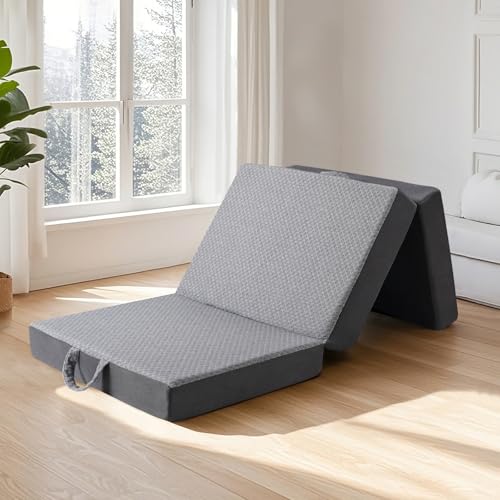
Who wouldn’t want a mattress that moves as easily as your plans change, especially when co-sleeping with a partner during travel or outdoor adventures? I rely on a tri-fold memory foam mattress that’s lightweight, portable, and folds compactly with built-in handles. High-density foam supports my body evenly, reducing pressure points and helping me sleep better. Its breathable, soft cover stays cool and removes easily for machine washing. I let it expand 5–7 days after unboxing and air it out first. It’s not perfect-space is limited for two-but it balances comfort, portability, and care in one practical design.
Best For: Travelers, campers, and couples seeking a portable, comfortable sleeping solution that balances support, ease of transport, and hassle-free maintenance.
Pros:
- Lightweight, tri-fold design with built-in handles for easy portability and compact storage
- High-density memory foam provides pressure-relieving support and conforms to the body for restorative sleep
- Removable, machine-washable cover and breathable surface enhance comfort and simplify cleaning
Cons:
- Limited sleeping space when shared by two adults, making co-sleeping less ideal
- Requires 5–7 days to fully expand after unboxing, delaying immediate use
- May have off-gassing odor, necessitating 24–48 hours of ventilation before first use
CYMULA 3″ Memory Foam Camping Mattress Pad

The CYMULA 3″ Memory Foam Camping Mattress Pad stands out for co-sleeping setups where space and surface versatility matter, especially when sharing sleep areas on floors, cots, or vehicle beds. I appreciate its carbon fiber memory foam and high-density sponge core-they offer support while reducing pressure points. The breathable, removable cover stays comfortable in different seasons and resists odors. I find the waterproof, non-slip bottom with rubber dots keeps it steady on smooth surfaces. At just over 20 inches when rolled, it’s easy to store or carry, and the straps help secure it in place. I’ve used it on cots and truck beds without shifting. The zippered cover is machine washable, which simplifies cleaning. With sizes from kids’ to Twin XL, it adapts well to shared or temporary sleeping spaces, making it a flexible, low-maintenance choice for restless sleepers or changing needs.
Best For: Restless sleepers and families needing a versatile, durable sleeping solution for co-sleeping, camping, or temporary setups on floors, cots, and vehicle beds.
Pros:
- Offers excellent pressure relief and full-body support with 3-inch carbon fiber memory foam and high-density sponge core
- Breathable, removable, and machine-washable cover simplifies cleaning and maintains hygiene
- Waterproof, non-slip bottom with rubber dots ensures stability on multiple surfaces, while roll-up design with straps enhances portability
Cons:
- Heavier than inflatable pads, which may reduce convenience for backpacking
- 3-inch thickness, while comfortable, may not fit perfectly with all standard bedding or mattress enclosures
- Memory foam may retain heat slightly in warm environments despite breathable cover
Memory Foam Camping Mattress Pad 3 Inch

Though I might prioritize comfort and stability when sharing sleep space outdoors, the 3-inch Memory Foam Camping Mattress Pad stands out for couples or parents co-sleeping with children on camping trips, thanks to its supportive yet adaptive foam layer. I appreciate how the 79 x 38-inch Twin XL size fits most tents while giving us room to stretch. The memory foam molds to our bodies, reducing pressure points, and the waterproof bottom keeps moisture out on damp ground. I can roll it up quickly with the buckle and stash it in the included bag-lightweight at just over five pounds. The removable, washable cover helps maintain hygiene after trips. It needs 24–48 hours to fully expand after unpacking, but I’ve found it worth the wait. PANDOROOM offers customer support if anything falls short.
Best For: Couples and parents camping with children who need a comfortable, stable, and spacious sleep solution outdoors.
Pros:
- 3-inch memory foam provides excellent support and pressure relief while adapting to body shape
- Waterproof, removable, and machine-washable cover ensures hygiene and protection against moisture
- Compact, lightweight design with roll-up buckle and travel bag enhances portability
Cons:
- Requires 24–48 hours to fully expand after unpacking, delaying immediate use
- Twin XL size may not fit in smaller tents despite being designed for most camping setups
- At 5.22 pounds, it may be slightly heavy for ultralight backpackers
MEI&CO Ultra-Light Inflatable Sleeping Pad

If you’re sharing sleep space during outdoor adventures, the MEI&CO Ultra-Light Inflatable Sleeping Pad stands out for couples who prioritize portability without sacrificing comfort. I’ve used it on backpacking trips, and its 6cm thickness cushions well, supporting up to 660lb. The diamond-pattern chambers distribute weight evenly, reducing pressure points. Its built-in foot pump inflates it fast-no mouth effort needed-and the integrated pillow adds comfort. Made from puncture-resistant, waterproof fabric, it holds up on rough terrain. I appreciate the included repair kit, which lets me fix leaks quickly. It packs small, making it a reliable, long-lasting choice for frequent campers who value efficiency and durability.
Best For: Couples and solo backpackers who need a lightweight, durable, and comfortable sleeping pad that packs small and inflates quickly for backcountry adventures.
Pros:
- Ultra-light and compact design makes it easy to carry on long hikes
- Built-in foot pump allows for fast, effortless inflation without mouth or tools
- Durable, waterproof, and puncture-resistant fabric with included repair kit ensures long-term reliability
Cons:
- At 6cm thickness, may not provide enough cushioning for side sleepers on very rocky terrain
- Integrated pillow is modest and may not suit those needing extra neck support
- Higher price point compared to basic sleeping pads, potentially deterring casual campers
Non-Inflatable Foldable Car Mattress for Camping
Need a sleeping solution that fits snugly in your vehicle without the hassle of pumping air? I’ve used the Non-Inflatable Foldable Car Mattress, and it’s a reliable pick for camping or co-sleeping on the go. Made with breathable linen fabric and a high-density foam core, it resists wear while offering steady support. At 70.9 x 23.6 inches when unfolded, it fits Minivans, SUVs, Tesla Model Y, RAV4, CR-V, X-Trail, and truck back seats. Folded, it’s compact-just 23.6 x 23.6 x 5.9 inches-so it’s easy to store. It works well as a sleeping pad, yoga mat, or portable mattress, giving you flexibility without inflation time.
Best For: Travelers and campers seeking a hassle-free, durable, and space-saving sleeping solution that fits in their car without needing inflation.
Pros:
- Made with breathable linen fabric and a high-density foam core for comfort and durability
- Folds into a compact size (23.6 x 23.6 x 5.9 inches) for easy storage and transport
- Versatile use as a car mattress, camping pad, yoga mat, or portable sleeping surface
Cons:
- Limited thickness (1.97 inches) may not provide sufficient cushioning for all sleepers
- Fixed dimensions may not fit all car models perfectly despite broad compatibility
- Foam core, while supportive, may retain heat in warmer conditions due to limited airflow
Ethical Mattress CO Hybrid (Twin, No Fiberglass)

The Ethical Mattress Co Hybrid (Twin, No Fiberglass) stands out as a strong choice for parents seeking a truly non-toxic sleep surface for co-sleeping with young children. I trust its organic cotton, wool, and natural latex layers because they’re free from fiberglass, polyfoams, and chemical flame retardants. The pocketed coil base offers firm, responsive support while reducing motion transfer-ideal for shared sleep. Since it meets flammability standards without toxins, I feel safe using it long-term. Its 10-inch profile and 55-pound weight suggest durability, though it’s heavier than average. Made in New Jersey, it ships compressed with no off-gassing. I appreciate the company’s transparency and direct support.
Best For: Parents seeking a non-toxic, durable, and safe mattress for co-sleeping with young children.
Pros:
- Made with certified organic cotton, wool, and natural latex-free from fiberglass, polyfoams, and chemical flame retardants
- Pocketed coil support system provides excellent motion isolation and firm, adaptive support for all sleep positions
- Meets flammability standards without toxic treatments and is proudly made in the USA with transparent sourcing
Cons:
- Weighs 55 lbs-20% heavier than average-making it difficult to move or rotate
- No foam encasement may reduce edge support compared to traditional hybrids
- Premium materials and craftsmanship come at a higher price point than conventional twin mattresses
Ethical Mattress CO Hybrid Queen (No Fiberglass)
When choosing a mattress for co-sleeping, I prioritize materials that are both safe and sustainable, which is why the Ethical Mattress CO Hybrid Queen stands out for those who want a clean, non-toxic sleep environment. I appreciate that it’s made with organic cotton, wool, natural latex, and pocketed coils-no fiberglass, polyfoams, or chemical flame retardants. The breathable latex top layer relieves pressure and stays cool, while the steel coils offer sturdy support and reduce motion transfer. Since it’s handmade in New Jersey, I know it’s built to last, even if it’s heavier than most. I find its balance of comfort, safety, and durability makes co-sleeping easier and healthier for everyone.
Best For: Eco-conscious families seeking a non-toxic, durable mattress ideal for co-sleeping and made from natural, sustainable materials.
Pros:
- Made with organic cotton, wool, natural latex, and pocketed coils-free from fiberglass, polyfoams, and toxic flame retardants
- Excellent breathability and pressure relief thanks to latex top layer and stretch knit organic cotton cover
- Reduced motion transfer and strong support from pocketed coil base, ideal for shared or co-sleeping setups
Cons:
- Weighs 88 lbs, making it significantly heavier and harder to move or rotate than average hybrid mattresses
- Higher material density and quality come at a premium price point not disclosed in the text
- Limited availability due to being handmade in a single U.S. location, potentially leading to longer shipping times
JOYMOR 3-in-1 Baby Bassinet with Wheels

Looking for a safe, adaptable sleep solution that grows with your child? I’ve found the JOYMOR 3-in-1 Baby Bassinet with Wheels does just that. It starts as a newborn bassinet, converts to a bedside sleeper, and later becomes a toddler playpen, supporting kids up to 33 lbs. The push-button setup and foldable frame make moving easy, while two locking wheels keep it steady. A removable bassinet and zippered mesh walls offer airflow and visibility, and I can attach it securely to my bed for safer co-sleeping. It includes a mattress, sheet, and a music box with lullabies. The carry bag adds portability for travel or room changes, making nighttime simpler.
Best For: Parents seeking a versatile, portable sleep and play solution that adapts from newborn to toddler stages with safety and convenience.
Pros:
- Converts from bassinet to bedside sleeper to playpen, accommodating growth up to 33 lbs
- Features push-button assembly, locking wheels, and a carry bag for easy mobility and storage
- Includes breathable mesh walls, detachable side for bed attachment, and built-in music box for comfort and safety
Cons:
- Weight limit of 33 lbs may restrict use for larger toddlers
- Assembly, while simple, may require initial effort and reading instructions
- Music box may have limited melody options or require battery replacements
SoundAsleep Dream Series Air Mattress Queen
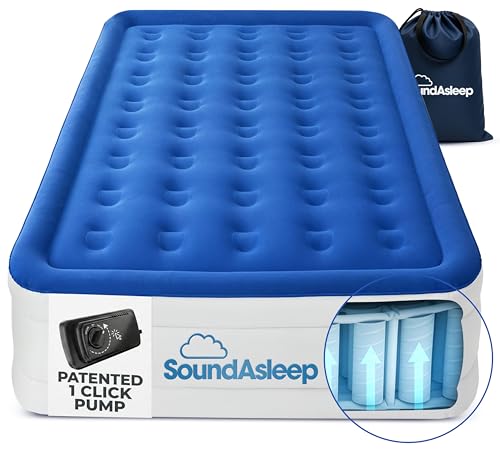
Need a reliable air mattress that holds up for two without sacrificing comfort or stability? I’ve found the SoundAsleep Dream Series Queen delivers. It uses 40 internal air coils for firm support, and its dual chambers keep it steady all night. The SureGrip bottom stays put on floors, while the flocked, waterproof top feels soft under sheets. Inflating takes under four minutes with the built-in 1-Click pump, and deflation is quick for storage. Made from durable, eco-friendly PVC, it resists punctures and stands 19 inches tall-easy to get on and off. It’s backed by a 1-year warranty and U.S. customer support.
Best For: Couples or guests seeking a durable, comfortable air mattress with excellent stability and quick setup for both home and camping use.
Pros:
- Features 40 internal air coils and dual chamber construction for superior support and motion isolation
- Patented 1-Click pump inflates the mattress in under 4 minutes with easy deflation for portability
- Made with puncture-resistant, eco-friendly PVC and a soft, waterproof flocked top for lasting comfort
Cons:
- Heavier than standard air mattresses due to double-height design, making transport slightly less convenient
- Internal pump requires power outlet, limiting use in remote outdoor settings
- Some users may find the 19-inch height challenging for entry and exit, especially for children or elderly users
Factors to Consider When Choosing a Mattress for Co Sleeping
You’ll want to pick a mattress that gives both of you enough space, so think about a size that fits your room and sleep habits. Look for one with good motion isolation and edge support, especially if one of you moves around at night or sleeps near the edge. Features like firmness options and cooling materials can help keep both sleepers comfortable, and checking the trial period or warranty adds peace of mind.
Size And Space Requirements
While sharing a bed can strengthen bonds and simplify routines, getting the size right guarantees everyone sleeps comfortably without constant disruption. You’ll want at least 24 inches of width per adult-so a Full (54 inches wide) is the minimum for two. If you’re co-sleeping with a child, add 20 inches per toddler or infant to secure safe, restful space. Length matters too: the mattress should extend 6 inches beyond the tallest person’s height to prevent uncomfortable overhang. For smaller rooms, consider a foldable or rollable mattress that expands to full size at night but stores compactly. These models offer versatility without sacrificing sleeping area. Prioritize dimensions that support unbroken rest, especially if sharing with kids or partners with different sleep habits. Proper width and length reduce pressure points and movement transfer, helping everyone stay aligned and settled through the night.
Firmness Level Compatibility
If you share your bed with a partner or child, choosing a mattress with balanced firmness helps both of you stay aligned and undisturbed through the night. Look for a medium-firm feel, ideally between 3 and 7 on a 10-point scale, depending on your sleeping positions-side sleepers often prefer softer support around 3–5, while back and stomach sleepers need firmer ratings like 6–7. A mattress 6 to 10 inches thick with at least 3 inches of supportive foam or coils guarantees proper spinal alignment. Foam layers with densities above 1.5 pounds per cubic foot last longer and handle weight differences better. Dual-layer designs with responsive foam or wrapped coils adapt to each sleeper’s body, maintaining support without sinking too much. This balance keeps both of you comfortable and properly supported.
Motion Transfer Reduction
Because restful co-sleeping depends on minimizing disruptions, focus on how well a mattress isolates motion. If you or your partner toss and turn, choose models with individually pocketed coils-they contain movement to one area, so you’re less likely to feel it. High-density memory foam also absorbs motion and reduces bounce, making it a solid pick for undisturbed sleep. Dual-chamber air mattresses let each side compress independently, limiting what your partner feels. Look for layered designs with damping materials like latex or thick foam comfort layers; they help disperse energy from movement. Independent suspension systems, such as zoned coils or segmented foam, are built to reduce motion spread across the bed. These features improve sleep continuity without overpromising. Check trial periods and warranties to test performance risk-free.
Edge Support Strength
When sharing a bed, a mattress with strong edge support keeps the perimeter firm and stable, so you or your partner don’t feel like you’re sliding off when sleeping near the edge. You’ll get up to 30% more usable sleep space with reinforced edges or high-density foam borders, which help prevent sagging and maintain support where it’s needed most. Strong edges also reduce motion transfer caused by movement along the sides, so you’re less likely to be disturbed. Without solid edge support, the effective sleep width shrinks by 15–20%, making the bed feel cramped and increasing fall risk, especially with a child or restless partner. Look for models that highlight durable edge construction, as they hold up better over time and support weight evenly. A sturdy perimeter means you can sleep or sit near the edge without sinking, adding comfort and safety for co-sleeping.
Temperature Regulation Features
While sharing a bed, staying cool matters more-your body heat combines with your partner’s, raising the risk of overheating through the night. Choose a mattress with a breathable cover made of organic cotton or mesh to let air flow and reduce trapped heat. Models with natural latex or open-cell memory foam sleep cooler than those with dense polyfoam by allowing better airflow. Look for hyperventilated foam cores or coil layers that let heat escape through internal channels. Avoid waterproof barriers made of plastic, which trap warmth; instead, pick moisture-resistant, breathable fabrics. Some mattresses include phase change materials (PCMs) in the cover to absorb extra heat and stabilize temperature. These features help keep both of you comfortable, especially if one of you runs hotter. Cooling performance can improve sleep quality over time. Check trial periods to test how well the mattress regulates temperature in your bedroom.
Ease Of Movement Sharing
Staying cool at night sets the stage for better movement and comfort when sharing a bed. You’ll want a mattress with low motion transfer-individually pocketed coils or dense foam layers help keep your partner’s flips and turns from jostling you awake. A medium-firm feel, around 5 to 7 on the firmness scale, supports easy movement without trapping you or causing you to roll toward each other. Wider sizes like queen or king give you about 30 inches of personal space, reducing contact during shifts. Mattresses with dual-layer or zoned support adjust to different weights and motion patterns, so one person’s roll doesn’t disrupt the other. A non-slip base keeps the mattress steady when either of you moves, adding stability without stiffness. These features work together to make changing positions smoother and less disruptive for both sleepers.
Durability For Frequent Use
You’ll want a mattress that holds up to nightly use when sharing a bed, and durability starts with what’s inside. High-density foam or layered support systems withstand constant use, resisting sagging and body impressions over time. Pocketed coils add resilience, especially under dual weight, while reinforced edges prevent compression where you sit or lie near the sides. Look for models 20% heavier than average-this often means denser, longer-lasting materials. A breathable, stretch-knit cover made from natural fibers like organic wool or latex handles repeated cleaning and friction without wearing thin. These materials also resist moisture and allergens, supporting healthier sleep. Check warranty terms: at least 10 years with clear policies on sag depth (usually 1.5 inches) shows the brand stands behind long-term performance. A durable build means fewer disruptions from shifting support, helping both of you sleep better, night after night.
Frequently Asked Questions
How Do I Clean a Co-Sleeping Mattress Naturally?
You clean your co-sleeping mattress naturally by mixing mild dish soap with warm water and blotting stains gently using a clean cloth. You let it air dry fully to prevent mold. You sprinkle baking soda across the surface, wait an hour, then vacuum it up to remove odors. You avoid harsh chemicals, as they can break down foam or fabrics over time. You repeat monthly to keep it fresh and safe.
Are Co-Sleeping Mattresses Safe for Newborns?
Yes, co-sleeping mattresses can be safe for newborns if they’re firm, fit snugly against the bed, and have breathable materials. You avoid soft, plush surfaces that could trap heat or limit airflow. Look for models with removable, washable covers you can clean naturally. Check that edges are reinforced so there’s no gap. Always followAAP guidelines-no pillows or loose bedding. Choose ones with trial periods so you can test firmness and safety.
Can I Use a Mattress Protector on a Foldable Mattress?
Yes, you can use a mattress protector on a foldable mattress, and you should-you’ll keep it clean and extend its life. Just pick a protector that’s stretchy and thin so it doesn’t interfere with folding. Look for waterproof, breathable models made from soft TPU or polyurethane. They’re easy to wipe down and won’t trap heat. Make sure it fits snugly and doesn’t bunch when folded. Most quality protectors are machine washable, too, so care stays simple.
Do Co-Sleeping Mattresses Emit Off-Gassing Smells?
Yes, some co-sleeping mattresses do emit off-gassing smells, especially those made with polyfoam or memory foam. You’ll notice a chemical odor when you first unbox them, but it usually fades within a few days. Ventilating the room helps speed things up. If you’re sensitive to smells, look for models with CertiPUR-US® certified foams-they emit fewer volatile compounds. Air out the mattress before use, and consider a breathable protector to minimize irritation without trapping odors.
Is It Safe to Place a Mattress on a Sofa?
No, you shouldn’t place a mattress on a sofa-it’s not safe or built for that. Sofas lack proper support, which can warp the mattress and create sagging. Poor airflow underneath might also lead to moisture buildup or mold. For safety and durability, always use a mattress on a solid, manufacturer-approved base. If you need a sofa bed, choose one with a built-in folding frame designed for mattress use.