Best Beds for Paraplegic Comfort and Support (Recommended by Experts)
You’ll want an electric hospital bed with five functions, including Trendelenburg positioning and height adjustment up to 30”, for ease of movement and circulation support. Pair it with a low air loss mattress that has a 24-hour battery backup and CPR function for safety and pressure relief. Use a positioning pad with handles and a turning pillow to reduce friction and assist with repositioning. Look for durable, washable materials and a 600-lb weight capacity. You’ll also find smart features like silent motors and tool-less assembly help over time.
We are supported by our audience. When you purchase through links on our site, we may earn an affiliate commission, at no extra cost for you. Learn more. Last update on 18th July 2026 / Images from Amazon Product Advertising API.
Notable Insights
- Electric hospital beds with 5-function adjustability provide optimal positioning for comfort and pressure relief in paraplegic users.
- Low air loss mattresses with alternating pressure therapy help prevent bedsores and manage moisture effectively.
- Adjustable height and Trendelenburg features support safe transfers and improve circulation for non-ambulatory individuals.
- Reinforced bariatric beds with weight capacities up to 600 lbs ensure durability and stability for long-term use.
- Repositioning aids like turning pillows and padded transfer sheets reduce friction and assist caregivers during movement.
Hospital Bed with 5 Electric Functions

If you need precise positioning for comfort or medical reasons, this hospital bed with 5 electric functions is a strong choice, especially if you’re managing paraplegia and want independence in adjusting your posture. I can raise the head up to 70°, lift the footrest 30°, adjust height from 8.5” to 25”, and shift into chair or Trendelenburg positions smoothly using the quiet German LIMOSS motor. The sturdy wood-and-steel frame supports up to 485 lbs, and the low height helps prevent injury if I transfer frequently. I appreciate the foldable rails, included table, and easy assembly. It fits standard mattresses, works well with a medical-grade foam model, and comes with a full bed warranty-giving me confidence in its long-term use.
Best For: Individuals seeking a highly adjustable, durable hospital bed with advanced positioning features for medical needs, bariatric support, or independent use, especially those managing conditions like paraplegia.
Pros:
- Full electric functionality with 5 functions including Trendelenburg, reverse Trendelenburg, and chair position for superior therapeutic and comfort options
- Sturdy construction with double wood paneling, reinforced steel, and a 485 lb capacity ensures long-term durability and safety
- Customizable aesthetics, tool-less assembly, foldable design, and included accessories enhance convenience and integration into home environments
Cons:
- Premium features and materials may come at a higher price point compared to basic hospital beds
- Spacious dimensions may not fit well in smaller rooms or tight spaces
- Wooden components, while attractive, may require more careful maintenance to avoid damage over time
Positioning Bed Pad with Handles (34″ × 52″)

This positioning bed pad with handles (34″ × 52″) works best for paraplegic individuals who need reliable support during transfers and repositioning, especially when mobility is limited. I use it daily to reduce strain when shifting in bed or moving to a wheelchair. With eight reinforced handles and a non-slip surface, it holds up to 400 lbs. The soft, wicking fabric stays dry in 10 minutes and absorbs up to 12 ounces. A waterproof barrier protects my mattress, and the pad itself is machine-washable and reusable. It’s comfortable against my skin and helps prevent irritation, making long-term use practical and eco-friendly.
Best For: Mobility-impaired individuals, including the elderly, bedridden, disabled, and incontinent users who require safe and comfortable repositioning and transfers.
Pros:
- Supports up to 400 lbs with 8 reinforced handles and a non-slip surface for secure, low-strain movement
- Features moisture-wicking fabric that absorbs up to 12 ounces and dries in 10 minutes, with a waterproof barrier to protect bedding
- Soft, skin-friendly material is machine-washable, reusable, and designed for long-term, eco-conscious use
Cons:
- Limited liquid capacity (12 ounces) may require frequent changes for heavy incontinence
- May shift slightly during vigorous repositioning despite non-slip surface
- Size (34″ × 52″) may not fit or fully protect larger mattresses
YZRYXHWL Bedridden Patient Turning Pillow
You’ll find the YZRYXHWL Bedridden Patient Turning Pillow especially helpful if you’re caring for someone with limited mobility, since it’s built to make repositioning easier and safer. I’ve used it to support turning with one hand, thanks to the convenient handle and contoured shape that supports the waist and back. It straps securely to bed rails, staying stable during side-lying care like massages or hygiene routines. The high-density sponge holds its shape, while the waterproof, soft PU leather is gentle on skin and simple to clean. By keeping legs separated, it boosts circulation and reduces pressure sore risks. Lightweight and easy to place under the knee, it’s practical for daily use without bulk. I’ve noticed less strain during transfers, and it holds up well after repeated use.
Best For: Caregivers looking for an effective, lightweight solution to safely reposition bedridden or elderly patients with reduced physical strain.
Pros:
- Simplifies patient turning with one-hand handle and provides waist/back support for safer repositioning
- Securely attaches to bed rails with a fixed strap, ensuring stability during side-lying care and hygiene routines
- High-density sponge and waterproof, anti-allergic PU leather offer durability, comfort, and easy cleaning
Cons:
- May not fit all bed rail types due to strap design limitations
- Limited adjustability for varying patient sizes or positioning needs
- Primarily designed for knee support during turning, not full-body alignment support
IMPROVIA Washable Underpads 18×24 (Pack of 4)

I rely on dependable protection that keeps me comfortable through the night, and the IMPROVIA Washable Underpads 18×24 (Pack of 4) deliver consistent performance for people with limited mobility, especially those managing incontinence due to paralysis. They offer heavy absorbency with quick wicking and stay 100% leakproof. Made with a soft 100% polyester top and a blended soaker layer, they’re durable and gentle on skin. I appreciate that they dry fast-within about 10 minutes-and survive up to 500 washes, replacing hundreds of disposables. They work not just in bed, but also on couches or floors, protecting surfaces and lasting longer than single-use options.
Best For: Individuals with limited mobility, especially those managing incontinence due to paralysis, who need reliable, reusable, and comfortable overnight protection.
Pros:
- Offers heavy absorbency with rapid wicking and 100% leakproof protection for maximum confidence
- Durable construction with a soft, skin-safe top layer and a high-performance soaker that withstands up to 500 washes
- Quick-drying design and versatile use across beds, couches, floors, or for pets, reducing waste and long-term costs
Cons:
- Smaller 18×24 size may not provide full coverage for larger body types or wider surfaces
- Polyester and rayon blend may retain odors over time without proper washing
- Initial cost may be higher than disposable pads, though savings accrue over time
MedVance Low Air Loss Mattress with Alarm

Who wouldn’t want a mattress that keeps up with demanding medical needs while offering real comfort? I’ve tried the MedVance Low Air Loss Mattress with Alarm, and it delivers solid, reliable support. Its ultra-quiet pump runs below 20 dB, so I sleep without noise, and the digital screen lets me adjust pressure based on my weight. The 8-inch air cells prevent bottoming out, and the low air loss design helps manage moisture. During a recent power outage, it kept me supported for over 24 hours. The CPR function deflates it in one second-critical in emergencies. It’s compatible with most hospital beds and holds up to 450 pounds.
Best For: Patients requiring advanced pressure relief, moisture management, and emergency responsiveness in a hospital or home care setting.
Pros:
- Ultra-quiet operation below 20 dB ensures a peaceful, restful environment
- Low air loss design with 8-inch deep air cells prevents bottoming out and manages moisture effectively
- Integrated CPR function deflates the mattress in one second for rapid emergency access
Cons:
- May require additional calibration for optimal performance on non-standard bed frames
- Digital controls could be complex for users unfamiliar with technology
- Replacement parts or cover cleaning may require specific procedures limiting convenience
Careboda 5-Function Electric Hospital Bed

The Careboda 5-Function Electric Hospital Bed stands out as a strong choice for individuals with paraplegia who need reliable support, ease of movement, and pressure relief in a home or medical setting. I can adjust the back, legs, or both together, plus switch between Trendelenburg positions with a handheld remote. The bed’s height adjusts from 17 to 30 inches, and its 530-lb capacity guarantees stability. I appreciate the collapsible rails, silent casters, and German-made motors that allow quiet repositioning. It includes a waterproof PU mattress for comfort and hygiene, and the IV pole and case slot add practicality. Overall, it balances functionality, safety, and ease of use.
Best For: Individuals with paraplegia or mobility challenges who require a durable, adjustable, and safe electric hospital bed for home or medical use.
Pros:
- Offers five electric functions including Trendelenburg positioning and independent back and leg adjustments for personalized comfort and care
- Features a 530-lb weight capacity, collapsible guardrails, and silent casters for safety, stability, and easy mobility
- Includes a waterproof PU mattress and practical accessories like an IV pole and case slot for enhanced comfort and usability
Cons:
- Mattress thickness at 4 inches may be insufficient for some users requiring higher pressure relief without an overlay
- Remote-dependent operation could pose challenges during power outages or technical malfunctions
- Bed width of 41 inches may feel restrictive for larger individuals despite high weight capacity
Electric Bed Lifting Assistant with Guardrails

Serving as a reliable support system for individuals with limited mobility, the Electric Bed Lifting Assistant with Guardrails stands out for paraplegic users who need help moving from lying to sitting upright. I find it especially useful because its electric motor smoothly adjusts the backrest from 2° to 80° with just a button press, offering solid support for reading or daily comfort. Built with a strong carbon steel frame and high-density foam, it holds up to 330 lbs while remaining durable and stable. The guardrails add safety, and the breathable, washable cover makes upkeep simple. I appreciate that it’s ready to use right away-no assembly required.
Best For: Individuals with limited mobility, including paraplegic users, seniors, and those recovering from surgery or pregnancy, who need assistance transitioning from lying to sitting upright.
Pros:
- Electric motor enables smooth, silent adjustment from 2° to 80° with easy remote-controlled operation
- Equipped with secure guardrails and a durable carbon steel frame supporting up to 330 lbs for enhanced safety and stability
- Features a breathable, removable, and machine-washable cover with high-density foam padding for comfort and easy maintenance
Cons:
- No installation required, which may limit customization or integration with existing bed frames
- Only one-piece design, offering no modular or split-motion functionality for independent upper and lower back adjustment
- High weight capacity but relatively heavy at 25.6 pounds, which may make repositioning or transport difficult for some users
Drive Medical Low Air Loss Mattress

If you’re managing paraplegia and need reliable pressure relief at home or in care settings, the Drive Medical Low Air Loss Mattress stands out for its combination of alternating pressure therapy and continuous air flow. I’ve found its 20 replaceable 8-inch air cells effectively redistribute weight and minimize pressure points. The built-in pillow supports proper head alignment, while the stretchable, fluid-resistant cover wicks moisture and reduces skin friction. It cycles 8 liters of air per minute, with an alert system that warns of pressure drops. I can confirm it fits standard beds and holds up to 350 pounds, making it practical for long-term therapeutic use.
Best For: Individuals with paraplegia or limited mobility seeking reliable pressure relief and skin protection in home or long-term care settings.
Pros:
- Combines alternating pressure therapy and low air loss technology to effectively reduce pressure ulcers
- Features a removable, fluid-resistant, and moisture-wicking cover that minimizes skin friction and heat buildup
- Equipped with an alert system and automatic pressure monitoring for safe, consistent performance
Cons:
- May require a learning curve to set up and adjust the pump settings correctly
- Air cells are replaceable but not user-replaceable without tools or technical assistance
- At 350 lb capacity, it may not support higher-weight individuals requiring bariatric care
3 Function Electric Hospital Bed (600LBS)

When you need reliable support for long-term care or recovery, this 3-function electric hospital bed handles up to 600 pounds, making it a strong choice for heavier users who still want smooth, independent control over positioning. I rely on its dual-movement system to adjust my backrest and legrest at the same time, easing pressure without sudden shifts. The sturdy steel frame stays steady, while quiet motors let me reposition without disturbing others. At home or in care facilities, it’s designed for daily use, with a breathable mattress and handy attachments like an IV pole and dining table. It arrives nearly preassembled, and with a 3-year motor warranty, help is available if something goes wrong.
Best For: Individuals needing a reliable, heavy-duty electric hospital bed for home or clinical use, especially those requiring adjustable comfort and support during recovery or long-term care.
Pros:
- Supports up to 600 lbs with a durable steel frame, ideal for heavier users
- Three independent motors and dual-movement system allow smooth, synchronized positioning of backrest and legrest
- Comes 95% preassembled with useful accessories including an IV pole, dining table, and breathable mattress
Cons:
- Limited warranty coverage for non-motor components (only 1 year)
- May be too large for small rooms due to its 83.8-inch length
- No mention of battery backup in case of power outage
Reusable Positioning Bed Pad for Elderly
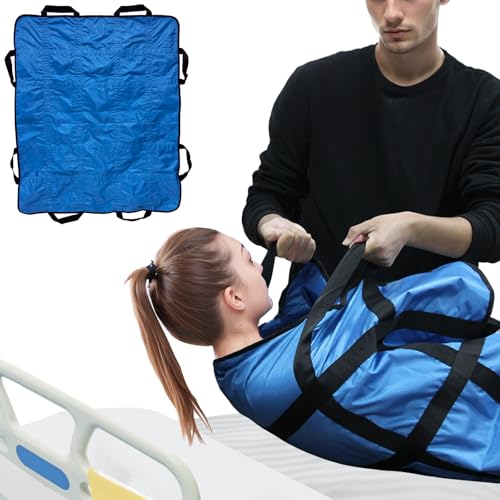
I rely on a durable, washable solution like the Reusable Positioning Bed Pad for Elderly because it supports both my comfort and my caregiver’s effort during transfers and repositioning. Measuring 48″ x 40″, it helps with turning, lifting, and mobility at home or in clinics. The double-sided Oxford fabric reduces friction, making slides smoother, while eight reinforced handles give my caregivers secure grip and control. It’s gentle on my skin and minimizes discomfort during routine care. Washable and reusable, it’s economical and reliable over time-just machine wash and air dry to maintain it without damaging bedding.
Best For: Elderly individuals and caregivers needing a reliable, reusable solution for safe and comfortable patient transfers and repositioning at home or in medical settings.
Pros:
- Durable double-sided Oxford fabric reduces friction and withstands repeated use
- Eight heavy-duty handles provide caregivers with secure grip and improved control
- Washable and reusable design promotes hygiene and long-term cost savings
Cons:
- Must be air-dried only; machine drying can cause shrinkage or damage
- May require frequent washing with regular use, increasing laundry load
- Not suitable for bariatric patients if weight limits are exceeded
Factors to Consider When Choosing a Bed for Paraplegic
You’ll want to look for pressure relief features that help prevent sores, especially if you spend long hours in bed. Adjustable positioning options, weight capacity limits, and ease of transfer affect both comfort and safety-so check how smoothly the bed supports your daily routine. Don’t overlook safety rails and warranty terms, since they can make a real difference during everyday use.
Pressure Relief Features
Though comfort is important, preventing pressure ulcers should be your top priority when selecting a bed for paraplegic care. Look for low air loss mattress systems that use alternating pressure and microclimate control to keep skin dry and reduce ulcer risk. Choose models with deep air cells-8 inches or more in a cell-on-cell design-to evenly distribute weight and prevent bottoming out. Pick a bed that supports continuous pressure monitoring with automatic adjustments, so therapy stays effective around the clock. Make sure it includes at least 24 hours of battery backup to maintain pressure relief during power failures. Use a waterproof, vapor-permeable, stretchable mattress cover that wicks moisture and lowers friction, helping protect sensitive skin. These features work together to improve safety and comfort, giving you reliable, long-term support tailored to your body’s needs.
Adjustable Positioning Options
When selecting a bed for paraplegic care, adjustable positioning options play a key role in supporting both comfort and health. You can tilt the backrest up to 70° and raise the legrests up to 30° to shift pressure and boost circulation. Trendelenburg and reverse Trendelenburg positions help improve breathing and digestion with smooth angle changes. Height adjustment from 8.5” to 30” makes transfers safer and aligns with your wheelchair or assistive devices. Electric controls let you adjust each bed section independently, so you can fine-tune your position without help. In-bed chair positions mimic sitting upright, making it easier to eat, read, or breathe. These features support independence and reduce physical strain. Look for reliable motors, smooth operation, and easy-to-reach controls. Test adjustments slowly to find what works best. Many models include trial periods or warranties-use them to guarantee long-term fit.
Weight Capacity Limits
A bed’s ability to adjust smoothly matters, but its strength under daily use matters just as much. You’ll want to check the weight capacity-most medical beds support 350 to 600 pounds, but exceeding this risks mechanical failure and injury. If you need more support, bariatric beds offer reinforced frames built for 500 pounds or higher. These models use heavy-duty motors and stronger support systems to stay reliable under added stress. Always confirm the max weight before buying, since going over the limit can void warranties and safety certifications. Choosing a bed within your weight range guarantees long-term safety, stability, and performance. It’s not just about size-it’s about matching the build to your needs so the bed works safely every day. A properly rated bed supports smooth operation, structural integrity, and peace of mind over time.
Ease Of Transfer
Since transferring safely and independently is a top priority, look for beds that support smooth, controlled movement from your wheelchair or mobility device. Choose adjustable models that lower to about 8.5 inches to match your chair’s height, making side transfers easier. A firm mattress edge gives you stable support as you shift from sitting to lying. Use beds with foldable or removable side rails so transfer boards or sliding aids fit without obstruction. Integrated grab bars or sturdy anchor points on the frame offer reliable handholds to guide your movement. Paired with low-friction transfer surfaces, these features reduce effort and help prevent strain or injury. Make sure the bed’s design works with your routine and equipment for consistent, predictable transfers. Test models with a trial period if available, so you can confirm comfort and usability over time.
Safety Rail Availability
You’ve already considered how bed height and edge support affect your ability to move on and off the mattress safely, and now it’s time to think about ongoing stability once you’re in bed. Safety rails should be adjustable or foldable so you can transfer easily while still having support when shifting positions. Look for beds with four individually collapsible rails-this gives you full control over which sides are up or down. Rails should rise at least 12 inches above the mattress to keep you secure during sleep. If you need a higher weight capacity, make sure the rail hardware is reinforced to stay steady under daily use. The locking mechanisms must be strong and tamper-resistant so rails won’t collapse accidentally. These features work together to keep you safe without limiting access. Test the rail operation if possible, and check the warranty for parts and longevity coverage.
Material Durability And Support
Look for beds built with high-strength steel frames and reinforced joints, since they reliably support up to 600 pounds and handle the demands of daily use without weakening. Choose models with double solid wood paneling and welded wood reinforcements-they boost durability in high-stress areas and resist sagging over time. Heavy-duty, rust-resistant bolts and reinforced connectors keep the frame stable, even with frequent shifting or repositioning. For the mattress, pick high-density foam or dual-layer designs that resist compression, so support and pressure relief stay consistent. The cover should be made of waterproof, abrasion-resistant fabric like polyurethane-coated material-it survives regular cleaning and resists wear from friction. These features work together to maintain structural integrity and comfort, which matters most when you rely on the bed daily.
Electrical Function Reliability
A bed’s strength and materials set the foundation, but how well it moves matters just as much when you rely on precise positioning for comfort and care. You need electric motors that run quietly-under 20 dB-so nighttime adjustments don’t disrupt sleep. Look for models with dual or multiple motors, giving you independent control over the backrest, legrest, and height for safe, pressure-relieving positioning. Smooth angle adjustments, from 2° to 80° on the backrest and up to 30° on the legrest, let you reposition with control. Reliable beds keep working during outages, some offering up to 24 hours of battery backup. Sealed wiring and corrosion-resistant parts protect against moisture and frequent cleaning, guaranteeing long-term performance in demanding environments. Test the bed’s responsiveness and check warranty coverage on the motor and electrical components to guarantee dependable use over time.
Frequently Asked Questions
How Do I Clean a Low Air Loss Mattress Cover?
You unzip the cover and remove it carefully to avoid damaging the seams. You machine-wash it in cold water with mild detergent, no bleach or fabric softener. You air-dry it or use a low-heat dryer setting to prevent shrinkage. You check the manufacturer’s tag for specifics, since some covers are antimicrobial or moisture-resistant and need special care to maintain function. You reattach it smoothly to avoid wrinkles.
Can Paraplegic Beds Be Used Without Medical Supervision?
Yes, you can use paraplegic beds without medical supervision, but you’ll want to check your specific needs. These beds often include pressure-relieving surfaces, adjustable positions, and durable frames. If you’re using one to prevent sores or aid mobility, reviewing features like low air loss or foam density helps. Many come with home-use warranties and setup guides. Still, testing comfort and safety in your routine guarantees it fits your daily care plan.
Are Electric Hospital Beds Safe for Home Use?
Yes, electric hospital beds are safe for home use when you follow manufacturer instructions and guarantee proper setup. You can adjust the head, foot, or height settings to suit your needs, improving comfort and mobility. These beds typically have sturdy metal frames, safety rails, and backup batteries. Most come with warranties and allow home trials. Check electrical outlets and space requirements, and consult your provider if you need accessories or have safety concerns.
Do Insurance Plans Cover These Specialized Beds?
Yes, some insurance plans do cover specialized beds, but you’ll need a doctor’s prescription and documentation showing medical necessity. Medicare Part B, for example, may help pay for hospital-style electric beds if they’re deemed durable medical equipment. Private insurers vary, so you should check your policy details and ask about coverage limits. Most require prior authorization, and you’ll likely pay a portion out-of-pocket.
What’s the Average Lifespan of a Positioning Bed Pad?
A positioning bed pad typically lasts 3 to 5 years with regular use. You’ll notice wear sooner if you rely on it daily for pressure relief or posture support. High-density foam models hold up better, while gel-infused or inflatable types may degrade faster. Check manufacturer warranties-many offer 1- to 3-year coverage. Regular inspection for sagging, lumping, or material breakdown helps you decide when replacement is needed.