Best Mattress Toppers to Prevent and Relieve Bed Sores
You get reliable pressure relief with alternating air pads like the Vive or Kekoy models, which use 130 heat-sealed cells to shift pressure every 6–12 minutes. They’re quiet, latex-free, and support up to 300 pounds. For simpler support, DMI’s foam topper boosts airflow with its egg-crate design. Most include warranties and work on standard beds, though power is required for air models. Choose based on mobility needs, bed size, and ease of setup-each option balances comfort, circulation, and skin protection in different ways.
We are supported by our audience. When you purchase through links on our site, we may earn an affiliate commission, at no extra cost for you. Learn more. Last update on 20th July 2026 / Images from Amazon Product Advertising API.
Notable Insights
- Alternating air pressure pads use wave-like inflation cycles to redistribute pressure and help prevent bed sores in immobile users.
- Look for models with 130 heat-sealed air cells and adjustable firmness settings for personalized pressure relief and comfort.
- Waterproof, hypoallergenic surfaces made from medical-grade PVC or vinyl protect skin and simplify hygiene maintenance.
- Convoluted foam toppers improve airflow and reduce body contact points, lowering pressure on hips and shoulders.
- Ensure the topper fits your mattress size and supports up to 300 pounds for optimal performance and safety.
Vive Alternating Air Pressure Mattress Pad
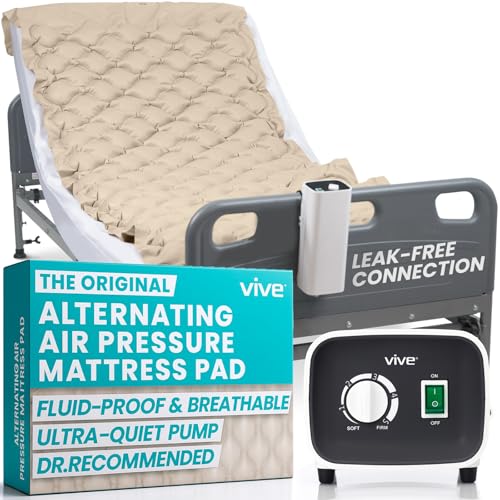
If you’re caring for someone who stays in bed for long periods and can’t easily shift positions, the Vive Alternating Air Pressure Mattress Pad could be one of the best choices for preventing and relieving bed sores. I’ve found its 130 heat-sealed air cells deliver steady, wave-like support, redistributing weight and easing pressure points every six minutes. The pump runs quietly at 22 dBA, so it won’t disturb sleep, and the durable vinyl handles up to 300 pounds. It fits standard beds, stays in place with secure flaps, and uses hypoallergenic, latex-free materials. I appreciate the included one-year guarantee-offering peace of mind for long-term care at home or in medical settings.
Best For: Individuals who are bedridden or immobilized and need preventive or therapeutic support for bed sores and pressure ulcers.
Pros:
- Delivers effective alternating pressure therapy with 130 air cells to evenly distribute weight and relieve pressure points
- Whisper-quiet pump operates at 22 dBA, ensuring undisturbed sleep and comfort
- Durable, waterproof vinyl construction with secure flaps and a 300-pound weight capacity for reliable long-term use
Cons:
- Requires continuous power to maintain air pressure cycles, posing limitations during outages
- Hand wash only, which may be inconvenient for frequent cleaning
- May feel too firm for users preferring a softer mattress surface
Alcedo Alternating Air Pressure Mattress Pad

Who wouldn’t benefit from a mattress topper that actively prevents bedsores while supporting long-term comfort? I’ve tried the Alcedo Alternating Air Pressure Mattress Pad, and it uses alternating air cells to relieve pressure and boost circulation-ideal for limited mobility. It fits hospital, homecare, or standard beds, with a 75 x 35-inch inflatable area and tucks securely under. The quiet pump offers five pressure settings, runs softly, and includes metal hooks for stability. Made of durable, waterproof vinyl, it’s breathable, hygienic, and supports up to 300 lbs. I hand-wash it for care. It’s FSA/HSA-eligible-practical for long-term use.
Best For: Individuals with limited mobility or those at risk of bedsores who need pressure relief and enhanced circulation during prolonged bed rest.
Pros:
- Uses alternating air pressure technology to prevent bedsores and improve circulation
- Quiet pump with five adjustable pressure settings for personalized comfort
- Durable, waterproof vinyl construction that’s breathable and FSA/HSA-eligible
Cons:
- Limited weight capacity of 300 lbs may not suit all users
- Requires secure tucking under the mattress for proper fit, which may be cumbersome
- Hand-wash only care instruction limits cleaning convenience
Lunderg Air Pressure Mattress Pad
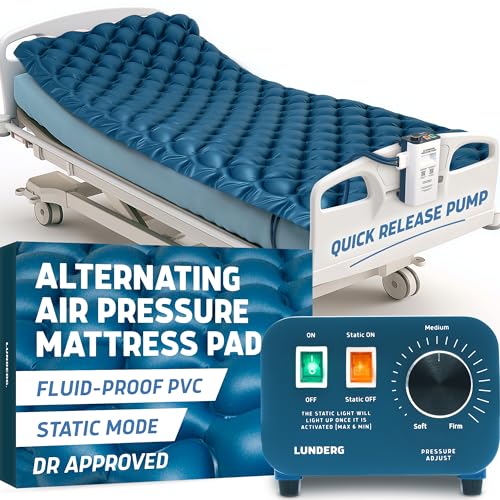
I’ve found the Lunderg Air Pressure Mattress Pad works best for people who need reliable pressure relief and can’t easily reposition themselves, especially during long recovery periods at home. It uses alternating and static air modes to boost circulation and prevent sores, with firmness you can adjust. The pump’s quiet, and the PVC surface is waterproof and durable. It fits twin beds, supports up to 300 lbs, and connects quickly with snap-in hoses. I recommend using a sheet over it to manage moisture. It’s backed by a warranty and earned strong user ratings for comfort and ease of use.
Best For: Individuals needing reliable pressure relief and limited mobility, especially during extended recovery periods at home.
Pros:
- Effective alternating and static pressure modes help prevent bedsores and improve circulation
- Whisper-quiet pump and adjustable firmness for personalized comfort and undisturbed rest
- Durable, waterproof PVC surface with quick-connect hoses for easy setup and maintenance
Cons:
- Only available in twin size, limiting use for larger bed types
- May require a top sheet to manage moisture and enhance comfort
- Limited weight capacity of 300 lbs may not suit all users
DMI 2-Inch Foam Mattress Topper (Twin, Blue)

The DMI 2-Inch Foam Mattress Topper (Twin, Blue) works best for side and back sleepers who need gentle pressure relief on a firm or aging mattress. Made of medical-grade convoluted foam, it boosts airflow and spreads body weight to ease hip, shoulder, and back stress. Its egg crate design reduces full-body contact, helping prevent pressure sores and skin irritation. Lightweight and portable, it unrolls easily but needs 24–48 hours to fully expand. I recommend hand washing only. The pull-on foam topper fits snugly and includes a 1-year warranty. It’s durable, widely rated, and often ranks in the top 30 mattress pads.
Best For: Side and back sleepers seeking gentle pressure relief and improved comfort on firm or aging mattresses.
Pros:
- Provides effective pressure relief and spinal support with medical-grade convoluted foam
- Enhances airflow and reduces risk of pressure sores with egg crate design
- Lightweight, portable, and easy to set up with a 1-year limited warranty
Cons:
- Not waterproof, offering only minimal protection against spills and liquids
- Requires 24–48 hours to fully expand after unrolling
- Hand wash only, which may be inconvenient for some users
Kekoy Alternating Air Pressure Mattress Pad

If you’re caring for someone with limited mobility or recovering from surgery, the Kekoy Alternating Air Pressure Mattress Pad stands out as a strong choice for preventing bed sores. It has 130 air cells that alternate every 10–12 minutes, easing pressure evenly across the body. The whisper-quiet pump runs below 28 dBA, so it won’t disturb sleep. I appreciate the five pressure settings, letting me adjust firmness based on comfort needs. Made from medical-grade PVC, it’s waterproof and easy to clean. The 75″ x 35″ surface fits most beds, and the long power cord offers placement flexibility.
Best For: Individuals with limited mobility, post-surgical patients, or elderly users seeking effective pressure relief and bed sore prevention.
Pros:
- Features 130 air cells that alternate every 10–12 minutes for consistent pressure redistribution and improved circulation
- Whisper-quiet aluminum pump operates below 28 dBA, ensuring minimal sleep disturbance
- Made from durable, waterproof medical-grade PVC for easy cleaning and long-term hygiene
Cons:
- Requires continuous power supply, limiting portability during outages
- May feel too firm or unfamiliar for users unaccustomed to air mattress systems
- Surface material, while durable, may retain heat without additional breathable bedding
Lunderg Air Pressure Mattress Pad with Flocking
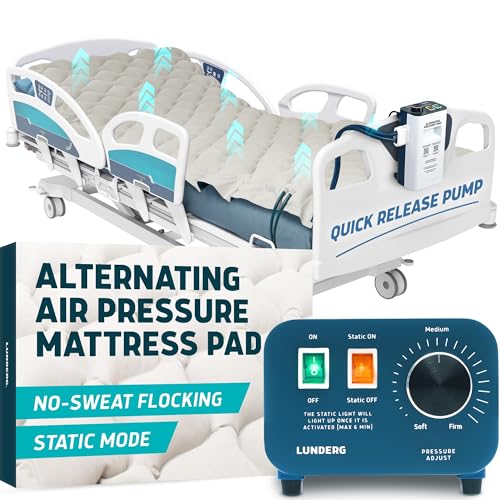
You’ll find the Lunderg Air Pressure Mattress Pad with Flocking works best if you or a loved one faces limited mobility and needs consistent pressure relief to prevent or manage bed sores. I’ve used it with patients who stay in bed long-term, and the alternating air cells help shift pressure automatically, reducing the need for constant repositioning. The flocking layer feels soft and keeps skin from overheating, which helps prevent sweating and irritation. It fits most beds and supports up to 300 lbs. The quiet pump lets me adjust firmness, and I can switch to static mode when transferring someone. Setup took about 20 minutes, and once it’s running, it works steadily with little maintenance.
Best For: Individuals with limited mobility who require consistent pressure relief to prevent or manage bed sores in home, hospital, or long-term care settings.
Pros:
- Patented flocking technology provides a soft, breathable surface that reduces overheating and discomfort
- Alternating air cells automatically relieve pressure, decreasing the need for frequent repositioning
- Quiet pump with adjustable firmness and static mode for easy transfers and caregiver support
Cons:
- Requires a continuous power source to maintain optimal function
- Initial setup and inflation process takes up to 20 minutes across multiple cycles
- Weight capacity limited to 300 lbs, which may not suit all users
Alternating Air Pressure Mattress Pad with Pump

Though I might not need advanced pressure relief now, this alternating air pressure mattress pad becomes essential for anyone managing limited mobility due to aging, surgery, or chronic illness. It uses 130 air cells that cycle every 10–12 minutes, shifting pressure and boosting circulation to help prevent bedsores. The quiet pump runs below 28 dBA and offers five firmness levels, so you can adjust it comfortably. Made from durable, waterproof PVC and vinyl, it’s easy to clean and built to last. It fits twin, full, or hospital beds, supports up to 300 lbs, and includes securing flaps to stay in place.
Best For: Individuals with limited mobility due to aging, post-surgery recovery, or chronic illness who need preventive care against bedsores and enhanced comfort during prolonged bed rest.
Pros:
- Features 130 alternating air cells that cycle every 10–12 minutes to improve circulation and reduce pressure points
- Ultra-quiet pump operating under 28 dBA with 5 adjustable firmness levels for personalized comfort
- Durable, waterproof PVC and vinyl construction that’s easy to clean and suitable for home or hospital use
Cons:
- May require adjustment period for users unaccustomed to the sensation of shifting air cells
- Limited weight capacity of 300 lbs, which may not accommodate all users
- Requires continuous power supply to maintain air pressure, posing inconvenience during outages
DMI Foam Mattress Topper (Full, Blue)
The DMI Foam Mattress Topper (Full, Blue) works best for people who need added pressure relief and airflow, especially those recovering from surgery or managing limited mobility. I’ve found its 2-inch convoluted foam design spreads body weight evenly, reducing stress on hips, shoulders, and the spine. The egg-crate surface boosts airflow, keeping skin cooler and drier. Made from medical-grade foam, it helps prevent bed sores by limiting full contact with the mattress. It fits standard full-size beds and unrolls in 12–24 hours. Lightweight and easy to move, it also protects your mattress from spills and wear, extending its life without extra maintenance.
Best For: Individuals seeking pressure relief, improved airflow, and spinal support, especially those recovering from surgery or with limited mobility.
Pros:
- Provides excellent pressure point relief for shoulders, hips, and spine with contoured convoluted foam
- Enhances airflow to keep skin cool and dry, helping prevent bed sores and skin irritation
- Lightweight, easy to set up, and acts as a protective layer to extend mattress life
Cons:
- Requires 12–24 hours to fully expand after unboxing, causing a delay in use
- Only compatible with full-size mattresses, limiting versatility across bed sizes
- Does not include a washable cover or advanced moisture barrier for heavy spill protection
Vaunn Medical Cloud Air Mattress Topper

If you’re caring for someone on extended bed rest, this topper offers targeted relief for those at risk of bed sores. I’ve found its Air-Lift Technology and 130 air cells work well to shift pressure, boost circulation, and keep skin dry. The Sleep Wave Therapy inflates and deflates cells in a wave-like pattern, which helps relax muscles and prevent sore spots. It runs on a quiet pump, so it won’t disturb sleep, and the firmness is adjustable. Made from medical-grade vinyl, it’s waterproof, easy to clean, and holds up to 300 lbs. It fits most twin beds and stays in place with anchor flaps.
Best For: Individuals on extended bed rest or those at risk of developing bed sores who need pressure relief, enhanced circulation, and a cool, dry sleep surface.
Pros:
- Utilizes 130 air cells with Sleep Wave Therapy to continuously redistribute pressure and promote blood flow
- Features a quiet, high-efficiency pump for 24/7 operation without disrupting sleep
- Constructed with durable, medical-grade waterproof vinyl that’s easy to clean and supports up to 300 lbs
Cons:
- Only compatible with twin-size beds, limiting use for larger mattress sizes
- Requires continuous power connection (110V), making it unusable during power outages or abroad
- May require adjustment period for users unaccustomed to moving air surface
Lunderg Queen Air Pressure Mattress Pad
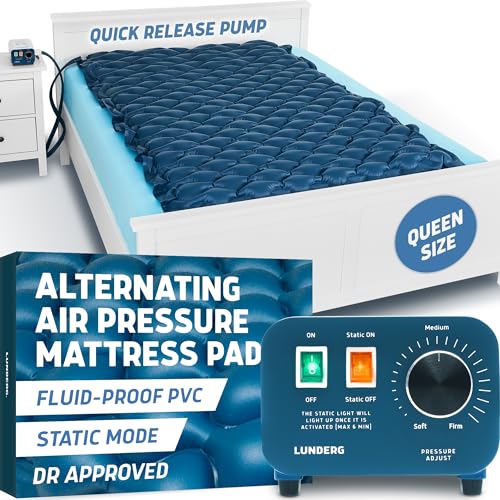
You’ll find the Lunderg Queen Air Pressure Mattress Pad especially beneficial if you or a loved one needs reliable bed sore prevention during long periods of bed rest. I’ve used it and found the alternating air pressure system effectively relieves skin and joint pressure while boosting circulation. It fits standard queen mattresses (53” x 77”) and supports up to 320 lbs. The quiet pump offers adjustable firmness and a static mode for stability during transfers. Durable, waterproof fabric maintains hygiene, and I recommend pairing it with a sheet for moisture control. Setup takes about 20 minutes across three inflation cycles, and the control knob lets me fine-tune comfort easily.
Best For: Individuals seeking a medical-grade solution for bed sore prevention and enhanced comfort during prolonged bed rest, especially those with limited mobility or recovering at home.
Pros:
- Effective alternating air pressure system helps prevent and heal bedsores by relieving pressure and improving circulation
- Quiet pump with adjustable firmness and static mode for easy transfers and personalized comfort
- Durable, waterproof construction supports up to 320 lbs and maintains hygiene in home or clinical settings
Cons:
- Requires approximately 20 minutes to fully inflate over three cycles, which may delay initial use
- Must be paired with a sheet for optimal moisture management, adding to maintenance needs
- Limited to queen size (53” x 77”), which may not fit all bed types or user preferences
Factors to Consider When Choosing a Mattress Topper for Bed Sores
You’ll want to pick a mattress topper that uses good pressure relief technology, like memory foam or air cells, so it supports sensitive areas without pushing too hard on the skin. Make sure the material is safe, breathable, and comfortable for long-term use, and check that it won’t make noise when you shift at night. Also, confirm it fits your bed size, handles your weight, and sets up easily-plus, look for models with a trial or warranty so you can test it risk-free.
Pressure Relief Technology
While lying for long periods, your body needs consistent support to avoid pressure buildup, especially if mobility is limited. A good mattress topper uses pressure relief technology to help prevent bed sores. Models with alternating pressure have 130 air cells that inflate and deflate every 10–12 minutes, shifting your weight and reducing strain on sensitive areas. The wave-like airflow feels subtle, almost like a gentle massage, and it boosts circulation to protect your skin. You can adjust the firmness to match your body weight and comfort needs, ensuring personalized support. In static mode, all cells stay fully inflated, giving a stable surface-ideal when transferring in or out of bed. Heat-sealed air cells resist leaks, so pressure stays even over time. This reliability means fewer disruptions and longer use without performance loss.
Material Safety And Comfort
A well-chosen mattress topper not only supports pressure relief but also prioritizes your skin’s health through safe, comfortable materials. You’ll want hypoallergenic, latex-free, and non-toxic surfaces to minimize irritation, especially if your skin is sensitive or damaged. Look for medical-grade vinyl or PVC covers-they resist fluids, stay heat-resistant, and wipe clean easily, helping maintain hygiene. Flocked, fabric-like tops boost breathability, letting air circulate so you stay cooler during long rests. The surface should feel soft and non-abrasive to cut down on friction and shearing that can lead to sores. Heat-sealed air cells add durability, preventing leaks and keeping support steady over time. These features work together to protect your skin while improving comfort. When choosing, balance safety, breathability, and softness so your topper supports both healing and restful sleep.
Noise Level Performance
Quiet operation matters when selecting a mattress topper for bed sores, especially if you’re sensitive to sound or share a room. Look for pumps that run under 28 dBA-this keeps noise whisper-quiet, so it won’t disturb light sleepers or clinical settings. Models with aluminum or high-efficiency motors often stay below 30 dBA, offering smooth, unobtrusive performance all night. A sealed motor enclosure and vibration-dampening materials help cut sound, so the system runs quietly even during pressure shifts. Pads designed for 24-hour use should maintain steady noise levels, without sudden spikes when cycling. For the best experience, aim for models under 25 dBA; they’re nearly silent, like a quiet bedroom. Checking noise specs helps you balance therapeutic needs with restful sleep, especially in shared or sensitive environments.
Weight Capacity And Size
Most mattress toppers built for bed sore prevention support at least 300 pounds, with some models safely accommodating up to 320 pounds, so you’ll want to check your weight against the manufacturer’s limit before buying. Exceeding that limit can strain the internal structure-whether foam density or air cell design-and reduce pressure relief, leading to wear or pump failure. You’ll also need to match the topper size to your mattress: standard options include twin (35–36” x 75–78”) and queen (53–60” x 77–80”) to guarantee full coverage. A proper fit prevents gaps where pressure builds on exposed areas. If the topper’s too small, it won’t protect high-risk zones like hips or heels. Always verify dimensions and weight specs-you’ll get better support and longer performance when both size and capacity align with your needs.
Ease Of Setup And Use
Getting the right fit and weight support sets the foundation, but how quickly and smoothly you can set up and use the mattress topper matters just as much-especially when managing bed sores. Look for models with quick-connect air hoses and clear visual instructions so you can get things running fast, without frustration. Pads that fully inflate in about 20 minutes across three cycles help reduce patient discomfort during setup. Choose a unit with a whisper-quiet pump-under 28 dBA-so it won’t disturb rest at night. Secure top and bottom flaps keep the topper anchored, so you’re not readjusting it constantly. A waterproof surface gives you peace of mind while minimizing effort. If care instructions include hand washing only, you’ll maintain hygiene without complicating routines. These features add up to easier daily use without sacrificing function.
Durability And Maintenance Needs
A well-built mattress topper can last years with proper care, and yours should stand up to daily use without losing performance. Choose models with heat-sealed air cells or medical-grade materials to resist leaks and wear over time. Waterproof surfaces help block fluids, making cleaning easier and reducing microbial growth. Look for non-toxic, latex-free, and hypoallergenic fabrics that resist mold and mildew, so your topper stays safe and strong with repeated use. Reinforced seams and high-density fabrics keep shape, especially under heavier weights-some support up to 300 pounds or more. Pick designs with wipe-clean surfaces or hand-washable covers to maintain hygiene without harming the material. Low-maintenance features mean less hassle and longer life. Durability and easy care go hand in hand, helping you stay comfortable and protected night after night.
Frequently Asked Questions
How Often Should I Replace My Mattress Topper?
You should replace your mattress topper every 3 to 5 years, depending on use and material. Memory foam compresses over time, losing support, while latex holds up longer but may degrade with heavy moisture. Wool toppers resist wear well but need careful cleaning. You’ll notice dips, lumps, or reduced comfort when it’s time. Check manufacturer guidelines and warranty terms-some offer replacements after trials. Regular flipping and using a protective cover help extend its life.
Can Mattress Toppers Be Used on Adjustable Beds?
Yes, you can use mattress toppers on adjustable beds, but you’ll need one that’s flexible and won’t shift or bunch when the bed moves. Look for lightweight memory foam or latex toppers with stretchy, grippy fabric covers-they stay in place better. Avoid thick, heavy designs that resist folding. Make sure the topper doesn’t interfere with the bed’s motors or hinges. Many brands offer compatible options with trial periods, so you can test the fit and feel risk-free.
Are Air Pressure Toppers Noisy During Sleep?
Yes, air pressure toppers can make noise when adjusting, especially at night. You’ll hear soft clicking or humming as the pump cycles air. Most modern models run quietly, but sound varies by brand and use. If you’re light sleeper, look for units with whisper-quiet motors or night modes. Check warranty and trial periods so you can test noise levels in your room. Read user reviews noting sleep disruptions to gauge real-world performance before deciding.
Do Foam Toppers Retain Too Much Heat?
yes, some foam toppers trap heat, especially traditional memory foam. you’ll feel warmer if the foam’s dense and non-porous. newer models use gel infusions or open-cell structures to improve airflow. look for copper or graphite additives-they help draw heat away. check if the cover’s breathable, like bamboo or TENCEL. many brands offer trial periods, so test it. if you sleep hot, consider latex or hybrid foams, which typically run cooler and provide pressure relief without excessive heat retention.
Can I Wash My Mattress Topper Cover?
Yes, you can wash your mattress topper cover-most are removable and machine-washable. Check the care label first, though, since materials like bamboo or wool might need gentle cycles or cold water. A zip-off design makes cleaning easier, and regular washing helps reduce bacteria and skin irritants. Tumble dry on low or air dry to prevent shrinking. A washable cover helps maintain hygiene, which matters if you’re managing sensitive skin or immobility.