Best Teas for Bedtime That Promote Deep, Restful Sleep
Choose a bedtime tea with calming herbs like valerian root, chamomile, and passionflower to support deep, restful sleep. Opt for organic, caffeine-free blends from trusted brands like Traditional Medicinals or Yogi, which use compostable bags and clean ingredients. Some include melatonin for faster sleep onset, though effects vary. Steep for 6–7 minutes to fully release active compounds. Try small batches first to assess your response. Each blend offers a unique balance of flavor and effectiveness worth exploring.
We are supported by our audience. When you purchase through links on our site, we may earn an affiliate commission, at no extra cost for you. Learn more. Last update on 21st July 2026 / Images from Amazon Product Advertising API.
Notable Insights
- Teas with valerian root, chamomile, and passionflower support deep sleep by promoting relaxation and reducing neural activity.
- Melatonin-infused blends like Sleepytime Extra help regulate sleep cycles for faster sleep onset.
- Organic, caffeine-free formulations ensure a clean, restful experience without stimulants or additives.
- Herbal combinations with lavender and mint improve sleep quality through calming aromas and better breathing.
- Sustainable, compostable packaging and certified organic ingredients reflect high quality and safety for nightly use.
Organic Nighty Night Tea with Valerian Root

If you’re someone who lies awake waiting for sleep to come, Organic Nighty Night Tea with Valerian Root could be one of the better choices among bedtime teas, especially if you prefer plant-based support backed by tradition. I rely on its valerian root base, paired with passionflower, lemon balm, and peppermint, to gently encourage rest. The earthy, minty taste feels calming, not sharp. It’s USDA Organic, caffeine-free, kosher, and uses compostable bags, which matters if you value sustainability. Each box gives you 16 servings, and the blend’s crafted by herbalists for consistency. I find it works best when sipped routinely, about 30 minutes before bed.
Best For: Individuals seeking a plant-based, organic sleep aid with traditional herbal support to help ease occasional sleeplessness.
Pros:
- Features valerian root, passionflower, lemon balm, and peppermint, all known for their sleep-supporting properties
- USDA Organic, caffeine-free, kosher-certified, and uses compostable tea bags for clean, sustainable sipping
- Formulated by herbalists for consistency and designed to be part of a calming bedtime routine
Cons:
- Earthy, herbal flavor may be strong or unpleasant for those sensitive to valerian root
- Only 16 tea bags per box, which may require frequent repurchasing for nightly use
- Effects may vary by individual, with some users requiring consistent use before noticing benefits
Traditional Medicinals Nighty Night Tea (16 Bags)

When sleep feels out of reach and nighttime thoughts won’t quiet, I turn to Traditional Medicinals Organic Nighty Night Tea as my go-to herbal ally for winding down. This blend combines chamomile, passionflower, valerian root, linden flower, and spearmint-each chosen for its calming properties. I notice the earthy, minty flavor soothes my senses, while the caffeine-free, USDA Organic, and Non-GMO formula gives me confidence in its quality. The compostable bags align with my eco-conscious habits. I’ve found it supports relaxation without grogginess, making it a reliable option among sleep aids worth trying.
Best For: Individuals seeking a natural, herbal sleep aid to support relaxation and restful sleep without next-day grogginess.
Pros:
- Combines trusted, calming herbs like chamomile, passionflower, and valerian root for effective sleep support
- USDA Certified Organic, Non-GMO, and caffeine-free, ensuring high-quality, clean ingredients
- Compostable tea bags reflect eco-friendly values and sustainable practices
Cons:
- Earthy, herbal flavor may be strong or off-putting for those sensitive to valerian root
- Only 16 tea bags per box, which may not last long with nightly use
- May not be potent enough for individuals with severe or chronic insomnia
Yogi Tea Bedtime Herbal Blend (4 Packs)

You’ll find the Yogi Tea Bedtime Herbal Blend especially helpful if you’re looking for a natural way to ease into sleep, since its caffeine-free mix of chamomile, passionflower, and lavender works together to support relaxation. I like that it’s USDA Organic, non-GMO, and vegan, so I don’t have to worry about additives. The licorice root adds subtle sweetness, while spearmint and cardamom bring a gentle warmth. I steep one or two tea bags for 7 minutes with boiling water, and the flavor feels soothing, not overpowering. It’s not a sleep aid in the medical sense, but I’ve found it helps quiet my thoughts before bed. If I’m winding down after a tense day, this blend supports a calmer shift into rest. The four packs give me plenty to test it over time, and I appreciate knowing each ingredient is vetted for quality. It’s not flashy, just reliable herbal support when I need it.
Best For: Individuals seeking a natural, caffeine-free herbal tea to support relaxation and improve bedtime routines.
Pros:
- USDA Organic, non-GMO, and vegan, ensuring high-quality, clean ingredients
- Thoughtfully blended with calming herbs like chamomile, passionflower, and lavender to promote restful relaxation
- Pleasant, soothing flavor with balanced notes of sweetness and warmth from licorice root, spearmint, and cardamom
Cons:
- May not be effective for those with severe sleep disorders or needing strong sedative effects
- The subtle flavor may not appeal to those who prefer bolder-tasting teas
- Sold in multi-packs, which could be excessive for someone wanting to try just a few servings
Celestial Seasonings Sleepytime Extra Herbal Tea, 20 Tea Bags Box

I rely on a bedtime tea that’s both effective and simple, and Celestial Seasonings Sleepytime Extra Herbal Tea fits that need with a blend built for adults seeking a caffeine-free way to unwind. Valerian root, chamomile, and spearmint work together to support relaxation, while the absence of caffeine, gluten, and artificial additives makes it a straightforward option for many. I appreciate that it’s not recommended if you’re pregnant, nursing, or on meds without medical approval, and those allergic to daisies should be cautious. I don’t drive after drinking it due to its calming effect. The tea bags lack staples or strings, and the box is made with recycled materials, which I find thoughtful. It’s a practical, accessible choice when comparing nighttime herbal options-reliable, cleanly designed, and focused on function without overpromising.
Best For: Adults seeking a caffeine-free, natural herbal tea to support relaxation and sleep without artificial additives.
Pros:
- Combines valerian root, chamomile, and spearmint for a synergistic, calming effect
- Free of caffeine, gluten, and artificial ingredients, suitable for many dietary needs
- Environmentally conscious packaging with recycled materials and staple-free tea bags
Cons:
- Not recommended for pregnant or nursing individuals without medical approval
- May cause drowsiness, limiting use before driving or operating machinery
- Potential allergen for those sensitive to chamomile and the daisy family
Yogi Tea Relaxation Variety Pack (3 Packs)

Who wouldn’t want a bedtime routine that actually helps quiet the mind and ease tension? I’ve found the Yogi Tea Relaxation Variety Pack helps me unwind with its three USDA Organic blends: Honey Lavender Stress Relief, Bedtime Tea, and Comforting Chamomile. Each of the 48 tea bags uses traditional Ayurvedic ingredients known for calm. I brew them as directed on the box for full flavor and effect. Yogi combines quality botanicals with pleasant tastes, so sipping feels soothing, not medicinal. It’s a practical option if you’re exploring natural support for better sleep.
Best For: Individuals seeking a natural, soothing bedtime routine to help reduce stress and support relaxation with organic herbal tea blends.
Pros:
- Features three USDA Organic herbal blends formulated with Ayurvedic ingredients known for calming effects
- Thoughtfully crafted flavors like Honey Lavender and Chamomile offer a pleasant, non-medicinal taste
- Convenient variety pack with 48 tea bags provides multiple options for nightly relaxation
Cons:
- May not provide strong enough effects for individuals with severe sleep disorders or high stress levels
- Contains chamomile, which some people may be allergic to
- Requires brewing preparation, making it less convenient than quick supplements or pills
Celestial Seasonings Sleepytime Herbal Tea Variety Pack

What makes Celestial Seasonings Sleepytime Herbal Tea Variety Pack a solid choice for winding down? I find it simple and effective-each of the six boxes holds 20 tea bags, giving you plenty of chances to test its routine. The blend of spearmint, chamomile, and peppermint delivers a mild, minty flavor without caffeine or artificial ingredients, and it’s gluten-free. Steeping one bag for 4 to 6 minutes brings out the calming notes. With no string, tag, or staple, the waste is less, and the box uses recycled paperboard, supporting eco-friendly habits. It won’t fix sleep disorders, but as a caffeine-free option, it fits well into a relaxed bedtime approach.
Best For: Individuals seeking a caffeine-free, eco-conscious herbal tea to support a calming bedtime routine.
Pros:
- Calming blend of chamomile, spearmint, and peppermint with no caffeine, artificial flavors, or colors
- Pack of 6 boxes provides 120 tea bags total, offering excellent value and convenience
- Environmentally thoughtful packaging: tea bags without staples or tags, and boxes made from 100% recycled paperboard with 35% post-consumer material
Cons:
- Mild flavor may not satisfy those seeking a more robust or complex herbal taste
- Lack of string and tag on tea bags may be inconvenient for some users
- While soothing, it does not treat underlying sleep disorders or guarantee improved sleep
Celestial Seasonings Sleepytime Tea with Melatonin

When winding down after a long day, a cup of Celestial Seasonings Sleepytime Tea Plus Melatonin can support your body’s natural shift into rest, especially if you’re looking for a gentle sleep aid with a trusted herbal base. I steep one bag in hot water for 4 to 6 minutes, letting the chamomile, spearmint, and other calming herbs blend with the added melatonin. It’s caffeine-free, with no artificial flavors or colors, so it fits smoothly into a nightly routine. The tea bags skip staples, strings, and tags, reducing waste, and the box uses 100% recycled paperboard. I appreciate how the brand sources ingredients globally and has over 40 years of experience crafting herbal blends that encourage calm.
Best For: Individuals seeking a caffeine-free, herbal sleep aid with added melatonin to support restful sleep and nighttime relaxation.
Pros:
- Combines trusted calming herbs like chamomile and spearmint with melatonin for enhanced sleep support
- Made without artificial flavors, colors, or unnecessary packaging elements like staples and tags
- Sustainably packaged with tea bags designed to reduce waste and an outer box made from 100% recycled paperboard
Cons:
- Melatonin dosage may be too low for some individuals seeking stronger sleep support
- Herbal taste may not appeal to those who prefer milder or flavored teas
- Limited availability in regions where melatonin-infused beverages are regulated as supplements
Twinings Sleep+ Herbal Tea with Melatonin
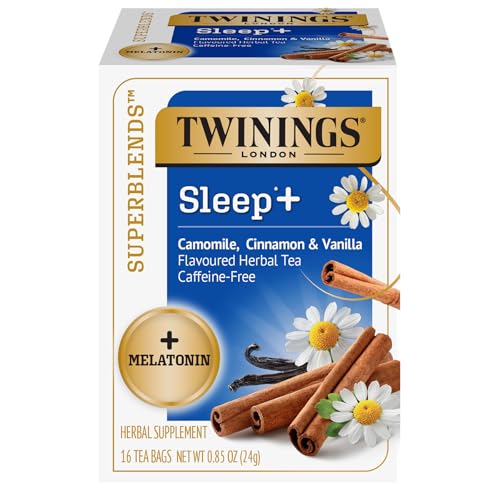
If you’re looking for a gentle, no-fuss way to support your nighttime routine, Twinings Sleep+ Herbal Tea with Melatonin might be your best bet-especially if you want something that combines tradition with a touch of science. Each cup contains 1mg of melatonin, plus calming chamomile, cinnamon, and vanilla, all in a naturally caffeine-free blend. I’ve found it easy to unwind with, whether hot or iced, and the flavor is smooth-sweet, floral, and just warm enough. Part of Twinings’ Superblends line, it’s crafted to support relaxation, not replace medical treatment. With a heritage since 1706, their blends balance taste and purpose. It’s a simple, thoughtful option to try if you’re adjusting your sleep habits.
Best For: Individuals seeking a naturally caffeine-free, flavorful herbal tea with melatonin to gently support their bedtime routine and promote relaxation.
Pros:
- Contains 1mg of melatonin combined with calming chamomile, cinnamon, and vanilla for a soothing nighttime experience
- Crafted by a trusted brand with over 300 years of blending heritage and a commitment to quality
- Can be enjoyed hot or iced, offering flexibility in consumption while supporting daily relaxation habits
Cons:
- Contains only a low dose of melatonin, which may not be sufficient for those with more severe sleep challenges
- Flavor, while pleasant, may be too mild or subtle for those seeking a bolder herbal profile
- Limited availability of clinical evidence on the long-term effects of regular melatonin-infused tea consumption
Traditional Medicinals Organic Nighty Night Tea (48 Bags)

For anyone seeking a reliable, plant-based sleep aid with a proven herbal blend, Traditional Medicinals Organic Nighty Night Tea stands out as a strong choice-especially if you value clean sourcing and sustainability. I’ve found its mix of valerian root, passionflower, lemon balm, and peppermint works gently to support relaxation and occasional sleeplessness. The earthy, minty flavor is herbal but not overpowering. It’s USDA Organic, Non-GMO, Kosher, and caffeine-free, with compostable packaging. Made in a solar-powered, zero-waste U.S. facility, it’s a solid pick if you want effective herbs and lower environmental impact-no guarantees, but a thoughtful option worth trying.
Best For: Individuals seeking a natural, sustainable sleep aid made with organic, ethically sourced herbs.
Pros:
- Features a clinically recognized blend of valerian root, passionflower, and lemon balm to support relaxation and sleep
- USDA Organic, Non-GMO Verified, Kosher, caffeine-free, and packaged in compostable tea bags
- Produced in a solar-powered, zero-waste U.S. facility by a Certified B-Corp committed to sustainability
Cons:
- Earthy, herbal flavor may be strong or unpleasant for those sensitive to valerian root
- Contains peppermint, which may relax the esophageal sphincter and worsen reflux in some individuals
- May not be strong enough for those with chronic or severe insomnia needing more potent intervention
Yogi Tea Bedtime (6 Pack) Organic

I’ve found the Yogi Tea Bedtime (6 Pack) Organic works best if you’re looking for a caffeine-free, plant-based option to support a calm nighttime routine. It blends organic passionflower, chamomile, valerian root, and lavender, all known for promoting relaxation and restful sleep. Each box holds 96 tea bags, so it lasts, and I appreciate that it’s USDA Organic, NON-GMO, and vegan. For strongest results, steep one bag for 7 minutes or use two if you need more support. The flavor is herbal but balanced, not overpowering. Since it’s mild, it works well for regular use, especially if you’re sensitive to stronger sedatives.
Best For: Individuals seeking a natural, caffeine-free herbal tea to support relaxation and restful sleep as part of a calming nighttime routine.
Pros:
- Promotes relaxation and sleep with a blend of organic passionflower, chamomile, valerian root, and lavender
- USDA Organic, NON-GMO, and vegan-ideal for those seeking clean, plant-based products
- Mild, balanced herbal flavor suitable for regular use, even for those sensitive to strong sedatives
Cons:
- Herbal taste may not appeal to those who prefer flavored or sweeter teas
- Requires a 7-minute steep time for optimal effect, which may be longer than desired
- May not be potent enough for individuals with severe sleep difficulties
Factors to Consider When Choosing a Tea for Bedtime
You should always check the caffeine content first-some bedtime teas still contain a small amount, even if labeled “decaf.” Look for clear certifications like USDA Organic or Non-GMO Project Verified, so you know the ingredients are quality-tested and sustainably sourced. Flavor and aroma matter too, since a soothing scent can support relaxation, but don’t overlook packaging-if it’s not resealable or earth-friendly, it might not be the best long-term choice.
Herbal Ingredients Matter
When choosing a bedtime tea, pay close attention to the herbal ingredients, since each brings distinct properties that support relaxation and sleep. Valerian root has gentle sedative effects that may help with occasional sleeplessness. Chamomile contains apigenin, which binds to brain receptors linked to sleep regulation. Passionflower may boost GABA levels, calming neural activity that can interfere with rest. Lavender offers linalool and linalyl acetate, compounds known for their soothing impact on the nervous system. Peppermint and spearmint add a mild, invigorating taste while contributing menthol, which some find helps with breathing and comfort at night. You can combine these herbs based on your personal needs, but responses vary. Try one ingredient at a time first to see how your body reacts. Look for clean, well-sourced blends without fillers. Small trials help identify the most effective option without side effects.
Caffeine Content Check
Though you might assume all teas are safe for bedtime, checking caffeine content is an essential step in choosing the right one. Always look for teas explicitly labeled caffeine-free, since even small amounts can disrupt your sleep. Herbal teas from plants like chamomile or valerian root naturally contain no caffeine, making them reliable choices. But some blends mix herbs with black, green, or white tea, so always read the ingredients. Even decaf versions of true tea may have trace caffeine, so they’re less dependable at night. Watch for added stimulants like guarana or ginseng, which might interfere with sleep despite the caffeine-free base. A careful label check helps you avoid accidental alertness. Choosing a truly caffeine-free blend supports better sleep onset and quality, especially if you’re sensitive or managing sleep issues.
Certifications And Quality
While not all tea labels offer clear guidance, paying attention to certifications can make a meaningful difference in both quality and safety. Look for the USDA Certified Organic seal to guarantee ingredients are grown without synthetic pesticides or fertilizers. Choose Non-GMO Verified teas so you know they’ve been tested for genetically modified content. If you’re sensitive to stimulants, confirm the tea is truly caffeine-free, as even trace amounts can affect sleep onset. Kosher certification might matter if you follow specific dietary guidelines-it also signals careful, supervised processing. Don’t overlook packaging: compostable tea bags or recycled materials show a brand’s commitment to sustainability. These markers don’t guarantee effectiveness, but they help you assess transparency and care in production. Checking certifications gives you clearer insight into what you’re drinking and supports more informed, confident choices for your nightly routine.
Flavor And Aroma Profile
Soothing your senses before bed starts with the right flavor and aroma profile in your tea. Earthy, minty, or herbal notes-from valerian root, peppermint, or chamomile-help create a calm atmosphere ideal for sleep. Minty undertones, like spearmint or peppermint, offer a gentle, invigorating coolness that relaxes without overwhelming. You’ll often find floral and sweet aromas in blends with chamomile or lavender, known for their soothing scent and mild taste. Warm, slightly spicy hints of cinnamon or cardamom add cozy depth, making your nightly ritual feel comforting. Botanicals rich in essential oils-such as passionflower or lemon balm-bring a distinctly herbal aroma that enhances the tea’s natural calm. Choosing a flavor you enjoy increases the chance you’ll stick with the habit. A pleasant taste and aroma don’t guarantee sleep, but they support the relaxation that leads to it.
Sustainability And Packaging
When choosing a bedtime tea, considering sustainability and packaging helps reduce your environmental footprint without sacrificing quality. Look for tea bags made from compostable materials like cornstarch or plant-based fibers, since they break down easily and won’t sit in landfills. Skip brands that use plastic staples, strings, or tags-these small parts often contaminate compost and add unnecessary waste. Choose boxes made from recycled paperboard with high post-consumer content, and favor minimalist packaging that trims excess without hurting protection or freshness. Support companies that run zero-waste manufacturing facilities, where nearly all production waste gets reused or recycled. These choices don’t just help the planet-they often mean cleaner, purer tea with fewer synthetic additives. By paying attention to packaging and sustainability, you make a practical, thoughtful swap that supports both restful sleep and long-term environmental health.
Frequently Asked Questions
Can I Drink Bedtime Tea While Pregnant?
You can drink some bedtime teas while pregnant, but you should check the ingredients first. Not all herbal teas are safe during pregnancy-some contain herbs that may stimulate contractions or affect hormone levels. Opt for blends with chamomile, ginger, or lemon balm, which are generally considered safe in moderation. Always consult your healthcare provider before starting any new tea, especially if you have health concerns or pregnancy complications.
Does Bedtime Tea Interact With Medications?
Yes, bedtime tea can interact with medications, so you should check with your doctor before combining them. Herbal ingredients like chamomile or valerian affect how your body processes certain drugs, including blood thinners or sedatives. You might not realize the risk until you experience drowsiness, dizziness, or reduced medication effectiveness. When trying bedtime teas, disclose all supplements and meds to your healthcare provider to avoid complications.
How Long Before Bed Should I Drink Tea?
You should drink tea about 30 to 60 minutes before bed. This gives your body time to process the liquid and start winding down. Drinking too close to bedtime might disrupt sleep with a bathroom trip. Choose caffeine-free options to avoid stimulation. Sip slowly to enjoy the calming effect. Try different timings over a few nights to see what works best with your sleep routine.
Is It Safe to Drink Tea Every Night?
Yes, it’s generally safe to drink tea every night if you choose caffeine-free varieties like chamomile or valerian root. You’re avoiding stimulants that disrupt sleep, which helps maintain consistent rest cycles. Still, rotate herbs occasionally to prevent overexposure, and watch for allergic reactions. If you have health conditions or take medications, check with your doctor first, since some ingredients interact poorly. Listen to your body’s signals over time.
Can Children Drink Herbal Bedtime Teas?
Yes, children can drink herbal bedtime teas, but you should choose blends carefully and consult a pediatrician first. Common ingredients like chamomile or lemon balm are generally safe in small amounts, yet some herbs may affect young bodies differently. You’ll want to avoid caffeine and strong sedatives. Start with a small serving to see how they react. Look for products labeled child-safe, and check ingredient transparency and certifications.