Best Fitbits for Monitoring Sleep (That Actually Deliver)
You get accurate sleep stage tracking with Fitbit models like the Inspire 3, Charge 6, and Sense 2, all using heart rate, movement, and skin temperature to assess deep, light, and REM sleep. These trackers automatically record sleep, offer Sleep Scores, and support SpO2 and breathing irregularity detection. With consistent wear, they build personalized baselines, improving accuracy over time. A 6-month Fitbit Premium trial helps access deeper insights, including long-term sleep trends and readiness cues. More details on how each model compares follow.
We are supported by our audience. When you purchase through links on our site, we may earn an affiliate commission, at no extra cost for you. Learn more. Last update on 21st July 2026 / Images from Amazon Product Advertising API.
Notable Insights
- Fitbit Sense 2 offers advanced sleep tracking with Sleep Score, Smart Wake alarms, and Sleep Profile via Fitbit Premium for personalized insights.
- Fitbit Charge 6 delivers accurate sleep stage detection using heart rate, movement, and SpO2 data, plus recovery readiness analysis.
- Fitbit Inspire 3 provides reliable sleep stage tracking and a 10-day battery, ideal for comfortable all-night wear.
- All-day heart rate and skin temperature monitoring improve sleep accuracy over time when worn consistently overnight.
- SpO2 tracking on supported Fitbits identifies breathing disturbances like apnea, enhancing overnight health insights.
Fitbit Inspire 3 Fitness Tracker with Heart Rate

If you’re looking for a no-fuss tracker that gives deep insights into your sleep patterns without breaking the bank, the Fitbit Inspire 3 is a solid choice. I wear it every night and get a Sleep Score, detailed stages, and a Sleep Profile that shows trends over time. It tracks heart rate, blood oxygen, skin temperature, and even detects irregular rhythms. I also get personalized tips and a stress score each day. It’s lightweight, water-resistant, and lasts up to 10 days on a charge. I activated my free 6-month Premium trial and explored deeper analytics-helpful for spotting sleep issues early.
Best For: Those seeking an affordable, lightweight fitness tracker with advanced sleep and health monitoring features.
Pros:
- Comprehensive 24/7 health tracking including sleep stages, heart rate, SpO2, skin temperature, and stress levels
- Up to 10-day battery life and water-resistant design for reliable everyday wear
- Includes 6-month Fitbit Premium trial with personalized insights and Sleep Profile
Cons:
- GPS relies on smartphone connection, no built-in GPS for standalone tracking
- Limited smart features compared to higher-end wearables
- Premium membership trial only available to new and returning users, activation required within 60 days
Fitbit Charge 6 Fitness Tracker with GPS

The Fitbit Charge 6 stands out for those prioritizing sleep recovery and daily health balance, especially if you want in-depth sleep tracking without stepping up to a premium smartwatch. I rely on its nightly Sleep Score to spot patterns over time, and the 24/7 heart rate monitoring helps assess rest quality. It tracks Active Zone Minutes, calories, and even your stress response, so you can adjust habits. Built-in GPS supports outdoor runs, and it syncs with gym equipment. You get a 6-month Fitbit Premium trial, which reveals sleep insights, Smart Wake alarms, and recovery readiness analysis-useful for spotting fatigue or imbalance.
Best For: Fitness and health enthusiasts who want advanced sleep tracking, daily readiness insights, and built-in GPS without upgrading to a full smartwatch.
Pros:
- Comprehensive health tracking with sleep score, stress management, and 24/7 heart rate monitoring
- Built-in GPS and turn-by-turn navigation support for accurate outdoor activity tracking
- Includes 6-month Fitbit Premium trial for enhanced insights, Smart Wake alarms, and recovery analysis
Cons:
- No onboard music storage despite YouTube Music controls
- Limited smartwatch features compared to higher-end models
- Requires frequent charging with only up to 7-day battery life
Fitbit Sense 2 Advanced Smartwatch (Shadow Grey)

You’ll find the Fitbit Sense 2 Advanced Smartwatch in Shadow Grey works best if you’re tracking more than just sleep-you’re managing overall health with tools that sync seamlessly into daily life. It gives me accurate sleep stages and a Sleep Score each morning, plus a Smart Wake alarm to help me rise gently. I get personalized insights through the Sleep Profile, though that needs Fitbit Premium, which I got free for six months. It tracks my heart rate, stress, and blood oxygen all day and night, and its 6-day battery means fewer charges. The slim design stays comfortable, and I reply to texts right from my wrist.
Best For: Health-conscious individuals seeking comprehensive, 24/7 wellness tracking with advanced metrics and smart features seamlessly integrated into daily life.
Pros:
- Advanced health monitoring including ECG, all-day stress detection, SpO2, and heart rate tracking
- Personalized sleep insights with Sleep Score, Smart Wake alarm, and Sleep Profile (with Premium)
- Long 6+ day battery life, built-in GPS, and seamless smart features like on-wrist notifications and Fitbit Pay
Cons:
- Premium features like Sleep Profile and Daily Readiness Score require a Fitbit Premium subscription
- Some medical features like ECG and irregular rhythm notifications not available to users under 22 or in all regions
- Google Maps and Wallet features limited to Android, with delayed iOS support for Maps
Fitbit Inspire 3 Fitness Tracker with Sleep & Heart Rate

When tracking sleep stages with precision matters most, the Fitbit Inspire 3 stands out for anyone who wants deeper insight into their rest without sacrificing comfort or battery life. I appreciate how it measures light, deep, and REM sleep, then gives me a sleep score to guide improvements. It tracks heart rate 24/7 and includes stress tools that help me manage bedtime routines. With Active Zone Minutes, it keeps my workouts on point. I get calls and texts right on the band, and the 10-day battery suits my travel. Water-resistant and sleek, it fits snugly whether I’m swimming or sleeping.
Best For: Individuals seeking a comfortable, long-lasting fitness tracker with advanced sleep and heart rate monitoring to improve overall health and wellness.
Pros:
- Provides detailed sleep stage analysis and a personalized sleep score to enhance rest quality
- Offers 24/7 heart rate tracking, stress management tools, and Active Zone Minutes for effective workouts
- Delivers up to 10 days of battery life and 50-meter water resistance, ideal for swimming and travel
Cons:
- Lacks built-in GPS, relying on smartphone connection for accurate workout tracking
- Display may be difficult to read in bright sunlight
- Advanced features require a paid Fitbit Premium subscription to fully utilize
Fitness Tracker Watch with Heart Rate & Sleep Monitor

Looking for a reliable partner to track your sleep patterns and overall heart health? I’ve tested this fitness tracker watch, and it logs your heart rate 24/7 while automatically analyzing light, deep, and awake stages during sleep. It supports nine workout modes, counting steps, calories, and distance, with customizable goals in the app. You’ll get smart alerts for calls, texts, and apps like Gmail, plus handy tools like a stopwatch and breathing guide. The battery lasts 5–7 days on a 2-hour charge, and it’s sweat-, rain-, and splash-proof. It pairs with iPhones or Android phones, not tablets.
Best For: Health-conscious individuals seeking 24/7 heart rate and sleep monitoring with smart notification features in a durable, user-friendly fitness tracker.
Pros:
- Provides continuous heart rate and automatic sleep stage tracking with actionable health insights
- Offers 9 sport modes, detailed activity metrics, and customizable fitness goals via app
- Long battery life, IP68 waterproof rating, and broad compatibility with iOS and Android devices
Cons:
- Does not support phone calls or text messaging, limiting communication functionality
- Not compatible with tablets or computers, reducing cross-device flexibility
- Charging time of 2 hours may be lengthy compared to some competitors with faster charging
Smart Watch Health Fitness Tracker for Android iPhone

The Smart Watch Health Fitness Tracker for Android iPhone stands out for users who prioritize continuous, accurate sleep monitoring alongside daily health tracking. I rely on its 24/7 heart rate, blood oxygen, and sleep stage tracking to assess my sleep quality over time, and the data syncs clearly to my phone. It supports 115 sports modes, logs steps and calories, and uses GPS for route maps. I get call and message alerts, stay reminded to drink water or move, and customize the watch face. The 1.47-inch HD screen is sharp, battery lasts over a week, and it’s fully waterproof-ideal for swimming or sleep tracking in any condition.
Best For: Health-conscious individuals seeking comprehensive 24/7 fitness, sleep, and wellness tracking with seamless compatibility across Android and iPhone devices.
Pros:
- Offers continuous monitoring of heart rate, blood oxygen, sleep stages, and blood pressure with detailed app-based visualization
- Supports 115 sports modes with GPS route mapping and is IP68 waterproof, making it ideal for swimmers and outdoor enthusiasts
- Long battery life (6–12 days) and customizable features like watch faces, smart notifications, and lifestyle reminders enhance daily usability
Cons:
- Blood pressure and blood oxygen measurements are not medically certified and may lack clinical accuracy
- GPS functionality relies on phone connection, limiting standalone route tracking
- Limited wrist size adjustment range may not comfortably fit all users, particularly those with smaller or larger wrists
Health Fitness Tracker with 24/7 Monitoring

I’ll recommend this health fitness tracker with 24/7 monitoring if you’re someone who wants consistent, automatic insights into key health metrics that influence sleep quality-especially since it continuously tracks heart rate, blood oxygen, blood pressure, and stress levels day and night. It gives you a clear sleep quality score and practical feedback so you can adjust habits over time. With 25 sports modes, it also captures activity data like steps, distance, and calories to show how movement affects rest. The 1.47-inch display is bright and easy to read, sending vibration alerts for calls, texts, or weather changes. Its 5ATM waterproof rating means it works in the pool or rain, and the battery lasts up to 15 days on a 2-hour charge. It pairs with iOS 9.0 and Android 6.0+ through the free GloryFit app, uses BLE5.0 for stable connections, and comes with a 1-year warranty plus reliable support if you need help.
Best For: Individuals seeking a comprehensive, easy-to-use fitness and health tracker with continuous monitoring of vital metrics and robust activity tracking to improve sleep, fitness, and overall wellness.
Pros:
- 24/7 health monitoring of heart rate, blood oxygen, blood pressure, and stress levels with insightful sleep quality scoring
- Supports 25 sports modes with accurate tracking of steps, distance, calories, and active minutes for performance improvement
- Long battery life with 15-day standby, 5ATM waterproof rating, and bright 1.47-inch HD display for everyday durability and visibility
Cons:
- Requires the GloryFit app for full functionality, which may have limited compatibility with non-supported devices
- Blood pressure and stress monitoring are estimates, not medical-grade readings
- No GPS built-in, so outdoor activity tracking relies on connected phone for location data
Fitness Tracker with AMOLED Screen & Waterproof

You’ll get the most from this fitness tracker if you prioritize clear, real-time sleep insights alongside daily health tracking, especially with its AMOLED screen making data easy to read at a glance. I rely on its bright, 1.1-inch HD display to quickly check my sleep score, heart rate, and blood oxygen without squinting. It’s waterproof, so swimming won’t interrupt tracking, and I appreciate the 25 sports modes that adapt to my routine. The smart notifications-calls, texts, app alerts-keep me informed, while reminders to move or drink water add subtle structure. I charge it every week, and the magnetic charging is fast and convenient. It pairs smoothly with my phone, whether I use Android or iOS, and the app delivers detailed sleep breakdowns-useful when adjusting habits or discussing concerns with a professional.
Best For: Individuals seeking a sleek, waterproof fitness tracker with advanced health monitoring and smart notifications, ideal for active lifestyles and seamless smartphone integration.
Pros:
- Bright 1.1-inch AMOLED display ensures excellent visibility and an intuitive touch interface
- Comprehensive health tracking with continuous heart rate, blood oxygen, blood pressure, and detailed sleep analysis
- Supports 25 sports modes, waterproof design, and fast magnetic charging with up to 7 days of battery life
Cons:
- Sleep and health metrics may lack medical-grade accuracy for users needing clinical precision
- App functionality and alert customization could be limited compared to high-end smartwatches
- AMOLED screen, while vibrant, may be prone to scratches without added protection
Fitbit Versa 4 Smartwatch with GPS & Heart Rate
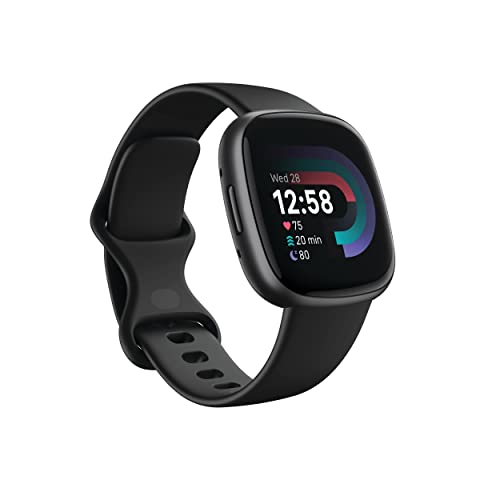
Looking for a reliable companion to guide sleep decisions and support long-term sleep wellness? I’ve used the Fitbit Versa 4 Smartwatch with GPS & Heart Rate, and it delivers. It tracks sleep stages, assigns a Sleep Score, and builds a Personalized Sleep Profile over time. The smart wake alarm helps me rise gently. With 24/7 heart rate and SpO2 monitoring, it captures key data linked to sleep quality. Its 6+ day battery life means fewer interruptions. I get a 6-month Fitbit Premium trial, which provides access to deeper insights. Water resistant to 50 meters, it stays on through swims and showers.
Best For: Individuals seeking a comprehensive sleep and fitness tracking smartwatch with advanced health insights and long battery life.
Pros:
- Offers detailed sleep analysis with Personalized Sleep Profile, Sleep Score, and smart wake alarm for improved sleep wellness
- Delivers robust health tracking including 24/7 heart rate, SpO2, stress management, and 6+ day battery life for consistent monitoring
- Includes valuable extras like 6-month Fitbit Premium trial, water resistance to 50 meters, and on-wrist GPS for accurate workouts
Cons:
- Google Maps integration limited to Android, with iOS support delayed until Spring 2023
- Fitbit Premium trial requires activation within 60 days, and features subject to change
- No mention of built-in speaker/microphone for making calls without phone, limiting true call independence
Smart Watch Health Fitness Tracker IP68 Waterproof
A sleek, reliable companion for those prioritizing sleep insights and daily health tracking, this Smart Watch Health Fitness Tracker stands out with its IP68 waterproof design and advanced sleep stage monitoring. I wear it comfortably every night, and it accurately records my REM, light, deep, and awake stages. The 24/7 heart rate, blood oxygen, and blood pressure tracking give me useful trends over time. With 115 sport modes and GPS integration, it supports active lifestyles. The 1.47” touch screen is clear, customizable, and easy to navigate. It lasts 6–7 days on a charge, connects reliably to my phone, and confidently handles swimming, rain, or showers without issue.
Best For: Health-conscious individuals and active users seeking comprehensive sleep analysis, continuous health monitoring, and durable, waterproof smartwatch functionality.
Pros:
- Accurate 24/7 tracking of heart rate, blood oxygen, blood pressure, and detailed sleep stages including REM
- Supports 115 sports modes with GPS integration and advanced performance metrics for fitness enthusiasts
- Long battery life (6–7 days) and IP68 waterproof rating make it ideal for swimming, showering, and daily wear
Cons:
- Blood pressure and blood oxygen readings are estimates and not medically accurate
- Limited smartwatch functionality compared to full OS smartwatches (e.g., app ecosystem, voice assistant)
- May not fit larger wrists comfortably due to strap adjustment limit of 9.05 inches
Factors to Consider When Choosing a Fitbit for Monitoring Sleep
You’ll want to check how accurately a Fitbit tracks your sleep stages, since not all models measure deep, light, and REM sleep the same way. Look for features like a sleep score and personalized insights, which help you understand patterns and make small adjustments over time. Also, consider whether the watch offers automatic tracking, smart wake alarms, and a comfortable fit for all-night wear-these can make a real difference in consistency and usability.
Sleep Stage Accuracy
When measuring sleep stages like light, deep, and REM, your Fitbit relies on optical heart rate sensors and accelerometers to track heart rate variability and movement patterns overnight. The longer and more consistently you wear it, the better it recognizes your personal sleep rhythms. Over time, stable wear helps the device build individualized baselines for resting heart rate and skin temperature, improving stage differentiation. Devices with overnight SpO2 monitoring can also detect breathing irregularities that may interrupt sleep, adding context to stage tracking. For best results, keep the fit snug and avoid excessive tossing. While not medical-grade, these sensors offer meaningful insights-especially when used nightly. Accuracy improves with regular use, so try wearing it at least a few weeks to assess your sleep patterns. Most models include a trial period, letting you test the fit and feedback.
Sleep Score Features
What makes a Fitbit’s Sleep Score worth tracking? It combines your sleep duration, restlessness, and sleep stages into one daily number so you can quickly gauge sleep quality. The score pulls data automatically, using your time in light, deep, and REM sleep, plus movement and heart rate variability, to give a detailed snapshot. Skin temperature changes and interruptions also shape the final result, helping spot patterns that might affect your rest. Since the score updates nightly, you can observe trends and see how lifestyle choices influence your sleep over time. This consistent, data-driven feedback lets you make informed decisions-whether adjusting bedtime habits, considering sleep aids, or discussing potential issues with a professional. It’s not perfect, but it’s a practical tool for tracking progress without guesswork.
Personalized Sleep Insights
If you’re looking to understand your sleep on a deeper level, consider how well a Fitbit delivers personalized insights based on your unique patterns. You’ll get a nightly Sleep Score that combines duration, restoration, and time in light, deep, and REM stages. Over time, advanced tracking models analyze your data to spot trends and offer feedback tailored to your habits. Some models go further with a Sleep Profile, grouping your patterns into types that reflect your individual sleep biology. When paired with a premium subscription, you gain access to behavioral analysis and specific recommendations for better rest. Features like smart alarms use your sleep stages to wake you during lighter sleep, helping you rise feeling more refreshed. These insights work best when used consistently, so pick a Fitbit that fits your routine and supports long-term tracking.
Automatic Sleep Tracking
Sleep tracking that works while you rest-automatically-starts with a Fitbit that captures your nightly patterns without needing manual input. It uses your movement and heart rate to log sleep duration and detect stages like light, deep, and REM. For better accuracy, pick a model with 24/7 heart rate monitoring-your heart rate variability helps fine-tune stage estimates. Some Fitbits also track skin temperature continuously, revealing subtle shifts in your sleep cycles. Others measure blood oxygen (SpO2) levels overnight, offering clues about breathing disruptions and long-term sleep quality trends. You’ll get a nightly Sleep Score based on duration, restlessness, and recovery, helping you identify patterns over time. These automatic features let you focus on rest while the device handles the data-so you can make informed choices about sleep habits, potential disorders, or whether sleep aids might help.
Smart Wake Functionality
How do you feel when your alarm blares during a deep sleep-groggy, disoriented, slow to respond? Smart Wake helps avoid that by using your sleep stage data to wake you when you’re in light sleep. It tracks movement and heart rate to identify REM, light, and deep phases, then triggers a gentle vibration within 30 minutes of your set alarm time. You wake more naturally, with less sleep inertia. For this to work well, your Fitbit must accurately detect sleep stages night after night. The timing shifts daily, based on your unique sleep patterns, so consistency matters. You’ll need to wear it regularly and let it learn your rhythm. Devices without full sleep staging won’t deliver the same results. Check specs to confirm Smart Wake is included-some models offer it only with premium subscriptions. Try it for a few weeks to see how your mornings change.
Sleep Environment Monitoring
When your bedroom’s conditions shift overnight, your Fitbit can help reveal how those changes affect your rest. If your device tracks temperature variations, you’ll see how rising room heat disrupts deep sleep. Ambient light detection shows whether nighttime brightness-like a streetlamp or phone glow-suppresses melatonin and delays sleep onset. Noise monitoring catches disruptive sounds, from snoring to traffic, that fragment your cycles and lower sleep efficiency. Some models even use air pressure and altitude data to assess environmental stability, which can influence breathing and comfort. Consistency in temperature, light, and sound strongly links to higher sleep scores. Choosing a Fitbit with environmental sensors gives you actionable data, not just sleep stages. You’ll spot patterns, adjust your room setup, and test changes-like blackout curtains or a white noise machine-with clear feedback. This isn’t about perfect conditions, but smarter, informed tweaks that support better rest over time.
Integration With Sleep Programs
Your Fitbit doesn’t just record how you sleep-it helps you improve it by connecting your nightly data to structured sleep programs. These programs automatically sync sleep stages, duration, and quality metrics to give you a clear picture over time. You’ll get a Sleep Score that breaks down deep, light, and REM sleep, helping you spot patterns affecting your rest. With long-term tracking, your device builds a Personalized Sleep Profile, offering recommendations based on your habits. Smart wake alarms detect lighter sleep phases, gently rousing you to reduce grogginess. The ongoing feedback adjusts bedtime cues and highlights environmental factors like light or noise. Since insights adapt with your progress, consistent use improves accuracy. Look for models that support full integration with sleep programs and offer trial periods, so you can test features like sleep scheduling and coaching. It’s a practical way to fine-tune your routine with real data.
Frequently Asked Questions
How Long Does the Battery Last During Sleep Tracking?
You get up to 7 days of battery life while tracking sleep each night, so you won’t need to charge it often. The device runs continuously, recording your sleep stages, heart rate, and movement without draining quickly. You’ll see accurate nightly data in the app each morning. If you forget to charge it, a 30-minute boost gives you another full day. The battery lasts longer when you disable non-essential features.
Can Fitbit Detect Sleep Apnea Accurately?
You can’t rely on Fitbit to diagnose sleep apnea accurately, though it does track breathing patterns and sleep stages that might flag irregularities. It uses your heart rate and movement data to estimate sleep quality and detect potential issues over time. If you notice frequent disruptions, consult a doctor for a clinical evaluation. Fitbit’s tools work best as part of an initial screening, not a replacement for medical testing.
Is Fitbit Data Shareable With Doctors?
Yes, you can share your Fitbit data with doctors by exporting sleep and activity reports through the Fitbit app or website. You download summaries as PDFs or CSV files, then send them securely or print them. While the data isn’t medical-grade, it offers trends like sleep stages, heart rate, and restlessness that may support discussions about sleep patterns or disorders. Doctors might use this info as part of a broader evaluation.
Do Fitbits Work Without a Smartphone?
You need a smartphone to set up your Fitbit and sync data, but once paired, the device tracks sleep and activity independently. You won’t get real-time notifications or app updates without the phone nearby, though core functions still work. For sleep tracking, it stores data and uploads it later when connection resumes. A phone is essential at first, but not 24/7. Try it with the 30-day return policy to check performance.
Are Fitbit Sleep Scores Reliable Over Time?
Yes, your Fitbit’s sleep scores are generally reliable over time, especially if you wear the device consistently and sync it nightly. The scores combine sleep duration, quality, and recovery patterns using clinically tested methods. While not medical-grade, they give useful trends for spotting changes in your rest. Long-term tracking helps you assess habits, test sleep aids, or note disorder symptoms. Most models include a 1-year warranty and let you trial features through the Fitbit app for informed decisions.