Best Baby Sleep Safety Devices Pediatricians Recommend
You’ll find pediatricians often recommend devices that support safe sleep without compromising comfort or monitoring. The Owlet Dream Sock offers FDA-cleared pulse and oxygen tracking for infants 6–30 lbs, sending alerts if levels fall outside safe ranges. Non-contact options like the Babysense 7 use under-mattress sensors to detect movement without radiation or wearables. For soothing, the Sleepy Baby Shh combines rhythmic tapping with white noise, while the NoJo Swaddle helps keep babies on their backs, aligning with AAP guidelines. Many of these include trial periods or warranties to test what works best for your routine. Choices balance monitoring precision, ease of use, and compliance with safety standards, and further details can help clarify which features match your needs.
We are supported by our audience. When you purchase through links on our site, we may earn an affiliate commission, at no extra cost for you. Learn more. Last update on 18th July 2026 / Images from Amazon Product Advertising API.
Notable Insights
- FDA-cleared wearable monitors like Owlet Dream Sock track oxygen and pulse in infants 6–30 lbs with real-time alerts for abnormal levels.
- Non-contact movement monitors like Babysense 7 detect breathing motion without wearables and alert if movement stops for 20 seconds.
- Pediatricians recommend devices compliant with AAP safe sleep guidelines, such as the NoJo swaddle that promotes back sleeping.
- Vibration soothers like Wuugy and Sleepy Baby mimic parental touch to calm infants without electronic monitoring risks.
- Sound machines with white noise, heartbeat, and shush sounds help establish sleep routines in a safe, non-invasive way.
Sleepy Baby Shh White Noise Machine
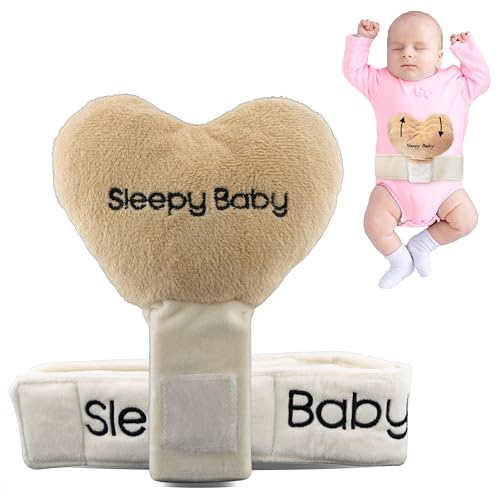
If you’re a new parent looking for a device that helps reduce constant holding while promoting calmer sleep, the Sleepy Baby Shh White Noise Machine stands out with its dual-action soothing system. I’ve found it combines built-in Shh sounds and white noise with rhythmic, hands-free tapping that mimics real parental patting-so babies feel comfort without constant rocking. The tapping speed adjusts, and the soft belt fits securely on most infants, allowing personalized use as your baby grows. It’s lightweight, easy to carry, and works well during travel or daily routines. You can run sounds alone or with tapping, giving flexibility based on your baby’s needs. While it doesn’t replace safe sleep practices, it supports them by encouraging relaxation.
Best For: New parents seeking a portable, multi-sensory soothing device to help calm their infants and reduce constant holding during sleep routines.
Pros:
- Combines white noise, Shh sounds, and automatic rhythmic tapping to mimic parental soothing techniques
- Adjustable tapping speed and soft, flexible belt for a customized, secure fit as baby grows
- Compact and lightweight design makes it ideal for travel and everyday use
Cons:
- Tapping feature may be too stimulating for some babies who prefer minimal touch
- Sound and tapping require batteries, which are not included
- Limited sound options compared to larger, more advanced white noise machines
Baby Sleep Soother with Vibration

I’ve found the vibrating baby sleep soother especially helpful for newborns and infants who respond well to rhythmic, gentle motion that mimics a parent’s comforting touch. It offers three vibration levels and a 60-minute timer that gradually slows, easing your baby into deeper sleep. At just 8.6 ounces, it’s light and fits most cribs, bassinets, or strollers, making it great for travel. The cover is 80% polyester and 20% cotton-easy to wipe clean and air dry. It runs on a built-in lithium polymer battery, so no replacements are needed. With a 3.8-star average from 157 reviews, it’s a practical choice for soothing and safe sleep support.
Best For: Parents of newborns and infants seeking a portable, gentle vibration solution to promote longer, more calming sleep.
Pros:
- Offers 3 adjustable vibration levels and a 60-minute progressive timer for a gradual transition to deeper sleep
- Lightweight and compact design fits most cribs, bassinets, and strollers, ideal for travel
- Easy-to-clean fabric cover and maintenance-free built-in battery enhance convenience
Cons:
- Average customer rating of 3.8 stars suggests mixed user experiences
- Limited to one battery life with no option for replacement if depleted
- May not fit larger or non-standard cribs and bassinets despite universal sizing claims
Owlet Dream Sock Smart Baby Monitor
The Owlet Dream Sock stands out for parents who want continuous, real-time insight into their infant’s pulse rate and oxygen levels, especially during sleep. I rely on its FDA-cleared accuracy for healthy babies 1–18 months old, and it tracks pulse, oxygen, wakings, and sleep trends seamlessly. If levels dip too low, I get instant alerts through the Base Station and Owlet Dream App. Even during power outages, Bluetooth and a backup battery keep monitoring live. I access sleep history and expert guidance in the app, with optional Owlet360 upgrades for deeper insights. It requires 2.4 GHz WiFi at setup-U.S. version only-but switches to 5 GHz later.
Best For: Parents of healthy infants aged 1–18 months seeking FDA-cleared, real-time monitoring of pulse rate, oxygen levels, and sleep patterns with reliable alerts and continuous connectivity.
Pros:
- FDA-cleared wearable monitor that accurately tracks real-time pulse rate, oxygen saturation, wakings, and sleep trends
- Provides instant alerts via Base Station and app if oxygen or pulse levels fall outside safe ranges, with backup battery and Bluetooth during outages
- Offers access to historical health data, expert sleep guidance, and optional Owlet360 upgrade for enhanced insights
Cons:
- Only compatible with U.S. versions and requires 2.4 GHz WiFi for setup, limiting international use
- Limited to infants 6–30 lbs, so not suitable for newborns or toddlers outside the weight range
- Continuous monitoring may lead to over-reliance or anxiety for some parents despite being designed for healthy babies
NoJo Safe Sleep Swaddle Blanket for Infants

I find the NoJo Safe Sleep Swaddle Blanket especially helpful for newborns and infants up to 6 months who need secure back-sleeping support, acting like a gentle anchor to help prevent rolling during naps. Made of 100% lightweight cotton, it’s breathable and fits snugly over standard and mini crib mattresses using Velcro flaps, keeping your baby safely positioned. I appreciate that it’s machine washable and fits babies weighing 7–25 pounds. While it restricts movement to reduce tummy sleeping, it’s not a restraint but a sleep aid aligned with AAP guidelines. It’s well-rated, rank-worthy, and backed by a manufacturer’s warranty-easy to try and compare.
Best For: Parents of newborns and infants up to 6 months who need a safe, AAP-recommended sleep solution to prevent rolling and promote back sleeping.
Pros:
- Helps keep babies securely on their back during sleep, aligning with American Academy of Pediatrics guidelines
- Made of 100% lightweight, breathable cotton and machine washable for easy care
- Attaches securely to crib mattresses with Velcro flaps and fits babies 7–25 pounds
Cons:
- Limited size range may not suit babies over 6 months or heavier than 25 pounds
- Velcro attachments could potentially loosen over time with repeated use
- Higher price point compared to traditional swaddle blankets without safety anchoring
Wuugy Melody Smart Baby Sleep Assistant
A smart baby sleep assistant like the Wuugy Melody works best for parents seeking a portable, multi-functional device that supports both sleep and air quality in various settings. I appreciate its rhythmic vibration and five soothing melodies, which help calm fussiness and support longer sleep. It’s made from durable ABS plastic, weighs just 1.64 pounds, and uses a twist-lock to attach securely to cribs, bassinets, or strollers. The rechargeable battery makes it travel-friendly, while the built-in carbon filter helps reduce airborne particles. It’s a 2025 Mom’s Choice Award winner, backed by a 2-year warranty and Amazon’s 30-day return policy.
Best For: Parents looking for a portable, multi-functional baby sleep aid that combines soothing vibrations, calming sounds, and air quality improvement for use at home or on the go.
Pros:
- Features rhythmic vibration and five calming melodies to help soothe fussy babies and promote longer, restful sleep
- Compact, lightweight design with twist-lock attachment makes it easy to use with cribs, bassinets, and strollers
- Includes a built-in micro active carbon air filter to reduce dust and airborne particles for cleaner sleep environments
Cons:
- Battery life details are not specified, which may raise concerns about performance during extended use
- Only 17 customer reviews, indicating limited user feedback for assessing long-term reliability
- Higher price point compared to basic sleep soothers without air filtration or smart features
Owlet Dream Sock Smart Baby Monitor
Ever wonder which smart baby monitor gives real-time health insights while letting you sleep easier? I’ve found the Owlet Dream Sock® tracks your baby’s pulse and oxygen levels continuously, alerting you if readings fall outside safe ranges. It’s FDA-cleared for infants 6–30 lbs, using pulse oximetry technology in a soft, mint-colored sock. I connect it to Wi-Fi (2.4 GHz setup, works on 5 GHz later) and the Owlet Dream App, getting live data and sleep trends. Even during outages, Bluetooth and a 7-day battery keep monitoring live. It’s portable, lightweight, and includes a 30-day return option and warranty-you get peace of mind, plus useful data to understand your baby’s sleep.
Best For: Parents of infants 1–18 months seeking a reliable, FDA-cleared smart baby monitor that provides real-time pulse and oxygen level tracking with uninterrupted alerts and sleep insights.
Pros:
- FDA-cleared for continuous monitoring of pulse and blood oxygen levels in infants 6–30 lbs, offering medical-grade reassurance
- Maintains monitoring during power or internet outages via Bluetooth and a long-lasting 7-day battery
- Provides detailed sleep trends, real-time alerts, and expert sleep tips through the Owlet Dream App with Wi-Fi flexibility (2.4 GHz setup, 5 GHz compatible)
Cons:
- Limited to U.S. compatibility only, restricting international use
- Requires 2.4 GHz Wi-Fi for initial setup, which may be less convenient for users with 5 GHz-only networks
- Only suitable for babies within the 6–30 lb weight range, limiting long-term use as infants grow
Babysense 7 Baby Sleep Monitor (Non-Contact)
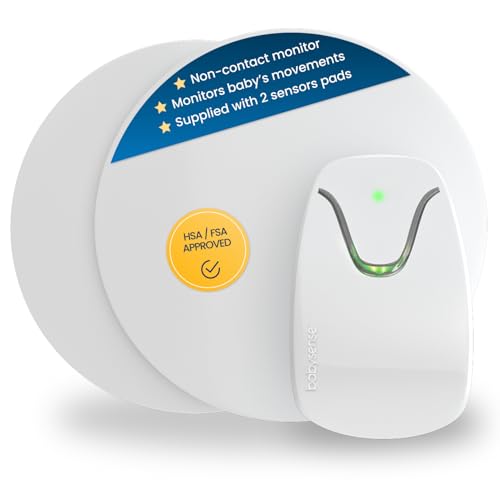
Since it works without WiFi or wearable parts, the Babysense 7 Baby Sleep Monitor suits parents looking for a simple, non-invasive option to track their newborn’s breathing movements. I rely on two under-mattress sensors that detect micro-movements across the entire crib, offering full-coverage monitoring. The system alerts me within 20 seconds if it senses no movement or fewer than 10 micro-movements per minute, using passive technology with no radiation. It’s safe, standalone, and cuts down false alarms with enhanced sensitivity. Plus, I can use my HSA or FSA funds-it’s certified for reimbursement.
Best For: Parents seeking a safe, non-contact, and simple breathing movement monitor for their newborn or infant without the need for WiFi or wearable components.
Pros:
- Uses non-invasive, passive under-mattress sensors to detect micro-movements across the entire crib
- Operates without WiFi, radiation, or wearable parts, making it safe and standalone
- Certified for HSA/FSA reimbursement and designed to reduce false alarms with enhanced sensitivity
Cons:
- Requires proper placement under the mattress for accurate detection
- Does not provide real-time remote monitoring via smartphone or app
- Limited to movement detection without additional health metrics or connectivity features
Portable Sound Machine for Baby Kids (16 Sounds)

You’ll find this palm-sized sound machine fits snugly in your pocket or clips quietly onto a stroller, car seat, or crib-its compact, drop-proof design built to keep pace with busy parenting and unpredictable baby routines. I appreciate how its 16 soothing sounds, like white noise, shush, and heartbeat, help signal sleep time, while the one-touch button works smoothly with one hand. The USB-C rechargeable battery lasts up to 20 hours and keeps playing while charging, so I never lose momentum. There’s no need for apps or Wi-Fi-just simple, reliable operation with an auto-off timer and memory function. I’ve used it at home and on trips, and it’s lightweight, drool-resistant, and easy to attach. It’s a practical tool for consistent sleep environments, especially during travel or shifts. With 24-hour customer support, I feel confident giving it a try.
Best For: Parents and caregivers seeking a portable, reliable, and easy-to-use sound machine to soothe babies and young children during naps, bedtime, or travel.
Pros:
- Compact, durable, and travel-friendly with a clip and carrying ring for easy attachment to strollers, car seats, or cribs
- Offers 16 soothing sounds with one-touch control, auto shut-off timer, and memory function for convenience
- USB-C rechargeable with up to 20 hours of battery life and continuous playback while charging-no batteries needed
Cons:
- Lacks smart features like app control, Bluetooth, or Wi-Fi connectivity, which may limit customization for some users
- Sound volume or range may be insufficient for larger rooms or very noisy environments
- Limited to preset sounds with no option to upload or play custom audio recordings
eufy Baby Monitor Smart Sock 2.4GHz Wi-Fi

The eufy Baby Monitor Smart Sock 2.4GHz Wi-Fi is a strong choice for parents seeking reliable, no-cost remote monitoring of their infant’s heart rate and sleep patterns without subscription fees. I use it to check my baby’s essential signs in real time through my phone and get alerts if the sock slips off or heart rate changes. It tracks sleep quality, naps, and heart trends over 48 hours, with adjustable sensitivity for accurate reporting. The soft, washable sock comes in three sizes and fits snugly on infants 0–18 months. Its smart algorithms and lens improve data precision. I appreciate the no monthly fees, Wi-Fi setup, and FSA eligibility.
Best For: Parents of infants 0–18 months who want a subscription-free, Wi-Fi-connected smart sock to monitor heart rate, sleep patterns, and receive real-time alerts.
Pros:
- Offers remote monitoring and instant smartphone alerts for heart rate changes or sock detachment
- Tracks sleep quality, naps, and 48-hour heart rate trends with customizable sensitivity settings
- Features a soft, washable, size-adjustable design with accurate data from advanced algorithms and a Fresnel lens
Cons:
- Requires proper sock sizing for accurate readings, which may be tricky during growth spurts
- Compatible only with 2.4 GHz Wi-Fi, limiting connectivity options
- Initial setup may be challenging for users unfamiliar with Wi-Fi-enabled baby devices
MyBaby Sound Machine with 4 Soothing Sounds

When quieting a restless infant, I rely on tools that combine simplicity with smart design-this is where the MyBaby Sound Machine with 4 Soothing Sounds stands out, especially for parents needing a portable, no-fuss sleep aid. I appreciate its four calming options-Heartbeat, White Noise, Ocean, and Lullaby-helping me match sounds to my baby’s mood. The compact, BPA-free device clips to strollers or bags and runs up to 26 hours on 3 AAA batteries. I use the 15-, 30-, or 45-minute auto-off timer to limit exposure safely. It’s lightweight, durable, and includes a 90-day warranty, plus Amazon’s 30-day return policy for peace of mind.
Best For: Parents seeking a portable, easy-to-use sound machine to soothe infants during naps, bedtime, or travel.
Pros:
- Offers four soothing sound options (Heartbeat, White Noise, Ocean, Lullaby) to suit different sleep preferences
- Compact, lightweight design with integrated clip makes it ideal for strollers, car seats, and diaper bags
- Auto-off timer (15, 30, 45 minutes) promotes safe, energy-efficient use
Cons:
- Requires 3 AAA batteries (not included), increasing initial setup cost
- Limited to 26 hours of battery life, which may require frequent replacements for heavy users
- Only a 90-day warranty, shorter than some competitors’ offerings
Factors to Consider When Choosing Baby Sleep Safety Devices
You’ll want to check if the device meets safety certification standards, like those from the CPSC or ASTM, to guarantee it’s built with your baby’s well-being in mind. Look at the type of sensor technology used-some rely on motion, while others use breathing pads or wearable parts-and consider how easy it is to set up and use each night. Think about power options, portability, and whether it fits securely with your crib, since these affect both daily use and long-term reliability.
Safety Certification Standards
While choosing a baby sleep safety device, look for models with FDA clearance since they’ve been tested for accuracy and reliability in tracking essential bodily functions like oxygen saturation and heart rate. You’ll also want devices eligible for HSA/FSA reimbursement, as this signals they meet recognized medical standards. Pick non-contact monitors that don’t rely on WiFi or emit radiation, reducing your baby’s exposure to unnecessary energy fields. Make sure the product follows American Academy of Pediatrics guidelines, especially for safe sleep positioning and movement detection. If the device runs on lithium-ion or lithium polymer batteries, confirm it has proper safety certifications to prevent overheating, leaks, or fire risks. These standards guarantee reliable performance and help protect your baby during critical sleep hours. Checking certifications gives you peace of mind without overcomplicating your choice.
Sensor Technology Type
Sensor technology plays a key role in how baby sleep safety devices monitor your infant’s well-being through the night. Passive sensors detect micro-movements under the crib mattress without touching your baby, offering non-invasive monitoring. If no movement occurs within 20 seconds or drops below 10 micro-movements per minute, motion-sensing pads can trigger an alarm. Wearable pulse oximetry sensors use light to track real-time heart rate and oxygen levels, giving you deeper health insights. Some devices rely on rhythmic vibrations that mimic a parent’s patting, providing comfort without electronic tracking. Air quality sensors also help by detecting airborne particles and filtering them with micro active carbon. Each type varies in setup and performance. Passive and wearable systems give direct physiological feedback, while vibration-based tools focus on soothing. Consider which data matters most-movement, essential signs, or air quality-then match it to your baby’s sleep patterns and needs.
Ease Of Use
A well-designed baby sleep safety device makes everyday use straightforward, so you can focus on rest without confusion. You want one-touch operation and intuitive controls that let you act fast, even at night. Look for automatic shut-off timers and memory settings-they cut down on repeated tweaking and support hands-free use after setup. Devices with simple, app-free designs and minimal buttons are easier to learn and less likely to lead to mistakes during critical moments. Lightweight, clip-on models attach quickly to cribs or strollers without tools or complex steps. Clear audio cues, visible indicators, or consistent feedback help you confirm it’s working-no technical know-how needed. These features add up to reliable, stress-free performance when you need it most. Prioritize simplicity and smart design so your routine stays smooth and safe.
Power And Portability
You can keep your baby’s sleep routine consistent, whether at home or on the go, when power and portability align with your daily needs. Choose battery-powered devices for flexibility-no outlet means needed, so they work in cribs, strollers, or hotels. Rechargeable lithium-ion batteries often last up to 20 hours, cutting down on replacements and long-term costs. Look for USB-C charging, which powers your device quickly and supports continuous use while plugged in. Compact models weigh under 1 pound and fit easily in diaper bags or clip onto strollers, making transport simple. Auto shut-off timers (15 to 60 minutes) help preserve battery life and promote safe, hands-free operation. These features mean reliable performance wherever your baby rests, with minimal hassle.
Compatibility With Cribs
While setting up a safe sleeping environment for your baby, matching the device to your crib’s design guarantees both stability and effectiveness. You’ll want to make certain it fits securely within standard crib dimensions-usually 28 x 52 inches-to avoid dangerous gaps. If you’re using an under-mattress sensor, check that it supports your mattress thickness, typically up to 6 inches, so it detects movement accurately. Devices with clips or straps should fasten safely without creating entanglement risks. Avoid any product requiring you to drill or alter the crib, since modifying the frame can compromise safety. Look for options that follow safe sleep guidelines by not introducing loose bedding, soft padding, or raised surfaces. Choosing a compatible, non-invasive device means you’ll maintain a safe sleep space while still benefiting from reliable monitoring-giving you peace of mind without unnecessary risk.
Frequently Asked Questions
Can These Devices Prevent Sudden Infant Death Syndrome (SIDS)?
No, these devices can’t prevent sudden infant death syndrome (SIDS). You should know that no product on the market has been proven to stop SIDS. While some monitors track breathing or movement, they may alert you to changes, but they don’t reduce risk. The safest approach is following AAP guidelines: use a firm mattress, avoid loose bedding, and always place your baby on their back.
Are Baby Sleep Monitors Safe for Newborns Under 3 Months?
Yes, baby sleep monitors are generally safe for newborns under 3 months if you choose models with proven safety standards and non-invasive sensors. You’ll want devices that avoid skin irritation, use secure wireless connections, and don’t overheat. Look for pediatrician-tested designs with breathable materials and reliable performance. Many top monitors offer free trials and warranties, letting you test accuracy and ease of use before committing. Always follow setup instructions closely.
Do Pediatricians Recommend Continuous Use of Sleep Tracking Devices?
You shouldn’t rely on continuous use of sleep tracking devices, pediatricians say. These tools can help spot patterns but may cause unnecessary worry if overused. Most experts suggest short-term monitoring to assess sleep issues, not long-term dependence. Devices vary in accuracy-some detect movement or breathing well, others don’t. Always prioritize safe sleep practices over data. Check for FDA clearance, test with trial periods, and choose models with clear alerts and easy setup.
Can White Noise Machines Damage a Baby’s Hearing Over Time?
Yes, white noise machines can damage a baby’s hearing if used too loudly or placed too close. You should keep the volume under 50 decibels and position the device at least 7 feet from the crib. Use it on a timer to limit exposure and avoid constant playback. Look for models with automatic shut-off and volume limits. Test different sounds and settings to see what helps your baby sleep without overuse. Always monitor for changes in response.
Is It Safe to Rely Solely on Smart Monitors for Overnight Safety?
You shouldn’t rely solely on smart monitors for overnight safety-they’re helpful but not foolproof. These devices detect movement, sound, or breathing, but false alarms and connectivity issues happen. They work best as extras, not replacements, for safe sleep practices like a firm mattress and clear crib. Most offer Wi-Fi alerts, app tracking, and some have warranties, but always supervise. Test them, but keep focus on proven methods.