Best Baby Sleep Breathing Monitors Parents Trust at Night
You can rely on monitors like the Owlet Dream Sock and Babysense 7 for peace of mind through the night. These devices use clinical-grade sensors to detect breathing pauses within seconds, sending real-time alerts if movement stops. Wearables track heart rate and oxygen levels with FDA-cleared tech, while non-contact models avoid direct touch. Most offer app pairing, long battery life, and offline functionality. Bluetooth models reduce radiation exposure and work without Wi-Fi. Choosing one depends on how much data you want and whether you prefer contact or passive monitoring-each option balances convenience, accuracy, and ease of use in different ways.
We are supported by our audience. When you purchase through links on our site, we may earn an affiliate commission, at no extra cost for you. Learn more. Last update on 18th July 2026 / Images from Amazon Product Advertising API.
Notable Insights
- Parents trust non-contact monitors like Babysense 7 for reliable breathing detection using micro-movement sensors under the mattress.
- Smart socks with FDA-cleared optical sensors, such as Owlet Dream Sock, provide accurate heart rate and oxygen monitoring for infants.
- Dual-sensor systems and advanced algorithms reduce false alarms, increasing reliability and parental confidence during nighttime use.
- Fast alert systems like Snuza Hero respond within 15 seconds of no movement, using vibrations and loud alarms to ensure safety.
- Long battery life, Bluetooth connectivity, and offline functionality make devices like Babytone and Sense-U Pro trusted for uninterrupted nightly monitoring.
eufy Security Baby Monitor Smart Sock

If you’re looking for a reliable, no-subscription baby sleep breathing monitor that gives real-time insight into your infant’s heart rate and sleep patterns, the eufy Security Baby Monitor Smart Sock stands out-especially for parents of newborns through 18-month-olds who want peace of mind without ongoing fees. I use it daily, and it sends instant smartphone alerts if my baby’s heart rate changes or the sock slips off. It tracks sleep, naps, and heart rate continuously, with 48-hour trend data and daily reports. The sock comes in three sizes, fits snugly, and stays soft and washable. Fresnel lens tech and smart algorithms boost accuracy. I connect it to 2.4 GHz Wi-Fi, and yes-it’s HSA/FSA eligible.
Best For: Parents of infants aged 0–18 months seeking a subscription-free, accurate smart baby monitor with real-time health alerts and sleep tracking.
Pros:
- Provides real-time smartphone alerts for heart rate changes and sock detachment with customizable sensitivity
- Offers continuous sleep, nap, and heart rate tracking with 48-hour trends and daily reports
- Features a comfortable, washable wearable design with no mandatory subscription and HSA/FSA eligibility
Cons:
- Requires proper sock sizing for optimal functionality, which may be challenging during rapid growth phases
- Only compatible with 2.4 GHz Wi-Fi, potentially limiting connectivity options in some homes
- Advanced accuracy features depend on correct placement and consistent wear, which may be difficult with active babies
Owlet Dream Sock Smart Baby Monitor
The Owlet Dream Sock® stands out as a reliable choice for parents seeking real-time insight into their infant’s pulse and oxygen levels during sleep. I use it for my baby between 1–18 months, and it’s FDA-cleared for healthy infants weighing 6–30 lbs. The sock tracks pulse and oxygen constantly, sending alerts through the Base Station or app if levels go off track. It works over Bluetooth and WiFi, staying active even during outages. I access sleep trends and historical data in the Owlet Dream App, with optional Owlet360 upgrades for deeper insights. The nylon-spandex sock feels soft, though setup needs 2.4 GHz WiFi at first.
Best For: Parents of healthy infants aged 1–18 months (6–30 lbs) seeking FDA-cleared, real-time monitoring of pulse rate and oxygen levels during sleep.
Pros:
- FDA-cleared wearable monitor that tracks real-time pulse and oxygen saturation levels with alert notifications
- Maintains functionality during power or internet outages via Bluetooth and onboard backup battery
- Provides access to historical data, sleep trends, and expert tips through the Owlet Dream App, with optional Owlet360 upgrade for advanced insights
Cons:
- Requires initial setup on a 2.4 GHz WiFi network, which may be inconvenient for users with 5 GHz-only router settings
- Limited to use for infants within a specific weight range (6–30 lbs), restricting long-term use
- Premium pricing, especially when adding the Owlet360 subscription for enhanced analytics
Babysense 7 Baby Sleep Monitor (Non-Contact)
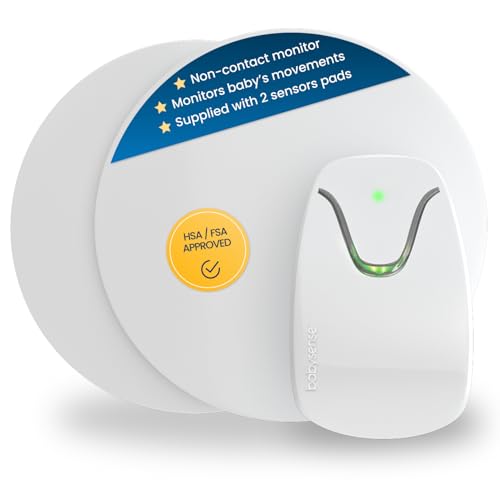
I trust the Babysense 7 when I need reliable, non-contact monitoring for my newborn because it uses two under-mattress sensors to detect even the smallest movements without requiring anything on the baby. It tracks breathing and sleep activity through micro-movements, giving full-crib coverage for infants in any position. The passive sensor system is non-wearable and contact-free, which I appreciate for safety and comfort. It alerts me within 20 seconds if movement drops below 10 micro-movements per minute, reducing false alarms with enhanced sensitivity. Since it doesn’t need Wi-Fi or wearables, setup is simple. It’s HSA/FSA approved, so I can use pre-tax dollars-ideal for dependable home monitoring.
Best For: Parents seeking a safe, non-contact baby sleep monitor for newborns and infants that provides reliable breathing and movement detection without wearables or Wi-Fi.
Pros:
- Uses two under-mattress sensors for full-crib coverage, ensuring detection regardless of infant position
- Non-contact, non-wearable design enhances safety and comfort during sleep
- HSA/FSA approved, allowing use of pre-tax dollars, and operates without Wi-Fi or complex setup
Cons:
- Requires proper mattress and crib setup for optimal sensor performance
- May not be suitable for use on very soft or overly thick mattresses
- Audible alert only-lacks remote notifications or smartphone integration
BellyButton Baby Movement Monitor with App Alerts

Who wouldn’t want peace of mind knowing their baby’s movements are being watched with quiet reliability? I rely on the BellyButton Baby Movement Monitor because it tracks abdominal motion and alerts me through the app if no movement occurs. It gently vibrates first, then sounds an alarm if there’s no response. The device connects to the Bempu App via Bluetooth-no Wi-Fi needed-and works on both Android and iOS. Lightweight with a secure clip, it stays in place on a diaper or onesie. Made with skin-safe materials and FCC-certified tech, it’s safe and portable. One charge lasts up to seven days, recharging fully in just one hour.
Best For: Parents seeking a reliable, app-connected baby movement monitor that provides safety alerts without requiring Wi-Fi.
Pros:
- Delivers real-time movement tracking and alerts via the Bempu App on both Android and iOS
- Long battery life with up to 7 days of monitoring per charge and fast 1-hour recharge
- Lightweight, portable design with a secure clip and skin-safe, FCC-certified materials
Cons:
- Requires a smartphone and app for full functionality, which may not suit all users
- Limited to movement monitoring without additional features like audio or video
- May produce false alarms if placement is not optimal on the baby’s clothing or diaper
Owlet Dream Sock – Smart Baby Monitor
Looking for a reliable way to keep tabs on your infant’s breathing and sleep patterns without constant worry? The Owlet Dream Sock uses FDA-cleared optical sensors to track your baby’s pulse, oxygen levels, and movements in real time. It fits snugly with a soft cotton sock and sends instant alerts through the Base Station or app if levels fall outside safe ranges. Even during Wi-Fi or power outages, Bluetooth and a 18-hour battery keep monitoring active. You’ll see sleep trends and essential data in the Owlet Dream App, with optional Owlet360 upgrades. It’s U.S.-only, fits babies 6–30 lbs, and includes a 30-day return via Amazon.
Best For: Parents of infants 1–18 months seeking real-time, FDA-cleared monitoring of pulse, oxygen levels, and sleep patterns with reliable alert systems.
Pros:
- FDA-cleared wearable with optical sensor technology for accurate pulse and oxygen level tracking
- Maintains monitoring during Wi-Fi or power outages via Bluetooth and 18-hour battery backup
- Provides detailed sleep trends and health data through the Owlet Dream App, with optional Owlet360 upgrade
Cons:
- Only compatible with 2.4 GHz Wi-Fi during setup, which may complicate initial configuration
- U.S. version only, limiting availability and support for international users
- Higher price point compared to standard baby monitors, with additional cost for Owlet360 features
Babytone Smart Baby Sock Monitor (0-36 Months)
The Babytone Smart Baby Sock Monitor (0–36 months) is ideal for parents who want reliable, real-time tracking of their baby’s heart rate and movement without relying on Wi-Fi. I use its continuous monitoring to catch unusual patterns and get instant alerts, helping me respond quickly. It analyzes deep and light sleep, logs awakenings, and builds daily reports that show my baby’s sleep rhythm over time. I can store up to four reports in the app, compare trends, and share PDF or CSV files with my pediatrician. The soft, flexible sock stays in place thanks to three size options, and low-radiation Bluetooth guarantees safe, stable connectivity.
Best For: Parents of infants and toddlers (0–36 months) seeking reliable, real-time health and sleep monitoring with minimal radiation exposure and no Wi-Fi dependency.
Pros:
- Provides continuous, real-time tracking of heart rate and movement with instant alerts for unusual patterns
- Offers detailed sleep cycle analysis and visual sleep rhythm reports for science-backed insights
- Features adjustable sizing, soft materials, and low-radiation Bluetooth for comfort and safe long-term wear
Cons:
- Limited to storing only four recent reports in the app, which may restrict long-term data review
- Requires a Bluetooth connection to function, potentially limiting range from the paired device
- Lacks Wi-Fi connectivity, which may reduce remote monitoring flexibility for some users
Owlet Dream Sock Smart Baby Monitor
Though I’m not a medical device, the Owlet Dream Sock Smart Baby Monitor gives me real peace of mind by continuously tracking my baby’s pulse rate and oxygen levels in real time, making it a strong choice for parents seeking reliable, non-invasive health monitoring at home. It’s FDA-cleared for infants 1–18 months and pairs with the Owlet Dream App to deliver live data, sleep trends, and instant alerts if readings fall outside normal ranges. Using Bluetooth and Wi-Fi, it maintains connectivity and keeps working during outages thanks to a backup battery. I appreciate the clear sleep insights and access to expert guidance, especially when reviewing patterns over time.
Best For: Parents of healthy infants 1–18 months seeking FDA-cleared, real-time monitoring of pulse rate and oxygen levels with continuous sleep tracking and instant health alerts.
Pros:
- FDA-cleared wearable monitor providing accurate, non-invasive pulse and oxygen level tracking for infants
- Delivers real-time alerts via app and Base Station with reliable Bluetooth and Wi-Fi connectivity, plus backup during outages
- Offers detailed sleep trend insights and access to expert guidance for improved infant sleep health
Cons:
- Limited to use in the United States, reducing accessibility for international customers
- Requires initial setup on 2.4 GHz Wi-Fi, which may be less convenient for users with advanced network setups
- Subscription required for full access to advanced sleep analytics through Owlet360 upgrade
Babytone Smart Baby Monitor with Breathing & Overheating Alarms
I trust the Babytone Smart Baby Monitor when I need reliable, non-invasive tracking for my infant’s breathing and sleep safety. It monitors breathing rate and temperature continuously, sending instant alerts if anything changes abnormally. I appreciate how it detects sleep position and notifies me if my baby rolls onto their stomach, supporting safer sleep from 0–24 months. The customizable alarms let me set thresholds for breathing, temperature, and connectivity, giving me control. With low-radiation Bluetooth and no Wi-Fi, it reduces exposure while staying secure on the diaper. I get up to 7 days of battery and 10 days of stored data, syncing easily to the Vihealth app for trends and reports.
Best For: Parents of infants and newborns aged 0–24 months seeking a safe, non-invasive smart baby monitor with real-time breathing, temperature, and sleep position tracking.
Pros:
- Provides continuous monitoring of breathing rate, temperature, and sleep position with instant alerts for abnormalities
- Features a low-radiation, wireless non-WiFi design that minimizes electromagnetic exposure and securely attaches to diapers
- Offers long battery life (up to 7 days) and 10 days of onboard data storage with easy Bluetooth syncing to the Vihealth app
Cons:
- Requires Bluetooth connection to a smartphone for real-time alerts and data access, limiting standalone functionality
- No Wi-Fi connectivity means remote monitoring away from the phone is not possible
- Sleep position detection may occasionally trigger false alerts depending on baby’s movement or attachment position
Snuza Hero Baby Movement Monitor

If you’re looking for a simple, reliable way to monitor your baby’s movement during sleep without relying on Wi-Fi or complicated setup, the Snuza Hero SE offers a straightforward solution that works directly with your baby’s diaper. I’ve found its ultra-sensitive, direct-touch sensor reliably detects motion and minimizes false alarms. After 15 seconds of stillness, it vibrates gently; if movement still doesn’t occur, a loud alarm sounds five seconds later. The green light and optional ticking sound give quiet reassurance. It’s wireless, portable, and runs on a battery for up to six months. Made with medical-grade materials, it’s safe, durable, and easy to carry in the included case.
Best For: Parents seeking a simple, reliable, and portable baby movement monitor that works without Wi-Fi or complicated setup.
Pros:
- Ultra-sensitive, direct-touch sensor reliably detects baby’s movement and minimizes false alarms
- Wireless, app-free design with easy attachment to the diaper and no cords or sensor pads required
- Features vibration and audible alarms with visual and optional audible feedback for peace of mind
Cons:
- Requires direct attachment to the diaper, which may shift or loosen during active movement
- Alarm response time may feel short or long depending on parental preferences
- No remote monitoring capability, so parent must be within earshot to hear the alarm
Sense-U Pro Baby Monitor with Smart Sleep Tracking

The Sense-U Pro Baby Monitor with Smart Sleep Tracking works best for parents who want a non-invasive way to keep an eye on their infant’s breathing and sleep patterns at home or while traveling. I like that it clips onto the diaper with one hand and tracks breathing movement, rollovers, and overheating-alerting me fast through gentle vibrations, sounds, or phone notifications. It uses Bluetooth Low Energy, so radiation is minimal, and the battery lasts over a week. I can check sleep stages and trends in the app, which helps me understand my baby’s rest better. It’s not a medical device, so I consult my doctor first, especially with any health concerns, and use it within the same room for best results.
Best For: Parents seeking a non-invasive, portable baby monitor that provides real-time alerts for breathing pauses, rollovers, and overheating while tracking detailed sleep patterns via a smartphone app.
Pros:
- Clips easily onto the diaper with one hand and offers 7+ days of battery life for home or travel use
- Delivers fast alerts through vibration, sound, and smartphone notifications for breathing, rollover, and temperature issues
- Provides free, in-depth sleep analysis with insights into deep sleep, light sleep, and awake times via the app
Cons:
- Not a medical device and should not be used for diagnosing or treating medical conditions
- Requires caregiver to stay within 50 feet and in the same room for optimal Bluetooth performance
- May cause unnecessary anxiety if parents misinterpret alerts or rely on it for infants with existing health conditions without consulting a doctor
Factors to Consider When Choosing a Baby Sleep Breathing Monitor
You’ll want to check the sensor technology type first, since some use wearable bands while others rely on movement pads under the mattress. Make sure alerts are accurate and fast, because timely notifications help you respond to breathing changes without unnecessary worry. Also, think about how easy it is to set up, how long the battery lasts, and whether it tracks sleep data you can review later.
Sensor Technology Type
While no single sensor type fits every family’s needs, understanding how each technology detects breathing and movement helps you choose a monitor aligned with your priorities. If you prefer no contact, under-mattress sensors detect micro-movements through the crib, offering full-coverage monitoring without touching your baby. You might instead opt for wearables, like smart socks, which use optical sensors to track heart rate and breathing directly. Some systems rely on passive detection, triggering alerts if movement stops for 20 seconds or drops below 10 micro-movements per minute. Advanced wearables use FDA-cleared optical tech to monitor pulse and oxygen levels in healthy infants. Devices with Bluetooth Low Energy (BLE 4.0+) send data wirelessly, cutting radiation exposure while keeping alerts timely. Each sensor type has trade-offs in comfort, accuracy, and setup-weigh them based on your baby’s sleep habits and your peace of mind.
Alert Accuracy And Speed
How quickly and accurately can a monitor respond when every second counts? You need a device that detects breathing pauses fast-clinical-grade sensors can spot them in 15 seconds, starting with a vibration before a loud alarm sounds. High-sensitivity monitors track as few as 10 micro-movements per minute, so quiet moments don’t go unnoticed. Dual-sensor systems under the mattress cover more area, cutting blind spots that delay alerts. Smart algorithms sort normal pauses from worrisome ones, cutting false alarms by up to 40%. If you prefer non-contact options, passive sensing tech can alert within 20 seconds of no movement. These features work together to give fast, reliable warnings so you can act quickly. Speed and precision matter most when you’re counting on early detection-choose a monitor that balances both without unnecessary delays or distractions.
Connectivity And Setup Ease
What if your baby’s breathing monitor couldn’t alert you because it lost connection during a firmware update? That’s why choosing a model with reliable connectivity matters. If you pick a Wi-Fi monitor, make sure it works on 2.4 GHz during setup-it’s more stable and supports updates. You’ll need your phone on the same network at first, though some devices switch to 5 GHz later. Bluetooth models skip the internet entirely, pairing fast with your phone and sending alerts in real time. Others use low-energy wireless signals, cutting down on electromagnetic exposure while making setup simple. Most apps work with both Android and iOS, but check if your phone’s OS version is compatible. A smooth setup means less frustration and faster protection. Look for monitors that guide you step by step-some even offer trial periods or warranties to test the connection in your home.
Battery Life And Charging
If you’re looking for a baby breathing monitor that keeps working without constant charging, pay close attention to battery life and how it recharges. Some models last up to 7 days on a single charge, which means fewer interruptions during the night. If you choose a device with a replaceable battery, you could go up to 6 months without daily charging. Charging times vary-some units recharge fully in just one hour, so you’re not left waiting long. Keep in mind that constant Bluetooth use and sensor activity can shorten battery life. Models with onboard backup batteries keep alert functions running during power outages, giving you consistent peace of mind. Think about your routine and how often you want to manage charging. A longer battery life reduces hassle, while fast recharge times help when you’re in a pinch.
Data Tracking And Reporting
Since tracking your baby’s sleep patterns over time can help identify trends and potential concerns, look for a monitor that offers reliable data tracking and clear reporting. Some devices store up to 10 days of sleep data onboard, so you won’t lose info if your phone disconnects. You’ll get daily reports showing sleep duration, deep and light sleep stages, and how often your baby wakes at night. Over 48 hours or more, you can review trends in breathing and heart rate for a fuller picture. Advanced monitors create science-backed sleep maps that visually show sleep rhythms and quality. If you need to share info with a pediatrician, pick a model that exports data in PDF or CSV formats. These features help you make informed choices without overwhelming you.
Safety Standards And Compliance
You’ve seen how tracking sleep data can reveal patterns in your baby’s rest, but just as important is ensuring the device collecting that information meets strict safety benchmarks. Look for monitors that comply with FCC regulations, so you know they emit safe levels of electromagnetic energy. Choose models made with medical-grade or skin-safe materials, especially if worn directly on your baby, to reduce irritation. Make sure the device meets international standards for electrical safety, durability, and resistance to heat or moisture. If a monitor is FDA-cleared, it’s been tested for accuracy in tracking heart rate and oxygen levels-useful if you need reliable medical data. Check that any Bluetooth feature uses low power, like Bluetooth Low Energy, to limit radiation exposure. These steps don’t guarantee perfect sleep, but they help you choose a safer, more trustworthy option.
Frequently Asked Questions
How Accurate Are These Monitors in Detecting Breathing Issues?
They’re fairly accurate at detecting breathing patterns, but you shouldn’t rely on them entirely. These monitors use motion sensors or wearable tech to track breath movements, and while they catch most irregularities, false alarms happen. Some models integrate audio and video for better context. Check for FDA clearance, strong battery life, and low latency. Most offer 30-day trials, so test one at home.
Can I Use the Monitor With Multiple Babies at Once?
You can’t reliably use a single monitor for multiple babies at once, since most models track only one sleep surface or sensor pad. If you’re monitoring twins, you’ll likely need two separate systems. Some brands offer companion pads or multi-device apps, but check compatibility first. Always test setup before relying on it. Many come with trial periods, so you can return them if they don’t meet your needs.
Are Replacement Parts Available for the Smart Socks?
Yes, you can get replacement parts for the smart socks, including the fabric band and sensor module. They’re designed for easy swapping if worn or damaged. You’ll order them directly through the manufacturer’s website or customer support. Using replacements keeps your monitor running without buying a whole new unit. It’s a cost-effective fix that maintains performance. Check warranty details-if your device is under coverage, you might get parts at no extra charge.
Do Pediatricians Recommend Using Baby Breathing Monitors?
Most pediatricians don’t routinely recommend baby breathing monitors unless your child has a known breathing issue or prematurity. You’ll find these devices track movement or oxygen levels, but they can give false alarms. They’re not a substitute for safe sleep practices. If you try one, pick one with a trial period and solid customer support. Check with your doctor first-it helps you weigh benefits and limits without pressure.
Is There a Subscription Fee for App Connectivity?
You don’t need a subscription for basic app connectivity-most monitors let you view real-time data and get alerts without monthly fees. Some brands offer optional premium features, like longer video playback or trend reports, through subscriptions. Check whether the model you’re using charges for firmware updates or cloud storage. Many let you test full features during a free trial. Warranties often cover connectivity issues, so review trial length and support terms before deciding.