Best Sleep Teas That Actually Help You Drift Off
You’ll find real support for winding down with sleep teas that blend valerian root, chamomile, and passionflower-ingredients studied for calming the nervous system and easing sleep onset. Options like Traditional Medicinals and Yogi use organic, compostable bags and avoid additives, while Twinings Sleep+ includes 1mg of melatonin for short-term rhythm support. Caffeine-free formulas with ethical sourcing and minimal packaging waste offer cleaner choices. Flavor and sensitivity matter, so trying a few helps match your routine. The next steps show how each tea balances ingredients, taste, and sustainability to meet different needs.
We are supported by our audience. When you purchase through links on our site, we may earn an affiliate commission, at no extra cost for you. Learn more. Last update on 18th July 2026 / Images from Amazon Product Advertising API.
Notable Insights
- Valerian root and chamomile are clinically supported ingredients that promote faster sleep onset and relaxation in effective sleep teas.
- Teas with melatonin, like Twinings Sleep+ and Celestial Seasonings + Melatonin, help regulate the sleep-wake cycle for faster drift-off.
- Organic, non-GMO blends from brands like Traditional Medicinals and Yogi use clean ingredients to support safe, natural sleep.
- Passionflower and lemon balm increase GABA levels, reducing mental chatter and nervous system activity to aid sleep.
- Compostable, staple-free tea bags from sustainable brands ensure eco-friendly use without compromising sleep tea effectiveness.
Traditional Medicinals Organic Nighty Night Tea (16 Bags)

If you’re looking for a sleep tea that combines science-backed herbs with certified organic quality, Traditional Medicinals Organic Nighty Night Tea stands out as a solid choice, especially if you struggle with occasional sleeplessness. I’ve tried it myself, and the blend of valerian root, passionflower, lemon balm, and peppermint works quietly but effectively to support relaxation. The earthy, minty flavor is pleasant, without bitterness, and since it’s caffeine-free, I don’t worry about it affecting my sleep cycle. Each compostable bag is sealed in a single pack, ensuring freshness. Knowing it’s USDA Organic and formulated by herbalists gives me confidence in its quality. While it’s not an instant fix, I’ve found it helpful when used consistently as part of a calming bedtime routine.
Best For: Individuals seeking a certified organic, herbal sleep tea to support relaxation and manage occasional sleeplessness as part of a consistent bedtime routine.
Pros:
- Combines science-backed, organic herbs like valerian root, passionflower, and lemon balm to promote restful sleep
- Caffeine-free with a pleasant, earthy-minty flavor and compostable tea bags for eco-conscious consumers
- USDA Certified Organic, Kosher, and formulated by herbalists for trusted quality and efficacy
Cons:
- Valerian root may have a strong earthy taste that some find unpleasant
- Not an immediate sleep solution; requires consistent use for best results
- Only 16 tea bags per pack, which may be less cost-effective compared to bulk options
Celestial Seasonings Sleepytime Extra Herbal Tea, 20 Tea Bags Box

I find Celestial Seasonings Sleepytime Extra Herbal Tea especially helpful if you’re an adult looking for extra support with falling asleep and staying relaxed at night. It combines valerian root, chamomile, and spearmint-herbs known for calming effects. Since it’s caffeine-free, gluten-free, and has no artificial additives, it fits well into many adult routines. Just don’t drive or operate machinery after drinking it. If you’re pregnant, nursing, or on medication, check with your healthcare provider first. The 20 tea bags come in eco-friendly packaging made with 35% post-consumer recycled material, and the bags themselves have no staples or strings, reducing waste.
Best For: Adults seeking an extra-strength, naturally caffeine-free herbal tea to support relaxation and sleep at night.
Pros:
- Contains calming herbs like valerian root, chamomile, and spearmint traditionally used to aid sleep
- Made without caffeine, gluten, or artificial additives, suitable for many dietary needs
- Eco-friendly packaging with 35% post-consumer recycled material and waste-reducing tea bag design
Cons:
- May cause drowsiness, so it’s unsuitable for use before driving or operating machinery
- Not recommended for children, pregnant or nursing individuals without medical approval
- Chamomile may trigger allergic reactions in people sensitive to the daisy family
Twinings Sleep+ Herbal Tea with Melatonin
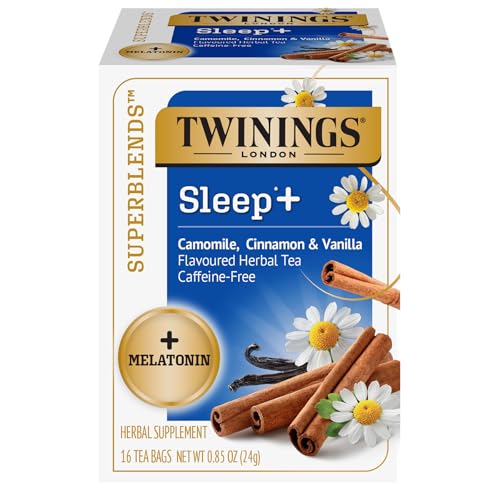
Who wouldn’t want a simple, calming ritual to signal the body it’s time to rest-especially when that ritual combines trusted botanicals with a science-backed sleep aid? I’ve found Twinings Sleep+ Herbal Tea helpful for winding down, thanks to its 1mg of melatonin paired with camomile, cinnamon, and vanilla. It’s caffeine-free, with a subtly sweet, floral taste that works hot or iced. Each pack has 16 tea bags, part of Twinings’ Superblends line focused on wellness. I appreciate the brand’s long history and ethical sourcing, which adds trust. It’s not a cure, but it can support a consistent bedtime routine.
Best For: Individuals seeking a naturally caffeine-free, calming bedtime tea with melatonin to support relaxation and improve sleep onset as part of a consistent nighttime routine.
Pros:
- Combines 1mg of melatonin with calming botanicals like camomile, cinnamon, and vanilla for a soothing, slightly sweet flavor
- Caffeine-free and suitable for hot or iced preparation, offering flexibility in consumption
- Part of a trusted brand with a long heritage and ethical sourcing practices focused on community well-being
Cons:
- Contains melatonin, which may not be suitable for everyone and could cause drowsiness if taken at the wrong time
- Effects may be subtle and vary by individual, not serving as a substitute for medical sleep treatments
- Limited pack size with only 16 tea bags, potentially requiring frequent reordering for daily use
Nighty Night Organic Sleep Tea (16 Bags)

Traditional Medicinals’ Nighty Night Organic Sleep Tea is a thoughtful choice for anyone seeking a natural, caffeine-free way to support restful sleep without relying on synthetic ingredients. I’ve found its blend of chamomile, passionflower, valerian root, linden flower, and spearmint works well to promote relaxation, thanks to the herbs’ long-standing use in traditional sleep remedies. The compostable tea bags hold USDA Certified Organic, non-GMO, and Kosher ingredients, which matters if you value clean sourcing. It has an earthy, minty flavor-pleasant, not overpowering. I drink it about 30 minutes before bed, and it helps me unwind more consistently. While results vary, it’s a solid herbal option worth trying if you’re exploring gentle, non-melatonin sleep aids.
Best For: Individuals seeking a natural, caffeine-free herbal tea to support relaxation and improve sleep quality without synthetic additives or melatonin.
Pros:
- USDA Certified Organic, non-GMO, Kosher, and compostable tea bags for clean, ethical consumption
- Thoughtfully blended with traditional sleep-supporting herbs like chamomile, passionflower, and valerian root
- Pleasant earthy, minty flavor that is smooth and not overpowering
Cons:
- Contains valerian root, which some may find has an earthy or unpleasant aftertaste
- Limited quantity with only 16 tea bags per box
- Effects may vary, and results are not guaranteed due to natural herbal formulation
Celestial Seasonings Sleepytime Herbal Tea (6-Pack)

The thoughtful blend of spearmint, chamomile, and peppermint in Celestial Seasonings Sleepytime Herbal Tea creates a soothing experience ideal for those seeking a gentle, caffeine-free way to ease into rest. I find it easy to prepare-just steep one bag in hot water for 4 to 6 minutes to release its calming notes. Each box holds 20 tea bags, and the 6-pack offers a long-lasting supply. The tea is gluten-free and contains no caffeine, making it a practical option for sensitive systems. I appreciate the eco-conscious design: no staples, strings, or tags on the bags, and the packaging uses 35% post-consumer recycled paperboard, which supports sustainability without sacrificing function.
Best For: Individuals seeking a caffeine-free, gluten-free herbal tea to support relaxation and sleep with an eco-conscious design.
Pros:
- Soothing blend of chamomile, spearmint, and peppermint promotes calm and relaxation
- Caffeine-free and gluten-free, ideal for sensitive diets and evening consumption
- Eco-friendly packaging and tea bags without staples, strings, or tags
Cons:
- Contains peppermint and spearmint, which may not suit those sensitive to mint flavors
- Flavor profile may be too mild for those preferring stronger herbal intensity
- No resealable packaging, requiring transfer for optimal freshness after opening
Traditional Medicinals Organic Nighty Night Tea (48 Bags)

If I’m looking for a sleep tea that combines strong herbal support with eco-conscious values, Traditional Medicinals Organic Nighty Night Tea stands out as a top choice. It’s made with valerian root, passionflower, lemon balm, and peppermint to support relaxation and sleep, offering an earthy, minty flavor that’s easy to sip. Each of the 48 individually wrapped bags is compostable, and the tea is USDA Organic, Non-GMO, Kosher, and caffeine-free. It’s crafted in a solar-powered, zero-waste factory, and the packaging is recyclable. As a certified B-Corp, the company prioritizes environmental and social impact, making this a reliable option if you value sustainability alongside sleep support.
Best For: Individuals seeking a potent, organic sleep tea that aligns with eco-conscious and socially responsible values.
Pros:
- Combines powerful sleep-supporting herbs like valerian root, passionflower, lemon balm, and peppermint in an effective, earthy-minty blend
- USDA Organic, Non-GMO Verified, Kosher, and caffeine-free with compostable tea bags and recyclable packaging
- Produced in a solar-powered, TRUE Zero Waste certified facility by a certified B-Corp committed to sustainability
Cons:
- Valerian root has a strong, earthy taste that may be unappealing to some
- Contains peppermint, which could be too stimulating for sensitive individuals despite its calming blend
- Higher price point compared to conventional sleep teas due to premium organic and sustainable sourcing
Celestial Sleepytime Tea + Melatonin (18 Bags)

One standout option for anyone struggling to fall asleep is Celestial Seasonings Sleepytime Tea Plus Melatonin, especially if you prefer a gentle, plant-based solution with added sleep-supporting benefits. I like that it combines chamomile, spearmint, and other calming herbs with melatonin, which helps regulate sleep cycles. The tea’s caffeine-free and has no artificial flavors or colors, so it’s clean and simple to use. I steep one bag in hot water for 4 to 6 minutes, then toss it-no strings, tags, or staples mean less waste. The box is made from 100% recycled paperboard, 35% of which is post-consumer material.
Best For: Individuals seeking a natural, caffeine-free sleep aid that combines calming herbal ingredients with melatonin to support healthy sleep cycles.
Pros:
- Combines soothing herbs like chamomile and spearmint with melatonin for enhanced sleep support
- Eco-friendly design with tea bags free of strings, tags, and staples, plus packaging made from recycled materials
- Free of artificial flavors and colors, offering a clean and simple bedtime tea experience
Cons:
- Contains melatonin, which may not be suitable for everyone or for long-term daily use without medical guidance
- Limited quantity with only 18 tea bags per box compared to larger tea packs
- Herbal taste may not appeal to those who dislike chamomile or mint-forward blends
TAZO Organic DREAM Herbal Tea (16 Bags)
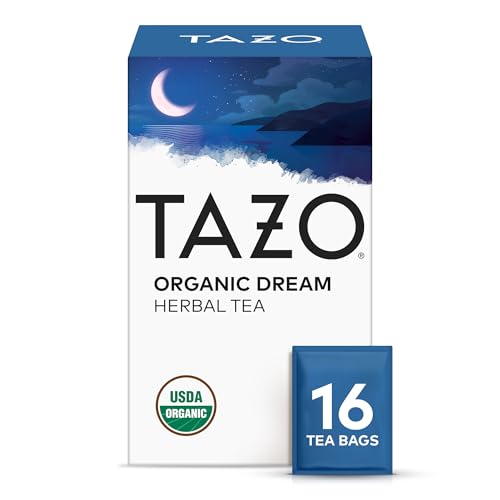
You’ll find TAZO Organic DREAM Herbal Tea a solid choice if you’re looking for a caffeine-free way to unwind before bed, especially when stress or a busy schedule makes falling asleep a challenge. I’ve tried it after long days, and the blend of chamomile, lavender, and valerian root helps me relax without grogginess. The natural almond and vanilla flavors add a gentle sweetness that makes the ritual feel comforting. I steep it for 5 minutes in hot water, sometimes with a splash of milk and honey, and it becomes a calming part of my wind-down routine. With 16 organic tea bags per box, it’s a practical option to test nightly use and see how well it supports your sleep pattern.
Best For: Individuals seeking a caffeine-free, organic herbal tea to promote relaxation and support better sleep, especially those with stress-related or routine-disrupted sleep challenges.
Pros:
- Made with organic chamomile, lavender, and valerian root known for their calming, sleep-supportive properties
- Enhanced with natural almond and vanilla flavors for a smooth, comforting taste without added sugar
- Easy-to-use tea bags with straightforward steeping instructions, ideal for a consistent nighttime ritual
Cons:
- Contains almond flavoring, which may not be suitable for those with nut allergies
- May not induce strong drowsiness in individuals with severe insomnia
- Limited quantity with only 16 bags per box, potentially requiring frequent repurchases
Numi Organic Sweet Slumber Tea (16 Count)

Numi Organic Sweet Slumber Tea stands out among the best sleep teas for anyone seeking a natural, organic way to unwind before bed-especially those sensitive to caffeine or synthetic additives. I find its blend of chamomile, lavender, valerian root, lemon balm, and passionflower works gently to quiet mental chatter and ease physical tension. I steep it for 8 to 10 minutes, letting the floral, earthy notes fill the room, which helps my body recognize it’s time to slow down. It’s caffeine-free, made with certified organic, non-GMO ingredients, and comes in plastic-free, recyclable packaging-so I feel good about using it nightly.
Best For: Individuals seeking a caffeine-free, organic herbal tea to support relaxation and improve sleep quality without synthetic additives.
Pros:
- Expertly blended with traditional calming botanicals like chamomile, lavender, and valerian root to ease both mind and body
- Made with certified organic, non-GMO ingredients in eco-friendly, plastic-free, and recyclable packaging
- Long steep time (8–10 minutes) enhances aromatic release, aiding in deeper relaxation and signaling bedtime to the nervous system
Cons:
- May not provide strong sedative effects for those with chronic insomnia
- Earthy, herbal flavor profile may be less appealing to those who prefer mild or sweet teas
- Contains valerian root, which has a distinct taste some users might find unpleasant
Ahmad Tea Herbal Sleep Tea (20 ct)

If you’re looking for a sleep tea that combines natural relaxation with consistent quality, Ahmad Tea Herbal Sleep Tea stands out among 20-count options for its thoughtfully balanced blend. I’ve found its mix of calming camomile, honey, and lavender gently promotes evening relaxation without artificial sweeteners or caffeine. It’s sugar-free and naturally decaffeinated, making it a reliable choice if you’re managing sleep issues or avoiding stimulants. Sourced from trusted gardens worldwide, the ingredients support both wellness and ethical farming through the Ethical Tea Partnership. With 22 Great Taste Awards, this tea delivers proven quality, offering a smooth, satisfying taste hot or iced-ideal for building a calming nightly routine.
Best For: Individuals seeking a natural, sugar-free, and decaffeinated herbal tea to support relaxation and restful sleep.
Pros:
- Expertly blended with calming camomile, honey, and lavender for evening relaxation
- Sugar-free and naturally decaffeinated, ideal for health-conscious consumers
- Ethically sourced through the Ethical Tea Partnership and backed by 22 Great Taste Awards
Cons:
- May not provide strong sedative effects for those with severe insomnia
- Flavor is subtle, which may not appeal to those seeking bold taste
- Limited to 20 count per pack, which may require frequent repurchasing
Factors to Consider When Choosing Sleep Teas
You’ll want to check for key ingredients like valerian root, chamomile, or passionflower, since they’re linked to better sleep. Make sure the tea is certified caffeine-free, especially if you’re sensitive to stimulants, and look for organic or non-GMO labels if those matter to your routine. Also consider the tea bag material, packaging sustainability, and how the design might affect steeping, so you can find a fit that works well for your nightly habit.
Key Ingredients To Look For
While not all sleep teas work the same, the most effective ones usually contain specific natural ingredients known for supporting relaxation and sleep. Look for valerian root, which may help you fall asleep faster and improve sleep quality with its sedative effects. Chamomile has apigenin, an antioxidant that binds to brain receptors to encourage drowsiness and reduce insomnia. Passionflower boosts GABA levels, calming nervous system activity and aiding relaxation, according to clinical studies. Lavender has proven anxiolytic properties, helping ease anxiety and improve sleep efficiency when consumed as a tea. Some blends add melatonin, a hormone that regulates your sleep-wake cycle, especially useful in 1mg doses for short-term sleep support. You’ll want to check labels for these ingredients, as their presence and concentration affect how well the tea works. Choosing a blend with one or more of these components gives you better odds of finding relief.
Caffeine Free Certification Importance
A caffeine-free certification matters because it confirms the tea contains no detectable caffeine, which could otherwise disrupt your sleep. You want assurance that what you’re drinking won’t interfere with your ability to wind down. This certification means a third party tested the product, verifying it’s truly free of stimulants. Without it, teas may still have trace amounts from cross-contamination or labeling errors-enough to affect sensitive individuals. Certified brands follow strict processing rules to avoid contact with caffeinated plants during manufacturing. That level of care supports a more reliable bedtime routine. When choosing a sleep tea, look for the official caffeine-free label so you know you’re getting exactly what’s promised. It’s a small detail that makes a real difference in performance. This simple step helps you avoid hidden energy boosters and stay focused on rest.
Organic And Non Gmo Status
Choosing an organic and non-GMO sleep tea means you’re selecting a product grown and processed with strict standards in mind. You’ll know at least 95% of the ingredients are organically farmed, free from synthetic pesticides or fertilizers. When a tea is USDA Organic certified, farms follow ongoing checks, inspections, and record-keeping to maintain quality. Non-GMO verification guarantees none of the plant-based ingredients have been genetically altered, supporting natural growing methods you can trust. These choices reduce your exposure to chemical residues and align with eco-friendly practices. You’re also supporting healthier soil and greater biodiversity. While organic and non-GMO teas may cost a bit more, their production reflects long-term environmental and personal health benefits. You can feel confident they’re made with care, from seed to cup. Look for clear labeling to verify these claims before you buy.
Tea Bag Material And Design
Tea bag material and design play a key role in both the environmental impact and brewing performance of your sleep tea. You’ll find some bags are made from compostable, plant-based materials, breaking down more easily and reducing landfill waste. Staple-free designs remove metal components, boosting biodegradability. Brands skipping strings and tags cut down on extra paper and plastic, helping the planet without hurting function. Paper bags often use food-grade adhesives to stay sealed during brewing-no plastic needed. If you care about flavor, try pyramid-shaped bags; they give whole-leaf herbs room to expand, improving infusion and potentially enhancing the tea’s calming effect. These designs may cost a bit more, but they offer better herb mobility and clarity in taste. Consider trying a sample pack to compare how each bag type performs in your routine.
Sustainability Of Packaging
Look for packaging made from 100% recycled paperboard with at least 35% post-consumer content, as it cuts down on landfill waste and reduces the need for virgin materials. Choose brands that use recyclable cartons and avoid plastic-lined wrappers, since plastic-free packaging supports circular economy practices and lowers pollution. Opt for tea bags without strings, tags, or staples-they’re simpler to compost and reduce non-compostable waste. If you compost at home, pick brands with plant-based, compostable tea bags that break down efficiently. You’ll also find that companies using certified organic, sustainably sourced herbs often pair them with eco-friendly packaging to support a sustainable lifecycle. These choices don’t guarantee better sleep, but they can align with environmental values. Check labeling for clear disposal instructions so you can recycle or compost correctly. Small packaging changes add up when you make them consistently.
Brand Transparency And Ethics
When you’re evaluating sleep teas, paying attention to brand transparency and ethics helps you make informed choices that align with both personal and environmental well-being. Look for certifications like USDA Organic or Non-GMO Project Verified-they show a brand’s commitment to clean, honest ingredients. If a company uses compostable, plastic-free tea bags made from plant-based materials, you’ll know they’re reducing environmental harm. Packaging printed on recycled paperboard with high post-consumer content also signals responsible resource use. Check if the brand shares sourcing details, like fair labor practices or direct farmer partnerships-this transparency builds trust. Third-party verifications like B-Corp certification mean the company meets strict standards for social and environmental accountability. These factors don’t guarantee better sleep, but they do help you choose brands that value integrity, sustainability, and ethical practices.
Sensory Profile And Flavor Balance
You’ll want a sleep tea that feels calming not just in effect but in taste, since an unbalanced flavor can distract rather than soothe. A well-balanced blend combines earthy, minty, and floral notes to support relaxation without overwhelming your palate. Chamomile and lavender add soft floral sweetness, while spearmint or peppermint brings a cool freshness that makes the tea easier to enjoy. Valerian root adds deep earthiness, but its strong taste often needs balancing with sweeter herbs to stay drinkable. Avoid teas with sharp bitterness or astringency, as those qualities can work against the calming goal. Steeping time matters-let it brew too long and roots or flowers may turn bitter, tipping the flavor off balance. Aim for a smooth, harmonious taste that supports the tea’s purpose: helping your mind and body wind down without resistance.
Frequently Asked Questions
Can Sleep Teas Interact With Prescription Medications?
Yes, sleep teas can interact with prescription medications. You might unknowingly amplify sedative effects or reduce drug effectiveness. Herbal ingredients like valerian or chamomile affect the central nervous system, potentially interfering with antidepressants, blood thinners, or anxiety meds. Always check with your doctor before mixing teas and prescriptions. They’ll help weigh risks, especially if you take meds long-term or have underlying conditions. When in doubt, medical guidance keeps you safe.
Are Sleep Teas Safe for Pregnant Women?
No, you shouldn’t assume sleep teas are safe during pregnancy. Many contain herbs like valerian or chamomile, which may stimulate the uterus or affect hormones. Always consult your doctor before trying any herbal product while pregnant, since some ingredients lack enough research for prenatal use. Your provider can help you weigh potential risks and suggest safer alternatives based on your health history and current needs.
How Long Before Bed Should I Drink Sleep Tea?
You should drink sleep tea about 30 to 60 minutes before bed to let your body absorb its calming compounds. This timing gives your digestion a chance to process the herbs while letting melatonin-like effects build. If you feel groggy, try drinking it earlier. Since ingredients like chamomile or valerian root work differently for everyone, test timing over a few nights. Start with 45 minutes before sleep and adjust based on how you feel.
Can Children Drink Sleep Teas Safely?
you shouldn’t give sleep teas to children without consulting a doctor first. their bodies react differently to herbal ingredients, and safety isn’t guaranteed. some herbs may affect development or interact with medications. always check labels for age-specific guidelines, and never assume natural means safe. if you’re considering it, start by discussing options with a pediatrician. they can help weigh benefits against risks, ensuring any choice supports your child’s health without unintended side effects.
Do Sleep Teas Lose Effectiveness Over Time?
Yes, you might notice sleep teas losing effectiveness over time because your body can build a tolerance to certain herbs like valerian or chamomile. You’ll still get some calming effects, but they may feel less strong after weeks of daily use. To maintain results, try cycling-using the tea for a few weeks, then taking a break. This helps keep your response steady and prevents over-reliance while supporting long-term sleep habits.