How to Combine Cotton Sheets With Down Comforters for Optimal Comfort
Choose cotton sheets with a 200–400 thread count for softness and breathability, pairing them with a down comforter suited to your climate-700+ fill power for cold areas, 500–600 for warmer ones. Layer the cotton sheet directly on your body for moisture wicking, then add the down for lightweight warmth. Opt for single-ply cotton and baffled box construction to support airflow and even insulation. Wash sheets gently and care for the comforter with down-specific cleaning, and you’ll find how small choices improve sleep quality over time.
Notable Insights
- Choose cotton sheets with a thread count between 200 and 400 for optimal breathability and softness.
- Pair high-fill-power down comforters (700+) with cotton sheets in cold climates for maximum warmth.
- Place cotton sheets directly against the skin to wick moisture and improve temperature regulation.
- Layer the down comforter over cotton sheets to trap heat efficiently without overheating.
- Wash cotton sheets regularly in cool water and clean the down comforter with a down-specific detergent.
Choose the Best Thread Count for Cotton Sheets
A thread count between 200 and 400 usually works best for cotton sheets paired with down comforters, since it balances softness, durability, and breathability. You might’ve heard the thread count myths-like higher numbers always mean better quality-but that’s not true. Counts above 400 can involve multi-ply yarns, which don’t improve softness and may reduce cotton breathability. Single-ply cotton in the 200–400 range gives you airflow and comfort, helping regulate body temperature while you sleep. This is especially helpful if you’re managing night sweats or insomnia. High thread counts may feel luxurious, but they often trap heat, undermining the natural insulation of your down comforter. Look for sheets labeled “long-staple cotton” and check warranty or trial policies-many brands offer 60- to 100-night trials. That way, you can test performance without risk and choose based on real sleep experience, not just labels. For deeper insight into material quality, consider checking reviews focused on top thick sheets performance during extended use.
Match Down Fill Power to Your Climate
You’ve picked breathable cotton sheets with a smart thread count to help your body stay cool-now it’s time to match your down comforter’s warmth to your local weather. Fill power measures how much space an ounce of down occupies, directly affecting insulation. Higher fill power, like 700 or above, traps more heat and works well in cold climate zones. If you live in a warm or humid region, choose a lower fill power-between 500 and 600-for lighter warmth and better airflow. This balance helps prevent overheating, which may disrupt sleep. Always check the comforter’s construction; baffled boxes keep down evenly distributed. Many brands offer trial periods, so you can test warmth and breathability. A warranty often covers shifts or clumping. Matching fill power to climate zones supports consistent body temperature, improving sleep quality without relying on sleep aids. For hot sleepers or those in warmer areas, consider a best lightweight down comforter designed specifically for summer use.
Layer Cotton Sheets and Down Comforters for Comfort
Because cotton sheets and down comforters work best when layered thoughtfully, it’s worth considering how their textures and breathability interact to support a comfortable sleep environment. You’ll want to place a cotton sheet directly against your skin since its fabric breathability helps regulate bed temperature by wicking moisture and allowing airflow. Down traps warmth efficiently, so pairing it with breathable cotton prevents overheating. Choose a lightweight cotton percale or sateen depending on your preferred feel-both support consistent bed temperature without compromising comfort. The layering order matters: cotton sheet first, then the down comforter on top. This setup lets each material perform as designed-cotton managing humidity, down providing insulation. Together, they balance warmth and breathability, which can improve sleep quality, especially if you’re sensitive to heat or night sweats. This combination supports restful sleep without relying on external sleep aids. For those seeking a hypoallergenic alternative, consider a down alternative comforter that mimics the loft and warmth of down without using animal-derived fill.
Keep Cotton Sheets Soft and Down Fluffy: Care Tips That Last
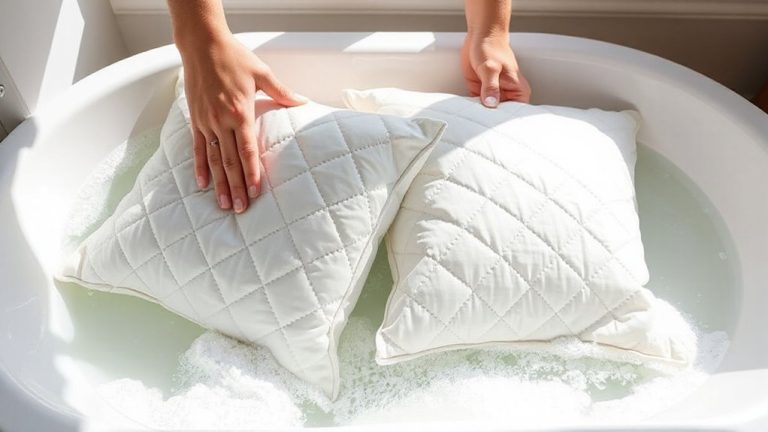
Proper care keeps your cotton sheets soft and down comforter fluffy, preserving their performance over time. Use gentle washing techniques: wash sheets in cool water with mild detergent, avoiding bleach or fabric softeners that break down fibers. For your down comforter, opt for a front-loading machine and a down-specific cleanser to maintain loft. Always follow drying methods carefully-dry sheets on low heat with wool dryer balls to reduce wrinkles and keep them soft. For the comforter, use low heat with several clean tennis balls to prevent clumping and restore fluffiness. Guarantee the down is completely dry to avoid mold. Air-dry cotton sheets occasionally to extend their lifespan. Regular maintenance with these methods supports comfort and durability, helping you maintain a sleep environment that promotes rest without irritation or overheating.
Why Cotton Sheets and Down Comforters Make the Perfect Pair
Cotton sheets and down comforters work well together because their natural properties complement one another to support balanced sleep. You benefit from the breathability balance each material offers-cotton allows air to flow easily, while down adapts to your body temperature. This pairing supports effective moisture regulation, wicking sweat away and releasing it into the air so you stay dry. Cotton’s soft, durable fibers feel gentle on skin, reducing irritation that could disrupt rest. Down maintains loft and insulation without overheating, especially under breathable cotton. Together, they create a sleep environment friendly to sensitive skin and common sleep issues linked to overheating. Look for high-thread-count cotton and responsibly sourced down with strong fill power for lasting performance. Many quality sets include trial periods, letting you test comfort and adjust. With proper care, this combo supports long-term comfort, helping you maintain consistent, restful sleep night after night.
On a final note
You’ll sleep better when cotton sheets breathe against your skin while a down comforter traps warmth without overheating. Choose a thread count between 200–400 for durability and softness, and match fill power to your climate-600–700 works well in moderate zones. Layer them loosely to balance comfort and airflow. Wash sheets weekly to preserve cotton’s feel, and air out the comforter monthly to maintain loft. Many brands offer trial periods, so test for a few nights to judge warmth and comfort.